

Introduction
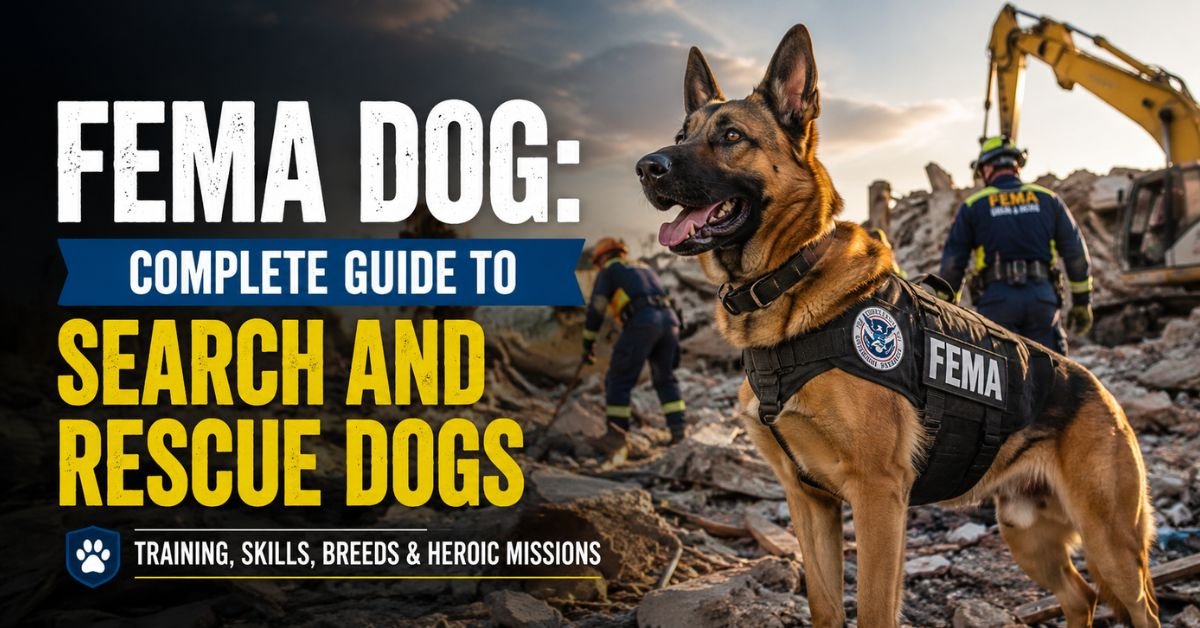
A fema dog is one of the most highly trained and hardworking dogs in the world. These dogs help rescue people during disasters such as earthquakes, hurricanes, building collapses, floods, and other emergencies. Their incredible sense of smell, intelligence, and obedience make them essential members of emergency rescue teams.
Many dog lovers are fascinated by FEMA rescue dogs because of their bravery and dedication. These dogs work closely with handlers and emergency responders to save lives in difficult situations. In addition, they go through years of specialized training before they become certified rescue dogs.
In this guide, you will learn everything about FEMA dogs, including their training, best breeds, skills, daily life, and how they help during disasters.
What Is a FEMA Dog?
A FEMA dog is a specially trained search and rescue dog that works with the Federal Emergency Management Agency in the United States. These dogs are part of Urban Search and Rescue (US&R) teams.
Their main job is to locate missing or trapped people after disasters. FEMA dogs use their strong sense of smell to find human scent under rubble, debris, snow, or collapsed buildings.
These dogs are trained to:
- Search disaster areas
- Detect human scent
- Work in dangerous environments
- Ignore distractions
- Follow handler commands quickly
- Help emergency teams save lives
Because of their skills, FEMA rescue dogs are often called heroes.
How FEMA Dogs Help During Emergencies
FEMA dogs are extremely valuable during rescue operations. Humans may struggle to locate survivors quickly, especially in large disaster zones. However, a trained disaster search dog can cover areas much faster.
Common Emergencies FEMA Dogs Respond To
Earthquakes
Collapsed buildings can trap people under heavy debris. FEMA dogs search the area to locate survivors.
Hurricanes and Floods
Disaster response dogs assist rescue teams in flooded neighborhoods and damaged communities.
Tornadoes
After tornado destruction, rescue dogs help find injured or trapped people.
Building Collapses
Search and rescue dogs can detect human scent deep within rubble piles.
Missing Person Searches
Some FEMA canine teams also assist in locating missing individuals during emergencies.
Best Dog Breeds for FEMA Work
Not every dog can become a FEMA rescue dog. These dogs need intelligence, energy, confidence, and strong work drive.
Top FEMA Dog Breeds
Labrador Retriever
Labradors are one of the most popular FEMA dog breeds because they are friendly, trainable, and energetic.
German Shepherd
German Shepherds are intelligent and fearless. They perform very well in search and rescue operations.
Belgian Malinois
This breed is fast, athletic, and highly focused during training.
Golden Retriever
Golden Retrievers are smart and eager to please, making them excellent working rescue dogs.
Border Collie
Border Collies are known for their intelligence and strong work ethic.
FEMA Dog Breed Comparison Table
| Breed | Energy Level | Trainability | Strengths |
| Labrador Retriever | High | Excellent | Friendly, reliable, strong scent skills |
| German Shepherd | High | Excellent | Brave, protective, intelligent |
| Belgian Malinois | Very High | Excellent | Agile, focused, hardworking |
| Golden Retriever | High | Very Good | Gentle, obedient, social |
| Border Collie | Very High | Excellent | Extremely intelligent, fast learner |
How FEMA Dogs Are Trained
Training a FEMA dog takes a lot of time, patience, and dedication. Most dogs begin training when they are still puppies.
Early Puppy Training
During puppyhood, trainers focus on:
- Socialization
- Confidence building
- Obedience
- Play-based learning
- Exposure to loud noises and unstable surfaces
This early foundation is very important for future rescue work.
Advanced Search Training
As the dog matures, training becomes more challenging.
Dogs learn to:
- Detect live human scent
- Search large disaster zones
- Climb rubble safely
- Work off leash
- Respond to hand signals and commands
Handlers reward dogs with toys and praise when they successfully locate a person.
Disaster Simulation Exercises
FEMA rescue dogs train in realistic environments such as:
- Collapsed buildings
- Concrete piles
- Dark tunnels
- Noisy locations
- Smoke-filled areas
This helps prepare them for real emergencies.
FEMA Dog Certification Process
Not all trained dogs become official FEMA dogs. They must pass difficult certification tests.
What Certification Tests Include
A FEMA dog must demonstrate:
- Strong obedience
- Accurate scent detection
- Agility
- Confidence
- Focus under stress
- Ability to locate hidden victims
The handler and dog are tested together as a team.
Once certified, they may be deployed to disaster zones across the country.
The Bond Between FEMA Dogs and Handlers
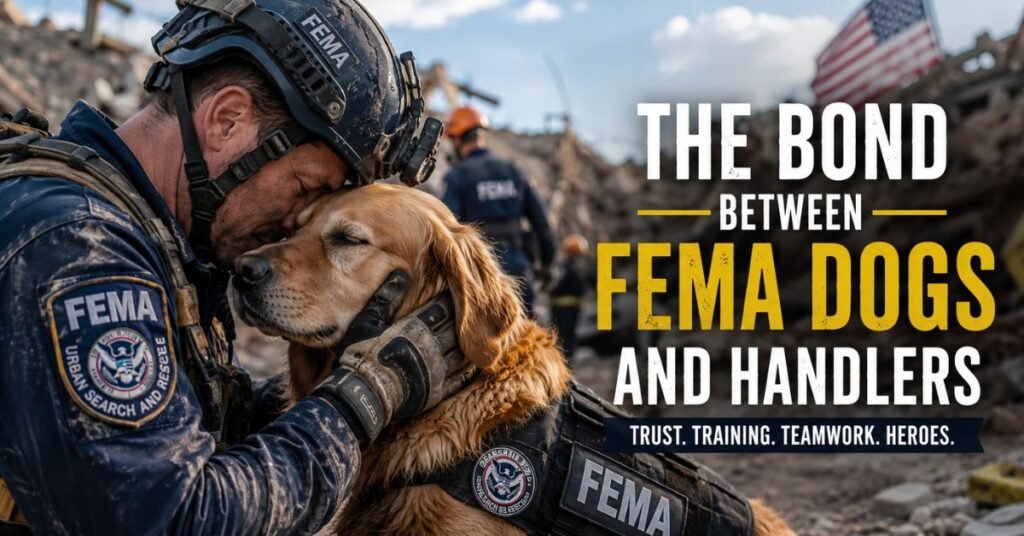
A FEMA dog and handler work as a close team. Trust and communication are essential.
Handlers spend years training and working with their dogs. Because of this, the bond becomes very strong.
Responsibilities of a FEMA Dog Handler
Handlers must:
- Train daily
- Maintain the dog’s health
- Build trust
- Read canine body language
- Ensure safety during missions
Most handlers describe their rescue dogs as both coworkers and family members.
Daily Life of a FEMA Dog
Many people imagine FEMA dogs working every day in disasters. However, most of their time is spent training.
Typical Daily Activities
A FEMA rescue dog may spend time:
- Practicing search exercises
- Running obstacle courses
- Playing fetch
- Exercising
- Traveling for training events
- Relaxing at home with the handler
Even though these dogs are highly trained professionals, they still enjoy normal dog activities.
Skills Every FEMA Dog Needs
Not every energetic dog can handle FEMA work. These dogs require specific personality traits and skills.
Important FEMA Dog Traits
Strong Sense of Smell
Search dogs rely heavily on scent detection.
Confidence
Disaster environments can be loud and dangerous.
Physical Fitness
Dogs must climb, jump, and work for long hours.
Focus
They must ignore distractions and stay on task.
Play Drive
Many trainers use toys as rewards during training.
Challenges FEMA Dogs Face
Although FEMA dogs are highly skilled, their work can be physically and emotionally demanding.
Common Challenges
- Extreme weather conditions
- Dangerous debris
- Long working hours
- Stressful rescue scenes
- Injuries from unstable surfaces
Because of these risks, handlers carefully monitor their dogs’ health and safety.
FEMA Dogs After Retirement
Like humans, FEMA dogs eventually retire from active duty.
What Happens After Retirement?
Most retired FEMA dogs live with their handlers or adoptive families. Retirement allows them to relax and enjoy life after years of hard work.
Retired rescue dogs usually spend their days:
- Playing
- Walking
- Resting
- Enjoying family life
Many handlers continue to care for their retired canine partners for the rest of their lives.
Can Any Dog Become a FEMA Dog?
Not every dog is suitable for FEMA work. Even intelligent dogs may not enjoy rescue training.
Qualities Trainers Look For
Trainers often select dogs that are:
- Energetic
- Confident
- Toy motivated
- Friendly
- Physically healthy
- Comfortable around people
Dogs that scare easily or lack motivation may not succeed in this demanding field.
How to Start Search and Rescue Dog Training
If you are interested in training a search and rescue dog, there are several ways to begin.
Tips for Beginners
Start With Basic Obedience
Teach commands such as:
- Sit
- Stay
- Come
- Heel
Build Confidence
Expose your dog to different environments and surfaces.
Encourage Play Motivation
Use toys and games as rewards.
Join a SAR Organization
Many local search and rescue groups offer training programs.
Stay Consistent
Training requires patience and regular practice.
Famous FEMA Dog Rescue Stories
FEMA dogs have participated in many major rescue missions throughout history.
Historic Disaster Responses
These dogs assisted during:
- Hurricane Katrina
- September 11 rescue efforts
- Major earthquakes
- Tornado outbreaks
- Building collapses
Their work has helped save countless lives.
Why FEMA Dogs Are So Important
Technology continues to improve, but dogs still outperform many machines when locating human scent.
Benefits of FEMA Dogs
- Faster search times
- Better scent detection
- Ability to access difficult areas
- Emotional support for rescue teams
- Reliable disaster assistance
Because of these advantages, FEMA canine teams remain a critical part of emergency response operations.
Conclusion
A fema dog is far more than just a trained animal. These brave and intelligent dogs save lives during some of the most dangerous disasters imaginable. Through advanced training, strong teamwork, and incredible scent abilities, FEMA rescue dogs play a critical role in emergency response efforts.
Whether searching collapsed buildings or helping locate survivors after natural disasters, these dogs demonstrate loyalty, courage, and skill every day.
If you admire hardworking canine heroes, FEMA dogs are truly among the best examples of the powerful bond between humans and dogs.
Training usually takes 1–3 years depending on the dog and training program.
Yes. Most FEMA dogs are social, friendly, and enjoy working with people.
In most cases, FEMA dogs live at home with their handlers as family pets.
Labrador Retrievers, German Shepherds, and Belgian Malinois are among the best breeds for FEMA work.
They use their powerful sense of smell to detect human scent under debris or rubble.

Muhammad Ahad — Passionate writer sharing informative, engaging, and easy-to-read articles across different topics. Focused on delivering valuable content that helps readers learn, explore, and stay inspired every day.