

Introduction
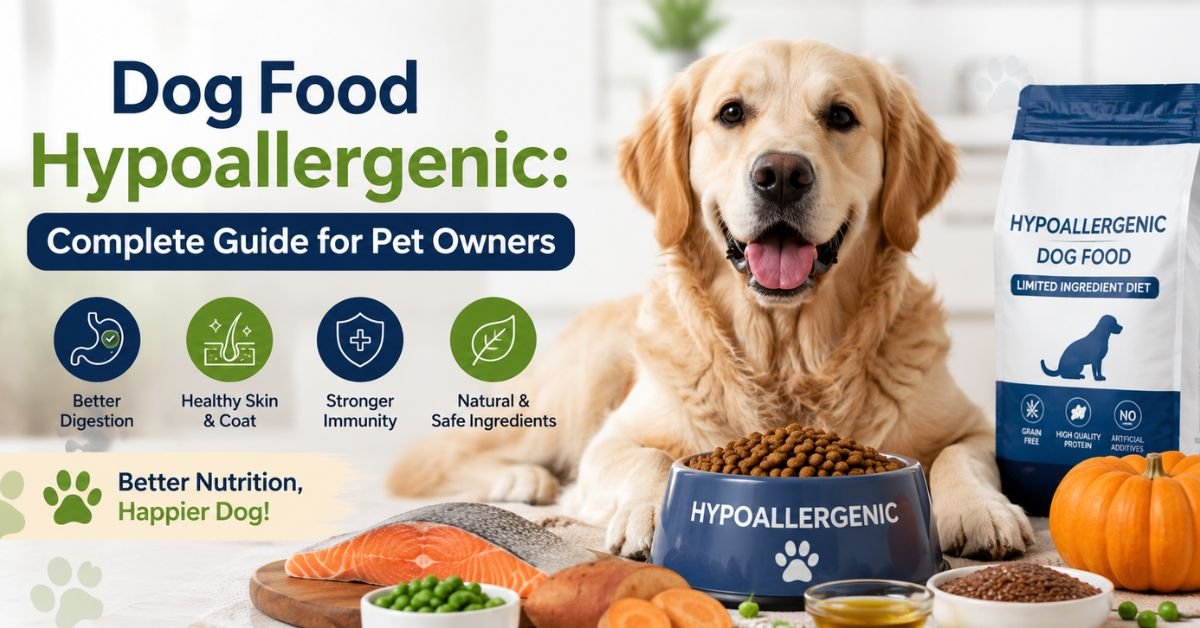
Many dogs suffer from food allergies and sensitivities that can make daily life uncomfortable. Symptoms like itchy skin, ear infections, stomach problems, and excessive licking are often linked to diet. That is why many pet owners are switching to dog food hypoallergenic formulas to help their dogs feel healthier and happier.
Hypoallergenic dog food is specially designed to reduce allergic reactions and support better digestion. These diets use carefully selected ingredients that are less likely to trigger sensitivities. As a result, dogs with food allergies often experience healthier skin, improved digestion, and more energy.
In this guide, you will learn what hypoallergenic dog food is, how it works, its benefits, the best ingredients to look for, and tips for choosing the right food for your dog.
What Is Dog Food Hypoallergenic?
Understanding Hypoallergenic Dog Food
Hypoallergenic dog food is made with ingredients that are less likely to cause allergic reactions in dogs. These foods usually avoid common allergens such as:
- Beef
- Dairy
- Wheat
- Soy
- Chicken
- Corn
- Artificial additives
Instead, they often contain limited ingredients and unique protein sources that dogs may tolerate better.
Some hypoallergenic foods also include hydrolyzed proteins. These proteins are broken down into tiny particles so the dog’s immune system is less likely to react to them.
Here are some signs that your dog needs hypoallergenic dog food
Food allergies can appear in many ways. Sometimes pet owners mistake these symptoms for seasonal allergies or skin conditions.
Common Symptoms of Food Allergies
Skin Problems
Dogs with allergies often experience:
- Constant itching
- Red skin
- Hot spots
- Hair loss
- Paw licking
Digestive Issues
Some dogs develop:
- Vomiting
- Diarrhea
- Gas
- Upset stomach
Ear Infections
Recurring ear infections are another common sign of food sensitivity.
If your dog regularly experiences these symptoms, changing to a hypoallergenic diet may help.
Benefits of Dog Food Hypoallergenic
Choosing the right food can improve your dog’s quality of life significantly.
Better Skin and Coat Health
Many allergy-friendly dog foods contain omega fatty acids that support healthy skin and shiny coats. Reduced itching also prevents skin damage and infections.
Improved Digestion
Sensitive stomach dog food often contains easy-to-digest ingredients and probiotics. This helps reduce bloating, diarrhea, and stomach discomfort.
Fewer Allergic Reactions
Because these foods avoid common allergens, dogs experience fewer reactions over time.
More Energy
Dogs feel more active and comfortable when their digestive system and skin are healthy.
Common Ingredients in Hypoallergenic Dog Food
Different brands use different formulas, but several ingredients are commonly found in quality hypoallergenic diets.
| Ingredient Type | Common Options | Benefits |
| Novel Proteins | Duck, salmon, venison, rabbit | Less likely to trigger allergies |
| Carbohydrates | Sweet potatoes, peas, rice | Gentle on digestion |
| Healthy Fats | Fish oil, flaxseed | Support skin and coat |
| Fiber Sources | Pumpkin, beet pulp | Aid digestion |
| Supplements | Probiotics, vitamins | Improve gut and immune health |
Types of Hypoallergenic Dog Food
Limited Ingredient Dog Food
Limited ingredient diets contain fewer ingredients to reduce the chance of allergic reactions. They are ideal for identifying food triggers.
Best For:
- Mild food sensitivities
- Dogs with unknown allergies
- Elimination diets
Hydrolyzed Protein Dog Food
Hydrolyzed protein formulas use proteins broken into smaller molecules that are less likely to trigger the immune system.
Best For:
- Severe allergies
- Chronic digestive issues
- Dogs diagnosed by veterinarians
Grain Free Dog Food
Some dogs are sensitive to certain grains. Grain free options replace grains with ingredients like potatoes or peas.
However, grain-free diets are not necessary for every dog. Always consult your veterinarian before switching completely.
How to Choose the Best Dog Food Hypoallergenic
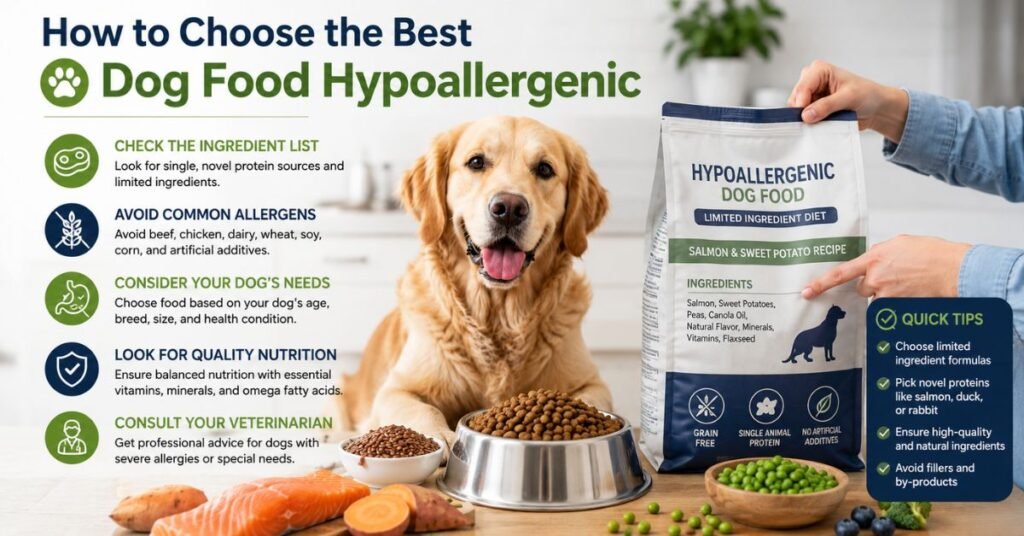
Not all allergy-friendly dog foods are equal. Choosing the right one depends on your dog’s specific needs.
Check the Ingredient List
Look for:
- Single protein sources
- Natural ingredients
- No artificial colors or preservatives
- Limited fillers
Avoid foods with long ingredient lists and unknown additives.
Consider Your Dog’s Age and Breed
There is a difference in nutritional needs between puppies, adults, and senior dogs. Large breeds may also need joint support ingredients.
Talk to Your Veterinarian
If your dog has severe allergies, your veterinarian may recommend prescription hypoallergenic food or allergy testing.
Best Protein Sources for Dogs With Allergies
Some proteins are more allergy-friendly than others.
Salmon
Salmon is rich in omega-3 fatty acids and supports skin health.
Duck
The duck protein has been found to work well for dogs who are sensitive to other proteins.
Venison
Venison is highly digestible and less common in standard dog foods.
Rabbit
Rabbit protein is lean and often used in limited ingredient diets.
Ingredients to Avoid in Sensitive Stomach Dog Food
Some ingredients commonly trigger allergies and digestive issues.
Artificial Additives
Avoid:
- Artificial colors
- Artificial flavors
- Chemical preservatives
Low-Quality Fillers
Cheap fillers like corn syrup and excessive soy can irritate sensitive dogs.
Unknown Meat By-Products
Choose foods with clearly labeled protein sources instead of vague meat by-products.
Transitioning Your Dog to Hypoallergenic Food
The stomach of your dog can be upset by switching foods too quickly.
Recommended Transition Schedule
Days 1–3
- 75% old food
- 25% new food
Days 4–6
- 50% old food
- 50% new food
Morning 7–9
- 25% old food
- 75% new food
Day 10
- 100% new food
A gradual transition helps prevent digestive upset and allows your dog to adjust comfortably.
Homemade vs Commercial Hypoallergenic Dog Food
Some owners prefer homemade diets, while others choose commercial products.
Homemade Diets
Pros
- Full ingredient control
- Fresh ingredients
Cons
- Time-consuming
- Difficult to balance nutrients properly
Commercial Diets
Pros
- Convenient
- Nutritionally balanced
- Vet-tested options available
Cons
- Some premium brands can be expensive
For most owners, high-quality commercial hypoallergenic dog food is the safer and easier option.
Tips for Managing Dog Food Allergies
Allergy management involves more than diet.
Keep a Food Journal
Track:
- Foods eaten
- Symptoms
- Treats
- Changes in behavior
This helps identify triggers more easily.
Avoid Random Treats
Even small treats can trigger allergies. Use hypoallergenic treats whenever possible.
Maintain Regular Vet Visits
Routine checkups help monitor your dog’s skin, digestion, and overall health.
Conclusion
Food allergies can seriously affect your dog’s comfort and health. Fortunately, choosing the right dog food hypoallergenic formula can make a major difference. These specialized diets help reduce itching, improve digestion, and support overall wellness.
When selecting hypoallergenic dog food, focus on high-quality ingredients, limited allergens, and your dog’s specific needs. A gradual transition and regular veterinary care will also help your dog adjust successfully.
With the right diet and proper care, your dog can enjoy a healthier, happier, and more comfortable life.
The best option depends on your dog’s allergies and health needs. Limited ingredient and hydrolyzed protein foods are often recommended for sensitive dogs.
Common signs include itching, ear infections, diarrhea, vomiting, and excessive paw licking. Your veterinarian can help diagnose food allergies.
Not always. Some dogs benefit from grain-free diets, but others do well with grains like rice or oats. The main goal is avoiding the actual allergen.
Yes, many brands offer formulas designed specifically for puppies with food sensitivities.
Most dogs show improvement within 6 to 12 weeks after switching to a proper allergy-friendly diet.

Muhammad Ahad — Passionate writer sharing informative, engaging, and easy-to-read articles across different topics. Focused on delivering valuable content that helps readers learn, explore, and stay inspired every day.
1 thought on “Dog Food Hypoallergenic: Complete Guide for Pet Owners”