

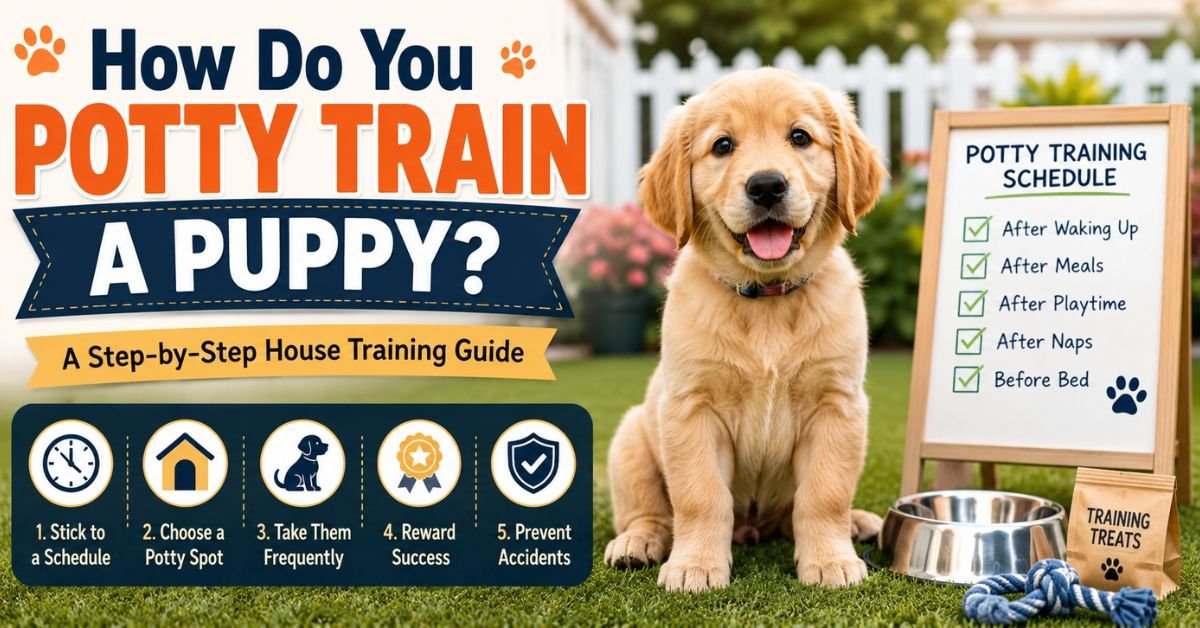
How Do You Potty Train a Puppy Bringing home a puppy is exciting until you discover a puddle on the carpet five minutes after taking them outside.
Many new owners ask, how do you potty train a puppy without constant accidents, frustration, and confusion. The good news is that puppies are capable of learning clean bathroom habits surprisingly quickly when they have a consistent routine, close supervision, and rewards for making the right choice.
Potty training is not about punishment. It is about teaching your puppy where and when to eliminate while helping them develop bladder and bowel control. Most healthy puppies can learn the basics within a few weeks, although complete reliability often takes several months.
Quick Answer Box
To potty train a puppy, establish a consistent schedule, take them outside frequently, use the same potty location, reward successful bathroom trips immediately, supervise closely indoors, and prevent opportunities for accidents. Most puppies improve rapidly when taken outside after waking, eating, drinking, playing, and before bedtime. Consistency is the biggest factor in success.
Why Potty Training Matters
House training is one of the first lessons that shapes your puppy’s daily habits.
A puppy that learns appropriate bathroom behavior develops:
- Better household manners
- Stronger communication with owners
- Improved confidence
- Reduced stress for the family
- Greater freedom around the home
Without proper training, puppies can develop habits that become difficult to break later. Repeated indoor accidents may encourage them to view certain areas of the house as acceptable bathroom locations.
Understanding Your Puppy’s Bladder Control
One reason owners struggle with housebreaking is expecting too much too soon.
Young puppies simply cannot “hold it” like adult dogs.
General Guideline
| Puppy Age | Approximate Holding Time |
| 8–10 weeks | 1 hour |
| 10–12 weeks | 2 hours |
| 3–4 months | 3–4 hours |
| 4–6 months | 4–6 hours |
| 6+ months | Increasingly reliable |
These numbers are estimates. Excitement, drinking water, exercise, and stress can significantly shorten the time a puppy can wait.
How Do You Potty Train a Puppy Successfully?
Step 1: Create a Consistent Schedule
Puppies thrive on routine.
Take your puppy outside:
- Immediately after waking up
- After meals
- After drinking water
- After play sessions
- After naps
- Before bedtime
- Every 1–2 hours for very young puppies
The more opportunities your puppy has to succeed outdoors, the fewer accidents happen indoors.
Step 2: Choose One Potty Area
Always use the same outdoor location.
Dogs rely heavily on scent. Returning to the same spot helps your puppy recognize that this area is intended for bathroom use.
Avoid wandering around the yard during potty breaks. Instead, go directly to the designated location.
Step 3: Use a Verbal Cue
Once your puppy begins eliminating, calmly say a cue such as:
- “Go potty”
- “Do your business”
- “Bathroom”
Over time, the puppy learns to associate the phrase with the action.
This becomes extremely helpful during travel, bad weather, and busy schedules.
Step 4: Reward Immediately
Timing matters.
Reward your puppy within seconds of finishing.
Many owners accidentally wait too long and reward the puppy after returning indoors, which weakens the association.
Effective rewards include:
- Small training treats
- Praise
- Petting
- Playtime
The puppy should think:
“Going outside makes good things happen.”
Step 5: Supervise Indoors
When your puppy is awake, someone should be watching.
Signs a puppy needs to go include:
- Sniffing intensely
- Circling
- Suddenly wandering away
- Squatting
- Whining near doors
- Restlessness
If you see these behaviors, head outside immediately.
The Role of Crate Training
Crate training can dramatically speed up potty training.
Dogs naturally avoid soiling their sleeping area.
A properly sized crate:
- Encourages bladder control
- Prevents unsupervised accidents
- Creates a safe resting space
- Helps establish routine
The crate should be large enough for your puppy to:
- Stand up
- Turn around
- Lie down comfortably
A crate that is too large may allow one end to become a bathroom area.
Remember that crates are management tools, not punishment devices.
Sample Puppy Potty Training Schedule
Morning
- 6:30 AM – Outside immediately
- Breakfast
- Outside again after eating
- Playtime
- Potty break
Midday
- Potty break
- Lunch (if age appropriate)
- Potty break after meal
- Nap
- Potty break after waking
Afternoon
- Outdoor break every 1–2 hours
- Training session
- Potty break afterward
Evening
- Dinner
- Potty break after eating
- Playtime
- Potty break before bed
Night
Very young puppies may require one or two nighttime bathroom trips.
Common Potty Training Mistakes
Inconsistent Schedules
One day following a routine and the next day skipping potty breaks confuses puppies.
Consistency builds habits.
Punishing Accidents
Yelling, rubbing a puppy’s nose in urine, or harsh corrections can create fear.
Many puppies become anxious and may hide when they need to eliminate.
Giving Too Much Freedom
A puppy with unrestricted access to the house is more likely to have accidents.
Freedom should increase gradually as reliability improves.
Missing Warning Signs
Puppies often communicate before eliminating.
Learning these signals prevents many accidents.
Cleaning Incorrectly
Dogs can smell residual odors long after humans think the area is clean.
Use an enzymatic cleaner specifically designed for pet accidents.
What to Do When Accidents Happen
Accidents are normal.
Even well-trained puppies occasionally make mistakes.
If You Catch Your Puppy in the Act
- Interrupt calmly with a clap or verbal cue
- Immediately take them outside
- Reward if they finish outdoors
If You Find an Accident Later
Do not punish.
Your puppy will not connect delayed punishment with the earlier behavior.
Simply clean the area thoroughly and continue training.
Potty Training Apartments and Small Spaces
Apartment living presents unique challenges.
Success often depends on:
- Frequent elevator trips
- Predictable schedules
- Quick access to designated outdoor areas
Some owners temporarily use puppy pads during early training stages.
If using pads, place them in one consistent location and gradually transition outdoor elimination once the puppy is ready.
Nighttime Potty Training
Many owners struggle most during the night.
Helpful strategies include:
- Remove water shortly before bedtime (unless veterinary guidance suggests otherwise)
- Take the puppy outside immediately before sleep
- Use a crate near your bed
- Respond quickly when the puppy wakes and signals
Keep nighttime trips quiet and boring.
Avoid turning potty breaks into play sessions.
Potty Training Different Breeds
Breed can influence training speed.
Some puppies learn rapidly while others require more repetition.
Often Easier to House Train
- Labrador Retriever
- Golden Retriever
- Standard Poodle
May Require Extra Patience
- Dachshund
- Chihuahua
- Yorkshire Terrier
Individual personality matters far more than breed stereotypes.
Practical Potty Training Checklist
Daily Action Plan
- Take puppy outside immediately after waking
- Use the same potty location every time
- Follow a consistent feeding schedule
- Supervise closely when indoors
- Watch for sniffing and circling behaviors
- Reward outdoor elimination immediately
- Use a properly sized crate
- Clean accidents with enzymatic cleaners
- Limit unsupervised freedom
- Track accidents and successes in a notebook
- Stay patient and consistent
When Potty Training Progress Stalls
Sometimes owners feel stuck.
Ask yourself:
- Has the puppy been given too much freedom?
- Are rewards happening immediately?
- Is the schedule consistent?
- Are family members following the same rules?
- Has the puppy been checked for health problems?
Many setbacks occur because one part of the routine becomes inconsistent.
Returning to basics often restores progress quickly.
When to Call a Veterinarian
While accidents are normal during training, certain signs deserve veterinary attention.
Contact a veterinarian if your puppy:
- Suddenly loses previously learned house training habits
- Urinates excessively
- Strains to urinate
- Cries while urinating
- Has blood in urine
- Experiences persistent diarrhea
- Drinks unusually large amounts of water
- Cannot hold urine for age-appropriate periods
According to veterinary guidance, urinary tract infections, digestive disorders, parasites, and congenital conditions can interfere with successful house training.
How Long Does Potty Training Take?
Most puppies begin understanding the process within a few weeks.
Typical timeline:
- First 2 weeks: Frequent supervision and many reminders
- Weeks 3–6: Fewer accidents
- Months 2–4: Improved reliability
- 6 months and beyond: Most healthy dogs become dependable
Some puppies learn faster while others need additional time.
Success is usually measured by gradual improvement rather than perfection.
Final Thoughts
If you’re wondering how do you potty train a puppy, the answer is consistency, supervision, patience, and positive reinforcement. Puppies do not understand household rules automatically. Every successful trip outside teaches them what you expect.
Celebrate small wins, maintain a predictable schedule, and remember that accidents are part of the learning process. Most puppies become reliable housemates when owners stay patient and provide clear guidance day after day.
The fastest approach combines frequent outdoor trips, close supervision, immediate rewards, and a consistent schedule. Preventing accidents is just as important as rewarding success. Every accident that occurs indoors can slow learning.
Most young puppies need bathroom opportunities every one to two hours while awake. Additional trips should happen after meals, naps, drinking water, and play sessions.
Puppy pads can help in apartments or situations where outdoor access is limited. However, many trainers prefer teaching outdoor elimination from the start because it reduces confusion later.
Some puppies become distracted outdoors and forget to eliminate. Spend a little more time in the designated potty area and reward immediately when they finish outside.
Not always, but it often makes house training easier. Crates help prevent unsupervised accidents and encourage natural bladder control when used properly.

Muhammad Ahad — Passionate writer sharing informative, engaging, and easy-to-read articles across different topics. Focused on delivering valuable content that helps readers learn, explore, and stay inspired every day.