

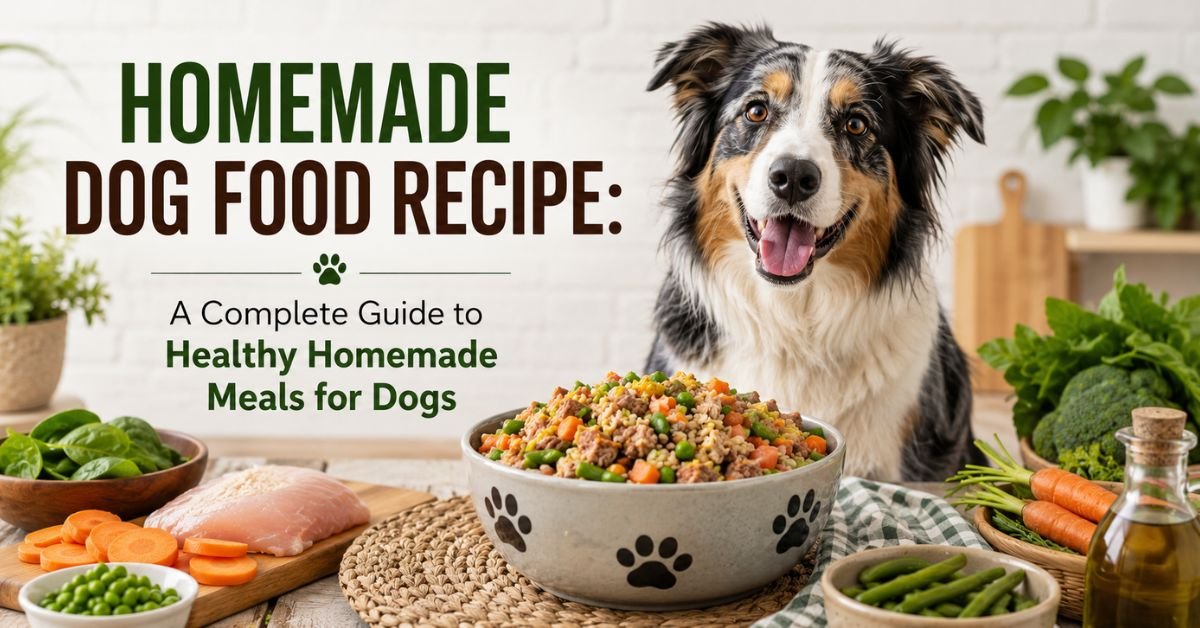
Many dog owners eventually wonder whether they can prepare meals at home instead of relying entirely on commercial kibble Homemade Dog Food Recipe. The appeal is understandable. You know exactly what goes into the bowl, you can avoid certain ingredients, and many dogs seem excited about fresh food.
A homemade dog food recipe can be a healthy option when prepared correctly. The challenge is that dogs need more than just meat and vegetables. They require specific nutrients in the right proportions to support muscle health, bone strength, organ function, skin condition, and overall wellbeing.
This guide explains how to create safer homemade meals, avoid common nutritional mistakes, and determine when veterinary guidance is necessary.
Quick Answer Box
A homemade dog food recipe should include a quality protein source, dog-safe vegetables, healthy carbohydrates, and appropriate vitamin and mineral supplementation. While fresh ingredients can provide excellent nutrition, meals must remain balanced to avoid deficiencies. Many veterinarians recommend consulting a veterinary nutritionist before feeding homemade diets long term, especially for puppies, seniors, or dogs with medical conditions.
Why Dog Owners Choose Homemade Dog Food
The growing interest in homemade meals is driven by several practical reasons.
Ingredient Control
Some owners prefer knowing every ingredient their dog consumes. This can be especially important for dogs with suspected food sensitivities.
Freshness
Freshly prepared meals often contain recognizable ingredients such as chicken, turkey, carrots, green beans, and rice.
Picky Eaters
Many dogs find fresh food more appealing than dry kibble. Owners often report improved enthusiasm at mealtime.
Special Dietary Needs
Dogs with allergies, digestive sensitivities, or certain health conditions may benefit from carefully customized diets under veterinary supervision.
Stronger Owner-Dog Connection
Preparing meals can make owners feel more involved in their dog’s daily care. However, emotional satisfaction should never replace proper nutritional planning.
The Biggest Risk of Homemade Diets
The most common mistake is assuming that a meal that looks healthy is nutritionally complete.
Dogs require precise amounts of:
- Protein
- Fat
- Calcium
- Phosphorus
- Zinc
- Copper
- Iron
- Vitamin D
- Vitamin E
- Essential fatty acids
A bowl containing only chicken, rice, and vegetables may appear nutritious but can become deficient if fed regularly without proper balancing.
According to veterinary nutrition guidance, nutritional deficiencies often develop gradually and may not become obvious until months or years later.
What Makes a Balanced Homemade Dog Food Recipe?
A balanced canine meal generally contains four major components.
1. High-Quality Protein
Protein supports:
- Muscle maintenance
- Immune function
- Skin health
- Tissue repair
Good options include:
- Chicken
- Turkey
- Lean beef
- Fish
- Eggs
Protein typically forms the foundation of homemade dog food.
2. Healthy Carbohydrates
Carbohydrates provide energy and fiber.
Popular choices include:
- Brown rice
- Oatmeal
- Sweet potatoes
- Quinoa
- Pumpkin
3. Dog-Safe Vegetables
Vegetables contribute vitamins, minerals, and antioxidants.
Examples include:
- Carrots
- Green beans
- Peas
- Spinach
- Broccoli
Cook vegetables thoroughly to improve digestibility.
4. Healthy Fats
Healthy fats support:
- Brain function
- Skin condition
- Coat quality
- Cellular health
Good sources include:
- Fish oil
- Salmon
- Flaxseed oil
- Sardines
Homemade Dog Food Ingredients: Safe vs Avoid
| Safe Ingredients | Use With Caution | Never Feed |
| Chicken | Peanut butter (xylitol-free only) | Chocolate |
| Turkey | Cheese | Grapes |
| Lean beef | Eggs in moderation | Raisins |
| Brown rice | Liver occasionally | Onions |
| Sweet potatoes | High-fat meats | Garlic |
| Green beans | Large amounts of spinach | Macadamia nuts |
| Pumpkin | Dairy products | Xylitol sweetener |
| Carrots | Certain seasonings | Alcohol |
Always double-check ingredient safety before adding new foods to your dog’s meals.
Easy Homemade Dog Food Recipe
This simple recipe works well for many healthy adult dogs.
Ingredients
- 2 pounds lean ground turkey
- 1 cup brown rice
- 1 cup chopped carrots
- 1 cup green beans
- 1 tablespoon fish oil
- 4 cups water
Directions
- Cook turkey thoroughly.
- Add rice and water.
- Simmer until rice softens.
- Add vegetables.
- Continue cooking until vegetables become tender.
- Allow food to cool completely.
- Add fish oil before serving.
Storage
- Refrigerate for up to 3 days.
- Freeze portions for future meals.
Remember that this recipe may not provide complete nutrition for long-term exclusive feeding without supplementation.
Benefits of Homemade Dog Food
Improved Ingredient Transparency
You know exactly what enters your dog’s bowl.
Potentially Better Digestibility
Some dogs digest fresh ingredients more easily than heavily processed foods.
Better Appetite
Freshly cooked meals often appeal to selective eaters.
Customization
Recipes can be adjusted based on veterinary recommendations for specific dietary needs.
Reduced Exposure to Certain Fillers
Owners can avoid ingredients they prefer not to include.
Common Homemade Dog Food Mistakes
Feeding Only Meat
Dogs require more than protein.
Exclusive meat diets often lead to calcium deficiencies and nutritional imbalances.
Ignoring Calcium
One of the most common homemade feeding errors involves insufficient calcium intake.
Using Unsafe Ingredients
Onions, garlic, grapes, raisins, and xylitol-containing products can be dangerous.
Guessing Portion Sizes
Overfeeding contributes to obesity, while underfeeding can lead to nutrient deficiencies.
Copying Random Internet Recipes
Not every online recipe is nutritionally balanced.
Veterinary review is often necessary before long-term use.
Homemade Dog Food for Different Life Stages
Puppies
Puppies have strict nutritional requirements.
Improper homemade diets may affect:
- Bone growth
- Brain development
- Immune function
Veterinary guidance is strongly recommended.
Adult Dogs
Healthy adults often adapt best to properly formulated homemade diets.
Senior Dogs
Older dogs may require:
- Adjusted calories
- Higher-quality protein
- Joint-support nutrients
- Easier digestion
Pregnant or Nursing Dogs
These dogs have significantly increased nutritional demands.
Home-prepared diets should only be fed with veterinary supervision.
How Much Homemade Food Should You Feed?
The correct amount depends on:
- Age
- Weight
- Activity level
- Metabolism
- Health status
As a general starting point, many healthy adult dogs consume approximately 2% to 3% of their body weight in food daily.
For example:
| Dog Weight | Approximate Daily Food |
| 10 lbs | 0.2–0.3 lbs |
| 25 lbs | 0.5–0.75 lbs |
| 50 lbs | 1–1.5 lbs |
| 75 lbs | 1.5–2.25 lbs |
These are estimates only. Individual needs vary significantly.
Practical Checklist for Feeding Homemade Dog Food
Before Starting
Discuss diet plans with your veterinarian
Determine your dog’s calorie requirements
Review all ingredients for safety
Choose high-quality protein sources
Include dog-safe vegetables
Add appropriate carbohydrate sources
Consider necessary supplements
During Preparation
Cook meats thoroughly
Avoid excess salt and seasonings
Use proper food hygiene
Store leftovers safely
Label frozen meal portions
Long-Term Monitoring
Monitor body weight monthly
Watch stool quality
Check skin and coat condition
Evaluate energy levels
Schedule regular veterinary checkups
Adjust portions when necessary
Signs Your Homemade Diet May Need Adjustment
Pay attention to changes such as:
Digestive Issues
- Chronic diarrhea
- Constipation
- Excessive gas
- Vomiting
Coat Problems
- Dry skin
- Excessive shedding
- Dull coat
Weight Changes
- Unexpected weight gain
- Unexplained weight loss
Low Energy
Persistent lethargy may signal nutritional imbalances.
Muscle Loss
Insufficient protein or calorie intake can contribute to muscle wasting.
Any persistent symptoms should be evaluated by a veterinarian.
When to Call a Veterinarian
Seek veterinary advice if your dog experiences:
- Repeated vomiting
- Persistent diarrhea lasting more than 24–48 hours
- Rapid weight loss
- Refusal to eat
- Severe itching
- Hair loss
- Weakness
- Difficulty walking
- Seizures
- Suspected nutrient deficiencies
Veterinary consultation is particularly important before starting homemade diets for:
- Puppies
- Senior dogs
- Pregnant dogs
- Nursing dogs
- Dogs with chronic illnesses
- Dogs taking medication
Can Homemade Dog Food Replace Commercial Food Completely?
It can, but only if properly balanced.
Commercial foods meeting recognized nutritional standards are formulated to provide complete nutrition.
Homemade diets require careful planning to achieve similar nutritional adequacy.
Many veterinarians recommend working with a board-certified veterinary nutritionist when replacing commercial food entirely.
Some owners choose a mixed approach, combining high-quality commercial food with occasional homemade meals.
Final Thoughts
A well-planned homemade dog food recipe can provide fresh, appealing meals while allowing greater control over ingredients. The key is remembering that dogs require complete nutrition, not simply fresh ingredients.
Many owners focus on protein and vegetables while overlooking essential minerals, vitamins, and fatty acids. Taking the time to build balanced meals helps support long-term health and prevents nutritional deficiencies.
If you plan to feed homemade food regularly, veterinary guidance remains one of the smartest investments you can make for your dog’s wellbeing.
The healthiest recipe includes balanced amounts of protein, carbohydrates, vegetables, healthy fats, vitamins, and minerals. No single recipe works for every dog because nutritional needs vary based on age, size, activity level, and health status.
Yes, dogs can eat homemade food daily if the diet is nutritionally complete and balanced. Long-term feeding of incomplete recipes may lead to deficiencies over time.
Chicken and rice can help during short-term digestive upset, but they do not provide complete nutrition for long-term feeding. Additional nutrients and ingredients are necessary.
Many do. Calcium, vitamins, minerals, and essential fatty acids are frequently lacking in homemade diets unless carefully formulated. A veterinarian can recommend appropriate supplements.
Most cooked homemade dog food remains fresh for approximately 3 to 4 days when stored properly in airtight containers. Frozen portions can often last several months.

Muhammad Ahad — Passionate writer sharing informative, engaging, and easy-to-read articles across different topics. Focused on delivering valuable content that helps readers learn, explore, and stay inspired every day.