

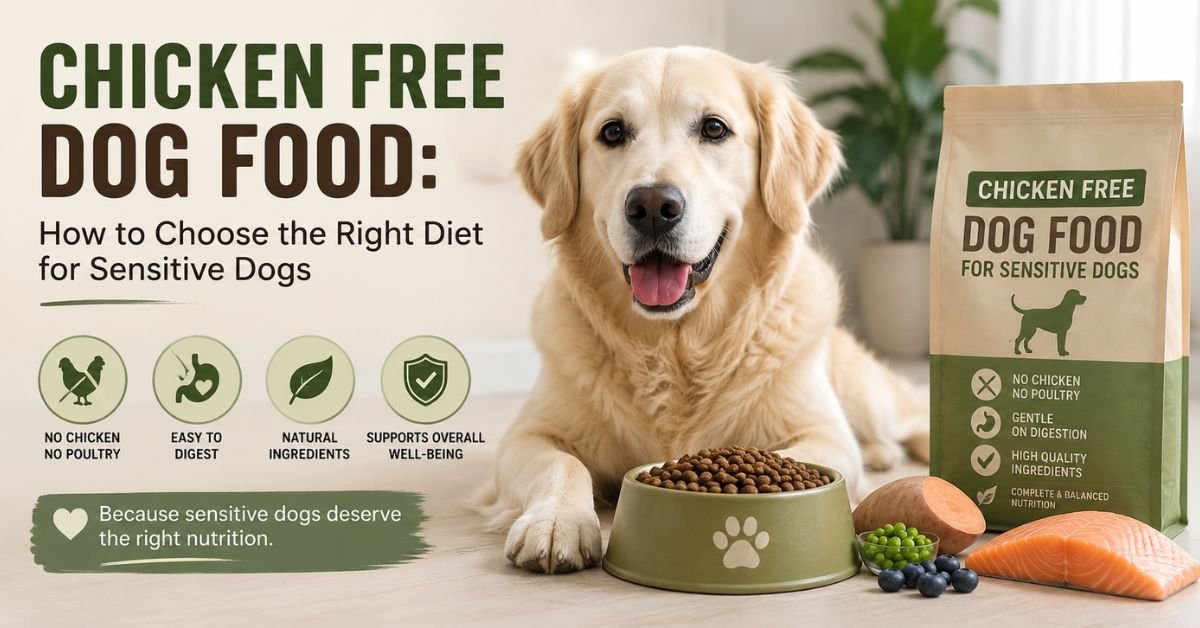
Many dog owners are surprised to learn that chicken is one of the most common proteins found in commercial dog food. While chicken is nutritious for many dogs, it doesn’t work well for every pet. Some dogs develop food sensitivities, digestive upset, or skin issues that improve when switched to chicken free dog food.
Understanding when a chicken-free diet makes sense can help you make smarter feeding decisions and avoid unnecessary ingredient changes.
Quick Answer
Chicken free dog food is designed for dogs that cannot tolerate chicken or chicken-based ingredients. These diets often use alternative proteins such as salmon, lamb, duck, turkey, venison, or fish. If your dog experiences itching, ear infections, digestive upset, or suspected food sensitivities, veterinarians may recommend trying a chicken-free diet as part of a structured feeding plan.
Why Some Dogs Need Chicken Free Dog Food
Chicken itself is not harmful. In fact, it is a high-quality protein source used in thousands of dog foods.
The challenge is that repeated exposure to the same protein over time can contribute to food sensitivities in some dogs. While true food allergies are relatively uncommon, they do occur.
Common signs that may suggest a food-related problem include:
- Persistent itching
- Frequent ear infections
- Paw licking
- Digestive upset
- Gas
- Loose stools
- Chronic skin irritation
Many dog owners report noticeable improvement after removing chicken from their dog’s diet, especially when alternative proteins are introduced.
Benefits of Chicken Free Dog Food
Supports Dogs with Food Sensitivities
Removing a problematic ingredient may reduce itching, scratching, and skin inflammation.
Provides Protein Variety
Alternative proteins offer nutritional diversity and may reduce the risk of overexposure to a single protein source.
May Improve Digestive Health
Dogs sensitive to chicken sometimes experience firmer stools and less digestive discomfort after switching foods.
Useful During Elimination Diets
Veterinarians often recommend limited-ingredient, chicken-free diets when investigating food-related health concerns.
Common Chicken-Free Protein Sources
| Protein Source | Benefits | Best For |
| Salmon | Rich in omega-3 fatty acids | Skin and coat support |
| Lamb | Highly digestible | Sensitive stomachs |
| Duck | Novel protein option | Suspected allergies |
| Venison | Less commonly fed | Elimination diets |
| Whitefish | Lean and nutrient-rich | Digestive sensitivities |
| Turkey | Alternative poultry option | Dogs avoiding chicken |
How to Read Dog Food Labels
One common mistake is assuming a food is chicken-free simply because the front label highlights another protein.
Always check the ingredient list for:
- Chicken meal
- Chicken fat
- Chicken by-products
- Chicken broth
- Natural chicken flavor
Some dogs tolerate chicken fat because it contains minimal protein, while others require complete avoidance. Veterinary guidance can help determine the right approach.
Choosing the Best Chicken Free Dog Food
When evaluating products, focus on quality rather than marketing claims.
Look for:
- Named protein sources
- Complete and balanced nutrition
- AAFCO nutritional adequacy statement
- Appropriate life-stage formulation
- Transparent ingredient lists
Avoid selecting food solely because it is grain-free or labeled “natural.”
Practical Checklist for Switching to Chicken Free Dog Food
Review your dog’s current ingredient list
Record symptoms such as itching or digestive issues
Choose a food with a single primary protein source
Transition gradually over 7–10 days
Monitor stool quality
rack skin and coat improvements
Limit treats containing chicken
Discuss persistent symptoms with your veterinarian
Reassess progress after 6–8 weeks
[wp_ulike]
Potential Risks and Mistakes
Switching Foods Too Quickly
Sudden diet changes can cause digestive upset even when the new food is high quality.
Assuming Every Itch Is a Food Allergy
Environmental allergies are actually more common than food allergies.
Ignoring Hidden Chicken Ingredients
Treats, supplements, and flavored medications may contain chicken proteins.
Chasing Trends
A chicken-free diet is not automatically healthier. It should be chosen based on your dog’s individual needs.
When to Call a Veterinarian
Seek veterinary advice if your dog experiences:
- Severe itching
- Chronic ear infections
- Persistent vomiting
- Ongoing diarrhea
- Significant weight loss
- Blood in stool
- Skin infections
- Lack of improvement after a dietary trial
Veterinarians may recommend diagnostic testing or a supervised elimination diet to identify the underlying cause.
Final Thoughts
Chicken free dog food can be a valuable option for dogs dealing with food sensitivities, chronic itching, or digestive discomfort. The goal is not simply to avoid chicken but to identify a diet that supports your dog’s long-term health. Careful ingredient review, gradual transitions, and veterinary guidance can help ensure the switch is both safe and effective.
No. Many dogs thrive on chicken-based diets. Chicken-free food is most useful when there is evidence that chicken contributes to health issues.
[wp_ulike]
No. Many dogs thrive on chicken-based diets. Chicken-free food is most useful when there is evidence that chicken contributes to health issues.
[wp_ulike]
Many dogs show improvement within 4 to 8 weeks. Some cases require a longer elimination period under veterinary supervision.
[wp_ulike]
Salmon, lamb, duck, venison, and whitefish are popular alternatives. The best choice depends on your dog’s individual health needs.
[wp_ulike]
Yes, provided the food is formulated for growth and meets complete nutritional requirements for puppies.
[wp_ulike]

Muhammad Ahad — Passionate writer sharing informative, engaging, and easy-to-read articles across different topics. Focused on delivering valuable content that helps readers learn, explore, and stay inspired every day.