
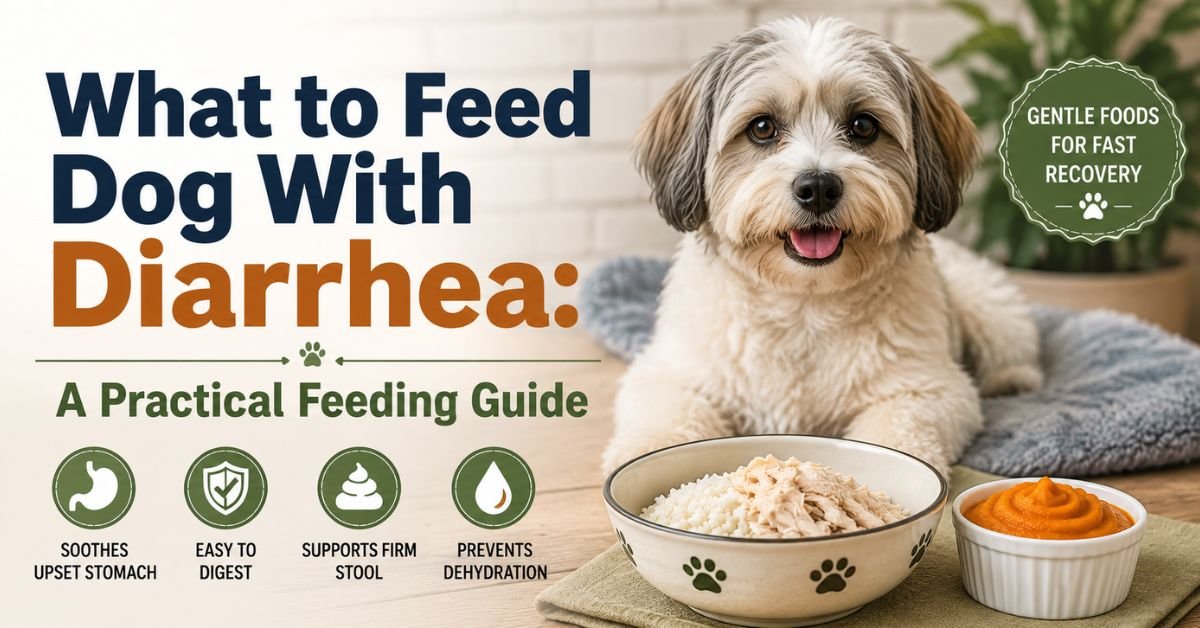
Watching your dog struggle with diarrhea can be stressful. One moment they’re running around normally, and the next they’re asking to go outside every hour. While occasional digestive upset is fairly common in dogs, knowing what to what to feed dog with diarrhea can make a significant difference in recovery and comfort.
Food plays a major role in helping the digestive tract settle down. The right meals can reduce irritation, support hydration, and help stools return to normal. The wrong foods can prolong symptoms or even make the situation worse.
This guide explains which foods veterinarians often recommend, what should be avoided, and when diarrhea may signal a more serious problem.
Quick Answer Box
If your dog has mild diarrhea but is otherwise acting normal, veterinarians often recommend a bland diet consisting of boiled skinless chicken and plain white rice, fed in small portions throughout the day. Plain canned pumpkin and veterinarian-approved probiotics may also help. Always provide fresh water, monitor hydration, and contact a veterinarian if symptoms worsen, last more than 24–48 hours, or are accompanied by vomiting, lethargy, or blood in the stool.
Why Dogs Get Diarrhea
Diarrhea is not a disease itself. It’s a symptom that can result from many different causes.
Common reasons include:
- Eating table scraps
- Sudden diet changes
- Food intolerance
- Stress or anxiety
- Intestinal parasites
- Bacterial infections
- Viral infections
- Toxic substances
- Certain medications
- Chronic digestive disorders
Many dog owners notice diarrhea after a family gathering, holiday meal, or accidental garbage raid. A dog’s digestive system can be surprisingly sensitive, especially when introduced to rich or fatty foods.
Understanding the cause helps determine whether simple dietary management is enough or whether veterinary treatment is needed.
The Main Goal When Feeding a Dog With Diarrhea
When diarrhea occurs, the digestive tract becomes irritated.
The feeding strategy should focus on:
- Resting the digestive system
- Preventing dehydration
- Replacing lost nutrients
- Supporting healthy gut bacteria
- Encouraging normal stool formation
This is why bland, easily digestible foods are typically recommended during recovery.
Best Foods to Feed a Dog With Diarrhea
Boiled Chicken and White Rice
This is often considered the classic bland diet.
Why it works:
- Easy to digest
- Low in fat
- Gentle on the stomach
- Provides protein and energy
Preparation tips:
- Use skinless chicken breast
- Boil without seasoning
- Use plain white rice
- Avoid butter, oils, garlic, onions, or spices
A common starting ratio is approximately:
- 2 parts rice
- 1 part chicken
Feed small portions several times daily instead of one large meal.
Plain Canned Pumpkin
Plain pumpkin puree contains soluble fiber that can help regulate stool consistency.
Benefits include:
- Supports digestive balance
- Adds moisture
- Provides beneficial nutrients
- Intestinal water may be absorbed by this product
Important:
Use only plain pumpkin puree.
Avoid pumpkin pie filling because it contains added sugar and spices that may upset your dog’s stomach.
Boiled Turkey
If chicken isn’t tolerated, boiled turkey can be another option.
Choose:
- Lean turkey meat
- No skin
- No seasoning
Turkey provides digestible protein while remaining relatively gentle on the digestive tract.
Plain Scrambled Eggs
Eggs are highly digestible and contain quality protein.
Serve:
- Plain
- Cooked thoroughly
- No butter
- No milk
- No seasoning
Small portions can work well during recovery.
Prescription Gastrointestinal Diets
Veterinarians sometimes recommend specially formulated gastrointestinal diets.
These diets are designed to:
- Improve digestibility
- Support intestinal healing
- Reduce digestive stress
They may be particularly useful for dogs experiencing recurring diarrhea or chronic digestive issues.
Comparison Table: Common Foods for Dogs With Diarrhea
| Food | Digestibility | Benefits | Best Use |
| Boiled Chicken & Rice | Excellent | Gentle and soothing | Mild diarrhea |
| Plain Pumpkin | Good | Adds fiber and supports stool formation | Loose stools |
| Boiled Turkey | Excellent | Lean protein source | Chicken alternative |
| Plain Eggs | Good | Easily digested protein | Recovery phase |
| Prescription GI Diet | Excellent | Formulated for digestive support | Chronic or severe cases |
| Fatty Human Foods | Poor | Can worsen symptoms | Avoid |
| Dairy Products | Poor | May trigger digestive upset | Avoid |
Diarrhea-friendly foods for dogs
Many owners accidentally prolong digestive problems by offering foods that seem harmless.
Avoid:
Fatty Foods
Examples include:
- Bacon
- Sausage
- Fried foods
- Fat trimmings
These foods can trigger additional digestive inflammation.
Dairy Products
Many dogs struggle to digest lactose.
Avoid:
- Milk
- Ice cream
- Cheese in large amounts
Spicy Foods
Seasonings can irritate the digestive tract.
Never feed:
- Hot sauces
- Chili products
- Highly seasoned leftovers
Rich Table Scraps
Even small amounts can worsen symptoms.
Examples:
- Pizza
- Gravy
- Fast food
- Holiday leftovers
Toxic Foods
Never offer:
- Onions
- Garlic
- Grapes
- Raisins
- Chocolate
- Xylitol-containing products
These foods can be dangerous regardless of diarrhea.
Should You Fast a Dog With Diarrhea?
This question often causes confusion.
In the past, fasting for 12–24 hours was commonly recommended for healthy adult dogs. However, veterinary recommendations have evolved.
Many veterinarians now prefer introducing small amounts of easily digestible food sooner rather than prolonged fasting, especially when the dog remains interested in eating.
Puppies, senior dogs, and dogs with medical conditions should generally not undergo fasting without veterinary guidance because they can become weak or dehydrated more quickly.
How Much Should You Feed?
Portion size matters.
Large meals may overwhelm an irritated digestive system.
A typical approach is:
- Feed 4–6 small meals daily
- Use smaller portions than normal
- Gradually increase food amounts as stools improve
Once bowel movements return to normal for several days, slowly transition back to the regular diet what to feed dog with diarrhea .
A sudden return to normal food can trigger another episode of diarrhea.
How to Transition Back to Regular Dog Food
Recovery doesn’t end when stools look normal.
Many dogs relapse because owners switch foods too quickly.
A gradual transition often works best:
Day 1
75% bland diet + 25% regular food
Day 2
50% bland diet + 50% regular food
Day 3
25% bland diet + 75% regular food
Day 4
100% regular food
If diarrhea returns, contact your veterinarian.
The Importance of Hydration
One of the biggest concerns with diarrhea is dehydration.
Repeated bowel movements result in the loss of fluids and electrolytes by dogs.
Watch for:
- Dry gums
- Sunken eyes
- Excessive panting
- Weakness
- Loss of appetite
- Reduced skin elasticity
Fresh water should always be available.
Some dogs benefit from veterinarian-approved electrolyte support products, but human sports drinks are generally not recommended unless specifically advised by a veterinarian.
Can Probiotics Help?
According to veterinary guidance, probiotics may support digestive recovery by helping restore beneficial gut bacteria.
Potential benefits include:
- Improved stool quality
- Better digestive balance
- Faster recovery in some cases
Not all probiotics are created equally.
Choose products specifically formulated for dogs and consult your veterinarian if your dog experiences frequent digestive issues.
What to feed dog with diarrhea Common Mistakes Dog Owners Make
Switching Foods Repeatedly
Owners sometimes try multiple foods in a single day.
This can make digestive upset worse and make it harder to identify what’s helping.
Offering Human Remedies
Many over-the-counter medications safe for humans can be dangerous for dogs.
Never administer medications without veterinary approval.
Ignoring Hydration
A dog can become dehydrated surprisingly quickly during severe diarrhea.
Assuming Every Case Is Minor
Some episodes are harmless, but others indicate serious illness.
Persistent diarrhea should never be ignored.
Feeding Large Meals
Even healthy foods can overwhelm an irritated digestive tract when portions are too large.
Practical Checklist: What to Do When Your Dog Has Diarrhea
Step 1
Assess your dog’s overall behavior.
Step 2
Check for vomiting, lethargy, or blood in the stool.
Step 3
Provide unlimited access to fresh water.
Step 4
Begin feeding a bland diet if your dog remains alert and interested in food.
Step 5
Offer small meals every few hours.
Step 6
Monitor stool consistency.
Step 7
Watch closely for signs of dehydration.
Step 8
Avoid table scraps and fatty foods.
Step 9
Gradually reintroduce normal food once stools improve.
Step 10
Contact a veterinarian if symptoms persist or worsen.
[wp_ulike]
When to Call a Veterinarian
Some situations require prompt medical attention.
Seek veterinary care if your dog has:
- Blood in the stool
- Black, tar-like stool
- Repeated vomiting
- Severe lethargy
- Refusal to eat
- Signs of dehydration
- Abdominal pain
- Fever
- Known toxin exposure
- Diarrhea lasting longer than 24–48 hours
Puppies deserve special attention.
Because of their small size, dehydration can become dangerous much faster than in adult dogs.
Senior dogs and dogs with underlying medical conditions should also be evaluated sooner rather than later.
Special Considerations for Puppies
Puppies with diarrhea should never be treated casually.
Common causes include:
- Parasites
- Dietary changes
- Viral infections
- Stress
Puppies have smaller fluid reserves and can deteriorate quickly.
While bland foods may sometimes be appropriate under veterinary guidance, persistent diarrhea in a puppy warrants prompt professional evaluation.
What if My Dog Has Diarrhea and Vomiting?
When diarrhea occurs alongside vomiting, the situation becomes more concerning.
The combination increases the risk of:
- Dehydration
- Electrolyte imbalance
- Nutritional deficiencies
Potential causes range from simple dietary indiscretion to serious illnesses requiring medical intervention.
Veterinary assessment is strongly recommended if both symptoms occur together, especially if they continue beyond several hours.
Chronic Diarrhea vs. Occasional Diarrhea
A single episode may result from something simple like dietary indiscretion.
Chronic diarrhea is different.
Potential causes include:
- Food allergies
- Inflammatory bowel disease
- Chronic infections
- Pancreatic disorders
- Metabolic diseases
Repeated digestive problems deserve veterinary investigation rather than repeated home treatment.
Final Thoughts
Knowing what to what to feed dog with diarrhea can help support recovery while reducing stress for both you and your pet. Simple, easily digestible foods such as boiled chicken, white rice, plain pumpkin, and veterinarian-approved gastrointestinal diets are often the safest choices during mild digestive upset.
Key Takeaways
Pay close attention to hydration, monitor symptoms carefully, and avoid the temptation to offer rich comfort foods. Most mild cases improve with supportive care, but persistent diarrhea, blood in the stool, vomiting, or signs of dehydration deserve prompt veterinary attention.
A thoughtful feeding approach, combined with close observation, often gives your dog’s digestive system the best opportunity to recover comfortably.
Rice alone may provide energy, but it does not supply enough protein for proper recovery. Most veterinarians recommend combining rice with a lean protein source such as boiled chicken or turkey for a more balanced temporary diet.
[wp_ulike]
Many dogs improve within a few days. A bland diet is usually used temporarily until stools normalize. Long-term feeding of chicken and rice alone is not nutritionally complete and should not replace a balanced diet permanently.
[wp_ulike]
Plain pumpkin puree can help some dogs because it contains soluble fiber that may improve stool consistency. Results vary between dogs, and pumpkin should be used as part of an overall recovery plan rather than a cure-all.
[wp_ulike]
Not necessarily. Current veterinary recommendations often favor small amounts of easily digestible food rather than extended fasting, especially if the dog remains alert and willing to eat. Individual circumstances vary, so consult your veterinarian when uncertain.
[wp_ulike]
Fatty foods, rich table scraps, dairy products, spicy foods, and sudden diet changes commonly worsen diarrhea. Keeping meals simple and bland generally supports recovery more effectively.
[wp_ulike]

Muhammad Ahad — Passionate writer sharing informative, engaging, and easy-to-read articles across different topics. Focused on delivering valuable content that helps readers learn, explore, and stay inspired every day.