
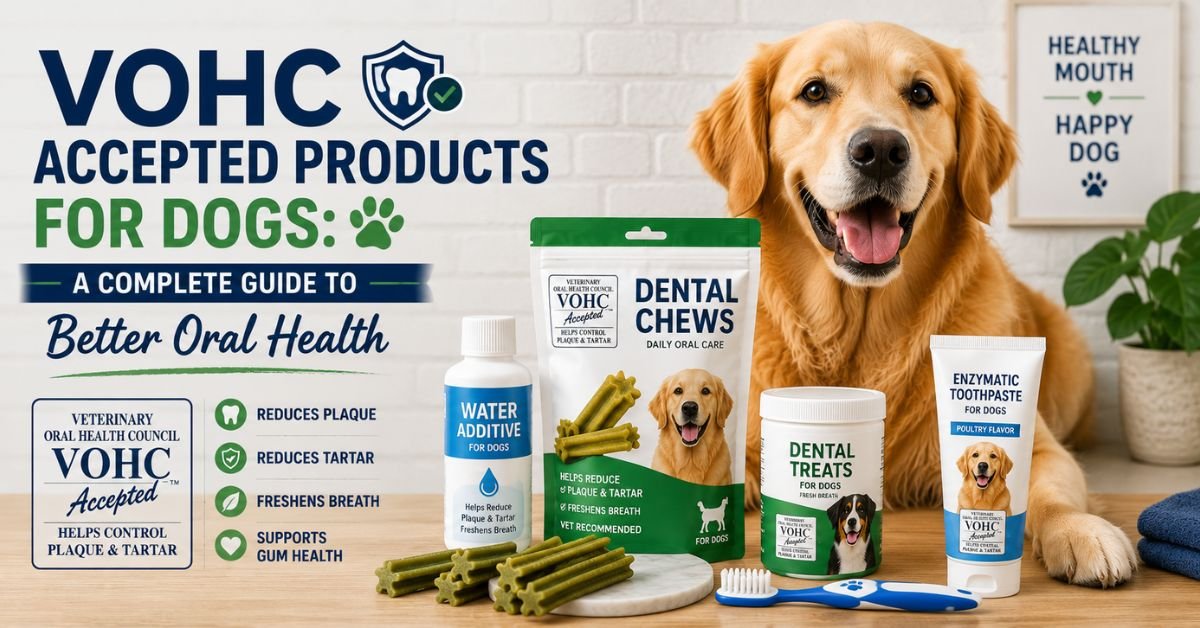
VOHC Accepted Products Dogs often suffer from dental disease. Many owners are surprised to learn that signs of oral disease often begin long before obvious symptoms appear. By age three, a large percentage of dogs already show some level of periodontal disease according to veterinary dental organizations.
This is where VOHC Accepted Products become valuable. These products have undergone independent review to demonstrate their ability to reduce plaque, tartar, or both. While they are not a replacement for veterinary dental care, they can become an important part of a dog’s oral hygiene routine.
Quick Answer Box
VOHC Accepted Products are dog dental care products that have earned acceptance from the Veterinary Oral Health Council after meeting specific standards for reducing plaque and/or tartar. These products include dental chews, treats, diets, water additives, and oral hygiene solutions. When used correctly alongside regular tooth brushing and veterinary care, they can help lower the risk of dental disease and improve long-term oral health.
What Does VOHC Mean?
The Veterinary Oral Health Council (VOHC) is an independent organization that evaluates dental products for pets.
Manufacturers submit scientific data showing that their products reduce plaque or tartar accumulation. The evidence is reviewed according to established protocols. Products that meet the required standards may earn the VOHC Seal of Acceptance.
A VOHC acceptance does not mean a product is perfect or superior in every way. It simply means the product demonstrated measurable effectiveness in controlled studies.
Many veterinarians view the VOHC seal as a helpful indicator when recommending oral care products.
Why Dog Dental Health Matters
Dog owners often focus on nutrition, exercise, and vaccinations while overlooking oral health. Unfortunately, dental disease can affect far more than a dog’s mouth.
When plaque accumulates on teeth, bacteria begin forming colonies along the gumline. Tartar forms if plaque is not removed. This process can lead to:
- Inflamed gums
- Bad breath
- Pain while eating
- Loose teeth
- Tooth loss
- Oral infections
- Advanced periodontal disease
In severe cases, chronic oral infections may contribute to broader health concerns affecting organs such as the heart, liver, and kidneys.
Many dogs continue eating despite significant dental pain, making dental disease easy to miss.
How VOHC Accepted Products Help
Most accepted products target one or both of the following:
Plaque Reduction
Plaque is a soft bacterial film that forms on teeth daily. Products designed for plaque control help reduce bacterial buildup before it hardens.
Tartar Reduction
Tartar develops when plaque mineralizes. Once tartar forms, professional cleaning is usually required for complete removal.
VOHC accepted products may work through:
- Mechanical chewing action
- Abrasive textures
- Special ingredients
- Oral rinsing effects
- Enzymatic action
- Controlled dental diets
Each product category uses a different approach.
Types of VOHC Accepted Products
The market includes several categories of accepted products.
| Product Type | Primary Benefit | Best For | Limitations |
| Dental Chews | Plaque and tartar reduction | Dogs that enjoy chewing | Not suitable for every dog |
| Dental Treats | Easy daily use | Busy households | May add calories |
| Dental Diets | Continuous oral support | Dogs needing long-term management | More expensive than regular food |
| Water Additives | Convenient supplementation | Dogs resistant to brushing | Less effective than brushing |
| Oral Gels | Targeted plaque control | Dogs tolerating handling | Requires owner consistency |
| Toothbrush & Toothpaste Systems | Most effective home care | Dedicated owners | Requires training and patience |
Common Categories of VOHC Accepted Products
Dental Chews
Dental chews are among the most popular options.
Their textured surfaces create friction against tooth surfaces during chewing. Some formulations also contain ingredients designed to help slow tartar formation.
Benefits include:
- Easy daily use
- High owner compliance
- Enjoyable for many dogs
- Added enrichment
Owners should always supervise chewing sessions and choose products appropriate for their dog’s size and chewing style.
Dental Treats
Dental treats function similarly to chews but are often smaller and easier to administer.
These can be useful for:
- Small breeds
- Senior dogs
- Multi-dog households
- Reward-based routines
Portion control remains important because extra calories can contribute to weight gain.
Dental Diets
Certain therapeutic diets are specifically engineered to support oral health.
These foods often feature:
- Larger kibble size
- Special fiber matrix structures
- Increased contact with tooth surfaces
Some dogs benefit greatly from dental diets, particularly when tooth brushing is difficult.
Water Additives
Water additives are mixed into a dog’s drinking water.
Potential advantages include:
- Minimal effort
- Daily exposure
- Easy integration into routines
Their effectiveness varies, but many owners appreciate the convenience.
Tooth Brushing Systems
Most veterinary dental professionals still consider brushing the gold standard for home dental care.
A quality toothbrush and dog-safe toothpaste can physically remove plaque before it becomes tartar.
Even a few brushing sessions per week may provide significant benefits.
What the VOHC Seal Does and Does Not Mean
Many owners misunderstand the purpose of the VOHC seal.
What It Means
The product:
- Was evaluated using established protocols
- Demonstrated effectiveness
- Reduced plaque and/or tartar according to standards
- Submitted supporting research
What It Does Not Mean
The seal does not guarantee:
- Complete prevention of dental disease
- Better ingredients than competitors
- Superior nutrition
- Elimination of veterinary dental cleanings
- Universal suitability for every dog
A VOHC accepted product remains only one component of a comprehensive oral care plan.
Benefits of Choosing VOHC Accepted Products
Evidence-Based Selection
Pet stores contain hundreds of products making bold dental claims.
The VOHC acceptance process provides an additional layer of credibility.
Reduced Guesswork
Owners often struggle to identify products that genuinely help oral health.
The seal narrows choices to products supported by scientific testing.
Improved Long-Term Oral Health
Consistent use may help slow plaque and tartar accumulation, potentially reducing the severity of dental disease over time.
Better Compliance
Dogs often enjoy dental chews and treats, making routine oral care easier.
Common Mistakes Dog Owners Make
Even motivated owners sometimes undermine their dog’s dental health.
Assuming Bad Breath Is Normal
Persistent bad breath is often a sign of bacterial growth or dental disease.
Relying Only on Treats
Dental treats help, but they should not replace examinations or brushing.
Ignoring Early Symptoms
Watch for:
- Red gums
- Drooling
- Difficulty chewing
- Pawing at the mouth
- Facial swelling
Using Human Toothpaste
Human toothpaste may contain ingredients that are unsafe for dogs.
Waiting Until Pain Appears
Many dogs hide oral discomfort remarkably well.
Practical Checklist: Building a Dog Dental Care Routine
Use this step-by-step checklist to create a sustainable oral hygiene plan.
Daily
Provide fresh water
Check for changes in breath
Offer veterinarian-recommended dental products when appropriate
Several Times Weekly
Brush your dog’s teeth
Inspect gums for redness or swelling
Look for broken teeth
Monthly
Monitor tartar buildup
Evaluate chewing habits
Review product effectiveness
Every Veterinary Visit
Request an oral examination
Discuss plaque accumulation
Ask whether professional cleaning is needed
Review current dental products
[wp_ulike]
When VOHC Accepted Products May Not Be Enough
Home care has limits.
Dogs with advanced periodontal disease often require:
- Professional dental cleaning
- Dental radiographs
- Tooth extractions
- Pain management
- Antibiotic treatment when indicated
Owners sometimes expect dental chews to reverse years of dental disease. Unfortunately, once severe tartar and infection are present, veterinary treatment is usually necessary.
When to Call a Veterinarian
Seek veterinary advice promptly if you notice:
- Bleeding gums
- Broken teeth
- Difficulty eating
- Excessive drooling
- Facial swelling
- Pus around the gums
- Loose teeth
- Sudden refusal of food
- Extreme bad breath
- Signs of oral pain
These symptoms may indicate serious dental disease requiring professional evaluation.
Are VOHC Accepted Products Worth the Cost?
Many owners wonder whether these products justify their higher prices.
The answer often depends on perspective.
A quality dental chew may cost more than a standard treat. However, preventing severe dental disease can potentially reduce future treatment costs and improve quality of life.
Veterinarians frequently emphasize that prevention is generally easier and less expensive than managing advanced oral disease.
That said, the most expensive product is not always the best option. Consistency matters more than price.
A moderately priced product used daily often provides more benefit than a premium product used occasionally.
How to Choose the Right VOHC Accepted Product
Consider Your Dog’s Age
Puppies, adults, and seniors have different needs.
Evaluate Chewing Style
Aggressive chewers may require more durable options.
Think About Calorie Intake
Dogs prone to weight gain may benefit from lower-calorie alternatives.
Discuss Existing Dental Disease
Dogs with advanced disease may require professional treatment before starting a maintenance program.
Focus on Consistency
Choose products you can realistically use long term.
The best dental product is often the one that becomes part of your daily routine.
Creating a Complete Oral Health Strategy
A balanced dental care approach often includes:
- Routine veterinary examinations
- Regular tooth brushing
- Appropriate VOHC accepted products
- Healthy nutrition
- Monitoring for symptoms
- Professional cleanings when needed
No single product can do everything.
Combining multiple preventive measures generally provides the strongest protection.
Final Thoughts
VOHC Accepted Products offer dog owners a practical way to support oral health using products backed by scientific evaluation. While no chew, treat, or water additive can replace professional dental care, these products can play a meaningful role in reducing plaque and tartar buildup.
The strongest dental care plans combine regular brushing, routine veterinary examinations, appropriate preventive products, and prompt attention to early warning signs. Consistency matters far more than perfection. Small daily habits often make the biggest difference in keeping a dog’s teeth and gums healthier for years to come.
VOHC Accepted Products are dental care products that have met Veterinary Oral Health Council standards for reducing plaque, tartar, or both through documented testing procedures. They include dental chews, treats, diets, water additives, and oral hygiene products.
[wp_ulike]
No. Tooth brushing remains one of the most effective methods for removing plaque. VOHC accepted products can support oral hygiene but should ideally be used alongside brushing and routine veterinary care.
[wp_ulike]
Not always. Safety depends on a dog’s size, age, chewing habits, and existing health conditions. Owners should choose appropriately sized products and supervise chewing sessions.
[wp_ulike]
Results vary depending on the product and the dog’s existing oral health. Many products help slow plaque and tartar accumulation over weeks to months when used consistently.
[wp_ulike]
No. These products help manage plaque and tartar accumulation but cannot reverse established periodontal disease. Dogs with significant dental disease often require professional veterinary treatment.
[wp_ulike]

Muhammad Ahad — Passionate writer sharing informative, engaging, and easy-to-read articles across different topics. Focused on delivering valuable content that helps readers learn, explore, and stay inspired every day.