

Introduction
Every dog owner will eventually face a situation where their furry friend gets a cut, scrape, puncture wound, or minor injury. Whether it happens during playtime, a walk, or outdoor adventures, knowing the basics of dog wound treatment can make a big difference in your dog’s recovery.
Proper wound care helps prevent infection, reduces pain, and speeds up healing. While some injuries can be safely treated at home, others require immediate veterinary attention. Understanding the difference is essential for every responsible pet parent.
In this guide, you’ll learn how to assess a wound, provide first aid, monitor healing, and know when professional treatment is necessary.
Understanding Dog Wounds
Dogs can suffer from different types of wounds. Each type may require slightly different care and attention.
Common Types of Dog Wounds
Cuts and Lacerations
Cuts are usually caused by sharp objects such as glass, metal, or rocks. Minor cuts often heal quickly with proper care, while deeper cuts may need stitches.
Scrapes and Abrasions
These wounds occur when a dog’s skin rubs against rough surfaces. They usually affect the top layer of skin and can often be managed at home.
Puncture Wounds
Puncture wounds are caused by sharp objects or animal bites. Although they may look small on the surface, they can be deep and prone to infection.
Bite Wounds
Dog bites can cause hidden tissue damage beneath the skin. Even small bite wounds should be monitored closely.
Surgical Wounds
After surgery, dogs require careful wound monitoring to ensure proper healing and avoid complications.
Dog Wound Treatment: First Steps
When your dog gets injured, staying calm is important.
Step 1: Assess the Situation
Before touching the wound:
- Keep your dog calm and restrained.
- Check the size and depth of the injury.
- Look for active bleeding.
- Observe signs of pain or shock.
If bleeding is severe, seek emergency veterinary care immediately.
Step 2: Stop the Bleeding
For minor bleeding:
- Use a clean cloth or sterile gauze.
- Apply gentle pressure.
- Hold pressure for several minutes.
Avoid repeatedly lifting the cloth to check the wound, as this can restart bleeding.
Step 3: Clean the Wound
Cleaning is one of the most important parts of dog wound care.
Use:
- Sterile saline solution
- Clean lukewarm water
- Pet-safe wound cleansers
Avoid using:
- Hydrogen peroxide frequently
- Alcohol
- Harsh disinfectants
These products may damage healthy tissue and delay healing.
Step 4: Remove Debris
If dirt, grass, or small particles are present:
- Gently flush the area.
- Use sterile tweezers if necessary.
- Avoid digging into the wound.
If debris is deeply embedded, contact your veterinarian.
Essential Supplies for Dog First Aid
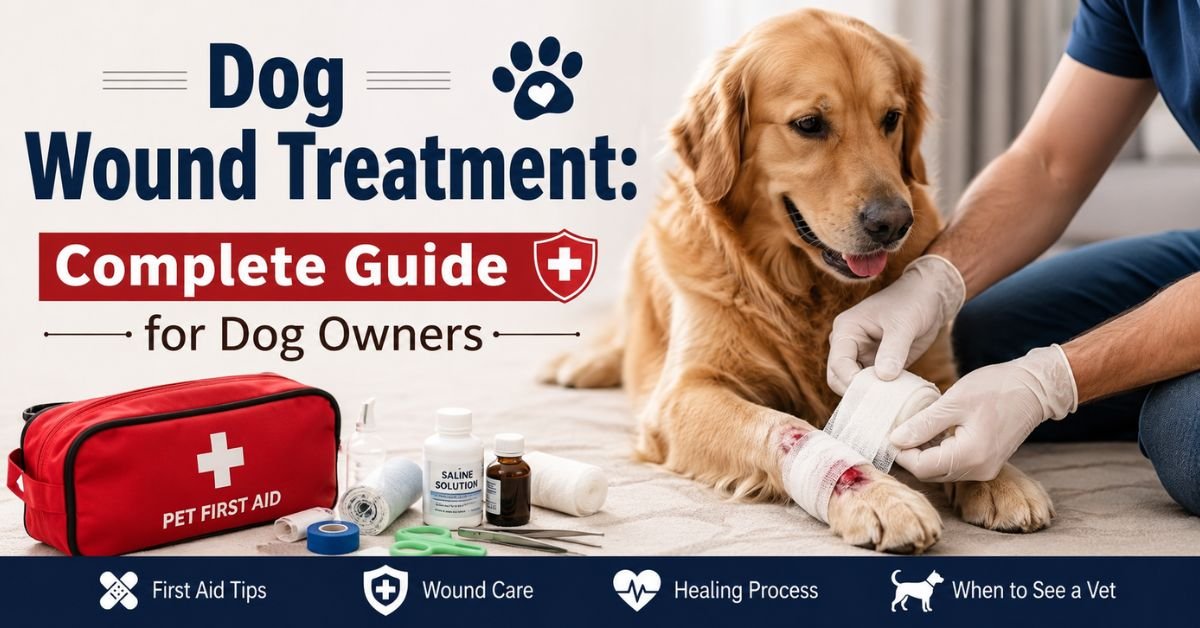
Every pet owner should keep a dog first-aid kit.
| Supply | Purpose |
| Sterile Gauze | Control bleeding |
| Saline Solution | Clean wounds |
| Bandages | Protect injuries |
| Non-Stick Pads | Cover wounds |
| Tweezers | Remove debris |
| Disposable Gloves | Maintain hygiene |
| Pet-Safe Antiseptic | Reduce infection risk |
| Vet Contact Information | Emergency support |
Having these supplies readily available can save valuable time during an emergency.
How to Bandage a Dog Wound
Bandaging helps protect wounds from dirt, bacteria, and excessive licking.
Proper Bandaging Steps
Clean the Wound First
Never place a bandage over a dirty wound.
Apply a Non-Stick Pad
This prevents the dressing from sticking to healing tissue.
Wrap Securely
Use a soft bandage material.
The bandage should be:
- Snug but not tight
- Comfortable
- Secure enough to stay in place
Monitor Daily
Check for:
- Swelling
- Moisture
- Odor
- Bandage slipping
Replace bandages as directed by your veterinarian.
Signs of Healthy Wound Healing
Understanding normal healing helps you track recovery.
What Healthy Healing Looks Like
During healing, you may notice:
- Mild redness initially
- Reduced swelling over time
- Formation of healthy pink tissue
- Gradual closure of the wound
- New hair growth
Most minor wounds improve noticeably within several days.
Warning Signs of Infection
Infections can turn a minor injury into a serious medical problem.
Symptoms to Watch For
Contact your veterinarian if you notice:
- Excessive redness
- Swelling that worsens
- Thick discharge
- Pus
- Foul odor
- Fever
- Loss of appetite
- Increased pain
- Lethargy
Prompt canine wound treatment can prevent complications.
Preventing Dogs From Licking Wounds
Dogs naturally lick injuries, but excessive licking can slow healing and introduce bacteria.
Effective Solutions
Elizabethan Collar
Also known as the “cone,” it prevents direct access to the wound.
Recovery Suit
A soft recovery suit covers the injured area while allowing movement.
Bandaging
Appropriate bandaging may discourage licking when used correctly.
Distraction
Mental stimulation and supervised activity can reduce licking behavior.
Natural Support for Wound Healing
While veterinary care remains the priority, several supportive practices can aid healing.
Proper Nutrition
Good nutrition supports tissue repair.
Provide:
- High-quality protein
- Essential fatty acids
- Vitamins A, C, and E
- Adequate hydration
Rest and Recovery
Limit strenuous activity until healing progresses.
Avoid:
- Running
- Jumping
- Rough play
Clean Living Environment
Keep your dog’s bedding clean and dry to reduce contamination.
When Home Treatment Is Enough
Some minor injuries can be safely managed at home.
Suitable for Home Care
Minor wounds may include:
- Small scrapes
- Superficial cuts
- Minor abrasions
- Small skin irritations
Continue monitoring healing closely.
If the wound worsens, seek veterinary care.
When to See a Veterinarian
Not all wounds should be treated at home.
Seek Veterinary Care Immediately If:
- Bleeding will not stop
- The wound is deep
- Muscle or bone is visible
- A bite caused the injury
- The wound is near the eye
- There is severe swelling
- Signs of infection appear
- Your dog is in significant pain
Professional dog injury care may involve antibiotics, stitches, pain management, or advanced wound therapy.
Stages of Wound Healing in Dogs
Understanding the healing process helps owners know what to expect.
Stage 1: Inflammation
Occurs during the first few days.
The body works to stop bleeding and remove damaged tissue.
Stage 2: Debridement
The immune system clears bacteria and dead cells.
Mild redness is common during this stage.
Stage 3: Repair
New tissue forms and the wound begins closing.
This stage often lasts several weeks.
Stage 4: Maturation
The skin strengthens and remodels.
Hair may gradually regrow over the area.
Common Mistakes in Dog Wound Care
Many owners accidentally slow healing by making simple mistakes.
Mistakes to Avoid
- Using alcohol on wounds
- Ignoring signs of infection
- Allowing excessive licking
- Applying human medications without approval
- Skipping bandage changes
- Delaying veterinary treatment for serious injuries
Avoiding these mistakes can significantly improve wound healing in dogs.
Tips for Faster Recovery
Follow these simple practices:
- Clean wounds promptly.
- Follow veterinary instructions.
- Keep the wound protected.
- Prevent licking.
- Provide quality nutrition.
- Maintain hydration.
- Monitor healing daily.
Consistency is the key to successful dog wound treatment.
Conclusion
Knowing the basics of dog wound treatment can help you respond quickly and effectively when your dog gets injured. Cleaning wounds properly, preventing infection, monitoring healing, and recognizing warning signs are essential parts of responsible pet ownership.
While minor injuries can often be managed at home, never hesitate to contact your veterinarian if you are unsure about the severity of a wound. Early treatment can prevent complications and help your dog return to a happy, healthy life much faster.
Hydrogen peroxide may damage healthy tissue and slow healing. Most veterinarians recommend saline solution or pet-safe wound cleansers instead.
Minor wounds often heal within 1 to 2 weeks. Larger or deeper wounds may require several weeks or longer.
Many wounds benefit from protective bandaging, especially during the early stages of healing. However, some wounds heal better with controlled airflow. Follow veterinary guidance.
Only use products approved by your veterinarian. Some human ointments can be harmful to dogs.
A small amount of licking may occur naturally, but excessive licking can delay healing and increase infection risk.

Muhammad Ahad — Passionate writer sharing informative, engaging, and easy-to-read articles across different topics. Focused on delivering valuable content that helps readers learn, explore, and stay inspired every day.
1 thought on “Dog Wound Treatment: Complete Guide for Dog Owners”