

Introduction
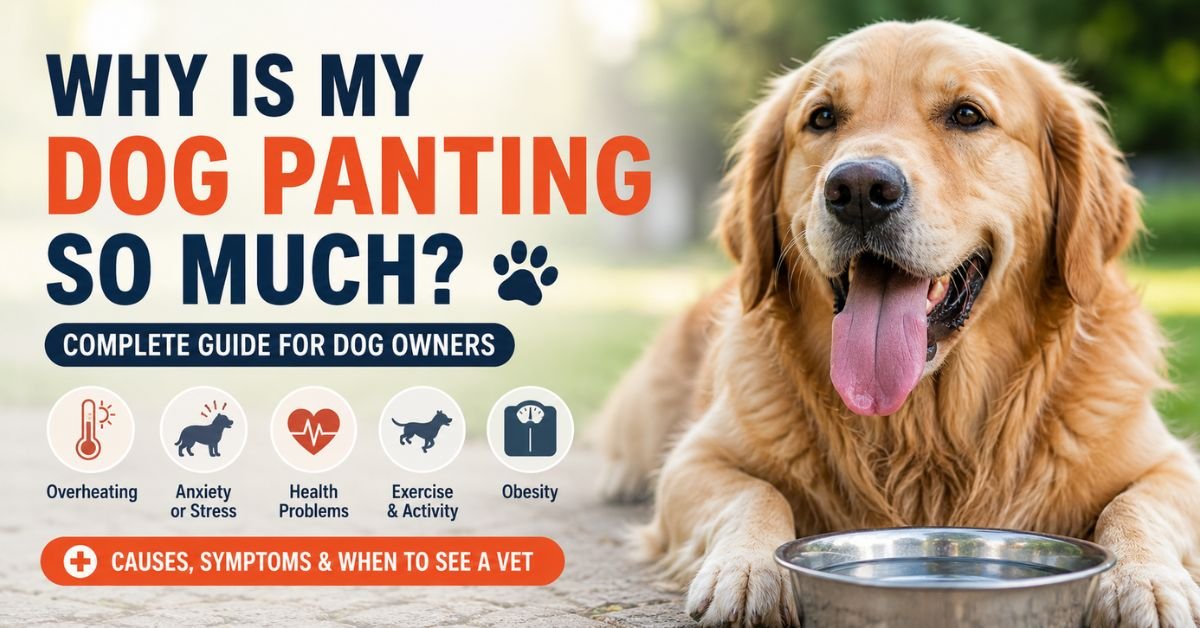
Many dog owners ask the same question: why is my dog panting so much? Panting is completely normal for dogs. In fact, it is one of the main ways dogs cool their bodies. However, excessive panting can sometimes signal stress, pain, overheating, or even serious health problems.
Because dogs cannot sweat like humans, they rely heavily on panting to regulate body temperature. While some panting after exercise or during hot weather is expected, nonstop or unusual panting should never be ignored.
In this guide, you will learn the most common reasons dogs pant, how to recognize warning signs, and when it is time to contact your veterinarian.
Understanding Normal Dog Panting
Before worrying, it is important to understand what normal panting looks like.
Dogs pant to:
- Cool down after exercise
- Regulate body temperature
- Release excitement or stress
- Recover from physical activity
Normal panting usually slows down within a few minutes after rest and water. Your dog should also appear relaxed and comfortable.
However, excessive panting often looks different. It may include:
- Rapid breathing
- Loud or heavy panting
- Panting during rest
- Drooling excessively
- Difficulty calming down
If your dog shows these signs frequently, there may be an underlying issue.
Why Is My Dog Panting So Much? Common Causes
Heat and Overheating
One of the most common reasons for excessive panting in dogs is overheating.
Dogs are very sensitive to heat, especially during summer. Thick-coated breeds, older dogs, and overweight dogs struggle even more in warm temperatures.
Signs of Overheating
- Heavy panting
- Bright red gums
- Drooling
- Weakness
- Vomiting
- Lethargy
If not treated quickly, overheating can lead to heatstroke, which is a medical emergency.
What You Should Do
- Move your dog to a cool area
- Offer fresh water
- Use cool (not ice-cold) towels
- Avoid intense exercise in hot weather
Always provide shade and hydration during outdoor activities.
Exercise and Physical Activity
After running, playing, or long walks, dogs naturally pant more.
This type of panting should improve within 10–20 minutes. Puppies and active breeds may pant longer because they have higher energy levels.
However, if your dog struggles to breathe or pants excessively after mild exercise, it could point to heart or lung issues.
Anxiety and Stress
Emotional stress is another major reason dogs pant heavily.
Dogs may pant during:
- Thunderstorms
- Fireworks
- Car rides
- Vet visits
- Separation anxiety
Stress panting is often combined with pacing, whining, shaking, or hiding.
How to Help an Anxious Dog
- Create a calm environment
- Use comforting toys or blankets
- Try calming music
- Maintain a routine
- Talk to your veterinarian about anxiety treatments
Pain or Discomfort
Dogs often hide pain very well. Panting can sometimes be one of the only visible signs.
Pain-related panting may happen because of:
- Injuries
- Arthritis
- Stomach pain
- Dental problems
- Internal illness
Signs Your Dog May Be in Pain
- Restlessness
- Limping
- Whining
- Loss of appetite
- Changes in posture
If your dog suddenly begins panting without a clear reason, pain could be the cause.
Obesity
Overweight dogs usually pant more because extra body fat makes movement and temperature regulation harder.
Even mild exercise may cause heavy breathing in overweight dogs.
Tips for Weight Management
- Feed balanced meals
- Avoid excessive treats
- Increase daily exercise slowly
- Monitor calorie intake
Healthy weight management can significantly reduce excessive panting.
Respiratory Problems
Some breathing conditions make it difficult for dogs to get enough oxygen.
These conditions include:
- Pneumonia
- Collapsed trachea
- Lung disease
- Airway obstruction
Flat-faced breeds such as Bulldogs and Pugs are especially prone to breathing problems.
Warning Signs
- Wheezing
- Blue gums
- Coughing
- Noisy breathing
- Difficulty inhaling
Seek veterinary care immediately if your dog struggles to breathe.
Heart Disease
Heart problems can cause fluid buildup in the lungs, making breathing more difficult.
Dogs with heart disease may show:
- Persistent panting
- Fatigue
- Coughing
- Weakness
- Difficulty exercising
Senior dogs are more likely to develop heart-related conditions.
Early diagnosis can improve treatment success.
Medication Side Effects
Certain medications increase panting in dogs.
Common examples include:
- Steroids
- Prednisone
- Pain medications
If panting begins shortly after starting a medication, consult your veterinarian.
Never stop medications without professional guidance.
Dog Panting: Normal vs Dangerous
| Situation | Normal Panting | Dangerous Panting |
| After exercise | Yes | Only if it continues too long |
| Hot weather | Mild panting | Extreme heavy panting |
| During sleep | Rare | Frequent or loud |
| At rest | Minimal | Persistent rapid breathing |
| Stressful situations | Temporary | Severe panic-like breathing |
| With blue gums | No | Emergency situation |
When Should You Worry About Dog Panting?
You should contact your veterinarian if your dog:
- Pants excessively without exercise
- Pants heavily at night
- Has trouble breathing
- Shows blue or pale gums
- Becomes weak or collapses
- Refuses food or water
- Has a swollen abdomen
- Experiences coughing or wheezing
These symptoms may indicate a serious medical problem.
How Veterinarians Diagnose Excessive Panting
Your veterinarian may perform several tests to find the cause.
Common Diagnostic Tests
- Physical examination
- Blood tests
- Chest X-rays
- Heart ultrasound
- Oxygen monitoring
The goal is to identify whether the problem is related to heat, stress, pain, or disease.
How to Help a Panting Dog at Home
Keep Your Dog Cool
Always provide:
- Fresh drinking water
- Shade outdoors
- Air conditioning or fans indoors
Cooling mats can also help during hot weather.
Avoid Overexertion
Exercise your dog during cooler parts of the day, especially in summer.
Early mornings and evenings are usually safest.
Reduce Stress
Create a quiet, predictable environment.
Calming products such as anxiety wraps or pheromone diffusers may also help some dogs.
Maintain Regular Vet Visits
Routine checkups help detect hidden health problems before they become serious.
Senior dogs especially benefit from yearly wellness exams.
Breeds That Pant More Than Others
Some breeds naturally pant more due to their facial structure or coat type.
Common Heavy-Panting Breeds
- Pugs
- Bulldogs
- Boxers
- Huskies
- Saint Bernards
Flat-faced breeds often struggle with airflow because of shorter airways.
Owners of these breeds should monitor breathing carefully during hot weather.
Can Dogs Pant While Sleeping?
Mild panting during dreams can be normal, especially in puppies.
However, loud or frequent panting during sleep may suggest:
- Pain
- Anxiety
- Breathing problems
- Heart disease
If nighttime panting becomes common, schedule a veterinary visit.
Preventing Excessive Panting in Dogs
Prevention is always better than treatment.
Prevention Tips
- Keep your dog hydrated
- Avoid hot pavement
- Maintain healthy body weight
- Use proper exercise routines
- Schedule regular health checks
- Never leave dogs in parked cars
Even a few minutes inside a hot vehicle can become deadly.
Conclusion
If you have been asking yourself, why is my dog panting so much, the answer may range from completely normal behavior to a serious health issue.
Occasional panting after exercise or during warm weather is expected. However, persistent, heavy, or unusual panting should never be ignored.
Pay close attention to your dog’s behavior, breathing patterns, and overall health. Early action can prevent complications and help keep your dog safe and comfortable.
When in doubt, always contact your veterinarian for professional advice.
Nighttime panting may be caused by anxiety, pain, overheating, or medical conditions such as heart disease. Persistent panting during sleep should be evaluated by a veterinarian.
No. Dogs also pant because of stress, exercise, pain, and illness. However, severe panting with weakness or red gums may indicate heatstroke.
Panting without activity may signal stress, pain, obesity, respiratory problems, or heart disease. Monitor your dog closely and contact your vet if symptoms continue.
Yes, senior dogs may pant more due to arthritis, pain, heart disease, or reduced physical fitness.
Yes. Anxiety is a very common cause of heavy panting. Thunderstorms, separation anxiety, and unfamiliar environments often trigger stress-related panting.

Muhammad Ahad — Passionate writer sharing informative, engaging, and easy-to-read articles across different topics. Focused on delivering valuable content that helps readers learn, explore, and stay inspired every day.
2 thoughts on “Why Is My Dog Panting So Much? Complete Guide for Dog Owners”