

Introduction
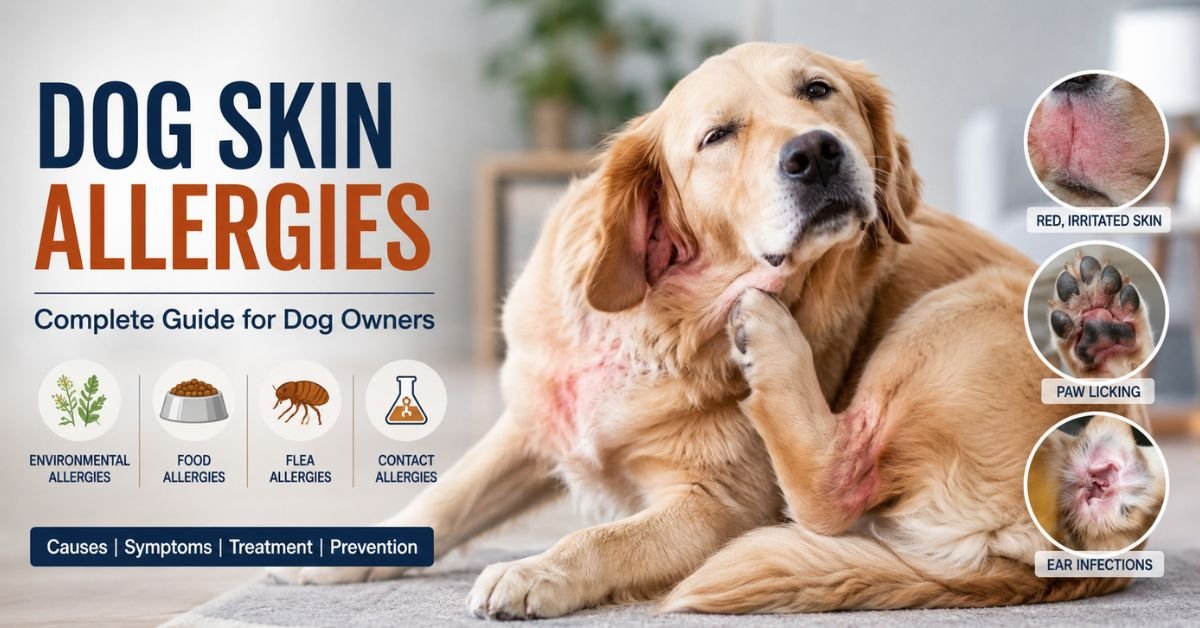
Dog skin allergies are one of the most common health problems that affect dogs of all breeds and ages. If your dog is constantly scratching, licking, biting its paws, or developing red and irritated skin, allergies could be the reason.
Many dog owners struggle to identify what is causing their pet’s discomfort. Unfortunately, untreated allergies can lead to infections, hair loss, and long-term skin problems.
In this complete guide, you’ll learn everything about dog skin allergies, including causes, symptoms, diagnosis, treatment options, and prevention tips. By understanding the condition, you can help your furry friend live a happier and more comfortable life.
What Are Dog Skin Allergies?
Dog skin allergies occur when a dog’s immune system overreacts to substances that are normally harmless. These substances, known as allergens, trigger inflammation and itching.
In many cases, allergy symptoms appear first on the skin. Dogs may scratch excessively, chew their feet, rub their face, or develop rashes and infections.
While allergies cannot always be completely cured, they can often be managed successfully with proper care and treatment.
Common Causes of Dog Skin Allergies
Several factors can trigger canine skin allergies.
1. Environmental Allergies
Environmental allergens are among the most common causes of itchy dog skin.
Examples include:
- Pollen
- Grass
- Mold spores
- Dust mites
- Household dust
Dogs may experience seasonal allergies or year-round symptoms depending on the allergen.
2. Food Allergies
Some dogs develop allergic reactions to ingredients in their food.
Common food allergens include:
- Beef
- Chicken
- Dairy products
- Eggs
- Wheat
- Soy
Food allergies often cause both skin problems and digestive issues.
3. Flea Allergy Dermatitis
In dogs with sensitive skin, a single flea bite can cause severe itching.
Dogs with flea allergies often experience:
- Intense scratching
- Hair loss
- Red skin
- Skin infections
Regular flea prevention is essential.
4. Contact Allergies
Certain materials can irritate a dog’s skin after direct contact.
Potential triggers include:
- Cleaning products
- Shampoos
- Lawn chemicals
- Fabrics
- Plastic food bowls
Symptoms of Dog Skin Allergies
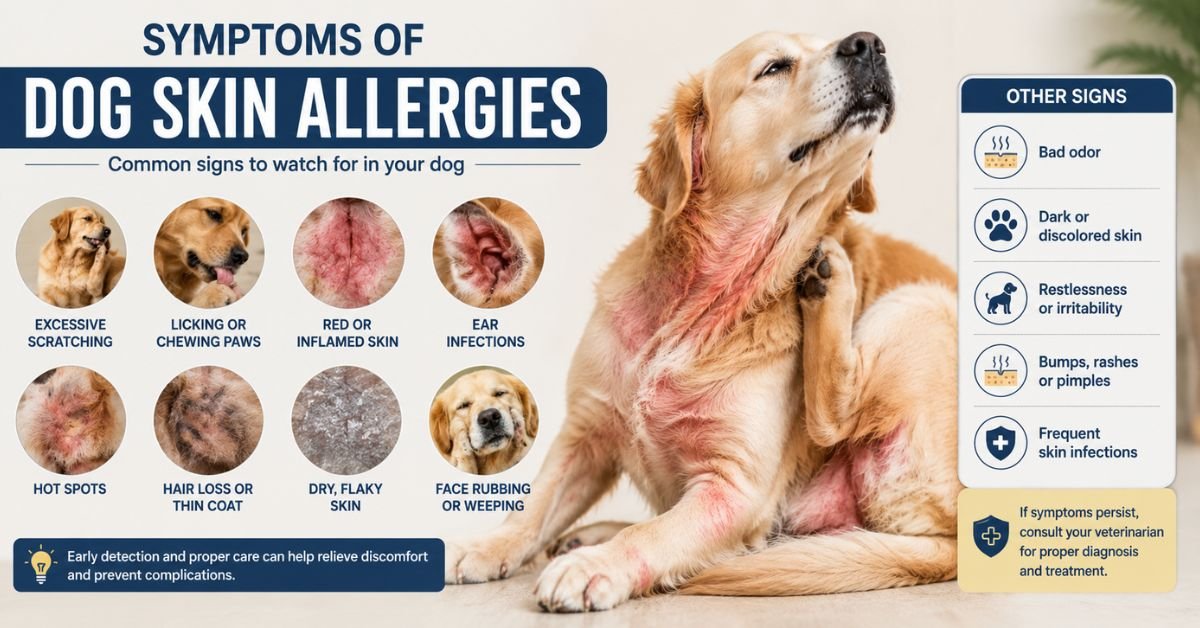
Recognizing the symptoms early can help prevent complications.
Common Signs
- Excessive scratching
- Constant licking
- Chewing paws
- Red skin
- Hot spots
- Hair loss
- Skin infections
- Ear infections
- Dry or flaky skin
- Face rubbing
Some dogs may also develop a strong odor due to secondary skin infections.
Areas Most Commonly Affected
Allergic reactions in dogs frequently affect:
- Paws
- Ears
- Belly
- Armpits
- Face
- Tail base
Types of Dog Skin Allergies
Understanding the different types helps identify the best treatment plan.
Atopic Dermatitis
Atopic dermatitis is a chronic allergy caused by environmental allergens.
Symptoms often include:
- Itchy skin
- Recurrent ear infections
- Paw licking
- Redness
This condition usually develops between one and three years of age.
Food Allergy Dermatitis
Food-related allergies can develop at any age.
Common symptoms include:
- Year-round itching
- Ear infections
- Digestive upset
- Skin inflammation
Flea Allergy Dermatitis
This allergy results from sensitivity to flea saliva.
Affected dogs often scratch intensely around:
- Tail base
- Lower back
- Hind legs
Dog Skin Allergies vs Other Skin Problems
Many skin conditions can look similar.
| Condition | Main Cause | Common Symptoms |
| Skin Allergies | Allergens | Itching, redness, licking |
| Flea Infestation | Fleas | Scratching, flea dirt |
| Mange | Mites | Hair loss, crusty skin |
| Fungal Infection | Yeast/Fungus | Odor, redness |
| Bacterial Infection | Bacteria | Pustules, sores |
| Dry Skin | Weather/Nutrition | Flaking, mild itching |
A veterinary diagnosis is important for accurate treatment.
How Veterinarians Diagnose Dog Skin Allergies
Diagnosis often requires a combination of examinations and testing.
Physical Examination
Your veterinarian will check:
- Skin condition
- Coat quality
- Ear health
- Presence of fleas
Allergy Testing
Common tests include:
- Intradermal skin testing
- Blood allergy testing
Food Elimination Trial
Food allergies can be diagnosed with this test.
Dogs are fed a special diet for several weeks to identify triggers.
Treatment Options for Dog Skin Allergies
Treatment depends on the underlying cause.
Medications
Veterinarians may prescribe:
- Antihistamines
- Anti-inflammatory medications
- Prescription allergy medications
- Antibiotics for infections
Always follow veterinary instructions carefully.
Medicated Shampoos
Special shampoos can help:
- Reduce itching
- Remove allergens
- Soothe irritated skin
Bathing frequency should be recommended by your veterinarian.
Allergy Immunotherapy
For environmental allergies, allergy shots or oral immunotherapy may provide long-term relief.
This approach targets the underlying allergy rather than simply managing symptoms.
Flea Control
Year-round flea prevention is crucial.
Options include:
- Oral medications
- Spot-on treatments
- Flea collars
Dietary Management
Dogs with food allergies may benefit from:
- Limited ingredient diets
- Hydrolyzed protein diets
- Veterinary prescription diets
Natural Ways to Support Dogs with Skin Allergies
Natural remedies should complement veterinary treatment, not replace it.
Omega-3 Fatty Acids
Omega-3 supplements may help:
- Reduce inflammation
- Improve skin health
- Support coat quality
Regular Grooming
Routine grooming helps remove:
- Dust
- Pollen
- Dirt
- Loose hair
Paw Cleaning
Wiping paws after outdoor walks can reduce exposure to allergens.
Clean Home Environment
Helpful steps include:
- Frequent vacuuming
- Washing bedding regularly
- Using air purifiers
- Reducing dust accumulation
Preventing Dog Skin Allergies
Although some allergies cannot be prevented completely, these strategies can help reduce flare-ups.
Maintain Flea Prevention
Consistent flea control remains one of the most effective preventive measures.
Feed a High-Quality Diet
Balanced nutrition supports healthy skin and immune function.
Schedule Regular Veterinary Checkups
Routine examinations help detect problems early.
Keep Skin Clean
Proper bathing and grooming reduce allergen exposure.
Monitor Seasonal Triggers
If symptoms worsen during certain seasons, discuss preventive strategies with your veterinarian.
When Should You See a Veterinarian?
Contact your veterinarian if your dog experiences:
- Severe itching
- Open wounds
- Hair loss
- Ear infections
- Skin odor
- Swelling
- Persistent scratching
Early treatment can prevent complications and improve your dog’s comfort.
Conclusion
Dog skin allergies can significantly affect your pet’s quality of life, but with proper management, most dogs can remain healthy and comfortable. Understanding the causes, recognizing the symptoms, and seeking veterinary care early are key steps toward successful treatment.
Whether your dog’s allergies are caused by food, fleas, or environmental triggers, a combination of medical treatment, good nutrition, grooming, and preventive care can make a major difference. By staying proactive, you can help your furry companion enjoy healthier skin and a happier life.
Environmental allergens such as pollen, grass, dust mites, and mold are among the most common causes.
Most allergies cannot be permanently cured, but they can usually be managed successfully with proper treatment.
Common triggers include beef, chicken, dairy products, eggs, wheat, and soy.
Persistent itching, licking, ear infections, and red skin often suggest allergies. A veterinary examination is needed for confirmation.
Some allergies are seasonal, especially those caused by pollen and grass. Others can occur year-round.

Muhammad Ahad — Passionate writer sharing informative, engaging, and easy-to-read articles across different topics. Focused on delivering valuable content that helps readers learn, explore, and stay inspired every day.