

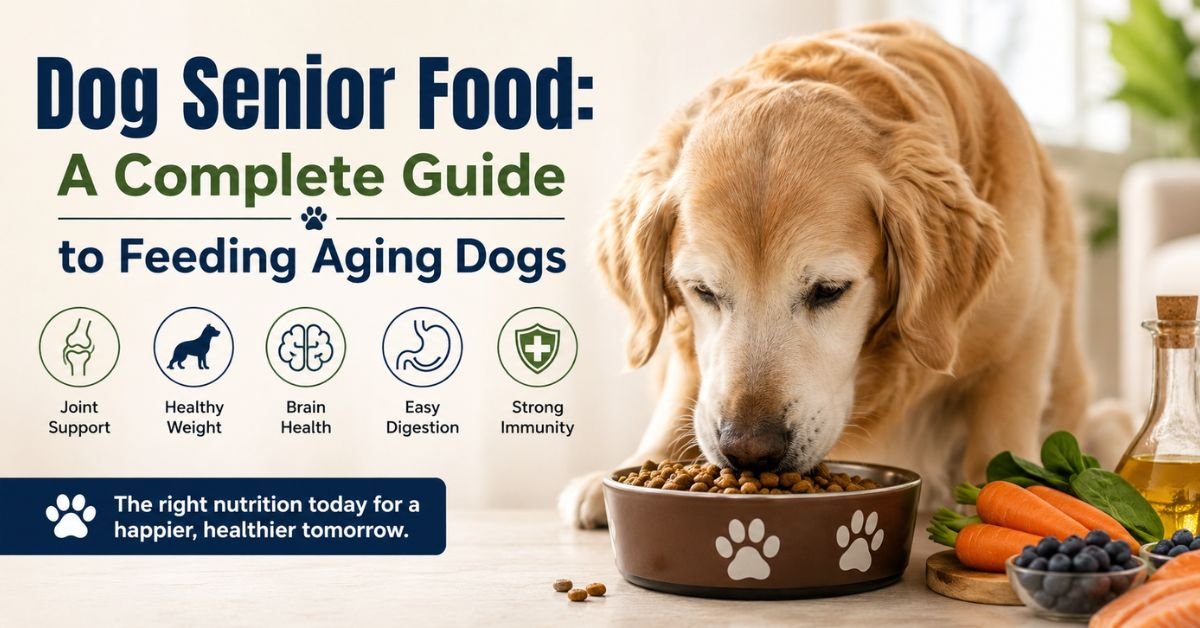
A dog’s nutritional needs change significantly with age. The food that worked perfectly during adulthood may no longer support an older dog’s metabolism, joints, digestive system, or overall health. Choosing the right dog senior food can help maintain a healthy weight, improve mobility, support cognitive function, and enhance quality of life during the later years.
Many owners assume that senior food is simply lower in calories. The reality is much more complex. Older dogs often require carefully balanced protein, joint-supporting nutrients, digestive aids, and specific calorie levels based on their activity level and medical history.
Quick Answer Box
Dog senior food is specially formulated to meet the changing nutritional needs of aging dogs. Quality senior diets typically contain highly digestible protein, controlled calories, joint-support ingredients such as glucosamine, omega-3 fatty acids, and nutrients that support brain function. The best choice depends on your dog’s age, breed size, weight, activity level, and any existing health conditions.
What Counts as a Senior Dog?
There is no universal age at which every dog becomes a senior.
Breed size plays a major role:
| Dog Size | Senior Age Typically Begins |
| Small breeds | 10-12 years |
| Medium breeds | 8-10 years |
| Large breeds | 7-8 years |
| Giant breeds | 5-7 years |
Large and giant breeds tend to age faster than smaller dogs. A Great Dane may require senior nutrition years before a Chihuahua.
Veterinarians often evaluate more than age alone. Factors such as mobility, body condition, energy levels, and medical history help determine when a dog should transition to senior food.
Why Aging Changes Nutritional Needs
As dogs age, several biological changes affect how they process and utilize nutrients.
Slower Metabolism
Many older dogs burn fewer calories because they become less active. Feeding the same portions used during adulthood can gradually lead to weight gain.
Loss of Muscle Mass
Senior dogs naturally lose lean muscle tissue. Maintaining adequate protein intake becomes increasingly important to preserve strength and mobility.
Joint Wear and Tear
Years of activity place stress on joints. Arthritis and stiffness become common concerns, especially in larger breeds.
Digestive Changes
Some older dogs experience reduced digestive efficiency. Foods containing highly digestible ingredients may improve nutrient absorption.
Cognitive Aging
Senior dogs can experience age-related cognitive decline. Certain nutrients may help support brain health and mental sharpness.
Key Nutrients to Look for in Dog Senior Food
Not all senior formulas are created equally.
High-Quality Protein
One common misconception is that senior dogs need low-protein diets.
According to veterinary nutrition guidance, healthy senior dogs often benefit from adequate, highly digestible protein to maintain muscle mass.
Look for named animal protein sources such as:
- Chicken
- Turkey
- Salmon
- Lamb
- Beef
Unless a veterinarian recommends otherwise due to kidney disease or another medical condition, protein restriction is generally unnecessary.
Omega-3 Fatty Acids
Omega-3s, particularly EPA and DHA, may support:
- Joint health
- Skin condition
- Coat quality
- Brain function
- Inflammation control
Fish oil is one of the most common sources.
Glucosamine and Chondroitin
These ingredients are frequently included in senior diets to support joint function and cartilage health.
While not a cure for arthritis, many dog owners report improved comfort and mobility when these nutrients are included as part of a broader management plan.
Controlled Calories
Excess weight places additional stress on aging joints and organs.
Senior foods often contain adjusted calorie levels that help prevent obesity without sacrificing essential nutrients.
Fiber
Moderate fiber levels can help:
- Support digestion
- Promote healthy stools
- Improve satiety
- Assist weight management
Antioxidants
Ingredients such as vitamin E, vitamin C, and other antioxidants help combat oxidative stress associated with aging.
Comparison Table: Common Types of Dog Senior Food
| Type | Best For | Advantages | Potential Drawbacks |
| Dry Senior Food | Most healthy seniors | Affordable, convenient, supports dental chewing | May be difficult for dogs with severe dental issues |
| Wet Senior Food | Dogs with dental problems | Easy to chew, highly palatable | Higher cost, shorter shelf life |
| Weight Management Senior Food | Overweight seniors | Lower calorie density | May not suit underweight dogs |
| Joint Support Senior Food | Dogs with mobility concerns | Added glucosamine and omega-3s | Joint supplements may still be needed |
| Sensitive Stomach Senior Food | Digestive issues | Easily digestible ingredients | Limited ingredient choices |
| Prescription Senior Diets | Specific medical conditions | Targeted nutrition | Requires veterinary recommendation |
How to Choose the Best Dog Senior Food
Consider Breed Size
Large breeds often benefit from formulas focused on:
- Joint support
- Weight control
- Mobility maintenance
Small breeds may need:
- Smaller kibble size
- Higher nutrient density
- Dental support
Evaluate Body Condition
A senior dog carrying excess weight may need calorie-controlled food.
A thin senior dog may require:
- Increased calories
- Enhanced protein
- Veterinary evaluation to rule out illness
Review Ingredient Quality
A quality senior formula should generally feature:
- Real animal protein
- Clearly identified ingredients
- Balanced vitamins and minerals
- Appropriate calorie levels
Be cautious of marketing claims that lack nutritional substance.
Check AAFCO Statements
Look for foods that meet nutritional standards established by the Association of American Feed Control Officials (AAFCO).
This helps ensure nutritional adequacy.
Signs Your Dog May Need Senior Food
Many owners wait until obvious signs of aging appear.
Common indicators include:
- Reduced activity
- Weight gain
- Muscle loss
- Stiffness after exercise
- Increased sleeping
- Slower recovery after activity
- Changes in appetite
A gradual dietary transition may help support these changes.
Common Feeding Mistakes With Senior Dogs
Overfeeding
This remains one of the biggest mistakes.
Even slight weight gain can worsen arthritis and reduce mobility.
Switching Foods Too Quickly
Sudden diet changes may trigger digestive upset.
Transition gradually over 7–10 days.
Ignoring Dental Health
Painful teeth can reduce food intake.
Some dogs need softer foods as they age.
Assuming Every Senior Needs the Same Diet
An active 11-year-old Border Collie has very different nutritional needs than a sedentary 11-year-old Bulldog.
Skipping Veterinary Wellness Exams
Diet decisions should be informed by regular health evaluations.
Age-related diseases can alter nutritional requirements significantly.
Senior Dog Weight Management
Maintaining an ideal body condition is one of the most effective ways to support longevity.
Benefits include:
- Reduced joint stress
- Better mobility
- Improved cardiovascular health
- Lower diabetes risk
- Enhanced quality of life
Veterinarians frequently identify obesity as a major contributor to health complications in older dogs.
A balanced senior diet combined with regular exercise can make a meaningful difference.
Supporting Joint Health Through Nutrition
Joint discomfort affects countless aging dogs.
Nutrition alone cannot reverse arthritis, but it can play an important role in a broader management plan.
Helpful nutrients include:
- Glucosamine
- Chondroitin
- EPA
- DHA
- Antioxidants
Additional strategies may include:
- Weight management
- Controlled exercise
- Physical therapy
- Veterinary-approved supplements
Many owners notice that small improvements in mobility significantly improve a senior dog’s daily comfort.
Cognitive Health and Aging Dogs
Some senior dogs experience cognitive dysfunction, which resembles age-related memory decline in humans.
Possible signs include:
- Confusion
- Restlessness
- Altered sleep patterns
- House-training accidents
- Reduced interaction
Certain senior diets contain nutrients that support brain health, including:
- DHA
- Antioxidants
- B vitamins
- Mitochondrial support compounds
According to veterinary guidance, early intervention may help slow progression in some dogs.
Can You Feed Homemade Meals Instead?
Some owners prefer preparing meals at home.
Homemade diets can work, but nutritional balance is critical.
Common deficiencies occur when recipes lack proper levels of:
- Calcium
- Essential fatty acids
- Vitamins
- Trace minerals
Before switching to homemade feeding, consult a veterinarian or board-certified veterinary nutritionist.
Many internet recipes fail to provide complete nutrition for aging dogs.
Practical Checklist for Choosing Dog Senior Food
Use this checklist before purchasing a new senior diet:
Determine whether your dog qualifies as a senior based on breed size
Schedule a wellness exam if one has not been completed recently
Assess your dog’s current weight and body condition
Review activity level and mobility
Check for digestive sensitivities
Look for high-quality protein sources
Verify AAFCO nutritional adequacy
Evaluate calorie content
Consider joint-support ingredients
Transition gradually over 7–10 days
Monitor stool quality, energy, and appetite after switching
Reassess nutrition every 6–12 months
When to Call a Veterinarian
Seek veterinary advice promptly if your senior dog experiences:
- Sudden weight loss
- Persistent vomiting
- Chronic diarrhea
- Refusal to eat
- Difficulty standing
- Severe limping
- Increased thirst
- Frequent urination
- Confusion or disorientation
- Rapid decline in activity
These signs may indicate underlying medical conditions that require diagnosis and treatment.
Diet alone cannot address serious health issues.
FAQs
1. At what age should dogs start eating senior food?
Most dogs transition between 7 and 10 years of age, depending on breed size. Large breeds typically require senior nutrition earlier than small breeds. A veterinarian can help determine the ideal timing based on health status and body condition.
[wp_ulike]
2. Is senior dog food lower in protein?
Not necessarily. Many quality senior diets contain adequate protein levels to help maintain muscle mass. Protein restriction is usually reserved for specific medical conditions under veterinary supervision.
3. Can puppies or adult dogs eat senior dog food?
Senior formulas are designed for older dogs and may not provide the calorie or nutrient balance needed by growing puppies or highly active adults. Feeding should match life stage requirements.
4. What ingredients should I avoid in dog senior food?
Focus less on individual “bad” ingredients and more on overall nutritional quality. Avoid foods with poor nutritional balance, unclear ingredient sourcing, or excessive calories that contribute to obesity.
5. Does senior dog food help with arthritis?
Senior food may support joint health through ingredients such as glucosamine, chondroitin, and omega-3 fatty acids. However, arthritis management often requires a combination of nutrition, weight control, exercise modification, and veterinary treatment.
Final Thoughts
The right dog senior food does more than fill a bowl. It supports mobility, muscle maintenance, digestive health, cognitive function, and healthy aging. The best diet depends on the individual dog rather than a single brand or formula.
Regular veterinary checkups, weight monitoring, and thoughtful food selection help ensure that aging dogs remain comfortable, active, and engaged throughout their senior years.

Muhammad Ahad — Passionate writer sharing informative, engaging, and easy-to-read articles across different topics. Focused on delivering valuable content that helps readers learn, explore, and stay inspired every day.