

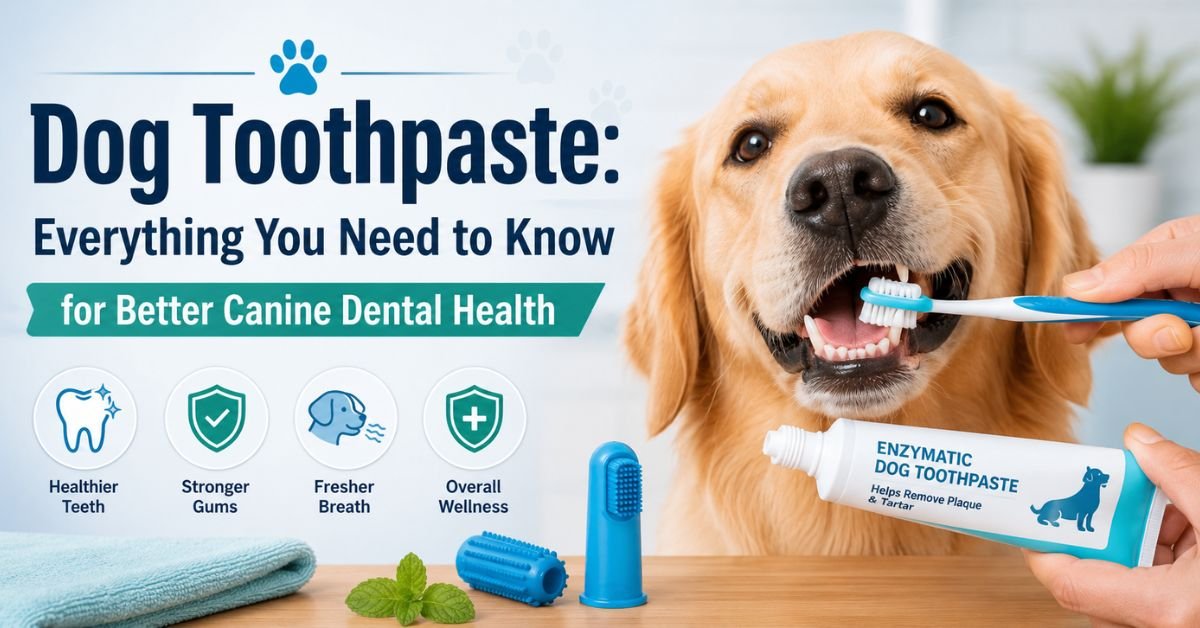
Dog Toothpaste dental disease is one of the most common health problems seen in dogs, yet it often develops quietly. Many owners don’t notice an issue until their dog develops persistent bad breath, inflamed gums, difficulty chewing, or visible tartar buildup.
Using dog toothpaste regularly is one of the simplest ways to support your dog’s oral health at home. The right product can help reduce plaque, freshen breath, support healthy gums, and slow the progression of dental disease when combined with regular veterinary care.
While brushing may seem challenging at first, most dogs can learn to tolerate and sometimes even enjoy the process when introduced gradually and paired with a tasty toothpaste flavor.
Quick Answer Box
Dog toothpaste is specially formulated to be swallowed safely and helps reduce plaque, support gum health, and improve breath. Human toothpaste should never be used on dogs because it may contain toxic ingredients such as xylitol or excessive fluoride. Daily brushing with an enzymatic dog toothpaste, combined with routine veterinary dental checkups, provides the best protection against dental disease and tooth loss.
Why Dental Care Matters for Dogs
Many owners assume bad breath is normal in dogs. In reality, persistent bad breath is often one of the earliest signs of dental disease.
Food particles and bacteria collect on teeth throughout the day. These materials form plaque, a sticky film that can harden into tartar if not removed regularly.
Over time, tartar accumulation can lead to:
- Gingivitis
- Gum inflammation
- Periodontal disease
- Tooth pain
- Tooth loss
- Oral infections
- Difficulty eating
According to veterinary guidance, a large percentage of dogs show signs of dental disease by the age of three. Small breeds are particularly vulnerable because crowded teeth create more opportunities for plaque buildup.
Regular brushing with dog toothpaste interrupts this cycle before serious problems develop.
What Is Dog Toothpaste?
Dog toothpaste is a dental cleaning product designed specifically for canine oral health.
Unlike human toothpaste, it is formulated to be swallowed safely because dogs do not spit after brushing.
Many products contain enzymes that help break down plaque and reduce bacterial growth inside the mouth.
Common flavors include:
- Poultry
- Peanut butter
- Beef
- Vanilla mint (dog-safe formulas)
- Bacon
The flavoring helps make brushing more enjoyable and increases compliance.
Can Dogs Use Human Toothpaste?
The answer is simple: no.
Human toothpaste contains ingredients intended for people who rinse and spit after brushing.
Dogs swallow toothpaste, which creates potential risks.
Ingredients That Can Be Harmful
| Ingredient | Why It’s a Problem for Dogs |
| Xylitol | Extremely toxic and may cause life-threatening blood sugar drops |
| Fluoride | Can cause stomach upset and toxicity in large amounts |
| Foaming agents | May irritate the digestive system |
| Artificial sweeteners | Some may be unsafe for pets |
| Strong mint oils | Can cause stomach discomfort |
Even a small amount of human toothpaste can create unnecessary risks.
Always choose toothpaste formulated specifically for dogs.
Benefits of Using Dog Toothpaste
Reduces Plaque Accumulation
Plaque begins forming within hours after eating.
Regular brushing removes bacteria before they harden into tartar.
Supports Healthier Gums
Inflamed gums can become painful and bleed easily.
Brushing helps reduce bacterial irritation along the gumline.
Improves Breath
Bad breath is often caused by bacterial growth in the mouth.
Many dog owners report noticeable improvements in breath after establishing a consistent brushing routine.
Helps Prevent Costly Dental Procedures
Professional cleanings may still be necessary, but routine brushing often slows plaque accumulation and can reduce the frequency of advanced dental treatments.
Encourages Better Long-Term Health
Research has shown that severe periodontal disease may affect other body systems, including the heart and kidneys.
Healthy teeth contribute to overall well-being.
Types of Dog Toothpaste
Not all products work the same way.
Enzymatic Dog Toothpaste
This is among the most commonly recommended options.
Benefits include:
- Breaks down plaque
- Targets oral bacteria
- Continues working after brushing
- Easy for beginners
Natural Dog Toothpaste
These formulas often contain:
- Coconut oil
- Baking soda alternatives
- Aloe vera
- Herbal ingredients
Natural options appeal to owners seeking fewer synthetic ingredients.
Veterinary Dental Toothpaste
These products are often formulated with clinical research and may carry recommendations from veterinary professionals.
Puppy Toothpaste
Puppies have different needs and may benefit from milder flavors and formulas designed specifically for younger dogs.
How to Choose the Best Dog Toothpaste
Shopping for dog toothpaste can feel overwhelming because of the large number of products available.
Consider the following factors.
Ingredient Safety
Look for products that:
- Are designed for dogs
- Avoid xylitol
- Use pet-safe ingredients
- Have clear labeling
Enzymatic Action
Enzymatic formulas often provide additional plaque-fighting support.
Flavor Acceptance
A toothpaste only works if your dog tolerates it.
Popular flavors include:
- Peanut butter
- Chicken
- Beef
- Bacon
Testing a few options may be necessary.
Veterinary Recommendations
Products supported by veterinary professionals or recognized oral health organizations can provide added confidence.
Dog’s Age and Health Status
Senior dogs, puppies, and dogs with existing dental disease may have different needs.
When uncertain, consult your veterinarian.
Comparison Table: Dog Toothpaste Types
| Type | Best For | Advantages | Potential Drawbacks |
| Enzymatic Toothpaste | Most dogs | Excellent plaque control | Slightly higher cost |
| Natural Toothpaste | Ingredient-conscious owners | Simple formulas | Variable effectiveness |
| Veterinary Formulas | Dental disease prevention | Research-backed | Premium pricing |
| Puppy Toothpaste | Young dogs | Gentle ingredients | Limited advanced plaque control |
| Flavor-Focused Toothpaste | Picky dogs | Easier acceptance | Ingredients vary between brands |
How to Brush Your Dog’s Teeth Correctly
Brushing technique matters just as much as the toothpaste itself.
Step 1: Let Your Dog Taste the Toothpaste
Allow your dog to lick a small amount from your finger.
This creates a positive association.
Step 2: Introduce Mouth Handling
Gently lift the lips and touch the teeth for a few seconds.
Reward calm behavior.
Step 3: Use a Dog Toothbrush
Choose a:
- Finger brush
- Soft-bristled dog toothbrush
- Dual-headed canine toothbrush
Step 4: Focus on the Outer Surfaces
Most plaque accumulates on the outer surfaces where the cheeks contact the teeth.
Step 5: Use Gentle Circular Motions
Avoid scrubbing aggressively.
Gentle brushing is usually sufficient.
Step 6: Reward Your Dog
Offer praise, affection, or a favorite activity immediately afterward.
Consistency creates success.
Practical Checklist: Building a Dog Toothbrushing Routine
- Choose a dog-safe toothpaste
- Select an appropriate toothbrush
- Introduce toothpaste gradually
- Keep sessions short initially
- Reward calm behavior
- Brush at the same time daily
- Focus on outer tooth surfaces
- Monitor for gum irritation
- Replace worn toothbrushes
- Schedule regular veterinary dental exams
- Track breath changes and tartar buildup
- Stay consistent even if progress feels slow
[wp_ulike]
Common Mistakes Dog Owners Make
Brushing Too Aggressively
Harsh brushing can irritate gums and make dogs resistant to future sessions.
Expecting Immediate Cooperation
Some dogs require weeks of gradual training before accepting brushing.
Using Human Toothpaste
This remains one of the most common and potentially dangerous mistakes.
Waiting Until Dental Disease Appears
Preventive care is far easier than treating advanced disease.
Ignoring Bad Breath
Persistent foul breath should never be dismissed as normal.
Signs Your Dog May Have Dental Problems
Watch for:
- Bad breath
- Yellow or brown tartar
- Red gums
- Bleeding gums
- Excessive drooling
- Pawing at the mouth
- Difficulty chewing
- Reduced appetite
- Facial swelling
- Loose teeth
These signs warrant closer attention and potentially a veterinary examination.
When to Call a Veterinarian
Home dental care is valuable, but certain situations require professional assessment.
Contact a veterinarian if your dog has:
- Bleeding gums
- Loose or broken teeth
- Refusal to eat
- Severe bad breath
- Facial swelling
- Excessive drooling
- Mouth pain
- Pus around teeth
- Sudden changes in chewing behavior
- Significant tartar accumulation
Professional dental cleaning may be necessary when plaque has already hardened beneath the gumline.
Dog Toothpaste and Other Dental Care Tools
Toothpaste works best as part of a broader oral hygiene plan.
Additional tools include:
Dental Chews
Many products help reduce plaque through mechanical chewing action.
Water Additives
These may support fresher breath and bacterial control.
Dental Wipes
Useful for dogs that resist brushing.
Dental Diets
Some specialized diets are formulated to reduce plaque accumulation.
Professional Cleanings
Even dogs with excellent home care may eventually require professional dental treatment.
Is Homemade Dog Toothpaste a Good Idea?
Homemade recipes are popular online, but effectiveness varies significantly.
While some recipes contain generally safe ingredients, they often lack the proven plaque-fighting benefits found in commercial enzymatic formulas.
Many veterinary professionals recommend commercially formulated products because they undergo testing for safety and performance.
If considering homemade alternatives, discuss ingredients with your veterinarian first.
How Often Should You Brush Your Dog’s Teeth?
Daily brushing provides the greatest benefit.
If daily brushing is not realistic, aim for at least three to four sessions each week.
Plaque begins reforming quickly after cleaning, so consistency matters more than occasional intensive brushing.
Many owners find success by pairing brushing with an existing routine such as evening feeding or bedtime.
Frequently Asked Questions
1. What is the best dog toothpaste for plaque removal?
Enzymatic dog toothpaste is often recommended because it helps break down plaque while reducing bacterial growth. The best choice depends on your dog’s preferences, age, and dental condition. Products accepted by recognized veterinary dental organizations may provide additional confidence.
2. Can puppies use dog toothpaste?
Yes. Many brands offer puppy-specific toothpaste formulas that are safe for young dogs. Early introduction can make lifelong dental care much easier.
3. How long does it take to see results from dog toothpaste?
Some owners notice fresher breath within a few days. Visible reductions in plaque may take several weeks of consistent brushing. Existing tartar generally requires professional removal.
4. What flavor of dog toothpaste do dogs prefer?
Preferences vary by individual dog. Chicken, beef, peanut butter, and bacon flavors are commonly accepted. Testing a few options may help identify your dog’s favorite.
5. Can dog toothpaste replace professional dental cleanings?
No. Dog toothpaste helps reduce plaque and support oral health, but it cannot remove hardened tartar beneath the gums. Veterinary dental examinations and professional cleanings remain important parts of preventive care.
Final Thoughts
A quality dog toothpaste can play a major role in protecting your dog’s oral health throughout life. Daily brushing helps reduce plaque, improve breath, support healthy gums, and lower the risk of painful dental disease.
The most effective routine is often the simplest: choose a safe canine toothpaste, brush consistently, watch for warning signs, and schedule regular veterinary dental evaluations. Small daily efforts can make a significant difference in your dog’s comfort, health, and quality of life for years to come.

Muhammad Ahad — Passionate writer sharing informative, engaging, and easy-to-read articles across different topics. Focused on delivering valuable content that helps readers learn, explore, and stay inspired every day.
1 thought on “Dog Toothpaste: Everything You Need to Know for Better Canine Dental Health”