

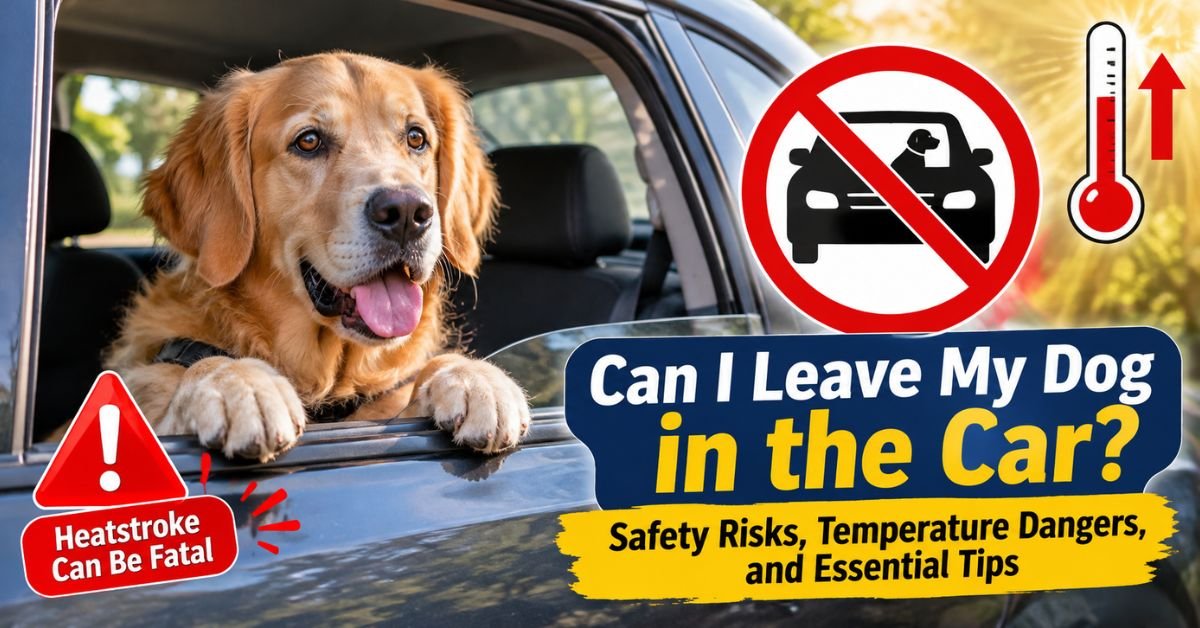
Overview: Is It Safe to Leave My Dog in the Car?
Many dog owners take their pets along when shopping, visiting friends, attending appointments, or running errands. However, situations sometimes arise when dogs must wait inside a parked vehicle. I Leave My Dog in the Car
If you have ever wondered, “Can I leave my dog in the car for five minutes?” the safest answer is no, particularly when your dog is unattended.
Even a short stop can become dangerous because vehicle temperatures can rise quickly. According to the RSPCA, when the outdoor temperature is just 22°C (72°F), a car’s interior can reach about 47°C (117°F) within an hour.
Dogs also regulate their body temperature differently from humans. They rely mainly on panting to release excess body heat. When a vehicle becomes hot, humid, and poorly ventilated, panting may no longer cool the body effectively.
The resulting condition, known as heatstroke, is a potentially fatal veterinary emergency.
Why Dogs Should Not Be Left Alone in Parked Cars
Several factors make parked vehicles dangerous environments for dogs:
- Rapid temperature increases: Sunlight through vehicle windows heats the interior quickly.
- Limited ventilation: A parked vehicle may not provide sufficient airflow.
- Humidity: Increased humidity makes it harder for dogs to cool themselves through panting.
- Unexpected delays: A quick shopping trip can turn into a much longer absence.
- Vehicle problems: Air conditioning can stop working, and an unattended running vehicle may create additional risks.
The important point is that a car does not need to feel extremely hot outside to become dangerous inside.
Can I Leave My Dog in the Car With the Windows Open?
No. Partially opening the windows does not reliably prevent dangerous temperature increases.
A small opening cannot guarantee adequate air circulation or maintain a safe interior temperature. Similarly, parking under a tree or using a windshield sunshade does not make an unattended vehicle safe for a dog.
The American Veterinary Medical Association (AVMA) specifically advises pet owners never to leave animals in cars, even in the shade or with the windows slightly open.
Symptoms and Triggers: What Happens When a Dog Gets Too Hot in a Car?
Heat exposure can affect a dog’s body rapidly. Recognizing the warning signs is essential because heatstroke can progress from mild discomfort to life-threatening organ damage.
1. Early Signs of Overheating
A dog experiencing excessive heat may show the following symptoms:
- Heavy or unusually rapid panting
- Excessive drooling
- Restlessness and repeated position changes
- Bright red or unusually dark gums
- Increased thirst
- Weakness or unusual tiredness
- Difficulty settling down
These symptoms should never be ignored, especially when a dog has been inside a parked vehicle.
| Warning Sign | What It May Indicate | Recommended Action |
|---|---|---|
| Heavy Panting | Difficulty releasing excess body heat | Move to a cooler environment immediately |
| Excessive Drooling | Significant heat stress | Begin cooling and contact a veterinarian |
| Vomiting or Diarrhea | Possible systemic heat injury | Seek emergency veterinary care |
| Confusion or Poor Coordination | Possible neurological effects | Arrange immediate veterinary treatment |
| Seizures | Severe neurological complications | Emergency veterinary treatment |
| Collapse or Unconsciousness | Critical medical emergency | Immediate emergency veterinary care |
3. Which Dogs Are More Vulnerable?
Although any dog can develop heatstroke, certain dogs have a higher risk.
Brachycephalic breeds: Dogs with short, flat faces often struggle with efficient breathing and heat regulation. Examples include:
- French Bulldogs
- English Bulldogs
- Pugs
- Boston Terriers
- Shih Tzus
Puppies: Young dogs may have difficulty regulating their body temperature and are more vulnerable to environmental stress.
Senior dogs: Older dogs may have reduced heat tolerance, particularly when they have existing medical conditions.
Overweight dogs: Excess body fat can make heat regulation more difficult.
Dogs with medical conditions: Animals with heart, respiratory, or other health problems may be less able to tolerate heat exposure.
A thick coat, dark coat, or individual differences in health can also influence how a dog responds to environmental temperatures.
4. Can Dogs Get Too Cold in a Parked Car?
Yes. Leaving a dog unattended in a vehicle during cold weather also creates health risks.
When the engine and heating system are switched off, the vehicle gradually loses warmth. Dogs exposed to sufficiently low temperatures may develop hypothermia.
Possible warning signs include:
- Persistent shivering
- Weakness and unusual tiredness
- Slow movement
- Confusion
- Reduced responsiveness
Puppies, senior dogs, small breeds, short-haired breeds, and dogs with health problems may be especially vulnerable.
The American Kennel Club and Cornell University College of Veterinary Medicine both warn against leaving dogs unattended in vehicles during cold weather.
Detailed Recommendations: How to Keep Your Dog Safe Around Cars
Preventing heatstroke and cold exposure starts with making safer decisions before travelling.
1. Leave Your Dog at Home When Possible
The safest option is to leave your dog in a comfortable environment at home when you know your destination does not allow pets.
Before leaving, make sure your dog has:
- Fresh drinking water
- A comfortable resting area
- Suitable indoor temperatures
- Adequate ventilation
- Access to a safe, quiet environment
If you expect to be away for an extended period, arrange for a responsible person to check on your dog.
2. Never Depend on Open Windows
Some owners believe that leaving the windows slightly open makes a parked vehicle safe.
Unfortunately, this assumption can put dogs at risk.
Even with open windows, sunlight can continue heating the vehicle’s interior. Air movement may also be insufficient to help the dog release excess body heat.
Instead of relying on ventilation, take your dog out of the vehicle whenever you park.
3. Avoid Leaving Your Dog Alone With the Air Conditioning Running
Leaving the engine running and air conditioning switched on may appear to solve the temperature problem, but it is not a dependable safety strategy.
Mechanical problems, engine shutdown, electrical issues, and accidental changes to the vehicle’s settings can interrupt cooling.
An unattended running vehicle also introduces additional security and safety concerns.
If your dog needs to remain in the vehicle during a necessary stop, have another responsible adult stay with the dog, monitor the environment, and be ready to respond immediately. This is not a substitute for avoiding unnecessary unattended confinement.
4. Use Proper Restraints During Car Travel
Keeping your dog secure while driving is another important part of vehicle safety.
Suitable options include:
- Crash-tested dog travel harnesses
- Properly secured travel crates
- Vehicle-compatible dog carriers
- Secure barriers designed for the vehicle
Avoid allowing your dog to move freely around the driver’s area. A loose dog can distract the driver and become injured during sudden braking.
Choose equipment appropriate for your dog’s size and follow the manufacturer’s installation instructions.
5. Plan Regular Breaks During Long Journeys
Long-distance travel can make dogs uncomfortable, particularly when they remain in one position for extended periods.
During suitable stops:
- Offer fresh drinking water.
- Allow your dog to stretch and walk.
- Provide bathroom opportunities.
- Choose shaded, comfortable resting areas.
- Check for signs of overheating or travel-related stress.
Never leave your dog alone in the parked vehicle while you take your own break.
6. Recognize the Warning Signs Before an Emergency
Pay attention to changes in your dog’s breathing, behavior, energy, and coordination.
A dog that suddenly becomes unusually quiet, refuses to move, or pants excessively may be experiencing heat stress.
Do not assume that a dog sleeping inside a vehicle is comfortable. Serious overheating can develop even when an animal initially appears calm.
🩺 Veterinary Expert Advice & Disclaimer:
“Never leave a dog unattended in a parked vehicle, even for a few minutes, because temperatures can rise rapidly and cause life-threatening heatstroke. If your dog develops excessive panting, vomiting, weakness, confusion, or collapse after heat exposure, begin cooling with cool water and seek immediate emergency veterinary care.”
— Veterinary Safety Guidance for Doggopulse
Editorial note: This is general veterinary safety guidance, not an individually signed review by a named veterinarian.
What Should You Do If Your Dog Is Trapped in a Hot Car?
Finding your dog trapped inside a hot vehicle can be frightening. However, acting quickly and seeking professional assistance can make a critical difference.
Step 1: Remove the Dog From the Heat
If your dog is inside your own vehicle, take them out immediately and move them to a cooler, shaded environment.
Do not waste time waiting for the vehicle to cool naturally.
Step 2: Begin Safe Cooling
If your dog shows signs of overheating:
- Move the dog away from direct sunlight.
- Apply cool water to the body, especially the neck, abdomen, and inner thighs.
- Provide airflow using a fan or gentle breeze.
- Offer small amounts of drinking water if the dog is conscious and able to swallow normally.
Avoid forcing water into the dog’s mouth.
Step 3: Contact a Veterinarian Immediately
Heatstroke is an emergency even if your dog appears to improve after cooling.
Call an emergency veterinary clinic and explain what happened. Follow the veterinarian’s instructions and arrange immediate examination.
Do not delay professional treatment while waiting to see whether symptoms disappear.
The RSPCA recommends cooling an overheated dog first and then transporting the animal to a veterinarian in a cool, ventilated vehicle.
Step 4: Monitor Your Dog During Recovery
Veterinary treatment may include intravenous fluids, temperature monitoring, blood tests, and supportive care.
Some complications, including kidney injury and blood-clotting problems, may become apparent after the initial overheating episode.
Follow all veterinary instructions, even if your dog seems normal again.
What If You Find Someone Else’s Dog Inside a Hot Car?
If you discover an unattended dog inside a potentially dangerous vehicle:
- Check whether the dog is showing signs of distress.
- Note the vehicle’s registration number and location.
- Ask nearby staff to help locate the owner.
- Contact local police or relevant animal welfare authorities if the dog appears to be in danger.
- Stay nearby and monitor the dog’s condition until help arrives.
Do not assume that the owner will return before the situation becomes dangerous.
If the dog is showing signs of heatstroke, treat the situation as an emergency. Laws concerning emergency vehicle entry and animal rescue differ between countries and regions, so seek assistance from local authorities rather than assuming you have legal permission to break a window.
| Travel Requirement | Recommended Practice | Main Benefit |
|---|---|---|
| Drinking Water | Carry fresh water and a portable bowl | Helps maintain hydration |
| Travel Restraint | Use a suitable, securely fitted harness or crate | Reduces injury risk |
| Ventilation | Maintain comfortable airflow while travelling | Improves comfort |
| Rest Breaks | Stop regularly during long journeys | Allows stretching and bathroom breaks |
| Temperature | Maintain a comfortable cabin temperature | Reduces heat and cold stress |
| Travel Planning | Choose dog-friendly destinations | Avoids leaving dogs unattended |
How Much Water Should a Dog Drink During Travel?
Dogs need access to fresh water throughout their journey. Their requirements depend on body weight, activity, weather, diet, and individual health.
Instead of forcing your dog to drink a fixed amount, offer water regularly, particularly during warm weather and long journeys.
Keep a clean, portable water bowl in your vehicle and refill it whenever necessary.
🐾 Dog Travel Essentials Checklist
A well-prepared travel kit helps keep your dog comfortable, hydrated, and safe throughout the journey. Before leaving home, make sure you have these important supplies:
Frequently Asked Questions (FAQs)
1. Can I Leave My Dog in the Car for Five Minutes?
It is not recommended. Even a short period can expose your dog to dangerous temperatures, particularly during warm or humid weather. A quick errand can also take longer than expected. The safest option is to take your dog with you or leave them at home.
2. Can I Leave My Dog in the Car With the Air Conditioning On?
Leaving the air conditioning running does not guarantee your dog’s safety. The system could fail, the engine could stop, or the vehicle could experience a mechanical problem. Avoid leaving your dog unattended in a parked vehicle.
3. Is It Safe to Leave My Dog in the Car During Winter?
Not necessarily. A parked vehicle can become extremely cold when the heating system is switched off. Prolonged cold exposure may cause hypothermia, especially in puppies, senior dogs, small breeds, and short-haired dogs.
4. What Should I Do If My Dog Shows Signs of Heatstroke in a Car?
Immediately remove your dog from the hot environment, begin cooling their body with cool water, and contact an emergency veterinarian. Warning signs include heavy panting, excessive drooling, vomiting, weakness, confusion, seizures, and collapse. Do not delay veterinary treatment even if your dog appears to recover.
Conclusion
If you regularly travel with your dog, understanding vehicle safety is essential. Although bringing your pet along may seem convenient, leaving a dog unattended in a parked car can expose them to serious health risks in both hot and cold weather.
Remember that open windows, shaded parking, and running air conditioning cannot guarantee your dog’s safety.
The best approach is to plan your journeys, carry fresh water, use appropriate travel restraints, and avoid leaving your dog alone inside a parked vehicle.
A few minutes of convenience are never worth risking your dog’s health or life.
At Doggopulse, we encourage responsible pet ownership through informed decisions, preventive care, and practical safety habits.
Scientific References & Sources The following veterinary and animal welfare organizations provide additional information about vehicle safety, heatstroke prevention, and cold-weather protection.📚 Scientific References & Sources
- American Veterinary Medical Association (AVMA) – Warm Weather Pet Safety
- RSPCA – Dogs Die in Hot Cars
- Cornell University College of Veterinary Medicine – Summer Heat Safety Tips for Dogs
- Cornell University College of Veterinary Medicine – Heatstroke: A Medical Emergency
- American Kennel Club (AKC) – Can I Leave My Dog in the Car If I Crack a Window?
- American Kennel Club (AKC) – Can I Leave My Dog in the Car in Winter?
- RSPCA – How to Recognise and Treat Heatstroke in Dogs

Muhammad Ahad — Passionate writer sharing informative, engaging, and easy-to-read articles across different topics. Focused on delivering valuable content that helps readers learn, explore, and stay inspired every day.