

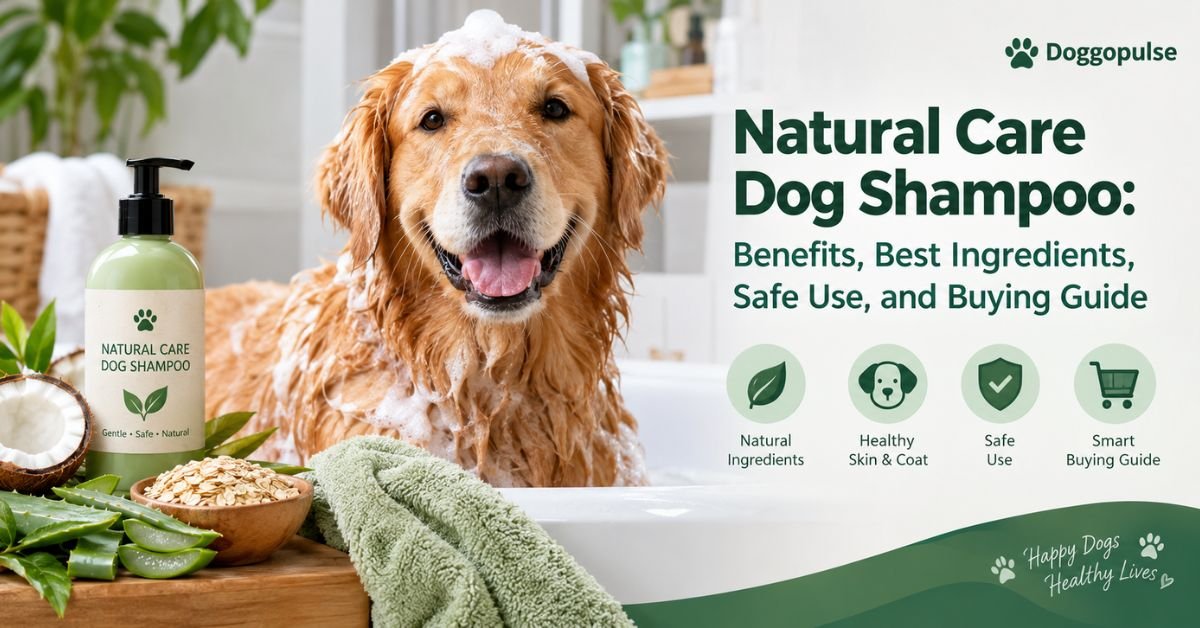
Choosing a natural care dog shampoo can help you keep your dog’s coat clean, soft, and comfortable without unnecessarily irritating the skin. However, a shampoo labeled natural, organic, or chemical-free is not automatically safer or more effective. The ingredients, your dog’s skin condition, and the way you use the product matter much more than marketing claims.
Some dogs need only a gentle shampoo for routine bathing, while others experience dry skin, dandruff, itching, or recurring irritation that requires veterinary attention. Understanding these differences will help you select a product that suits your dog’s needs.
This guide explains how to choose natural care dog shampoo, which ingredients may be helpful, what to avoid, and how to bathe your dog safely.
Overview: What Is Natural Care Dog Shampoo?
Natural care dog shampoo generally refers to dog grooming products made with plant-derived ingredients, naturally occurring moisturizers, or other ingredients marketed as gentle alternatives to conventional formulations. Depending on the product, these may include colloidal oatmeal, aloe vera, glycerin, coconut-derived cleansing agents, or botanical extracts.
The term does not have one universal formula. Two shampoos marketed as natural can have very different ingredients, fragrance levels, cleansing strengths, and suitability for sensitive skin.
A good shampoo should remove dirt, loose debris, and excess oil without leaving the skin uncomfortable or the coat difficult to manage.
Why dog-specific shampoo matters
Dogs have different skin characteristics from humans. Human shampoos, including many baby shampoos, may be too harsh for regular canine use. The American Society for the Prevention of Cruelty to Animals (ASPCA) recommends selecting a shampoo specifically formulated for your pet’s species and consulting a veterinarian when choosing a product for particular skin needs.
Natural Care Dog Shampoo: Benefits, Best Ingredients, Safe Use, and Buying Guide
Choosing a natural care dog shampoo can help you keep your dog’s coat clean, soft, and comfortable without unnecessarily irritating the skin. However, a shampoo labeled natural, organic, or chemical-free is not automatically safer or more effective. The ingredients, your dog’s skin condition, and the way you use the product matter much more than marketing claims.
Some dogs need only a gentle shampoo for routine bathing, while others experience dry skin, dandruff, itching, or recurring irritation that requires veterinary attention. Understanding these differences will help you select a product that suits your dog’s needs.
This guide explains how to choose natural care dog shampoo, which ingredients may be helpful, what to avoid, and how to bathe your dog safely.
Overview: What Is Natural Care Dog Shampoo?
Natural care dog shampoo generally refers to dog grooming products made with plant-derived ingredients, naturally occurring moisturizers, or other ingredients marketed as gentle alternatives to conventional formulations. Depending on the product, these may include colloidal oatmeal, aloe vera, glycerin, coconut-derived cleansing agents, or botanical extracts.
The term does not have one universal formula. Two shampoos marketed as natural can have very different ingredients, fragrance levels, cleansing strengths, and suitability for sensitive skin.
A good shampoo should remove dirt, loose debris, and excess oil without leaving the skin uncomfortable or the coat difficult to manage.
Why Dog-Specific Shampoo Matters
Dogs have different skin characteristics from humans. Human shampoos, including many baby shampoos, may be too harsh for regular canine use. The American Society for the Prevention of Cruelty to Animals (ASPCA) recommends selecting a shampoo specifically formulated for your pet’s species and consulting a veterinarian when choosing a product for particular skin needs.
Benefits of Natural Care Dog Shampoo
The potential benefits of natural care dog shampoo depend on the individual formula rather than the word “natural” on the bottle. Choosing a product that suits your dog’s skin and coat can help make regular grooming more comfortable.
1 Gentle Cleansing
A well-formulated dog shampoo can remove dirt, outdoor debris, and excess oils while leaving the coat easier to brush. A mild cleanser may be a suitable choice for dogs that do not need a specialized treatment.
2 Moisturizing Dry-Feeling Skin
Ingredients such as glycerin and certain emollients help retain moisture or soften the skin and coat. Colloidal oatmeal is also commonly used in products designed to soothe dry or irritated skin.
However, a moisturizing shampoo cannot correct every cause of dry skin. Nutritional problems, parasites, environmental conditions, and underlying diseases may require different solutions.
3 Supporting a Comfortable Coat
When the shampoo is appropriate for the dog’s coat type and is rinsed thoroughly, it can help remove buildup and make brushing easier. Dogs with long, curly, or dense coats may also benefit from a suitable conditioner.
4 Fewer Unnecessary Fragrances
A fragrance-free formula can be a sensible option for dogs that react to scented grooming products. Fragrance-free does not mean ingredient-free, hypoallergenic for every dog, or guaranteed not to cause irritation.
5 A Simpler Ingredient List
A clearly labeled formula makes it easier to identify potential triggers if your dog develops a reaction. Simplicity alone does not guarantee safety, but transparency helps owners make more informed decisions.
Best Ingredients to Look for in Natural Care Dog Shampoo
When comparing natural care dog shampoo products, focus on the purpose of each ingredient, the complete formula, and any sensitivities your dog already has. Certain moisturizing and skin-conditioning ingredients may help maintain a comfortable coat, but no single ingredient is suitable for every dog.

1. Colloidal Oatmeal
Colloidal oatmeal is commonly included in shampoos formulated for dry or itchy-feeling skin. It may help soothe mild irritation and support skin comfort when used in an appropriate dog-specific product.
However, persistent itching should not automatically be attributed to dryness. Allergies, parasites, and skin infections may require veterinary assessment and targeted treatment.

2. Aloe Vera
Some dog shampoos contain aloe-derived ingredients for skin-conditioning purposes. The suitability of aloe depends on the specific ingredient, its concentration, and the finished product’s formulation.
Choose a product specifically formulated for dogs and prevent your pet from licking it. Avoid applying raw aloe preparations or concentrated household products indiscriminately, as some parts of the aloe plant can be harmful if swallowed.

3. Glycerin
Glycerin is a humectant, which means it attracts and helps retain moisture. When included in a properly formulated dog shampoo, it may help support skin hydration and leave the coat feeling softer.
The overall formula matters more than the presence of glycerin alone. If your dog’s skin remains dry, flaky, or irritated, consult your veterinarian to investigate possible underlying causes.

4. Mild Cleansing Ingredients
Look for a dog-specific shampoo designed for your pet’s coat type and grooming needs. A suitable cleanser should remove everyday dirt and excess oils without leaving excessive residue or causing unnecessary irritation.
Do not judge a shampoo solely by whether its ingredients are plant-derived. The finished formula, fragrance, directions for use, and your dog’s individual sensitivities are all important considerations.
Ingredients and Products to Approach With Caution
Natural ingredients can still cause irritation or be unsafe when used incorrectly. Read the full label instead of assuming that a plant-based product is harmless.
Essential oils and concentrated botanical extracts
Tea tree oil and other concentrated essential oils deserve particular caution. Some essential oils can be toxic to dogs, especially when concentrated, swallowed, or improperly applied. Avoid homemade essential-oil mixtures and products that are not specifically formulated and labeled for dogs.
Strong fragrances and unnecessary additives
Heavily fragranced products may irritate some sensitive dogs. If your dog has reacted to scented products before, consider a fragrance-free formula and check the ingredient list carefully.
Human shampoo and household soap
Do not use human shampoo as your dog’s regular grooming product. Dish soap, laundry detergent, and household cleaning products are also not suitable routine substitutes. An exception may be an emergency decontamination situation in which a veterinarian or animal poison-control service specifically advises an appropriate cleansing method.
Medicated shampoos without veterinary guidance
Antifungal, antibacterial, antiseborrheic, and antiparasitic shampoos serve different purposes. A product that helps one skin condition may be unsuitable for another.
For example, a dog with a yeast infection may require an antifungal shampoo, while a dog with uncomplicated dry skin may need a gentle moisturizing product. A veterinary examination can help determine which approach is appropriate.
Symptoms and Triggers: When Does Your Dog Need a Different Shampoo?
A shampoo may contribute to skin irritation, but skin symptoms should not automatically be blamed on the grooming product.
Signs your current shampoo may not suit your dog
Watch for these changes after bathing:
- Increased scratching, licking, or rubbing.
- Redness around the belly, paws, armpits, or groin.
- Dry flakes or a coat that feels unusually rough.
- Redness around the face after accidental shampoo exposure.
- Increased discomfort after repeated baths.
Stop using a product if you suspect it is causing a reaction. Rinse off remaining residue if it is safe to do so, and contact your veterinarian if symptoms persist or worsen.
Common Causes of Skin Problems in Dogs
1. Allergies
Environmental allergens, food-related reactions, or contact irritants may cause itching and skin discomfort. Depending on the cause, your dog may also develop redness, frequent paw licking, or recurring skin irritation. Shampoo alone will not resolve every allergic condition.
2. Parasites
Fleas and mites can cause intense itching, redness, scabs, and hair loss. A routine natural shampoo should not be considered a reliable treatment for an infestation. Your veterinarian can recommend appropriate parasite control based on your dog’s condition.
3. Bacterial or Yeast Overgrowth
Redness, an unpleasant odor, greasy skin, scaling, and recurring discomfort can occur with bacterial or yeast skin infections. Veterinary assessment may be needed to identify the underlying problem and select suitable treatment, which may include a medicated shampoo.
4. Overbathing or Shampoo Residue
Frequent washing, harsh cleansers, or inadequate rinsing can irritate a dog’s skin. Rinse the coat thoroughly after every bath and follow the shampoo label. Dogs with skin disease may need a specific bathing schedule recommended by a veterinarian rather than simply bathing less often.
When to contact a veterinarian
Seek veterinary advice for persistent itching, spreading redness, hair loss, open sores, a strong unpleasant odor, or repeated skin flare-ups. Painful skin, facial swelling, breathing difficulty, or a rapidly worsening reaction needs urgent attention.
Veterinary Advice: Choosing and Using Dog Shampoo
🩺 Veterinary Expert Advice & Disclaimer:
“Choose a dog-specific shampoo based on your pet’s skin condition, coat type, and history of sensitivity rather than relying on a natural or organic label alone. If itching, redness, scaling, or an unpleasant skin odor persists, consult a veterinarian because your dog may need treatment for an underlying condition.”
— Veterinary Guidance for Doggopulse
Editorial note: This is general educational guidance, not a quotation from an individually identified veterinarian or a claim of individual veterinary review. Arrange a qualified veterinary review before publishing it as medically reviewed.
How to Choose the Right Natural Care Dog Shampoo
The best product depends on your dog’s needs. Use this comparison to narrow down your options.
How to Choose the Right Natural Care Dog Shampoo
Compare your dog’s skin condition and grooming needs to identify an appropriate shampoo type. These recommendations are general guidance and do not replace veterinary advice for skin disease.
| Dog’s Needs | Shampoo Type to Consider | Potential Benefit | Important Precaution |
|---|---|---|---|
| Normal, healthy skin | Gentle dog-specific shampoo | Removes dirt and everyday buildup | Avoid unnecessary strong fragrances. |
| Dry-feeling skin | Moisturizing dog shampoo | Helps soften the coat and support skin hydration | Persistent dryness may need veterinary assessment. |
| Mild, sensitive skin | Fragrance-free, gentle shampoo | Reduces exposure to some potential irritants | No product is guaranteed to suit every dog. |
| Puppy grooming | Shampoo labeled for puppies | Provides age-appropriate cleansing | Follow the label and avoid eye contact. |
| Greasy or flaky skin | Veterinarian-selected shampoo when symptoms persist | May address a specific skin problem | The correct treatment depends on the underlying cause. |
| Suspected bacterial or yeast infection | Veterinary-recommended medicated shampoo | May support targeted treatment | Use the prescribed contact time and schedule. |
Feeding Guidelines and Skin Health
Although this topic focuses on shampoo rather than food, nutrition can influence skin and coat condition. Bathing will not correct a nutritional deficiency or replace treatment for an underlying skin disorder.
Provide a complete and balanced diet
Feed your dog a complete and balanced diet appropriate for its life stage. If your dog has persistent skin problems, discuss the diet, treats, supplements, and any suspected food reactions with your veterinarian.
Do not start an elimination diet or make major dietary changes solely because your dog is itchy. Food allergies cannot be reliably diagnosed by shampoo choice or appearance alone.
Support hydration
Keep fresh, clean water available. Hydration supports general health, although simply drinking more water is not a treatment for every skin problem.
Avoid unproven skin supplements
Oils, herbal preparations, and supplements marketed for skin health are not automatically safe or necessary. Ask your veterinarian before adding them, especially if your dog takes medication or has an existing medical condition.
How to Bathe Your Dog Safely With Natural Care Dog Shampoo
Bathing your dog correctly helps remove dirt, loose hair, and everyday buildup without unnecessarily irritating the skin. Choose a shampoo formulated for dogs, follow its label instructions, and rinse the coat thoroughly to help keep your dog’s skin comfortable.
Brush Before Bathing
Brush your dog’s coat before adding water to remove loose hair and gently work through tangles. Avoid pulling at tight mats or brushing irritated skin aggressively, as this can cause discomfort. If the coat is severely matted, seek help from a professional groomer.
Wet the Coat With Lukewarm Water
Use lukewarm water that feels comfortable against your wrist. Wet the coat gradually, taking extra care around the face. Avoid spraying directly into your dog’s eyes, nose, or ears, and keep the bathing experience calm and reassuring.
Apply Shampoo as Directed
Apply a dog-specific shampoo according to the product label. Follow the manufacturer’s instructions for dilution, application, and contact time. Do not assume that a natural or plant-based shampoo should stay on the skin for a particular period unless the label says so.
Rinse the Coat Thoroughly
Rinse until all shampoo residue has been removed. Pay particular attention beneath the legs, around the belly, between the toes, and inside skin folds. Leftover product can irritate the skin, so take your time rather than finishing the rinse too quickly.
Dry Your Dog Gently
Pat the coat with a clean towel instead of rubbing vigorously. Dry skin folds and other areas where moisture can collect. If you use a pet-safe dryer, select a cool or low setting, keep it moving, and avoid directing hot air at one area for too long.
How often should you bathe your dog?
There is no single bathing schedule suitable for every dog. Coat type, activity level, skin health, product formulation, and veterinary recommendations all affect frequency.
For a healthy dog, bathe when the coat needs cleaning and follow the shampoo label. If your dog needs very frequent baths because of itching, odor, or skin problems, ask your veterinarian whether a different product or treatment plan is needed.
Frequently Asked Questions
1. Is natural care dog shampoo better than regular dog shampoo?
Not necessarily. A well-formulated conventional dog shampoo may be just as suitable as a natural product. Compare the ingredients, fragrance, intended use, and your dog’s individual needs instead of judging quality by marketing labels.
2. Can I use homemade natural shampoo on my dog?
Commercial dog shampoos formulated for canine skin are generally the more straightforward choice. Homemade mixtures containing vinegar, essential oils, concentrated plant extracts, or household soaps may irritate the skin or create safety risks. Ask your veterinarian before using a homemade preparation, especially if your dog has sensitive or damaged skin.
3. Is natural care dog shampoo safe for puppies?
It can be appropriate if the product is specifically labeled for puppies of your dog’s age and is used according to its directions. Use gentle handling, prevent shampoo from entering the eyes or mouth, and rinse thoroughly. Contact your veterinarian if your puppy has itching, redness, or unusual skin changes.
4. Can natural dog shampoo stop itching?
It may help soothe mild dryness or remove environmental debris, depending on the formula. However, it cannot reliably treat every cause of itching, including fleas, mites, allergies, or bacterial and yeast infections. Persistent or severe itching warrants veterinary assessment.
Final Thoughts
Natural care dog shampoo can be a useful part of your dog’s grooming routine when the formula suits its skin and coat. Ingredients such as colloidal oatmeal and glycerin may be helpful in appropriately formulated products, while fragrance-free options can be worth considering for sensitive dogs.
The most important factors are safe ingredients, correct use, thorough rinsing, and attention to your dog’s response. If your dog develops persistent itching, scaling, redness, or hair loss, seek veterinary advice instead of repeatedly switching shampoos.
A clean coat is only one part of skin health. Choosing the right product and recognizing when a skin problem needs professional care will help you make better decisions for your dog’s comfort and well-being.
Scientific References & Sources
📚 Scientific References & Sources
- ASPCA – Dog Grooming Tips
- Merck Veterinary Manual – Principles of Topical Treatment in Animals
- Merck Veterinary Manual – Treatment of Skin Disorders in Dogs
- VCA Animal Hospitals – Grooming and Coat Care for Your Dog
- Virginia Tech Veterinary Teaching Hospital – Safe Bathing Practices: Protecting Your Pet’s Skin
- American Kennel Club – How to Make Homemade Dog Shampoo

Muhammad Ahad — Passionate writer sharing informative, engaging, and easy-to-read articles across different topics. Focused on delivering valuable content that helps readers learn, explore, and stay inspired every day.