

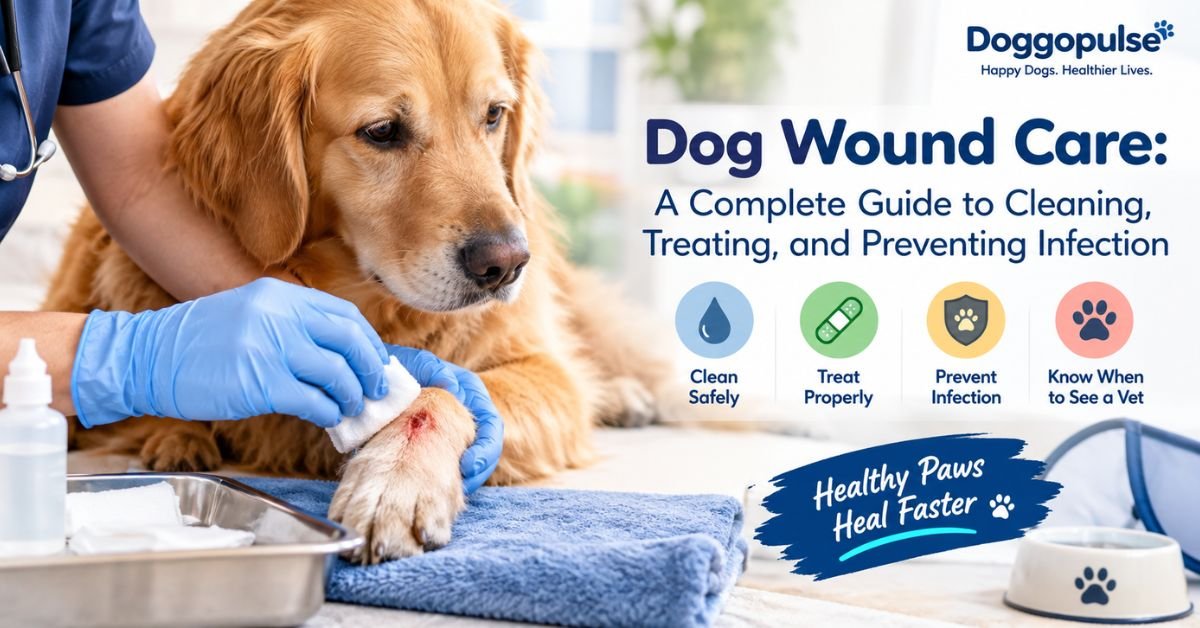
A small cut, scrape, puncture, or bite can happen to almost any dog. Your dog may step on something sharp, scratch against rough surfaces, get into a scuffle, or develop a wound after an accident Dog Wounds Care . While some minor wounds can receive basic first aid at home, others need prompt veterinary attention.
Knowing how to provide safe dog wounds care can help reduce contamination, protect damaged tissue, and prevent your dog from making the injury worse. The most important point is knowing the difference between a minor wound that can be monitored and an injury that requires professional treatment.
This guide explains how to assess a wound, control bleeding, clean it safely, recognize infection, protect the injury during healing, and know when your veterinarian should take over.
What Is Dog Wounds Care?
Dog wounds care refers to the cleaning, protection, monitoring, and treatment of damaged skin and underlying tissue.
Wounds can range from superficial abrasions to deep injuries involving muscles, blood vessels, nerves, or internal structures. Common examples include:
- Scratches and abrasions
- Small cuts
- Lacerations
- Puncture wounds
- Bite wounds
- Torn skin
- Paw-pad injuries
- Nail-bed injuries
- Hot spots caused by self-trauma
- Burns
- Surgical or postoperative wounds
A wound may look small on the surface while being much deeper underneath. This is particularly true of punctures and animal bites.
Veterinary guidance recommends that owners take open wounds seriously because contaminated or deep injuries can become infected or develop abscesses.
Why Proper Dog Wounds Care Matters
A wound creates an opening through which bacteria and debris can enter damaged tissue. Dogs can also delay healing by licking, chewing, scratching, or repeatedly reopening the injured area.
Appropriate wound care has several goals:
- Control bleeding.
- Remove visible contamination.
- Reduce the chance of infection.
- Protect healthy tissue.
- Prevent licking and chewing.
- Reduce additional trauma.
- Identify complications early.
- Support normal healing.
Even a wound that initially appears harmless should be monitored closely for changes in swelling, discharge, odor, pain, or tissue color.
Common Types of Dog Wounds
Understanding the type of injury can help you decide how urgently your dog needs veterinary care.
Scrapes and Abrasions
A scrape usually affects the surface layers of the skin. It may happen when a dog falls, slides across rough ground, or repeatedly scratches an area.
Small abrasions may have mild bleeding or oozing and can often be gently cleaned while you arrange veterinary advice if needed.
Cuts and Lacerations
A cut may be shallow or deep. Deep lacerations can damage blood vessels, muscles, nerves, and other structures.
If the wound has separated edges, is heavily contaminated, or continues bleeding, veterinary examination is appropriate.
Puncture Wounds
Puncture wounds deserve special attention because the surface opening can be deceptively small.
A bite from another animal, for example, may introduce bacteria deep underneath the skin. The opening can close while infection develops underneath.
Bite Wounds
Dog and animal bites should generally be assessed by a veterinarian, even when the external injury looks minor.
Bite wounds can contain bacteria and may hide deeper tissue damage. Some develop into abscesses several days later.
Paw and Paw-Pad Wounds
Dogs frequently injure their paws by stepping on sharp objects, rough surfaces, broken materials, or excessively hot ground.
Because dogs walk on their paws throughout the day, these injuries can repeatedly reopen and become difficult to keep clean.
Burns
Burns can result from hot surfaces, chemicals, fire, or other sources. Significant burns require veterinary evaluation because tissue damage may extend beyond what is immediately visible.
Signs That Your Dog May Have a Wound
Some wounds are obvious, while others can be hidden beneath fur.
Watch for:
- Blood on the coat or bedding
- Persistent licking of one area
- Repeated chewing or scratching
- Sudden limping
- Swelling
- Tenderness
- Whining when touched
- Matted or wet fur
- Red or irritated skin
- An unpleasant smell
- Pus or abnormal discharge
- A visible cut or hole in the skin
- Missing hair around an injured area
- Reluctance to walk or move normally
If your dog suddenly begins obsessively licking a particular location, inspect the area carefully.
Dog Wounds Care: What to Do First
Before treating any injury, remember that a painful or frightened dog can bite even if they are normally gentle.
Approach slowly and avoid putting your face near the injured area.
If possible, wear disposable gloves when handling an open wound. A barrier can also help protect you if the dog is frightened or painful.
Step 1: Assess the Situation
Look at the wound without immediately touching it.
Ask yourself:
- Is there heavy bleeding?
- Is the wound deep?
- Is there a foreign object?
- Was the injury caused by a bite?
- Is the wound near the eye?
- Is the chest or abdomen involved?
- Is my dog having trouble breathing?
- Is my dog unable to stand or walk?
- Does my dog appear severely painful or weak?
If any of these situations apply, prioritize veterinary care rather than attempting extensive home treatment.
Step 2: Control Active Bleeding
For bleeding wounds, place clean gauze or a clean cloth directly over the injury and apply firm, steady pressure.
Avoid repeatedly lifting the material to check whether bleeding has stopped because this can interfere with clot formation.
If blood soaks through the first layer, place additional material over it rather than immediately removing the original layer.
Persistent or severe bleeding requires urgent veterinary attention. VCA notes that bleeding that cannot be controlled within approximately 10–15 minutes warrants emergency veterinary care.
Step 3: Gently Flush the Wound
For appropriate minor wounds, clean water or sterile saline can be used to flush away surface debris.
The purpose is to remove contamination without further damaging tissue.
Do not aggressively scrub an open wound.
Warm tap water or an appropriate saline solution is commonly recommended for basic wound cleaning.
Step 4: Prevent Licking
One of the most important parts of dog wounds care is stopping your dog from repeatedly licking or chewing the injury.
An Elizabethan collar, commonly called an e-collar or cone, is often the safest option.
Depending on the wound location, your veterinarian may recommend another protective method.
Licking does not reliably “clean” a wound. A dog’s mouth contains microorganisms, and repeated licking can damage new tissue and delay healing.
🩺 Veterinary Advice & Disclaimer🩺 Veterinary Expert Advice & Disclaimer:
“Clean minor wounds gently and prevent licking, but do not assume a small surface opening means a minor injury. Deep, contaminated, puncture, bite, or persistently bleeding wounds should be assessed by a veterinarian because hidden tissue damage and infection may not be visible at first.”
— Veterinary-Informed Guidance for Doggopulse
What Not to Put on a Dog’s Open Wound
One of the most common mistakes in home wound care is assuming that a household disinfectant will automatically make an injury safer.
Avoid using products on an open wound unless your veterinarian specifically recommends them.
Avoid Hydrogen Peroxide
Hydrogen peroxide can damage healthy cells involved in wound healing and may delay recovery.
Avoid Rubbing Alcohol
Alcohol can irritate damaged tissue and cause significant discomfort.
Avoid Household Soaps and Shampoos
These products are not designed for open wounds and may irritate exposed tissue.
Avoid Essential Oils
Essential oils, including tea tree oil, should not be casually applied to wounds. Some substances can be harmful if absorbed or swallowed.
VCA specifically advises against using soaps, shampoos, rubbing alcohol, hydrogen peroxide, herbal preparations, and tea tree oil on open wounds unless directed by a veterinarian.
How to Clean a Minor Dog Wound
If your veterinarian has determined that a wound is suitable for home care, follow these general steps.
1. Prepare Your Supplies
Keep the following available:
- Clean gauze
- Sterile saline or clean water
- Clean towels
- Disposable gloves
- A suitable protective collar
- Any veterinarian-recommended medication
- A clean container for rinsing supplies
2. Keep Your Dog Calm
Choose a quiet area and have another person assist if your dog is nervous.
Do not force your dog through a painful procedure if they are becoming increasingly distressed or aggressive.
3. Flush the Area
Gently rinse away dirt and loose debris.
Do not forcefully scrub the wound.
4. Pat the Surrounding Area Dry
Avoid rubbing directly over exposed tissue.
5. Apply Only Recommended Products
If your veterinarian prescribed a topical medication, use it exactly as directed.
Do not add several different products because you think more treatment will produce faster healing.
6. Stop Your Dog From Interfering
Use an e-collar or another veterinarian-approved protective method.
When Does a Dog Wound Need Veterinary Treatment?
Knowing when to stop home care is just as important as knowing how to clean a wound.
Seek veterinary attention for:
- Deep cuts
- Large open wounds
- Puncture wounds
- Bite wounds
- Wounds near the eye
- Wounds involving the chest or abdomen
- Severe burns
- Foreign objects embedded in tissue
- Persistent bleeding
- Severe swelling
- Significant pain
- Difficulty walking
- Pus or abnormal discharge
- Bad odor
- Increasing redness or heat
- Black, gray, or unhealthy-looking tissue
- Wounds that are getting worse instead of better
VCA and AKC both emphasize veterinary evaluation for deep, contaminated, bite-related, actively bleeding, or infected wounds.
Emergency Warning Signs
Go to an emergency veterinary hospital when your dog has a serious injury accompanied by signs such as:
- Severe bleeding
- Difficulty breathing
- Collapse
- Inability to stand
- Major trauma
- A deep wound entering the chest or abdomen
- A large flap of damaged skin
- Severe weakness
- Pale or abnormal gums
- A penetrating object that remains embedded
If an object is stuck in a wound, do not pull it out yourself. Stabilize the area as safely as possible and seek emergency veterinary care.
Penetrating chest or abdominal injuries can be life-threatening.
Dog Wounds Care After Veterinary Treatment
After your veterinarian has treated the injury, your job shifts from emergency first aid to protecting the healing tissue.
Follow Medication Instructions
Give prescribed medications exactly as directed.
Do not give your dog human painkillers unless a veterinarian has specifically instructed you to do so. Some human medications can be dangerous or toxic to dogs.
Keep the Wound Clean
Follow your veterinarian’s instructions for cleaning frequency and products.
Some wounds need regular flushing, while others may require a different approach.
Keep Bandages Dry
If your veterinarian applies a bandage, keep it clean and dry.
A wet or damaged bandage may need prompt replacement.
Restrict Excessive Activity
Running, jumping, rough play, and excessive movement can cause healing wounds or surgical sites to reopen.
Your veterinarian may recommend leash-only walks or temporary activity restriction.
Monitor the Wound Every Day
Look for changes in:
- Color
- Swelling
- Discharge
- Odor
- Pain
- Skin temperature
- Wound size
- Appetite and behavior
Daily observation can help you notice complications before they become more serious.
How to Tell If a Dog Wound Is Healing
A healing wound should generally show gradual improvement rather than progressive deterioration.
Depending on the injury, you may notice:
- Less swelling
- Reduced redness
- Less discomfort
- Less discharge
- Formation of healthy tissue
- Gradual closure of the wound
- Improved normal activity
However, not every wound should simply be allowed to close quickly.
Some contaminated wounds are deliberately left open by veterinarians so they can drain and heal properly. Closing an infected or heavily contaminated wound too early can trap bacteria inside.
Signs Healing May Be Going Wrong
Contact your veterinarian if you notice:
- Increasing redness
- Increasing swelling
- Worsening pain
- Thick discharge
- Yellow or green discharge
- Bad odor
- Persistent bleeding
- Wound edges separating
- Black or gray tissue
- Your dog becoming lethargic
- Loss of appetite
- Fever or other signs of illness
A wound that looks worse after initially improving deserves veterinary attention.
Dog Wounds Care and Nutrition
Nutrition does not replace proper wound treatment, but adequate nutrition supports normal tissue repair.
During recovery, your dog generally needs a complete and balanced diet appropriate for their age, size, and health status.
Important nutritional components include:
Protein
The amino acids in protein are essential for maintaining and repairing tissues.
Dogs recovering from injuries may need particular attention to adequate protein intake, especially when appetite is reduced or another medical condition is present.
Calories
Healing requires energy.
If your dog is eating substantially less than normal, contact your veterinarian rather than simply adding treats or supplements.
Water
Adequate hydration supports normal body function and recovery.
Keep fresh, clean water available unless your veterinarian has prescribed fluid restrictions.
Vitamins and Minerals
A balanced commercial diet should normally provide the essential vitamins and minerals a healthy dog needs.
Avoid adding high-dose supplements without veterinary guidance. More is not always better, and some supplements can interact with medications or medical conditions.
| Wound Situation | Recommended First Step | Veterinary Attention |
|---|---|---|
| Small superficial scrape | Gently flush with clean water or saline and prevent licking | Contact a vet if worsening or not healing |
| Minor cut with controlled bleeding | Apply gentle pressure, clean appropriately, monitor closely | Vet evaluation if deep, gaping, or worsening |
| Persistent bleeding | Apply firm direct pressure with clean gauze or cloth | Urgent/emergency veterinary care |
| Puncture wound | Keep area clean and prevent licking | Veterinary evaluation recommended |
| Bite wound | Control bleeding if present and keep wound protected | Veterinary evaluation recommended |
| Deep or large laceration | Cover with clean material and minimize movement | Prompt veterinary/emergency care |
| Wound near eye | Avoid home treatment beyond basic protection | Prompt veterinary examination |
| Chest or abdominal penetrating wound | Do not remove embedded object | Emergency veterinary care |
| Pus, bad odor, increasing swelling | Keep clean and prevent licking | Veterinary examination |
| Wound with black or gray tissue | Avoid home treatmen | Urgent veterinary examination |
Can You Bandage a Dog’s Wound at Home?
Bandaging sounds simple, but an improperly applied bandage can create additional problems.
A bandage that is too tight can interfere with circulation. A poorly positioned bandage can trap moisture and contamination against the wound.
For this reason, it is best to have a veterinarian demonstrate appropriate bandaging technique when a wound actually requires one.
If your veterinarian has instructed you to bandage the wound, follow their exact instructions regarding:
- Dressing material
- Bandage tightness
- Change frequency
- Cleaning
- Keeping it dry
- Warning signs
If the bandage becomes wet, slips, smells bad, becomes soaked with blood or discharge, or your dog develops swelling or significant discomfort, contact your veterinarian.
VCA specifically warns that incorrect bandaging can cause complications and recommends professional guidance for bandage care.
How to Prevent Your Dog From Reopening a Wound
A dog may understand that a wound hurts, but that does not always stop them from licking or scratching it.
Useful protective measures can include:
Use an E-Collar
An e-collar is often the most reliable way to prevent access to a wound.
Limit Exercise
If movement causes the wound to stretch or reopen, temporarily reduce activity.
Keep Nails Trimmed
Shorter nails may reduce damage from accidental scratching.
Keep Bedding Clean
Clean bedding can help reduce exposure to dirt and contamination while your dog recovers.
Follow Veterinary Restrictions
If your veterinarian recommends crate rest, leash-only walks, or another restriction, follow those instructions until the healing period is complete.
Common Mistakes in Dog Wounds Care
Mistake 1: Assuming a Small Hole Is a Small Injury
Puncture wounds can penetrate deeper tissue than the skin opening suggests.
Mistake 2: Letting the Dog Lick the Wound
Licking can traumatize healing tissue and introduce microorganisms.
Mistake 3: Using Hydrogen Peroxide
Hydrogen peroxide can damage healthy cells and delay healing.
Mistake 4: Using Human Medication
Some human medications can be dangerous for dogs.
Mistake 5: Wrapping the Wound Too Tightly
An excessively tight bandage can interfere with circulation.
Mistake 6: Ignoring Increasing Discharge
Thick, colored, or foul-smelling discharge may indicate infection and should not be ignored.
Mistake 7: Waiting Too Long After a Bite
Bite wounds can hide deeper contamination and tissue damage.
Frequently Asked Questions About Dog Wounds Care
1. What can I use to clean my dog’s wound?
For many minor wounds, clean water or saline can be used to gently flush the area. Your veterinarian may recommend a specific diluted antiseptic in certain situations. Avoid hydrogen peroxide, rubbing alcohol, soaps, shampoos, tea tree oil, and other products unless your veterinarian specifically tells you to use them.
2. Should I let my dog lick a wound?
No. Repeated licking can damage new tissue, introduce bacteria, and interfere with healing. An e-collar is often an effective way to prevent access to the wound.
3. How long does a dog wound take to heal?
Healing time varies significantly depending on the wound’s depth, location, contamination, infection status, and whether surgery was required. A small superficial injury may improve relatively quickly, while deep or infected wounds can take considerably longer.
If the wound is not gradually improving, ask your veterinarian to reassess it.
4. When should I take my dog to the vet for a wound?
Seek veterinary care for deep cuts, punctures, bites, persistent bleeding, significant swelling or pain, wounds near the eyes, burns, foreign objects, abnormal discharge, foul odor, black or gray tissue, or injuries involving the chest or abdomen. Emergency care is appropriate for severe trauma, breathing difficulties, collapse, inability to stand, or uncontrolled bleeding.
Final Thoughts on Dog Wounds Care
Good dog wounds care is not about putting as many products as possible on an injury. The safest approach is to assess the wound carefully, control bleeding when necessary, gently remove surface contamination, prevent licking, and recognize when professional treatment is needed.
Minor superficial wounds may sometimes be managed with basic first aid and close monitoring, but punctures, bites, deep cuts, significant bleeding, burns, and wounds showing signs of infection deserve veterinary attention.
When you are uncertain about the severity of an injury, contacting your veterinarian is safer than waiting for the wound to become obviously worse.
📚 Scientific References & Sources
- VCA Animal Hospitals – Care of Open Wounds in Dogs
- American Kennel Club – Dog Wound Care: Everything You Need to Know
- VCA Animal Hospitals – First Aid for Wounds in Dogs
- VCA Animal Hospitals – First Aid for Bleeding in Dogs

Muhammad Ahad — Passionate writer sharing informative, engaging, and easy-to-read articles across different topics. Focused on delivering valuable content that helps readers learn, explore, and stay inspired every day.
1 thought on “Dog Wounds Care: A Complete Guide to Cleaning, Treating, and Preventing Infection”