

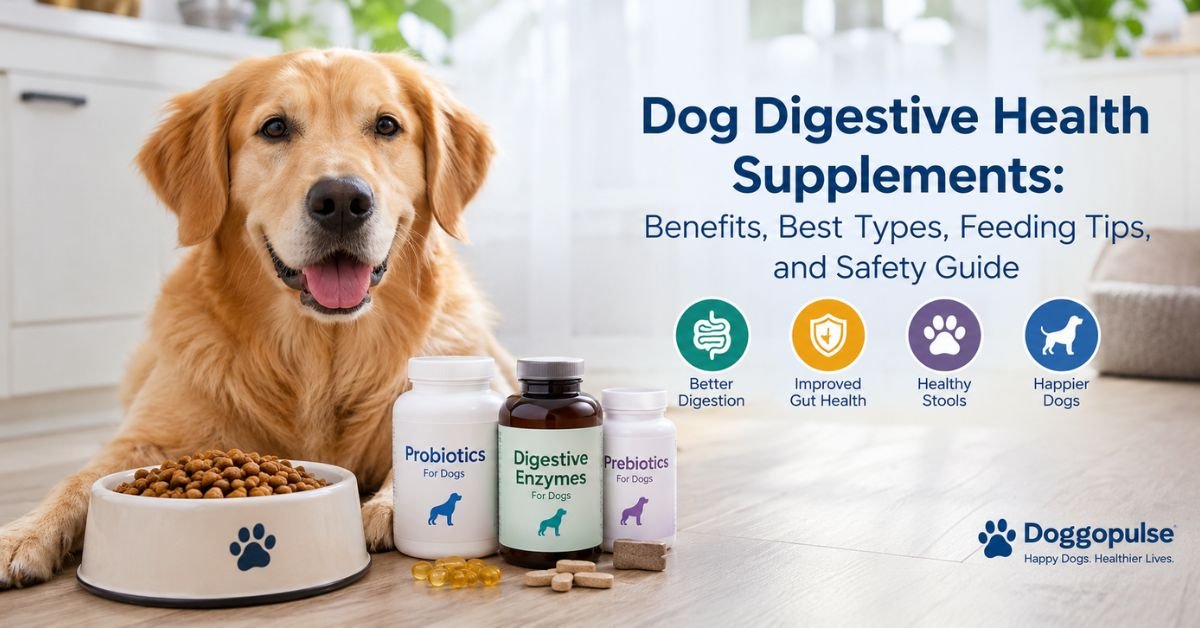
A healthy digestive system helps your dog absorb nutrients, maintain regular bowel movements, and support a balanced immune system. However, problems such as loose stools, gas, constipation, or a sensitive stomach can leave dogs uncomfortable and their owners searching for answers. Dog digestive health supplements may help in certain situations, but choosing the right product depends on your dog’s symptoms, diet, age, and underlying health. Dog digestive health supplements
Some supplements contain probiotics that provide beneficial microorganisms, while others contain prebiotics, digestive enzymes, or fiber to support specific digestive functions. These products are not interchangeable, and no single supplement is suitable for every dog.
This guide explains the main types of digestive supplements for dogs, what scientific evidence says about their benefits, how to choose a safe product, and when veterinary care is more important than supplementation.
Overview: What Are Dog Digestive Health Supplements?
Dog digestive health supplements are products designed to support gastrointestinal function, stool quality, or the balance of microorganisms living in the digestive tract. They are commonly available as powders, capsules, chewable tablets, pastes, and liquids.
A dog’s digestive system breaks food down into nutrients, absorbs those nutrients, and removes waste. The gut microbiome a community of bacteria and other microorganisms in the intestines—also plays a role in digestion and interactions with the immune system.
Diet, stress, illness, medications, and sudden food changes can affect digestive health. In some cases, a targeted supplement may help support recovery or improve stool consistency. However, evidence varies considerably between products, ingredients, and medical conditions. Dog digestive health supplements
Common Signs Your Dog May Have Digestive Problems
Changes in your dog’s eating habits, bowel movements, or everyday comfort may indicate a digestive problem. Recognizing these signs early can help you decide when home monitoring is appropriate and when veterinary care is needed.
Loose Stools or Diarrhea
Soft, watery, or unusually frequent stools may result from dietary changes, stress, parasites, or intestinal illness.
Constipation or Hard Stools
Dry stools, straining, or difficulty passing feces can be associated with dehydration, diet, or other medical problems.
Excessive Gas or Stomach Noises
Increased gas or rumbling sounds may occur after eating, swallowing air, changing food, or consuming poorly tolerated ingredients.
Vomiting or Nausea
Vomiting, lip licking, drooling, or repeated swallowing may indicate digestive irritation or an underlying illness.
Reduced Appetite
Refusing meals or eating less than usual can accompany digestive discomfort, pain, infection, or other conditions.
Mucus in the Stool
A slimy coating on the stool can occur with irritation or inflammation of the large intestine, particularly when symptoms recur.
Frequent or Urgent Bowel Movements
Repeated trips outside, straining, or sudden urgency may indicate intestinal irritation or a change in bowel function.
Changes in Stool Appearance
Unusual color, consistency, volume, or frequency can provide useful clues about your dog’s digestive health.
Digestive symptoms do not automatically mean your dog needs a supplement. Intestinal parasites, food intolerance, infections, pancreatitis, and other conditions can produce similar signs. A veterinarian can help identify the cause and determine whether probiotics, fiber, or another treatment is appropriate.
When to Seek Urgent Veterinary Care
Some digestive symptoms can signal a serious or potentially life-threatening condition. Contact a veterinarian urgently if your dog develops any of the following:
- Repeated vomiting or inability to keep water down.
- Blood in the stool or black, tarry stools.
- Severe abdominal pain or a visibly swollen abdomen.
- Repeated attempts to vomit without bringing anything up.
- Marked weakness, collapse, or severe lethargy.
- Signs of dehydration or rapidly worsening symptoms.
A swollen abdomen with unsuccessful retching is an emergency. Seek immediate veterinary care rather than waiting for a supplement to work.
Extra care: Puppies, senior dogs, and dogs with existing medical conditions may deteriorate more quickly. Contact your veterinarian promptly if they develop digestive symptoms, especially vomiting, diarrhea, or reduced appetite.
How Digestive Health Supplements May Work
Healthy digestion starts with appropriate nutrition and hydration. When a dog needs additional support, a suitable digestive supplement may help address specific digestive concerns.
Balanced Diet and Appropriate Hydration
Complete, balanced food and access to fresh water help support normal digestion, nutrient absorption, and healthy bowel movements.
Choose an Appropriate Digestive Supplement
Probiotics, prebiotics, or selected fiber supplements may be useful when appropriate for the dog’s symptoms and health needs.
Potential Improvement in Digestive Health
Some dogs may develop more consistent stools or experience improvement in selected digestive symptoms. Individual results vary.
Symptoms and Triggers: Why Do Dogs Develop Digestive Upsets?
Before selecting dog digestive health supplements, it helps to understand what may be causing the problem.
1. Sudden Food Changes
Switching from one dog food to another too quickly can upset the digestive system. A new food may contain different proteins, fats, fiber sources, or other ingredients that your dog does not tolerate well.
Transition to a new food gradually over about 7–10 days, or longer if your dog has a sensitive stomach or your veterinarian recommends a different schedule.
2. Stress and Changes in Routine
Travel, boarding, visitors, moving house, and changes in daily routines can affect some dogs’ bowel movements. Stress-related digestive changes may improve when the routine becomes predictable.
A canine probiotic may be worth discussing with your veterinarian if your dog repeatedly develops loose stools during stressful events. However, supplements do not replace appropriate stress management. Dog digestive health supplements
3. Food Intolerance or Dietary Sensitivity
Some dogs experience recurring digestive problems associated with particular ingredients or diets. Signs may include persistent diarrhea, vomiting, gas, or changes in appetite.
A veterinarian may recommend a carefully controlled elimination diet or a veterinary therapeutic diet. Randomly adding supplements, changing proteins, and introducing new treats simultaneously can make it harder to identify the trigger.
4. Parasites, Infections, or Underlying Disease
Intestinal parasites, infections, chronic intestinal inflammation, pancreatic disorders, and other conditions can cause ongoing digestive symptoms.
A probiotic or fiber supplement might support selected cases, but it cannot reliably treat these underlying conditions by itself. Persistent or recurring symptoms deserve a veterinary assessment.
5. Inappropriate Treats and Table Scraps
Rich foods, fatty leftovers, sudden increases in treats, and scavenging from rubbish can upset digestion. High-fat foods are particularly concerning for dogs susceptible to pancreatitis.
Keeping meals consistent and limiting unbalanced extras is often more useful than adding multiple supplements.
Best Dog Digestive Health Supplements: Types, Benefits, and Uses
There is no universally best digestive supplement for dogs. The most appropriate option depends on the digestive problem being addressed and whether the evidence supports using that ingredient for your dog’s particular condition.
1. Probiotics for Dogs
Probiotics are live microorganisms that may provide a health benefit when given in appropriate amounts. Certain canine probiotic products may help with selected cases of diarrhea or support stool consistency during digestive disturbances.
However, results depend on the exact microbial strain, dose, product quality, and condition being treated. Research has not shown that every probiotic product works equally well, and evidence for routine use in otherwise healthy dogs remains limited.
What to look for:
- A product specifically formulated for dogs.
- Clearly identified microbial strains.
- A guaranteed viable count through the end of shelf life, where applicable.
- Storage instructions and an expiration date.
- Veterinary guidance for dogs with chronic illness or weakened immune systems.
Probiotics may be useful in selected cases, but they should not delay investigation of persistent diarrhea, vomiting, or unexplained weight loss.
2. Prebiotics for Gut Health
Prebiotics are ingredients that beneficial gut microorganisms can use. Certain fermentable fibers, including inulin and fructooligosaccharides (FOS), are used in canine diets and digestive supplements.
Depending on the ingredient and amount, prebiotics may influence the intestinal microbiome, stool characteristics, and production of beneficial fermentation products.
However, adding too much fermentable fiber too quickly can increase gas, bloating, or loose stools. Dogs with chronic digestive disorders may need a specific type and amount of fiber rather than a general prebiotic product.
3. Synbiotics: Probiotics Combined With Prebiotics
Synbiotics combine probiotics with prebiotics in a single product. The goal is to provide selected microorganisms alongside ingredients that may support their activity.
Some formulations show promise, but the word synbiotic alone does not guarantee better results. Evidence depends on the individual formulation, and the benefits of one product cannot automatically be applied to another.
4. Digestive Enzyme Supplements
Digestive enzymes help break down nutrients such as fats, proteins, and carbohydrates.
These supplements have an important veterinary role in dogs with exocrine pancreatic insufficiency (EPI), a condition in which the pancreas does not produce enough digestive enzymes. Affected dogs may develop weight loss despite a good appetite, frequent bulky stools, and poor nutrient absorption.
Veterinary-prescribed pancreatic enzyme replacement can help manage this condition. Depending on test results, vitamin B12 supplementation and dietary changes may also be necessary.
Do not assume that a healthy dog needs digestive enzymes simply because they are marketed as promoting better digestion. Over-the-counter enzyme blends are not equivalent to veterinary treatment for EPI.
5. Fiber Supplements for Stool Quality
Fiber can influence stool consistency, intestinal movement, and fermentation in the colon. Depending on the type, it may help dogs with selected constipation problems or fiber-responsive large-bowel diarrhea.
Psyllium is one example of a fiber ingredient used in some veterinary dietary plans. However, the correct approach depends on the cause of the symptoms, the dog’s hydration, and the rest of its diet.
Too much fiber or the wrong type can worsen symptoms in some dogs. Ask your veterinarian before adding a concentrated fiber supplement, especially if your dog is vomiting, straining repeatedly, or may have an intestinal blockage.
6. Vitamin B12 and Other Targeted Nutrients
Vitamin B12, also called cobalamin, supports normal cellular function and other essential processes. Some dogs with chronic intestinal disease or EPI develop low B12 levels because absorption is impaired.
A veterinarian may recommend testing and targeted supplementation when a deficiency is identified or strongly suspected. Supplementing indiscriminately is not a substitute for finding the cause of poor nutrient absorption.
Similarly, omega-3 fatty acids are used for certain health purposes but are not a general treatment for every digestive complaint. The right supplement depends on the diagnosis, diet, and individual needs of the dog.
Which Digestive Supplement May Suit Your Dog?
The right digestive support depends on your dog’s symptoms, how long they have lasted, and whether other warning signs are present. Use this educational guide to understand the next step rather than selecting a supplement by symptoms alone.
Start With Your Dog’s Symptoms
Check the duration, severity, appetite, energy level, and any changes in bowel movements.
Occasional Loose Stools
Mild loose stools can sometimes follow stress or a sudden food change. Other causes, including parasites and infection, may require treatment.
Fiber-Related Problems
Some dogs with specific stool consistency problems may benefit from an appropriate type and amount of dietary fiber.
Weight Loss and Bulky Stools
Unexplained weight loss, increased appetite, and frequent, bulky stools can indicate poor nutrient absorption.
Severe or Recurring Symptoms
Persistent diarrhea, repeated vomiting, abdominal pain, blood in the stool, or worsening weakness may indicate a condition that needs medical attention.
Veterinary Advice: Choosing Supplements Safely
Choose a digestive supplement based on your dog’s symptoms and, when needed, a veterinary diagnosis rather than relying on broad marketing claims. Persistent diarrhea, repeated vomiting, weight loss, or changes in appetite should be investigated before supplementation is used as the main treatment.
How to Choose the Best Digestive Supplement for Dogs
A well-chosen supplement should have a clear purpose, transparent labeling, and an appropriate safety profile.
Check the Ingredients and Product Label
Before buying a supplement, check:
- Active ingredients: Identify the actual probiotic strains, fiber sources, enzymes, or nutrients.
- Amount per serving: The label should explain how much of each active ingredient the dog receives.
- Quality information: Look for reliable manufacturing standards, batch information, storage instructions, and expiry details.
- Evidence for the specific product: Studies on one probiotic strain do not prove that all products containing probiotics will work.
- Suitability for your dog: Consider age, body size, existing medical conditions, and current medications.
The American Animal Hospital Association cautions that supplement quality and evidence can vary. The Merck Veterinary Manual also emphasizes that the effects of probiotics depend on their composition and specific strains.
Should You Choose a Human Probiotic for Your Dog?
A product designed for humans should not automatically be considered appropriate for dogs. The strains, dose, inactive ingredients, and formulation may differ.
Some human products contain sweeteners or other ingredients that are unsafe for dogs. Xylitol is particularly dangerous and can cause life-threatening low blood sugar and liver injury.
Use a veterinary-recommended canine product instead, especially if your dog is young, elderly, immunocompromised, or taking medication.
Are More Ingredients Always Better?
No. A product containing ten different ingredients is not necessarily more effective than one containing a single, well-studied ingredient.
Combining several supplements also makes it difficult to identify the cause if your dog’s symptoms worsen. Start only with an appropriate, clearly defined plan recommended by your veterinarian.
Comparison Table: Dog Digestive Health Supplements
Different digestive supplements serve different purposes. Compare their potential benefits, common uses, and safety considerations before discussing an appropriate option with your veterinarian.
| Supplement Type | Potential Benefit | Common Use | Important Safety Consideration |
|---|---|---|---|
| Probiotics | May support stool consistency and a healthy balance of gut microbes. | Selected cases of diarrhea or digestive disturbance. | Effects vary by strain, product quality, and the dog’s condition. |
| Prebiotics | Provide fermentable substances that beneficial gut microbes can use. | Targeted support for gut microbiome health. | Excessive amounts may cause gas, bloating, or loose stools. |
| Synbiotics | Combine probiotics and prebiotics in one formulation. | Selected digestive support plans. | Benefits depend on the specific ingredients and formulation. |
| Digestive Enzymes | Help break down nutrients during digestion. | Veterinary management of exocrine pancreatic insufficiency (EPI). | Use appropriate enzyme replacement under veterinary direction. |
| Fiber Supplements | May help regulate stool consistency in selected cases. | Fiber-responsive diarrhea or certain constipation cases. | The wrong fiber type or amount may worsen digestive symptoms. |
| Vitamin B12 | Corrects or helps prevent vitamin B12 deficiency when indicated. | EPI or selected intestinal disorders associated with deficiency. | Supplementation may require blood testing and follow-up monitoring. |
Educational information for dog owners. Supplement suitability depends on the dog’s age, health, symptoms, diet, and veterinary assessment.
Feeding Guidelines: How to Introduce Digestive Supplements
Even an appropriate supplement can cause problems if introduced incorrectly. Follow these practical steps to make changes more safely.
Step 1: Check Your Dog’s Current Diet
Feed a complete and balanced diet suitable for your dog’s life stage. Review treats, table scraps, chews, and recent food changes as well as the main food.
If your dog is otherwise healthy but has occasional digestive upset after a diet change, correcting the feeding routine may be more useful than adding a supplement.
Step 2: Follow the Product’s Veterinary-Approved Directions
There is no single safe dose for all dog digestive health supplements. Dosing depends on the active ingredient, concentration, formulation, and reason for use.
Use the product label and your veterinarian’s instructions. Do not calculate a dose from a different brand or assume that a larger serving will work faster.
Step 3: Introduce Only One New Product at a Time
Unless your veterinarian recommends otherwise, avoid starting multiple supplements simultaneously. Introduce the chosen product as directed and monitor your dog’s response.
Record changes in:
- Stool consistency and frequency
- Appetite and water intake
- Vomiting or gas
- Energy level
- Body weight, if symptoms are recurring
Stop the supplement and contact your veterinarian if your dog develops a new reaction or symptoms worsen.
Step 4: Keep Fresh Water Available
Dogs with diarrhea can lose substantial amounts of water. Keep fresh water available and monitor drinking and urination. Contact your veterinarian if your dog cannot keep water down or shows signs of dehydration.
Do not force water or food into a dog that is repeatedly vomiting.
Step 5: Reassess Whether the Supplement Is Helping
Track the symptoms that led you to try the product. If there is no meaningful improvement within the period advised by your veterinarian, reassess the plan instead of continually increasing the dose or switching products.
Cornell University advises veterinary assessment when diarrhea persists beyond approximately 48–72 hours, and sooner if other concerning symptoms occur.
Feeding Schedule for a Dog With Mild Digestive Upset
When a dog develops mild digestive symptoms, careful monitoring and consistent feeding can help you track recovery. The right approach depends on your dog’s symptoms, age, medical history, and veterinary advice.
| Stage | Recommended Approach | What to Monitor |
|---|---|---|
| Initial Assessment | Check for warning signs and review recent food changes, new treats, supplements, or possible exposure to unusual substances. | Vomiting, blood in stool, abdominal pain, appetite, and energy level. |
| First Day | Keep fresh water available. Contact a veterinarian if symptoms are significant, worsening, or accompanied by other concerning signs. | Hydration, energy, ability to keep water down, and stool frequency. |
| Next Few Days | If home monitoring is appropriate, follow a veterinarian-recommended diet and supplement plan. Offer suitable meals consistently. | Stool consistency, appetite, water intake, and overall comfort. |
| During Recovery | Keep meals consistent and avoid rich treats, table scraps, and sudden dietary changes. Follow professional guidance when transitioning back to the usual food. | Return to normal stools, stable appetite, and recurrence of symptoms. |
| If Symptoms Persist | Arrange a veterinary examination. The veterinarian may recommend stool testing, blood tests, or other investigations based on the symptoms. | Weight loss, dehydration, recurring diarrhea, vomiting, or reduced appetite. |
This is a general monitoring guide, not a universal treatment schedule. Puppies, senior dogs, dogs with chronic illnesses, and dogs with severe symptoms may need earlier veterinary care. Do not deliberately fast a sick dog or use a homemade bland diet long-term without veterinary guidance.
Seek urgent veterinary care for repeated vomiting, bloody or black stools, severe abdominal pain, marked weakness, suspected poisoning, or signs of significant dehydration.
Educational content for DoggoPulse readers. Individual feeding decisions should be based on the dog’s condition and veterinary recommendations.
Common Mistakes to Avoid
Digestive supplements may help some dogs, but choosing the wrong product or overlooking the cause of symptoms can delay appropriate care. Avoid these common mistakes when supporting your dog’s digestive health.
Treating Every Digestive Problem With Probiotics
Diarrhea can result from parasites, infections, dietary intolerance, stress, or other medical conditions. A probiotic cannot reliably treat every cause, and persistent symptoms may need veterinary investigation.
Giving Too Much Fiber
More fiber is not always better. Different fiber types affect water retention, fermentation, and stool consistency in different ways. Excessive or unsuitable fiber may worsen gas, bloating, or stool changes.
Using Human Digestive Products Without Checking Ingredients
Human supplements may contain unsuitable ingredients, concentrations, or additives for dogs. A product intended for people is not automatically safe for pets.
Changing Food, Treats, and Supplements Together
Changing several things at once makes it harder to identify what improved your dog’s symptoms or what may have triggered them. Sudden dietary changes can also upset digestion.
Ignoring Recurring Symptoms
Repeated digestive upset is not simply a reason to keep trying new supplements. Depending on the symptoms, your dog may need fecal testing, blood tests, a supervised dietary trial, or other investigations.
Contact a veterinarian promptly for ongoing vomiting or diarrhea, reduced appetite, or recurring symptoms. Bloody or black stools, severe abdominal pain, marked weakness, suspected poisoning, or inability to keep water down may require urgent care.
Frequently Asked Questions (FAQs)
1. What is the best dog digestive health supplement?
There is no single best product for every dog. A canine probiotic may be appropriate for selected cases of digestive upset, fiber may help certain stool problems, and pancreatic enzymes are important for dogs with diagnosed EPI. The best choice depends on the cause of the symptoms and the evidence supporting the specific product.
2. Can I give my dog digestive supplements every day?
Some veterinary-recommended supplements can be used daily when appropriate, but not every dog needs ongoing supplementation. Long-term use should have a clear purpose, especially when your dog has a chronic condition or takes medication.
3. How long do digestive supplements take to work in dogs?
The response varies by ingredient, product, and underlying problem. Some dogs may show changes in stool consistency within a few days, while other conditions require a longer treatment plan. If symptoms worsen or fail to improve within the timeframe advised by your veterinarian, seek reassessment rather than increasing the dose yourself.
4. Can digestive supplements stop diarrhea in dogs?
Some products may help in selected cases, but they cannot reliably stop diarrhea caused by every illness. Mild diarrhea may resolve with appropriate dietary management, while other cases need medication, fluid therapy, parasite treatment, or further investigation. Seek prompt veterinary care for bloody or black stools, repeated vomiting, severe lethargy, abdominal pain, or signs of dehydration.
Final Thoughts
Dog digestive health supplements can be useful when they address a specific need, but they are not a replacement for balanced nutrition, appropriate hydration, and veterinary diagnosis.
Probiotics, prebiotics, synbiotics, fiber, digestive enzymes, and vitamin B12 each have different roles. Choosing a product based on your dog’s symptoms and medical history is safer than relying on broad promises about gut health.
If your dog has recurring diarrhea, unexplained weight loss, persistent vomiting, or changes in appetite, arrange a veterinary examination before trying multiple supplements. The goal is not simply to improve stool quality temporarily, but to understand and manage the reason your dog is experiencing digestive problems.
Scientific References & Sources
The following veterinary and scientific resources provide further information about canine probiotics, gut microbiome health, digestive enzymes, and common digestive problems in dogs.
The Power of Probiotics
Explains how probiotics may support canine digestive health, why product strains matter, and what owners should consider when selecting a supplement.
Read Veterinary ResourceMicrobiome, Prebiotics, Postbiotics
Discusses the gut microbiome, dietary influences, and considerations when evaluating prebiotics and probiotic supplements for pets.
Read AAHA ResourceModifying the Intestinal Microbiota in Animals
Reviews how diet, prebiotics, probiotics, and other interventions influence intestinal microbes, including the limitations of current evidence.
Read Merck ManualClinical Effect of Probiotics in Prevention or Treatment of Gastrointestinal Disease in Dogs: A Systematic Review
Evaluates clinical research on canine probiotics and highlights limitations in the available evidence, including study size and quality.
Read Research PaperEnzymes
Explains digestive enzyme supplements, their veterinary uses, possible side effects, and why professional guidance matters before supplementation.
Read VCA ResourceDiarrhea in Dogs
Covers common causes of diarrhea, hydration, dietary management, diagnostic testing, and warning signs that call for veterinary care.
Read Clinical Guidance
Muhammad Ahad — Passionate writer sharing informative, engaging, and easy-to-read articles across different topics. Focused on delivering valuable content that helps readers learn, explore, and stay inspired every day.