

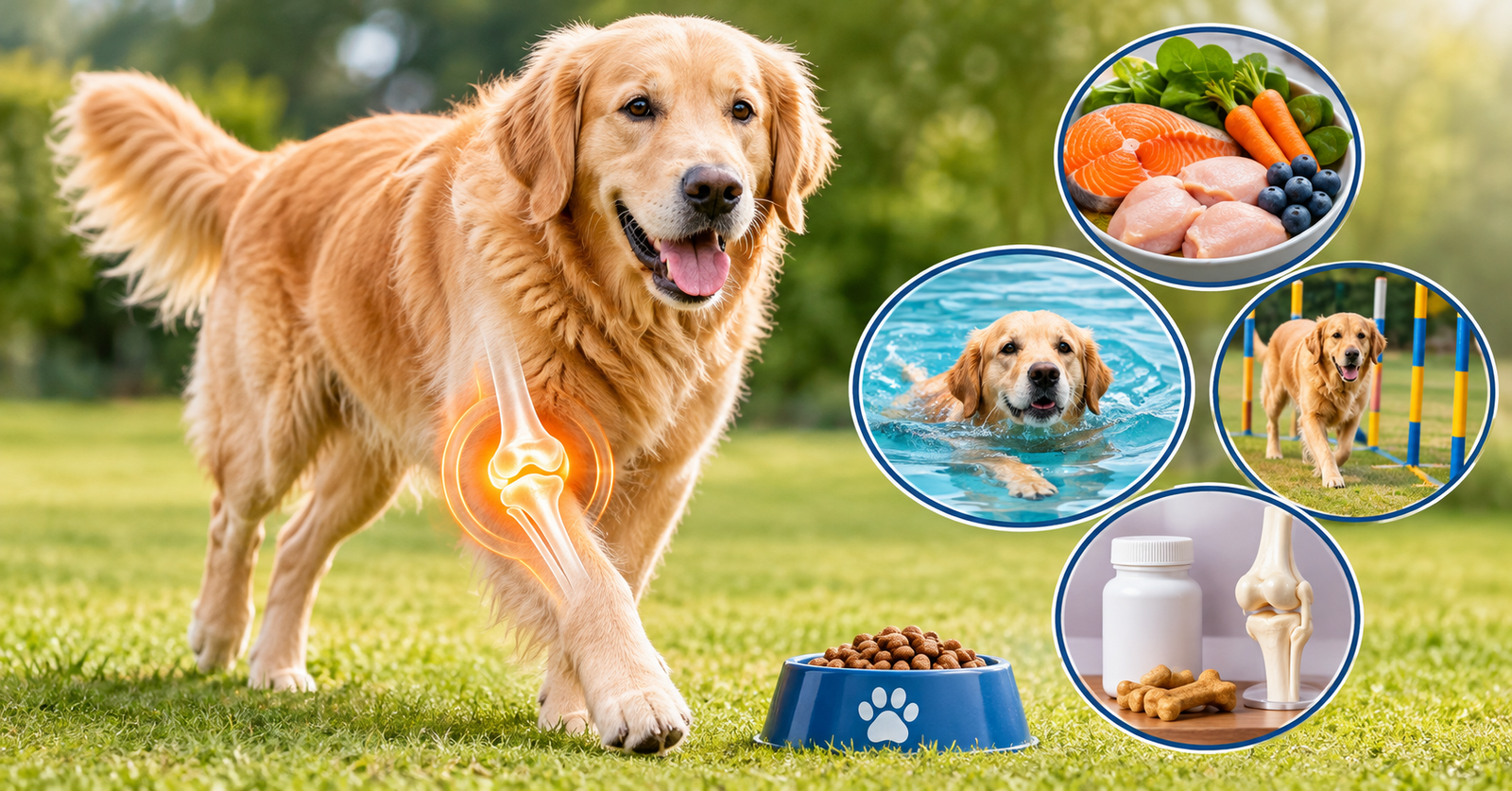
Healthy joints help dogs walk, run, jump, play, and enjoy their everyday activities. However, joint problems can develop at almost any age. Growing puppies, active adult dogs, overweight pets, and senior dogs may all experience joint-related challenges. Strengthen Your Dog’s Joints
The good news is that several natural ways can support your dog’s joint health. A balanced diet, healthy body weight, appropriate exercise, and carefully selected supplements can help maintain joint function, support cartilage health, and improve mobility.
For dog owners, the key is to start supporting joint health before serious mobility problems appear. If your dog already shows signs of stiffness or discomfort, early veterinary attention can help identify the cause and prevent unnecessary suffering.
This guide explains how to strengthen your dog’s joints, which foods and nutrients support mobility, which exercises are beneficial, and when veterinary treatment may be necessary.
1. Understanding Your Dog’s Joint Health
A dog’s joints connect bones and allow different parts of the body to move smoothly. Cartilage covers the ends of bones and acts as a protective cushion, while joint fluid helps reduce friction during movement.
Healthy joints depend on several structures working together:
- Cartilage: Protects the ends of bones and absorbs pressure.
- Synovial fluid: Lubricates the joints and supports smooth movement.
- Ligaments: Connect bones and help stabilize joints.
- Tendons: Connect muscles to bones and support movement.
- Muscles: Provide strength and stability around the joints.
When these structures become damaged or inflamed, dogs may experience stiffness, pain, reduced flexibility, and difficulty moving.
Common Joint Problems in Dogs
Some joint conditions are more common than others.
| Joint Condition | What Happens | Dogs Commonly Affected |
|---|---|---|
| Osteoarthritis | Cartilage gradually breaks down, causing inflammation and pain. | Senior and adult dogs |
| Hip Dysplasia | The hip joint develops abnormally and may become unstable. | Large and giant breeds |
| Elbow Dysplasia | Abnormal development of the elbow joint causes discomfort. | Growing medium and large breeds |
| Patellar Luxation | The kneecap moves out of its normal position. | Small and toy breeds |
| Joint Injuries | Ligaments, cartilage, or other joint structures become damaged. | Active and athletic dogs |
2. Signs Your Dog May Have Weak or Unhealthy Joints
Dogs do not always show obvious signs of joint discomfort. Some gradually change their behavior to avoid movements that cause pain.
Pay attention to the following symptoms.
1. Stiffness After Sleeping
Your dog may struggle to stand after sleeping or resting for several hours. This can be an early sign of joint discomfort, particularly in dogs with osteoarthritis.
2. Difficulty Climbing Stairs
Dogs with joint problems may hesitate before climbing stairs, jumping onto furniture, or getting into a vehicle.
3. Limping or Uneven Walking
A dog may place less weight on one leg or develop an unusual walking pattern. Persistent or sudden limping should be evaluated by a veterinarian.
4. Reduced Interest in Exercise
A previously active dog may become less interested in playing, running, or going for walks.
5. Difficulty Standing Up
Weakness, stiffness, and joint pain can make it harder for dogs to rise from the floor.
6. Licking or Chewing Around Joints
Some dogs repeatedly lick their knees, hips, elbows, or paws when experiencing discomfort.
7. Behavioral Changes
Joint pain may make dogs more irritable, withdrawn, or reluctant to interact with family members.
Important: Sudden severe limping, an inability to stand, a visibly swollen joint, or significant pain requires prompt veterinary attention. Do not assume that every mobility problem is caused by arthritis.
3. What Causes Joint Weakness in Dogs?
Understanding the factors that affect joint health helps owners make better decisions about prevention and daily care.
Aging and Natural Wear
As dogs grow older, cartilage and other joint structures can undergo gradual changes. Older dogs also tend to lose muscle mass, which may reduce support around their joints.
However, joint problems are not an unavoidable part of aging. Appropriate weight management, exercise, and veterinary care can help maintain mobility.
Excess Body Weight
Carrying extra weight places additional mechanical stress on the hips, knees, elbows, and other joints.
Excess body fat also produces inflammatory substances that may contribute to osteoarthritis-related pain.
Maintaining a healthy body condition is one of the most important ways to protect your dog’s joints.
Genetic Predisposition
Some breeds have a greater risk of developing particular orthopedic conditions.
Examples include:
- German Shepherds: Hip and elbow dysplasia.
- Labrador Retrievers: Hip and elbow dysplasia.
- Golden Retrievers: Hip and elbow dysplasia.
- Dachshunds: Intervertebral disc disease and certain mobility problems.
- Pugs: Increased risk of patellar luxation.
Genetic risk does not mean that every dog from these breeds will develop joint disease. Responsible breeding, appropriate growth, and preventive care remain important.
Poor Nutrition
An unbalanced diet may fail to provide the nutrients required for healthy bones, muscles, and connective tissues.
Growing puppies especially need carefully balanced nutrition to support normal skeletal development.
Repeated High-Impact Activities
Frequent jumping, uncontrolled ball chasing, sudden direction changes, and excessive strenuous exercise may increase injury risk.
Dogs need physical activity, but the type and intensity should match their age, breed, fitness, and physical condition.
4. Best Ways to Strengthen Your Dog’s Joints
Supporting joint health requires more than purchasing a joint supplement. The most effective approach combines nutrition, exercise, weight control, and appropriate veterinary care.
1. Maintain a Healthy Body Weight
Labrador Retriever Breed Guide | Personality, Temperament & Lost Dog Recovery | TailTracker
Weight management should be one of your first priorities when supporting your dog’s joints.
An overweight dog places additional pressure on its joints with every step. This can make existing discomfort worse and contribute to reduced mobility.
Practical ways to maintain a healthy weight:
- Measure meals instead of filling the bowl without checking portions.
- Choose a nutritionally complete food appropriate for your dog’s age and activity.
- Limit high-calorie treats and table scraps.
- Provide regular walks and suitable physical activities.
- Monitor your dog’s body condition regularly.
You should be able to feel your dog’s ribs without pressing hard, and your dog should have a visible waist when viewed from above.
If your dog is overweight, ask your veterinarian to establish a safe calorie target and weight-loss plan.
2. Feed Foods Rich in Omega-3 Fatty Acids
Omega-3 fatty acids are among the most useful dietary nutrients studied for dogs with joint problems.
Two important omega-3 fatty acids are:
- EPA (Eicosapentaenoic Acid): Helps regulate inflammatory processes.
- DHA (Docosahexaenoic Acid): Supports normal cellular and nervous system functions and contributes to nutritional support for dogs with osteoarthritis.
Research suggests that appropriate EPA and DHA intake may improve mobility and help manage osteoarthritis-related inflammation.
Dog-friendly sources include:
- Cooked salmon without seasoning or bones.
- Sardines packed in water without added salt.
- Veterinary-formulated fish oil supplements.
- Complete dog foods formulated with appropriate omega-3 levels.
Feed fish as an occasional addition rather than replacing a balanced complete diet. Check for bones, seasonings, and added salt.
Fish oil is calorie-dense and may not be appropriate for every dog. Your veterinarian should help determine the correct product and dose.
3. Include High-Quality Protein in Your Dog’s Diet
50 Human Foods Dogs Can & Cannot Eat | Complete Safety Guide 2025
Protein supports muscle development and maintenance. Strong muscles help stabilize joints and support comfortable movement.
Good protein sources include:
- Cooked chicken without bones or seasoning.
- Cooked turkey without skin or seasoning.
- Fully cooked eggs.
- Lean cooked beef.
- Complete commercial dog food containing appropriate protein levels.
Protein is particularly important for senior dogs because age-related muscle loss can reduce physical strength and stability.
However, simply adding extra meat does not automatically improve joint health. Your dog needs a balanced diet containing appropriate amounts of protein, fat, vitamins, and minerals.
4. Provide Appropriate Calcium and Vitamin D
Calcium and phosphorus support normal bone development and maintenance. Vitamin D helps regulate calcium and phosphorus absorption and metabolism.
These nutrients are particularly important for puppies.
However, more calcium is not necessarily better. Excessive calcium supplementation can interfere with normal skeletal development, especially in large- and giant-breed puppies.
Feed a complete and balanced puppy food formulated for your dog’s expected adult size. Never add calcium supplements without veterinary guidance.
5. Consider Glucosamine and Chondroitin
Glucosamine and chondroitin are common ingredients in canine joint supplements.
They are marketed to support cartilage and joint function.
Glucosamine helps produce compounds found in cartilage.
Chondroitin sulfate is a component of cartilage that contributes to its structure and ability to retain water.
Although these ingredients are widely used, research has not consistently demonstrated meaningful benefits for every dog. They should not be considered a guaranteed treatment for arthritis.
If you want to try a supplement, discuss the product with your veterinarian and select a reputable manufacturer.
6. Choose Regular Low-Impact Exercise
Exercise helps maintain muscle strength, flexibility, and a healthy body weight.
However, dogs with joint discomfort may struggle with intense activities.
Consider these lower-impact options:
- Controlled leash walking.
- Gentle swimming where appropriate.
- Supervised walking on level ground.
- Veterinary-guided rehabilitation exercises.
- Short, regular movement sessions.
Consistency is more useful than occasional exhausting exercise.
For dogs already diagnosed with arthritis, ask your veterinarian or canine rehabilitation professional to develop an exercise plan.
7. Try Swimming and Hydrotherapy
Paws & Co Group | Yorkshire’s Independent Pet Care Family – Yorkshire Paws & Co
Swimming can be useful for dogs that tolerate water and have difficulty with weight-bearing exercise.
Water supports part of the dog’s body weight, reducing impact on the joints while allowing the muscles to work.
Potential benefits include:
- Supporting muscle conditioning.
- Encouraging controlled movement.
- Improving exercise tolerance.
- Providing a low-impact activity option.
Hydrotherapy should be introduced gradually. Dogs with certain heart, respiratory, skin, or mobility conditions may need special precautions.
Never force a frightened dog into water. Strengthen Your Dog’s Joints
8. Provide a Comfortable Sleeping Area
Best Dog Beds for Senior Dogs: What to Look For – Big Ass Dog Company
A comfortable resting environment can make everyday life easier for dogs with joint discomfort.
Consider:
- A supportive orthopedic dog bed.
- Non-slip rugs on slippery floors.
- Ramps for getting into vehicles.
- Pet steps for furniture, if suitable.
- Keeping food and water bowls easily accessible.
Avoid encouraging repeated jumping from high furniture, particularly in dogs with existing orthopedic conditions. Strengthen Your Dog’s Joints
9. Schedule Regular Veterinary Checkups
Routine veterinary examinations can identify developing mobility problems before they become severe.
Your veterinarian may assess:
- Walking and standing posture.
- Joint flexibility.
- Muscle condition.
- Pain responses.
- Body weight and body condition.
- Possible orthopedic abnormalities.
Depending on the symptoms, X-rays or other diagnostic tests may be necessary.
Early diagnosis is particularly valuable for dogs with suspected hip dysplasia, elbow dysplasia, or osteoarthritis. Strengthen Your Dog’s Joints
5. Best Foods and Nutrients for Stronger Dog Joints
A balanced diet provides the foundation for healthy bones, muscles, and connective tissues.
The following table highlights useful nutrients and their dietary sources.
| Nutrient | Common Food Sources | Potential Joint Health Benefits | Feeding Considerations |
|---|---|---|---|
| Omega-3 Fatty Acids | Salmon, sardines, fish oil | Helps regulate inflammation | Monitor calories and supplement dosage |
| Protein | Chicken, turkey, eggs, beef | Maintains muscles supporting joints | Feed cooked, unseasoned sources |
| Calcium | Complete dog food, appropriate dairy ingredients | Supports normal bone structure | Avoid unnecessary supplementation |
| Vitamin D | Complete dog food, fish | Supports calcium and phosphorus metabolism | Excess supplementation can be harmful |
| Vitamin E | Complete dog food, appropriate plant oils | Supports normal antioxidant functions | Supplement only when appropriate |
| Zinc | Meat and complete dog food | Supports normal tissue maintenance | Excessive supplementation can be harmful |
6. Veterinary Expert Advice
🩺 Veterinary Expert Advice & Disclaimer:
“Maintaining a healthy body weight, providing controlled exercise, and feeding a nutritionally balanced diet are important steps in supporting your dog’s joint health. If your dog develops stiffness, limping, or difficulty standing, consult a veterinarian before starting joint supplements or changing its exercise routine.”
— Veterinary Information Prepared for Doggopulse; not an individual veterinary examination or named-veterinarian review.
7. Best Exercises to Support Your Dog’s Joint Strength
Exercise should improve your dog’s physical condition without placing unnecessary pressure on vulnerable joints.
Here are some useful activities.
Controlled Walking
Walking is one of the simplest ways to maintain muscle strength.
Start with a comfortable distance and gradually adjust the duration according to your dog’s fitness and veterinary recommendations.
Avoid forcing a dog to continue walking if it begins limping or showing discomfort.
Gentle Hill Walking
For suitable, healthy adult dogs, gentle uphill walking can engage muscles around the hips and back legs.
However, steep hills and downhill running can increase joint stress.
Avoid hill exercises for dogs with existing pain unless a veterinarian or rehabilitation professional approves them.
Swimming
Swimming can provide cardiovascular exercise and muscle conditioning without the same impact as running on hard surfaces.
Always supervise your dog and choose a safe swimming environment.
Veterinary-Guided Strength Exercises
A canine rehabilitation professional may recommend exercises such as controlled sit-to-stand movements, balance activities, or specific range-of-motion exercises.
These should be tailored to the dog’s condition. Some exercises that benefit a healthy dog may worsen pain in a dog with an orthopedic injury. Strengthen Your Dog’s Joints
8. Daily Joint Health Routine for Dogs
A consistent daily routine makes it easier to maintain healthy movement and prevent unnecessary strain.
| Time of Day | Recommended Activity | Purpose |
|---|---|---|
| Early Morning | Gentle leash walk | Encourage comfortable movement |
| Breakfast | Complete balanced dog food | Provide essential nutrients |
| Midday | Short supervised activity | Maintain regular movement |
| Afternoon | Rest on a supportive bed | Allow recovery |
| Evening | Controlled walk or approved exercise | Maintain muscle conditioning |
| Before Bed | Comfortable resting environment | Reduce unnecessary joint strain |
9. Feeding Guidelines for Better Joint Health
Nutrition plays an important role in maintaining your dog’s overall musculoskeletal health.
However, feeding extra food or supplements does not necessarily produce stronger joints.
Choose a Complete and Balanced Dog Food
Select a dog food appropriate for your dog’s age, size, and health requirements.
Look for a nutritional statement confirming that the food is complete and balanced for the relevant life stage.
Dogs with diagnosed osteoarthritis may benefit from veterinary therapeutic diets formulated to support mobility and weight management.
Control Daily Food Portions
Follow the feeding guidance on the food packaging as a starting point, then adjust according to your dog’s body condition and veterinarian’s recommendations.
Remember to include treats and additional foods in the daily calorie intake. Strengthen Your Dog’s Joints
Introduce New Foods Gradually
Sudden dietary changes can cause digestive upset.
When changing your dog’s regular food, gradually transition over approximately 5–7 days, or longer if your veterinarian recommends it.
Avoid Unsafe Foods
Some foods are dangerous to dogs, even when they are used as occasional treats. Keep the following foods away from your dog to reduce the risk of poisoning and other health problems.
Never use human joint medications or painkillers without veterinary approval. Some human medications can cause serious poisoning in dogs. If your dog eats a potentially toxic food or substance, contact a veterinarian or animal poison service immediately. Do not wait for symptoms to appear.
Do Not Overuse Supplements
More supplements do not automatically mean better joint health.
Excessive or inappropriate supplementation may create nutritional imbalances or interfere with medications.
Ask your veterinarian whether your dog actually needs a supplement and which product is appropriate.
10. Common Mistakes Dog Owners Should Avoid
Even caring owners sometimes make decisions that unintentionally increase joint problems.
| Common Mistake | Why It Can Be Harmful | Better Approach |
|---|---|---|
| Allowing Excessive Weight Gain | Increases joint loading | Maintain a healthy body condition |
| Excessive Jumping | May increase injury risk | Use ramps and controlled activities |
| Intense Exercise Without Conditioning | Can cause physical strain | Increase activity gradually |
| Giving Random Supplements | May cause unnecessary supplementation | Consult a veterinarian |
| Ignoring Persistent Limping | May delay diagnosis | Arrange a veterinary examination |
| Feeding an Unbalanced Homemade Diet | May cause nutritional deficiencies | Follow a veterinary nutrition plan |
| Stopping Exercise Completely | Can contribute to muscle loss | Maintain appropriate controlled movement |
11. When Does Your Dog Need Veterinary Treatment?
Natural joint support is useful, but it cannot replace medical treatment when a dog has an underlying orthopedic condition.
Consult a veterinarian if you notice:
- Persistent limping.
- Difficulty getting up.
- Swelling around a joint.
- Repeated reluctance to walk.
- Pain when touched.
- Sudden changes in activity.
- Difficulty climbing stairs.
- Progressive muscle loss.
Depending on the diagnosis, treatment may include prescription pain relief, anti-inflammatory medication, physical rehabilitation, weight management, therapeutic diets, injections, or surgery.
Veterinary-prescribed nonsteroidal anti-inflammatory drugs (NSAIDs) are commonly used to manage canine osteoarthritis pain. Dogs receiving long-term treatment may need periodic blood tests to monitor their health.
Never give your dog ibuprofen, naproxen, or other human painkillers unless a veterinarian specifically directs you to do so. Strengthen Your Dog’s Joints
12. Frequently Asked Questions (FAQs)
1. How Can I Strengthen My Dog’s Joints Naturally?
You can support your dog’s joint health by maintaining a healthy body weight, providing a balanced diet, encouraging controlled exercise, and discussing appropriate omega-3 supplementation with your veterinarian. These measures help support muscles, mobility, and overall joint function.
2. What Is the Best Food for Dogs With Weak Joints?
A complete and balanced dog food containing appropriate protein and omega-3 fatty acids can support overall joint health. Some dogs with osteoarthritis may benefit from veterinary therapeutic diets formulated with additional EPA and DHA. The best choice depends on your dog’s age, weight, and medical condition.
3. Do Glucosamine and Chondroitin Really Help Dogs?
Glucosamine and chondroitin are commonly used in canine joint supplements. However, scientific evidence of their effectiveness is inconsistent. Some dogs may benefit, but these supplements should not replace veterinary diagnosis or appropriate pain management.
4. At What Age Should I Start Supporting My Dog’s Joint Health?
Joint health support should begin during puppyhood. Appropriate growth nutrition, healthy body weight, safe exercise, and injury prevention help support normal development. Senior dogs and breeds predisposed to orthopedic conditions may need additional veterinary monitoring.
Conclusion
Strengthening your dog’s joints starts with everyday habits that support the entire musculoskeletal system. A healthy body weight, balanced nutrition, appropriate exercise, and a comfortable home environment can all contribute to better mobility.
Omega-3 fatty acids may provide additional support for dogs with joint problems, while glucosamine and chondroitin supplements may be worth discussing with your veterinarian.
Most importantly, do not ignore early signs of discomfort. Persistent stiffness, limping, and difficulty standing may indicate an underlying condition that requires professional attention.
With consistent care and an individualized health plan, you can help your dog remain comfortable, active, and mobile throughout life.
13. Scientific References & Veterinary Sources
The following veterinary and scientific resources support the nutritional and joint-health recommendations discussed in this article.
📚 Scientific References & Sources
- Cornell University College of Veterinary Medicine – How Joint Supplements Can Help With Orthopedic Conditions
- American College of Veterinary Surgeons – Osteoarthritis in Dogs
- Frontiers in Veterinary Science – International Consensus Guidelines for the Treatment of Canine Osteoarthritis
- MSD Veterinary Manual – Osteoarthritis in Dogs and Cats
- Cornell University College of Veterinary Medicine – Osteoarthritis: Diagnosis and Treatment
- University of Illinois College of Veterinary Medicine – Osteoarthritis: Management Options

Muhammad Ahad — Passionate writer sharing informative, engaging, and easy-to-read articles across different topics. Focused on delivering valuable content that helps readers learn, explore, and stay inspired every day.