

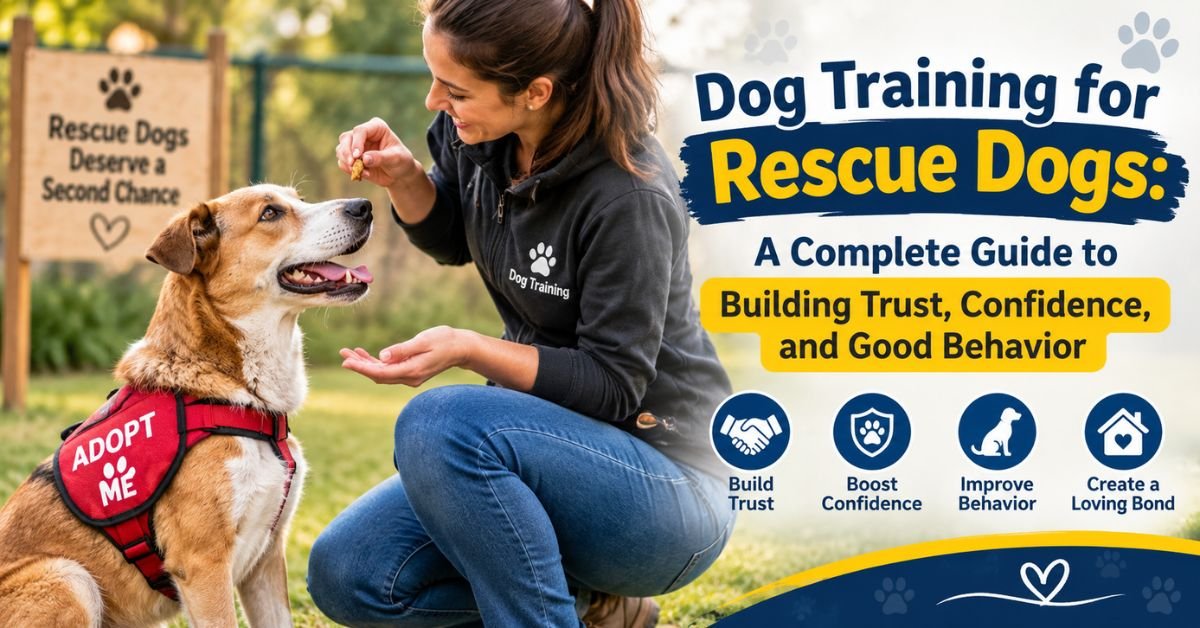
Bringing a rescue dog home can be a wonderful experience, but helping that dog adjust to a new environment sometimes requires patience, understanding, and consistent training. Some rescue dogs settle into their new homes quickly, while others need more time to feel comfortable around unfamiliar people, household noises, other animals, and everyday activities. Dog Training for Rescue Dogs
Dog training for rescue dogs is not simply about teaching commands such as sit, stay, and come. It is also about building trust, encouraging confidence, creating predictable routines, and helping dogs develop positive associations with their surroundings.
A rescue dog’s previous experiences may be unknown. Some dogs have experienced neglect, inconsistent care, limited socialization, or stressful environments. Others may have lived in loving homes but lost their families because of circumstances beyond their control. Therefore, it is important not to assume that every rescue dog has experienced trauma or has behavioral problems.
The most effective approach combines positive reinforcement, gentle guidance, appropriate management, and realistic expectations. With the right techniques, rescue dogs of different ages and backgrounds can learn new skills and become more comfortable family companions.
Overview of Dog Training for Rescue Dogs
Dog training for rescue dogs involves teaching useful behaviors while helping a newly adopted dog feel secure in its home and surroundings.
Unlike training a puppy from the beginning, working with an adult rescue dog may involve understanding existing habits, identifying unfamiliar triggers, and gradually replacing unwanted behaviors with more appropriate responses.
However, rescue dogs are not automatically difficult to train. Many already understand basic household routines and commands. Others may simply need time to understand what their new family expects.
Training provides several benefits beyond basic obedience. It helps rescue dogs understand their new environment, develop positive habits, and build a stronger relationship with their families.
1. Builds Trust and Communication
A dog that has recently entered a new home may not immediately understand its owner’s gestures, voice, or expectations. Gentle training helps establish predictable communication and strengthens the bond between dogs and their owners.
2. Improves Confidence
Learning simple behaviors and receiving rewards can help rescue dogs become more comfortable with unfamiliar situations. Gradual training also encourages them to explore their surroundings at their own pace.
3. Supports Household Safety
Commands such as recall, leave it, wait, and drop it help owners manage everyday situations. These skills can reduce risks around dangerous objects, open doors, and unfamiliar environments.
4. Reduces Unwanted Behaviors
Consistent, reward-based training can help manage jumping, excessive barking, leash pulling, inappropriate chewing, and other unwanted behaviors by teaching dogs more appropriate alternatives.
5. Provides Mental Stimulation
Training encourages dogs to think, solve simple problems, and interact positively with their owners. Short learning sessions and enrichment activities can also help prevent boredom.
🩺 Veterinary Behavior Recommendation
The American Veterinary Society of Animal Behavior (AVSAB)
recommends reward-based training for all aspects of dog
training and behavior modification. This approach focuses
on reinforcing desirable behaviors rather than relying
on fear, pain, or intimidation.
Training tip: Reward your rescue dog for
small improvements and allow enough time for learning.
Consistency and patience are essential for building
positive habits.
How Long Does It Take a Rescue Dog to Adjust?
There is no universal adjustment period for rescue dogs. Some become comfortable within days, while others need several weeks or longer.
Their progress depends on factors such as:
- Previous living conditions and experiences.
- Age and individual temperament.
- Previous training and socialization.
- Health and physical comfort.
- Household activity and environmental changes.
- The consistency of their new family’s approach.
You may have heard of the 3-3-3 rule, which describes approximately three days to decompress, three weeks to begin settling into routines, and three months to develop a stronger sense of belonging.
This is a general adoption guideline, not a scientifically established timetable. Individual dogs may adjust faster or slower.
The most important thing is to observe your dog’s behavior rather than expecting progress according to a fixed schedule.
Common Behavioral Signs and Training Triggers in Rescue Dogs
Before starting a training program, observe how your rescue dog responds to everyday situations. Understanding its behavior helps you choose appropriate training methods.
Not every behavior indicates a previous negative experience. Fear, excitement, frustration, insufficient training, and medical discomfort can produce similar signs.
1. Fear Around New People
Some rescue dogs feel uncomfortable when unfamiliar people approach, reach toward them, or attempt to pet them.
Possible signs include:
- Moving away or hiding.
- Tucking the tail between the legs.
- Lowering the body.
- Turning the head away.
- Lip licking or repeated yawning.
- Growling when someone approaches too closely.
Training recommendation: Allow the dog to approach people voluntarily. Ask visitors to avoid staring, leaning over the dog, or forcing physical contact. Reward calm behavior at a comfortable distance.
2. Separation-Related Distress
A newly adopted dog may become distressed when left alone.
Possible signs include:
- Persistent barking or whining.
- Scratching doors.
- Destructive chewing.
- Pacing or restlessness.
- Excessive drooling.
- Attempts to escape.
These signs can indicate separation-related distress, although other causes should also be considered.
Training recommendation: Begin with very short, comfortable periods of separation and gradually increase the duration. If the dog shows significant distress, consult a veterinarian or qualified behavior professional rather than allowing it to repeatedly panic.
3. Leash Pulling and Walking Problems
Rescue dogs may have limited experience walking on a leash. Some pull because they are excited, while others pull because unfamiliar surroundings make them nervous.
Common signs include:
- Pulling continuously.
- Stopping or refusing to walk.
- Lunging toward unfamiliar dogs.
- Barking at passing people.
- Trying to escape from the harness or collar.
Training recommendation: Start in a quiet environment using a properly fitted harness. Reward the dog for walking near you and gradually introduce more distractions.
4. Excessive Barking
Barking can occur when a rescue dog encounters unfamiliar sounds, visitors, other animals, or activity outside the home.
Common triggers include:
- Doorbells and knocking.
- Passing dogs.
- People approaching windows.
- Unexpected household noises.
- Being left alone.
Training recommendation: Identify the trigger before choosing a training strategy. Reward calm responses and use curtains, distance, or barriers to reduce unnecessary exposure.
5. Resource Guarding
Some dogs protect food, toys, sleeping areas, or other valuable objects.
Warning signs may include:
- Freezing when someone approaches.
- Eating faster when people come nearby.
- Growling over toys or food.
- Showing teeth.
- Snapping when someone attempts to take an object.
Training recommendation: Never punish growling or forcibly remove guarded items. Give the dog space and seek help from a qualified reward-based behavior professional, particularly if children live in the household.
6. House-Training Difficulties
Even an adult rescue dog may have accidents indoors.
Possible reasons include:
- Previous outdoor-only or indoor-only living arrangements.
- Unfamiliar toilet locations.
- Changes in feeding schedules.
- Stress associated with relocation.
- Medical conditions affecting urination or bowel movements.
Training recommendation: Establish regular toilet breaks, reward outdoor elimination, and clean accidents with an appropriate enzymatic cleaner. Avoid punishment.
Sudden house-training changes, frequent urination, straining, or diarrhea require veterinary assessment.
Detailed Recommendations: How to Train a Rescue Dog Step by Step
A successful rescue-dog training program should begin with trust and gradually introduce basic skills. Avoid overwhelming your dog with too many expectations during the first few days.
1. Give Your Rescue Dog Time to Settle In
Before expecting obedience, create an environment where your dog can relax.
Prepare a quiet area with:
- A comfortable bed.
- Fresh drinking water.
- Appropriate toys.
- Food and feeding bowls.
- A safe resting space.
- Limited household disturbances.
Allow your dog to explore its new surroundings at its own pace.
During the initial adjustment period, avoid unnecessary visitors, crowded dog parks, and overwhelming outings.
A predictable routine helps dogs understand what happens throughout the day.
For example, maintain consistent times for meals, toilet breaks, walks, play, and rest.
2. Build Trust Through Positive Reinforcement
Positive reinforcement means rewarding a behavior immediately after it occurs so the dog becomes more likely to repeat it.
Suitable rewards include:
- Small dog treats.
- Praise in a calm voice.
- Favorite toys.
- Short play sessions.
- Access to enjoyable activities.
For example, if your rescue dog voluntarily approaches you, calmly reward the behavior.
If it sits naturally, say “yes” and offer a small treat.
Avoid grabbing, shouting, intimidating, or forcing the dog into a position.
The objective is to help your dog understand that interacting with you produces positive experiences.
3. Teach Your Dog to Respond to Its Name
A reliable name response is one of the easiest foundation exercises.
Training steps:
- Choose a quiet room with minimal distractions.
- Say your dog’s name once in a friendly voice.
- When the dog looks toward you, immediately reward it.
- Repeat several times during short sessions.
- Gradually practice in different rooms and environments.
Do not repeatedly shout the dog’s name when it is ignoring you. Instead, reduce distractions and make the exercise easier.
Over time, your dog should learn that responding to its name is rewarding.
4. Teach Basic Commands
Basic obedience provides useful communication between you and your dog.
Start with simple commands and introduce more challenging exercises after your dog understands the basics.
Sit
Hold a small treat near your dog’s nose and slowly move it upward. As the dog’s head follows the treat, its rear may naturally move toward the floor. Mark and reward the sitting position.
Stay
Ask your dog to sit. Take a small step backward and immediately return to reward it if it remains in position. Increase distance and duration gradually.
Come
Begin indoors. Move a short distance away, say “come” in an encouraging voice, and reward your dog generously when it reaches you.
Never punish your dog after it comes to you, even if it took longer than expected.
Leave it
Present a low-value treat in a closed hand. Allow your dog to investigate without opening your hand. When it stops trying and moves away, reward it with a different treat.
Practice with increasingly realistic distractions while keeping the dog safe.
Drop it
Offer a toy and introduce a reward of higher value. When your dog releases the toy, mark the behavior and reward it. Whenever possible, return the toy so releasing objects does not always mean losing them.
5. Introduce Leash Training Gradually
Walking outside can be challenging for a dog adjusting to a new home.
Start by allowing your dog to become comfortable wearing a properly fitted harness indoors.
A gradual leash-training routine:
- Let your dog investigate the harness.
- Reward it for allowing the harness to be fitted.
- Attach the leash and practice walking indoors.
- Reward the dog for staying near you.
- Move to a quiet outdoor location.
- Introduce distractions slowly.
- Increase walking distance as confidence improves.
If your dog freezes, pulls excessively, or becomes frightened, stop and reassess the environment.
Never drag a frightened dog forward.
6. Use Positive Socialization
Socialization does not mean making your dog interact with every person or animal.
It means helping the dog become comfortable with different environments, sounds, surfaces, people, and everyday experiences.
Begin with manageable exposure to:
- People walking at a distance.
- Quiet streets.
- Household sounds.
- Different floor surfaces.
- Calm, suitable dogs.
- Short car journeys.
Reward relaxed observation and voluntary engagement.
If your dog becomes uncomfortable, increase the distance or end the exposure.
For dogs showing serious fear or reactivity, a veterinarian or qualified behavior professional can develop a gradual behavior-modification plan.
7. Establish a Consistent Potty-Training Routine
Adult rescue dogs may need house-training just like puppies.
Take your dog outside:
- Immediately after waking.
- After meals.
- After drinking substantial amounts of water.
- After play sessions.
- Before bedtime.
- At regular intervals during the day.
Choose a consistent toilet location and reward your dog immediately after successful elimination.
Keep a simple record of toilet habits to identify patterns.
Never rub a dog’s nose in an accident or punish it after discovering a mess. Such responses do not teach the correct toilet location.
If accidents continue despite consistent training, arrange a veterinary examination.
8. Manage Separation-Related Anxiety Carefully
Some rescue dogs struggle when their owners leave.
Do not assume that excessive barking or destructive behavior is simply disobedience.
A gradual independence-training plan may help dogs that can tolerate short periods alone.
Suggested approach:
- Teach your dog to relax on a comfortable bed.
- Reward calm independent behavior.
- Briefly move away while remaining visible.
- Return before the dog becomes distressed.
- Gradually introduce short departures.
- Increase separation time only while the dog remains comfortable.
Use a camera when possible to observe what happens after you leave.
Dogs with severe separation anxiety may require veterinary treatment, structured behavior modification, or medication as part of an individualized plan.
9. Introduce Crate Training Without Force
A crate can provide a comfortable resting area when introduced correctly.
However, some rescue dogs may have negative associations with confinement.
Start by leaving the crate open and placing comfortable bedding and treats inside.
Allow your dog to investigate voluntarily.
Gradually introduce short periods with the door closed, but only if your dog stays relaxed.
Never use a crate as punishment or leave a panicking dog confined.
A safe room or exercise pen may suit some dogs better.
10. Address Jumping, Chewing, and Destructive Behavior
Unwanted behaviors often occur because dogs are excited, bored, frustrated, or seeking attention.
Instead of punishment, teach an alternative behavior.
Jumping on visitors: Reward four paws on the floor or a calm sit. Ask visitors to avoid rewarding jumping with attention.
Chewing furniture: Provide appropriate chew toys and restrict access to valuable furniture when supervision is not possible.
Excessive excitement: Encourage short periods of calm activity and reward settling on a comfortable mat.
Stealing household objects: Keep dangerous items out of reach and teach a reward-based drop-it cue.
Remember that management is part of training. Preventing repeated unwanted behavior can make learning easier.
Veterinary Expert Advice & Disclaimer
“Rescue dogs should be trained using patient, reward-based methods that respect their individual comfort levels and previous experiences. If a dog displays persistent fear, aggression, separation-related distress, or sudden behavioral changes, consult a veterinarian or qualified veterinary behavior professional before increasing training intensity.”
11. Understand Fear and Reactivity Triggers
Some rescue dogs react strongly to specific situations.
For example, a dog may bark when another dog approaches because it feels frightened or frustrated.
One commonly used behavior-modification technique is desensitization and counterconditioning.
Desensitization involves introducing a trigger at an intensity or distance the dog can comfortably tolerate.
Counterconditioning involves pairing that trigger with something positive.
Example:
If your dog reacts to unfamiliar dogs:
- Find a distance where your dog notices another dog without becoming overwhelmed.
- When your dog sees the other dog, offer a high-value treat.
- Continue rewarding calm observation.
- Increase exposure gradually over multiple sessions.
- Increase distance again if signs of distress appear.
The goal is not to force close contact. It is to help your dog develop a more comfortable response.
Dogs with a bite history, serious aggression, or unpredictable reactions should receive individualized professional guidance.
12. Keep Training Sessions Short and Consistent
Long training sessions can become frustrating, especially for dogs that are still adjusting.
Start with approximately 3–5 minutes per session and repeat short exercises throughout the day if your dog remains engaged.
A useful daily routine may include:
- Morning: Name response and basic commands.
- After breakfast: Potty training and calm leash practice.
- Afternoon: Enrichment and simple obedience exercises.
- Evening: Relaxation training and gentle play.
End each session on an achievable, positive exercise.
Progress is more important than the number of commands your dog learns in one day.
Rescue Dog Training Methods: Behavioral Challenges and Solutions
Compare common rescue dog behavior challenges, their possible triggers, and suitable positive training approaches to help your dog develop confidence and better habits.
| Behavioral Challenge | Possible Trigger | Recommended Training Method | Main Training Goal |
|---|---|---|---|
| Fear of Strangers | Unfamiliar people and sudden approaches | Gradual exposure and positive reinforcement | Build confidence |
| Leash Pulling | Excitement or environmental distractions | Reward-based loose-leash walking | Improve walking manners |
| Excessive Barking | Noise, visitors, or other dogs | Trigger management and reward-based training | Encourage calm responses |
| Separation Distress | Being left alone | Gradual separation training and professional guidance | Develop comfortable independence |
| House-Training Accidents | Unfamiliar routine or medical issues | Scheduled toilet breaks and immediate rewards | Establish toilet habits |
| Resource Guarding | Approaching food, toys, or resting areas | Professional behavior assessment and safe management | Reduce guarding risks |
| Destructive Chewing | Boredom, stress, or insufficient enrichment | Appropriate chew toys and environmental management | Encourage suitable chewing |
| Jumping on People | Excitement and attention | Reward four paws on the floor | Improve greeting behavior |
| Fear of Other Dogs | Close encounters or unfamiliar environments | Distance-based desensitization and counterconditioning | Develop comfortable observation |
| Ignoring Commands | Distractions or insufficient practice | Short sessions and gradual difficulty increases | Improve responsiveness |
Feeding Guidelines for Rescue Dogs During Training
Food rewards can make training more enjoyable and help reinforce desirable behavior. However, treats should be selected carefully so your dog maintains a balanced diet.
A rescue dog may also experience changes in appetite or digestive habits after moving into a new home.
The following guidelines help you use food rewards without unnecessarily disrupting regular feeding.
1. Choose Small, Suitable Training Treats
Training treats should be small enough for your dog to eat quickly.
Suitable options may include:
- Small pieces of commercially prepared dog training treats.
- Plain cooked chicken without bones or seasoning.
- Small pieces of carrot.
- Small pieces of cucumber.
- Veterinary-approved low-calorie treats.
Avoid foods containing chocolate, grapes, raisins, onions, garlic, xylitol, or other ingredients known to be dangerous to dogs.
2. Follow the 10% Treat Guideline
Treats and other extras should generally provide no more than 10% of a dog’s daily calorie intake.
At least 90% of daily calories should come from a complete and balanced diet appropriate for the dog’s life stage and health requirements.
For example, if a dog requires 600 calories daily:
- Approximately 540 calories should come from its regular balanced diet.
- No more than approximately 60 calories should come from treats and other extras.
These are illustrative figures, not individualized feeding recommendations.
3. Avoid Overfeeding During Training
Rescue dogs may receive many rewards when learning new behaviors.
To prevent unnecessary weight gain:
- Break treats into very small pieces.
- Use part of the dog’s regular kibble as rewards.
- Count treats within the daily calorie allowance.
- Reduce meal portions appropriately when necessary.
- Monitor body condition and weight.
4. Keep Fresh Water Available
Training, exercise, and changes in surroundings can affect a dog’s water requirements.
Provide clean drinking water throughout the day, especially after outdoor activities.
Never restrict water to prevent house-training accidents without veterinary direction.
5. Maintain a Consistent Feeding Schedule
Regular feeding times can support predictable daily routines.
Feed an age-appropriate, complete and balanced diet. Avoid sudden food changes when possible. If a new diet is necessary, introduce it gradually, usually over approximately 7–10 days, unless your veterinarian recommends a different schedule.
Dogs with digestive problems, allergies, obesity, or other medical conditions may need an individualized feeding plan. Dog Training for Rescue Dogs
Common Mistakes to Avoid When Training Rescue Dogs
Even caring owners can unintentionally make training more difficult by expecting too much too soon.
1. Expecting Immediate Obedience
A rescue dog may need time to understand its new environment.
Start with simple exercises and gradually introduce more difficult commands.
2. Using Physical Punishment
Hitting, shouting, leash jerking, shock collars, and intimidation can increase fear and stress.
AVSAB recommends reward-based training rather than aversive methods.
3. Forcing Social Interactions
Do not force your dog to greet strangers, play with other dogs, or accept physical contact.
Allow voluntary interaction and respect its need for space.
4. Changing Training Rules Frequently
If one family member allows jumping while another discourages it, the dog may receive confusing signals.
Agree on consistent household rules and use the same verbal cues.
5. Ignoring Medical Problems
Pain, hearing difficulties, vision changes, digestive discomfort, and other medical conditions can influence behavior.
Arrange a veterinary examination if your dog’s behavior changes suddenly or training difficulties appear alongside physical symptoms.
6. Comparing Your Dog With Other Dogs
Every rescue dog has an individual personality and learning history.
Some learn commands quickly, while others need more repetition.
Measure progress against your dog’s previous behavior rather than another dog’s performance. Dog Training for Rescue Dogs
When Should You Seek Professional Dog Training Help?
Home training can address many everyday challenges, but some behaviors require professional assessment.
Consider consulting a veterinarian or qualified reward-based behavior professional if your rescue dog:
- Shows repeated aggression toward people or animals.
- Has bitten or attempted to bite someone.
- Experiences severe separation-related distress.
- Displays intense fear of ordinary household activities.
- Guards food or objects aggressively.
- Panics during walks or handling.
- Shows persistent anxiety despite appropriate management.
A veterinary examination should be considered before assuming that a behavioral problem is purely psychological.
A veterinarian may investigate pain or other medical contributors and refer your dog to a veterinary behaviorist when necessary.
When choosing a trainer, look for someone who explains their methods clearly, uses reward-based techniques, respects the dog’s comfort, and avoids promises of instant results.Dog Training for Rescue Dogs
Frequently Asked Questions About Dog Training for Rescue Dogs
1. Are Rescue Dogs Difficult to Train?
No. Rescue dogs are not automatically difficult to train. Many already understand basic commands and household routines. Others need additional time to become comfortable in their new environment. Consistent positive reinforcement and individualized training can help dogs of different ages and backgrounds learn successfully.
2. How Long Does It Take to Train a Rescue Dog?
The time required depends on the dog’s age, temperament, previous experiences, health, and training needs. Some dogs learn basic commands within a few weeks, while fear-related behaviors and separation problems may require months of gradual work and professional support. Focus on steady progress instead of a fixed deadline.
3. Should You Train a Rescue Dog Immediately After Adoption?
You can begin gentle foundation exercises immediately, provided the dog is comfortable. During the first few days, prioritize safety, predictable routines, bonding, and rest. Introduce simple name-response exercises and reward desirable behavior without overwhelming the dog with demanding training sessions.
4. Is Positive Reinforcement Better for Rescue Dog Training?
Yes. Reward-based training is the recommended approach by the American Veterinary Society of Animal Behavior. It teaches dogs which behaviors are desirable without relying on fear, pain, or intimidation. This approach is particularly useful when building trust with dogs adjusting to unfamiliar homes and people.
Conclusion
Dog training for rescue dogs requires patience, consistency, and an understanding of individual behavior. A newly adopted dog may need time to adjust to unfamiliar surroundings, learn household routines, and develop confidence around people and other animals.
Start with trust-building, introduce basic commands gradually, establish consistent routines, and reward desirable behavior. Pay attention to signs of fear or discomfort instead of forcing your dog into challenging situations.
Remember that successful training is not measured by how quickly a dog learns to sit, stay, or walk on a leash. It is measured by the dog’s growing confidence, ability to cope with everyday situations, and developing relationship with its family.
With a compassionate approach, appropriate veterinary support, and consistent reward-based training, rescue dogs can learn valuable life skills and enjoy a safer, happier life in their new homes. Dog Training for Rescue Dogs
Scientific References & Sources📚 Scientific References & Sources
- American Veterinary Society of Animal Behavior (AVSAB) – Position Statement on Humane Dog Training
- American Veterinary Society of Animal Behavior – Position Statements and Handouts for the Public
- Royal Society for the Prevention of Cruelty to Animals (RSPCA) – How to Train Your Dog and Top Training Tips
- RSPCA Australia – Is It Important to Train My Dog? What Sort of Training Would You Recommend?
- Dogs Trust – How to Help a Rescue Dog Get Settled Into Your Home
- Canadian Veterinary Medical Association (CVMA) – Humane Training of Dogs
- American Veterinary Society of Animal Behavior – What Are Reward-Based Training Methods for Dogs and Cats?
- RSPCA WA – Settling a Dog Into Your New Home

Muhammad Ahad — Passionate writer sharing informative, engaging, and easy-to-read articles across different topics. Focused on delivering valuable content that helps readers learn, explore, and stay inspired every day.