
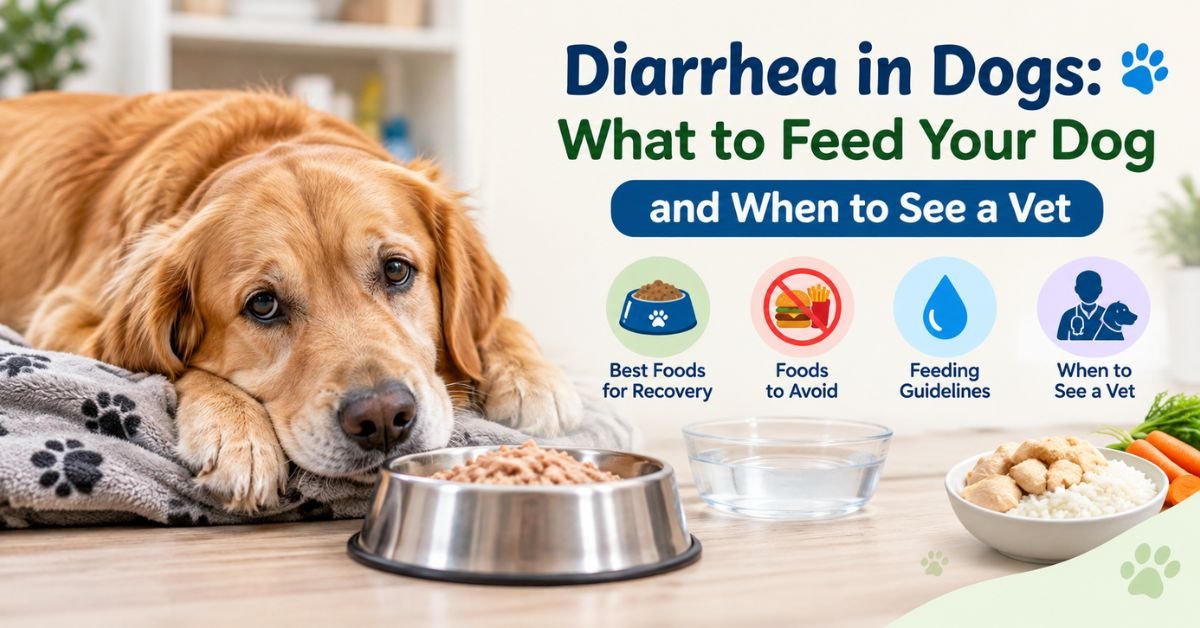
The most common digestive problem dogs experience is diarrhea. A sudden change in food, eating something unusual, stress, parasites, infection, food intolerance, or an underlying medical condition can all cause loose or watery stools food for dog diarrhea.
When your dog has diarrhea, choosing the right food can help support recovery. However, food alone cannot treat every cause of diarrhea. A dog with repeated vomiting, dehydration, bloody or black stools, severe weakness, abdominal pain, or persistent diarrhea needs veterinary attention rather than simply a change in diet.
For mild cases in an otherwise bright and healthy adult dog, veterinarians commonly use supportive care that includes hydration and an easily digestible gastrointestinal diet. Modern veterinary guidance also recognizes that prolonged fasting is usually unnecessary; the recovering gastrointestinal tract still needs nutrients.
What Are the Best Dog Diarrhea Foods?
The best food for dog diarrhea depends on why the diarrhea is happening, how severe it is, and your dog’s age and health status.
For an otherwise healthy adult dog with mild, short-term diarrhea, a veterinary gastrointestinal diet is often a practical option. These diets are designed to be highly digestible and may contain specific amounts and types of fiber that help support normal intestinal function. Some formulas are also lower in fat when a dog has a condition such as pancreatitis or another gastrointestinal disorder where fat restriction is appropriate.
What Makes a Good Diarrhea Diet?
A suitable recovery diet generally has several useful characteristics:
- Highly digestible ingredients
- Appropriate calories and essential nutrients
- Moderate or low fat when medically indicated
- Carefully selected fiber
- Good palatability
- Adequate moisture, especially when canned food is used
- A complete and balanced nutritional profile when it is intended for more than very short-term use
The goal is not simply to find the blandest food possible. The goal is to provide nutrition that your dog’s digestive system can tolerate while avoiding unnecessary ingredients that may worsen gastrointestinal upset.
Should You Feed Chicken and Rice?
Boiled chicken and white rice have traditionally been recommended as a bland diet for dogs with diarrhea. Cornell notes that mild cases may sometimes be managed with foods such as boiled chicken or low-fat hamburger with white rice. However, veterinary nutrition guidance has increasingly moved toward appropriately formulated gastrointestinal diets because chicken and rice are not nutritionally complete and their calorie and fat content can vary.
If your veterinarian specifically recommends chicken and rice for your dog, follow the veterinarian’s instructions. It should not automatically become a long-term diet.
Common Symptoms That May Occur With Dog Diarrhea
Symptoms of diarrhea can occur alone or in conjunction with other digestive issues.
Common signs include:
- Loose or watery stool
- More frequent bowel movements
- Urgency to defecate
- Mucus in the stool
- Mild abdominal discomfort
- Reduced appetite
- Increased intestinal noises
- Straining during bowel movements
- Occasional vomiting
A dog with a mild episode may remain alert, interested in normal activities, and willing to drink.
More concerning signs include:
- Repeated vomiting
- Significant weakness or lethargy
- Refusal to eat
- Signs of dehydration
- Abdominal pain
- Black, tarry stool
- Large amounts of fresh blood
- Fever
- Collapse
- Persistent or worsening diarrhea
Cornell Veterinary Medicine recommends veterinary evaluation when diarrhea is accompanied by vomiting, loss of appetite, lethargy, black/tarry stool, or failure to resolve within roughly 48–72 hours. Puppies and medically vulnerable dogs may require earlier assessment.
What Causes Diarrhea in Dogs?
Understanding the possible trigger helps determine whether changing food is enough.
1. Sudden Food Changes
Changing your dog’s food too quickly can disrupt gastrointestinal adaptation and result in loose stools.
If diarrhea began shortly after introducing a new food, returning temporarily to the previously tolerated diet may be appropriate for an otherwise healthy dog, followed by a slower transition once stools normalize food for dog diarrhea. Cornell recommends stretching food transitions over a longer period when a dog has reacted to a rapid change.
2. Dietary Indiscretion
There are a number of things that dogs shouldn’t eat, including:
- Table scraps
- Fatty leftovers
- Spoiled food
- Garbage
- Large quantities of treats
- Unfamiliar foods
Rich foods can be particularly troublesome for dogs with sensitive digestive systems.
3. Stress
Boarding, travel, veterinary visits, moving homes, visitors, or major changes in routine can contribute to stress-associated diarrhea.
4. Parasites
Intestinal parasites can cause diarrhea, particularly in puppies and dogs exposed to contaminated environments.
It may be necessary to perform a fecal examination when parasites are suspected.
5. Food Intolerance or Food Allergy
Some dogs develop gastrointestinal symptoms after consuming certain ingredients. In these cases, simply feeding a generic bland diet may not solve the problem.
A veterinarian may recommend a structured elimination diet or a hydrolyzed diet when food-responsive disease is suspected.
6. Infection
Viral, bacterial, or other infectious diseases can cause diarrhea. Some infections can be particularly dangerous in puppies, including parvovirus.
7. Underlying Medical Conditions
Persistent or recurrent diarrhea may occur with conditions involving the:
- Pancreas
- Liver
- Intestines
- Immune system
- Endocrine system
- Gastrointestinal tract
This is why recurring diarrhea should not simply be treated with repeated diet changes without finding the underlying cause.
🩺 Veterinary Advice for Dogs With Diarrhea🩺 Veterinary Expert Advice & Disclaimer:
“For mild diarrhea, focus on hydration and a highly digestible diet rather than repeatedly changing foods or giving rich treats. Persistent diarrhea, vomiting, blood in the stool, poor appetite, or signs of dehydration should be evaluated by a veterinarian because dietary management alone may not address the underlying cause.”
— Medically Reviewed & Verified for Doggopulse
Best Food Options for Dog Diarrhea
1. Veterinary Gastrointestinal Diets
For many dogs with acute digestive upset, a veterinary gastrointestinal diet is one of the most straightforward choices.
These diets are specifically formulated for digestive problems and can provide:
- High digestibility
- Controlled fat levels
- Appropriate fiber
- Complete nutrition
- Consistent nutrient composition
Some gastrointestinal diets are designed for short-term digestive upset, while others may be appropriate for longer-term management of diagnosed gastrointestinal disease.
Your veterinarian can select a formula based on your dog’s specific condition.
2. Low-Fat Diets When Medically Appropriate
Low-fat food can be useful for certain dogs, particularly those with pancreatitis or other conditions where dietary fat needs to be restricted.
However, low-fat does not automatically mean better for every dog with diarrhea.
Some dogs may benefit from other nutritional strategies, including appropriate fiber levels or a hydrolyzed diet. The right choice depends on the underlying disease.
3. Highly Digestible Wet Food
Canned gastrointestinal diets can be useful when hydration is a concern because wet food contributes additional water to the overall diet.
Fresh drinking water should still be available at all times.
4. Prescription Hydrolyzed Diets
If your veterinarian suspects a food-responsive disorder or food allergy, a hydrolyzed protein diet may be recommended.
Hydrolyzed diets contain proteins broken into smaller components that may be less likely to trigger an immune response in susceptible dogs.
These diets are generally used as part of a controlled veterinary elimination trial rather than simply as a casual replacement for regular food.
5. Fiber-Focused Diets
Fiber is not automatically appropriate for every case of diarrhea.
Dogs with certain large-intestinal problems may benefit from diets containing an appropriate amount and type of fiber. Merck Veterinary Manual notes that dogs with large-intestinal diarrhea may benefit from higher-fiber diets, while fiber alone is rarely sufficient for severe disease.
This is another reason to match the diet to the type and suspected cause of diarrhea.
| Food/Diet Option | When It May Be Useful | Important Consideration |
|---|---|---|
| Veterinary GI diet | Acute digestive upset and uncomplicated diarrhea | Choose with veterinary guidance when symptoms are significant |
| Low-fat GI diet | Pancreatitis or conditions requiring fat restriction | Not necessary for every case of diarrhea |
| Hydrolyzed diet | Suspected food-responsive disease or food allergy | Usually requires a controlled elimination trial |
| Boiled chicken and white rice | Short-term bland feeding when specifically recommended | Not complete and balanced for long-term feeding |
| Fiber-focused GI diet | Certain large-intestinal diarrhea cases | Fiber type and amount matter |
| Regular diet after recovery | Once stools have normalized | Transition gradually if the previous diet was tolerated |
Guidelines for Feeding a Diarrhea Dog
It is not enough to choose an appropriate diet. How you feed it also matters.
Feed Smaller Meals More Frequently
A dog with gastrointestinal upset may tolerate several small meals better than one or two large meals.
For example, instead of providing the entire daily amount in two large meals, your veterinarian may recommend dividing the food into several smaller portions throughout the day.
VCA notes that smaller, more frequent meals can be useful during gastrointestinal recovery.
You should not simply increase the amount of food because you are feeding more frequently.Divide the appropriate daily quantity into smaller meals.
Keep Fresh Water Available
Diarrhea causes the body to lose additional water.
It is important for your dog to have access to clean, fresh water.Dehydration is more likely in dogs suffering from diarrhea and vomiting due to the fact that both symptoms cause fluid loss.
Veterinary care should be sought if your dog is unable to keep water down.
Avoid Rich Treats
During recovery, avoid:
- Fatty treats
- Table scraps
- Cheese
- Greasy meat
- Large amounts of peanut butter
- New treats
- Sudden food additions
Even if your dog begs for them, rich foods can make it harder to determine whether the digestive system is improving.
Do Not Give Human Anti-Diarrhea Medicine Without Veterinary Advice
Do not automatically give your dog human medications such as loperamide or bismuth subsalicylate.
Cornell specifically advises owners not to use human diarrhea medications unless directed by a veterinarian because they can be harmful to some dogs or interact with other medications.
Should You Stop Feeding Your Dog?
Older advice sometimes recommended withholding food for 12–24 hours to “rest” the digestive system.
Current veterinary nutrition guidance is more cautious about routine fasting. VCA explains that the gastrointestinal tract needs nutrients during recovery and that prolonged food withholding can potentially delay recovery.
There are exceptions. A veterinarian may recommend a temporary food restriction for a dog with profuse vomiting, before a particular procedure, or in another specific clinical situation.
The safest approach is to follow your veterinarian’s instructions rather than applying a fasting rule to every case of diarrhea.
What About Probiotics for Dogs With Diarrhea?
Probiotics may be recommended in some cases because they can influence the intestinal microbiome.
However, not every probiotic product has the same evidence, strain composition, quality control, or clinical effectiveness.
Some veterinary studies have reported potential benefits from specific probiotic organisms in certain gastrointestinal conditions, but results vary depending on the strain, dose, disease, and individual dog.
If you want to use a probiotic, ask your veterinarian about a veterinary product and whether it makes sense for your dog’s particular situation.
What is the best length of time for a dog to be on a diarrhea diet?
The answer depends on the cause.
Dogs with uncomplicated acute diarrhea may only need a temporary gastrointestinal diet before gradually returning to their regular diet.
VCA notes that once stools return to normal, dogs can often transition back to their regular diet over approximately 7–10 days.
However, dogs with diagnosed conditions such as chronic enteropathy, pancreatitis, food-responsive disease, or other gastrointestinal disorders may require longer-term dietary management.
Do not assume that a short-term bland diet is nutritionally adequate for weeks or months.
Can Your Dog Benefit from a Veterinarian Visit?
Not every episode of diarrhea is an emergency, but some signs should not be ignored.
Contact a Veterinarian Promptly If:
- Diarrhea continues beyond about 48 hours
- Your dog repeatedly vomits
- Your dog refuses food
- Your dog becomes unusually tired or weak
- You see black or tarry stool
- There is significant blood in the stool
- Your dog appears painful
- Your dog cannot keep water down
- You suspect poisoning
- You suspect your dog swallowed a foreign object
- Your dog is a very young puppy
- Your dog is elderly or has an existing medical condition
- Diarrhea repeatedly returns
Cornell notes that persistent diarrhea, vomiting, lack of appetite, lethargy, and black/tarry stool are reasons to seek veterinary care.
Puppies Need Extra Caution
It is possible for puppies to become dehydrated more quickly than healthy adult dogs. Diarrhea in a puppy can also be associated with infectious diseases such as parvovirus.
A puppy with significant diarrhea, vomiting, weakness, poor appetite, or an incomplete vaccination history should be assessed by a veterinarian rather than managed only with food at home.
Why Antibiotics Are Not Automatically the Answer
It is tempting to assume that diarrhea requires antibiotics.
Current WSAVA/ENOVAT guidance does not support routine antibiotic treatment for mild or moderate acute canine diarrhea. Most dogs presenting with acute diarrhea have mild disease and can often be managed with supportive care. Unnecessary antimicrobial use can disrupt the microbiota and contributes to antimicrobial resistance.
Antibiotics may have a role in selected severe cases or when a veterinarian identifies a specific indication.
Never start leftover antibiotics without veterinary direction.
How to Transition Back to Regular Dog Food
Once your dog’s stool has returned toward normal and your veterinarian has no concerns, transition gradually.
A practical transition can involve progressively increasing the regular food while decreasing the gastrointestinal diet over several days.
If loose stool returns during the transition:
- Stop increasing the new food.
- Contact your veterinarian if symptoms are significant or persistent.
- Consider whether the original food could be contributing to the problem.
- Avoid adding treats or table scraps while determining what is happening.
Dogs with repeated diarrhea after returning to the same diet may need a veterinary investigation rather than repeated short-term dietary resets.
Can You Prevent Future Episodes of Diarrhea?
You cannot prevent every cause of diarrhea, but several habits can reduce avoidable episodes.
Make Food Changes Gradually
Avoid switching foods abruptly whenever possible.
Limit Table Scraps
Human foods can introduce excessive fat, unfamiliar ingredients, or large quantities of food.
Control Access to Garbage
Secure trash cans and prevent your dog from eating spoiled food or other inappropriate materials.
Keep Parasite Prevention Current
Follow a veterinarian-recommended parasite prevention program appropriate for your dog’s age, lifestyle, and geographic risk.
Track Food Reactions
If diarrhea repeatedly occurs after a particular food, record:
- Food brand and formula
- Ingredients
- Amount fed
- Treats
- Supplements
- Timing of symptoms
This information can help your veterinarian identify patterns.
Frequently Asked Questions
1. What is the best food for a dog with diarrhea?
For many otherwise healthy dogs with uncomplicated acute diarrhea, a highly digestible veterinary gastrointestinal diet may be appropriate. The best diet depends on the suspected cause, however. Dogs with pancreatitis, food-responsive disease, chronic enteropathy, or other conditions may require a specialized diet selected by a veterinarian.
2. Is chicken and rice good for dog diarrhea?
Chicken and white rice have traditionally been used as a short-term bland diet, and Cornell notes that they may be used in mild cases. However, this combination is not nutritionally complete or balanced for long-term feeding, and veterinary gastrointestinal diets provide more controlled nutrition.
3. Should I stop feeding my dog when it has diarrhea?
Routine prolonged fasting is generally not recommended for every dog with diarrhea. The recovering gastrointestinal tract still needs nutrients. A veterinarian may recommend temporary food restriction in specific situations, such as significant vomiting or before certain procedures.
4. When is dog diarrhea an emergency?
Diarrhea accompanied by repeated vomiting, severe weakness, collapse, significant dehydration, black/tarry stool, substantial blood, severe abdominal pain, suspected poisoning, or a swallowed foreign object requires prompt veterinary attention. Puppies and medically vulnerable dogs may also need earlier evaluation.
Final Takeaway
The right food for dog diarrhea is not necessarily the same for every dog.
For mild digestive upset, nutrition should generally focus on digestibility, adequate hydration, appropriate portions, and avoiding rich foods while the gastrointestinal tract recovers. Veterinary gastrointestinal diets can offer a more nutritionally controlled option than homemade chicken-and-rice mixtures, particularly when a dog needs more than very short-term dietary support.
Most importantly, food should not be used to mask symptoms that could indicate a more serious disease. Persistent diarrhea, vomiting, blood or black stool, poor appetite, lethargy, dehydration, or significant pain deserves veterinary assessment.
A veterinarian can determine whether your dog needs a gastrointestinal diet, low-fat diet, hydrolyzed diet, fiber-focused diet, diagnostic testing, medication, fluid therapy, or another treatment based on the underlying cause.
📚 Scientific References & Sources
- VCA Animal Hospitals – Nutrition for Dogs and Cats with Gastrointestinal Upset
- Cornell University College of Veterinary Medicine – Diarrhea in Dogs
- WSAVA / ENOVAT – Five Steps of Canine Acute Diarrhea Treatment
- Merck Veterinary Manual – Disorders of the Stomach and Intestines in Dogs
- World Small Animal Veterinary Association – Global Nutrition Guidelines
- VCA Animal Hospitals – Diarrhea in Dogs

Muhammad Ahad — Passionate writer sharing informative, engaging, and easy-to-read articles across different topics. Focused on delivering valuable content that helps readers learn, explore, and stay inspired every day.
1 thought on “Diarrhea in Dogs: What to Feed Your Dog and When to See a Vet”