

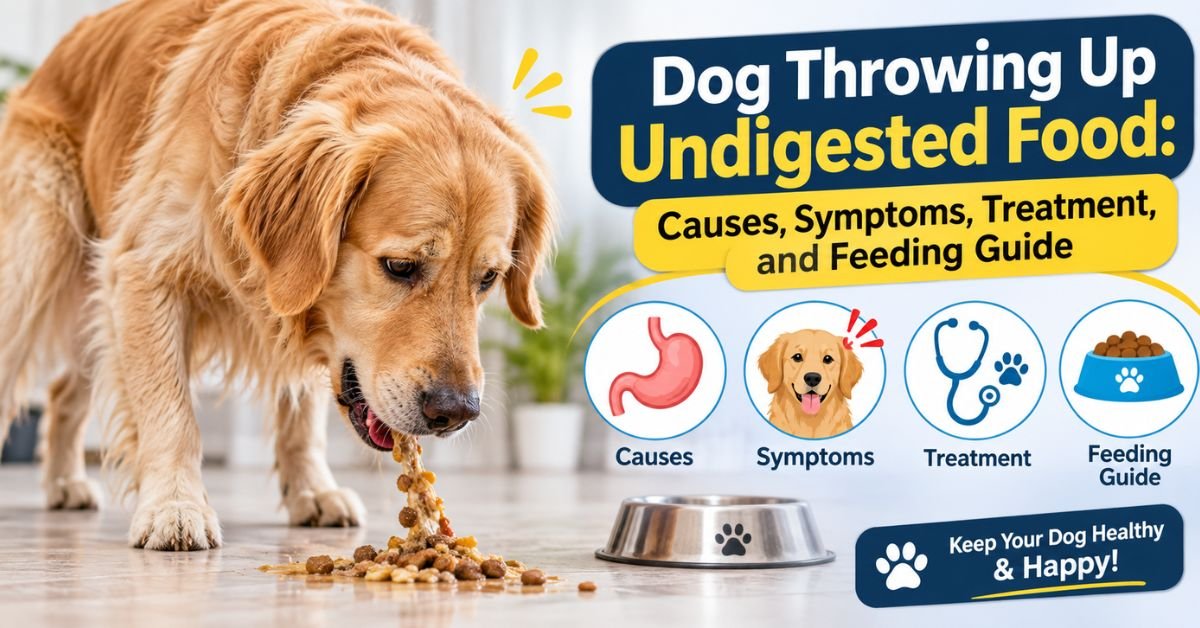
When your dog throws up food that looks almost exactly like the meal they just ate, it can be worrying. You may wonder whether your dog is eating too quickly, experiencing digestive problems, or dealing with something more serious. Dog Throwing Up Undigested Food
Dog throwing up undigested food can happen for several reasons, ranging from eating too quickly to problems affecting the stomach or esophagus. However, the appearance of the expelled food alone cannot identify the cause.
One important detail is whether your dog is actually vomiting or regurgitating. These are two different processes, and understanding the difference can help you recognize when your dog needs veterinary attention.
Some dogs experience an isolated episode after eating too much or too quickly. Others repeatedly bring up undigested food because of an underlying condition that needs veterinary investigation.
In this guide, we explain the common causes, warning signs, treatment options, feeding recommendations, and practical steps you can take to protect your dog’s digestive health. Dog Throwing Up Undigested Food
Overview: Why Is Your Dog Throwing Up Undigested Food?
A dog may bring up undigested food when something interrupts the normal movement of food through the digestive system.
Normally, food travels from the mouth through the esophagus and into the stomach, where digestive acids and enzymes begin breaking it down. Afterward, it moves into the small intestine for further digestion and nutrient absorption.
When this process is disrupted, food may return through the mouth before it has been properly digested.
There are two important possibilities when a dog brings up undigested food: vomiting and regurgitation. Although they may look similar, they involve different parts of the digestive system and often have different underlying causes.
1. Vomiting Undigested Food
Vomiting is an active process in which the stomach or upper intestine forcefully expels its contents through the mouth.
Before vomiting, your dog may:
- Show signs of nausea.
- Drool excessively.
- Lick their lips repeatedly.
- Become restless or uncomfortable.
- Experience abdominal contractions.
- Make retching or gagging sounds.
Sometimes, recently eaten food remains recognizable in the vomit, especially when vomiting occurs shortly after a meal.
2. Regurgitating Undigested Food
Regurgitation is different because it is generally a passive process. Food returns from the esophagus before reaching the stomach.
You may notice:
- Undigested food coming out without warning.
- Little or no abdominal effort.
- Food appearing in a tube-like shape.
- Episodes occurring during or shortly after eating.
- Occasional coughing or gagging.
Repeated regurgitation may indicate an esophageal disorder, including megaesophagus, a condition that affects the normal movement of food toward the stomach.
The symptoms accompanying undigested food can provide useful information about your dog’s condition. A single episode in an otherwise healthy dog may have a different significance from repeated episodes accompanied by weakness, pain, or breathing problems.
Common Symptoms to Watch For
Pay attention to changes in your dog’s behavior, appetite, and digestive health. The following symptoms may help you recognize when something is wrong.
Undigested Food
Your dog brings up recognizable pieces of their recent meal, sometimes shortly after eating.
Excessive Drooling
Increased saliva may indicate nausea, oral discomfort, or difficulty swallowing.
Loss of Appetite
Your dog refuses food, eats less than usual, or shows reduced interest in mealtimes.
Abdominal Discomfort
Your dog may appear restless, tense, uncomfortable, or reluctant to lie down.
Repeated Swallowing
Frequent swallowing or lip licking may accompany nausea or irritation of the esophagus.
Coughing
Coughing after regurgitation may indicate that food or liquid has entered the airway.
Unexplained Weight Loss
Repeated digestive problems may interfere with normal nutrition and contribute to weight loss.
Emergency Warning Signs: When to See a Veterinarian
Do not delay veterinary care if your dog experiences any of the following symptoms:
- Repeated vomiting: Your dog vomits multiple times or cannot keep water down.
- Blood in vomit: You notice fresh blood or material resembling coffee grounds.
- Swollen or painful abdomen: Your dog’s belly appears enlarged, tight, or painful.
- Unproductive retching: Your dog repeatedly tries to vomit but produces little or nothing.
- Severe weakness: Your dog experiences collapse, extreme lethargy, or difficulty standing.
- Breathing difficulties: Your dog has trouble breathing or develops persistent coughing after regurgitation.
- Suspected foreign object ingestion: Your dog may have swallowed a toy, bone, medication, poison, or another dangerous object.
Common Causes of Dog Throwing Up Undigested Food
Several conditions can explain why your dog brings up recognizable food. Identifying the likely cause requires considering when the episode happens, how frequently it occurs, and what other symptoms are present.
1. Eating Too Quickly
Some dogs swallow their meals rapidly without properly chewing.
This behavior can cause them to swallow excess air and consume more food than their digestive system comfortably handles at once.
You may notice your dog bringing up recognizable kibble shortly after finishing a meal.
What can help:
- Use a slow-feeder bowl.
- Divide daily food into smaller meals.
- Avoid competition around feeding areas.
- Encourage calm eating.
- Prevent vigorous exercise immediately around mealtimes.
Eating quickly may contribute to regurgitation, but repeated episodes should not automatically be blamed on eating speed.
2. Overeating or Eating Too Much at Once
Large meals can overwhelm a dog’s digestive system, particularly when the dog eats more than its recommended daily amount.
Some dogs also consume additional food from garbage cans, other pets’ bowls, or unattended food containers.
What can help:
- Measure daily food portions.
- Divide food into two or more meals when appropriate.
- Keep garbage and leftover food inaccessible.
- Avoid excessive treats and table scraps.
3. Megaesophagus
Megaesophagus is a condition in which the esophagus becomes enlarged and loses some of its ability to move food toward the stomach.
Instead of reaching the stomach normally, food can collect inside the esophagus and later return through the mouth.
Common signs include:
- Repeated regurgitation of undigested food.
- Difficulty maintaining body weight.
- Excessive swallowing.
- Coughing.
- Breathing problems associated with aspiration.
Megaesophagus can be congenital or acquired. It may also occur alongside certain underlying diseases.
Veterinarians commonly use chest X-rays and additional diagnostic tests to investigate suspected cases.
4. Gastrointestinal Obstruction
Dogs sometimes swallow objects they cannot digest, including:
- Socks.
- Small toys.
- Pieces of rubber.
- Bones.
- Corn cobs.
- Clothing material.
These objects may become lodged in the stomach or intestines and prevent normal food movement.
Possible symptoms include vomiting, loss of appetite, abdominal pain, lethargy, and changes in bowel movements.
Important: Never attempt to make your dog vomit or give home remedies if you suspect an obstruction. Contact a veterinarian immediately.
5. Gastritis or Stomach Irritation
Gastritis refers to inflammation of the stomach lining.
It may develop after a dog eats spoiled food, garbage, irritating substances, or something unsuitable for its digestive system.
Symptoms may include:
- Vomiting.
- Reduced appetite.
- Abdominal discomfort.
- Excessive drooling.
- General digestive upset.
Treatment depends on the underlying cause and the dog’s overall condition.
6. Food Intolerance or Sudden Diet Changes
Changing your dog’s food too quickly can upset its digestive system.
Some dogs also have difficulty tolerating particular ingredients or foods that do not agree with them.
Possible symptoms include:
- Vomiting.
- Loose stools.
- Gas.
- Changes in appetite.
- Abdominal discomfort.
Introduce a new diet gradually unless your veterinarian recommends a different approach.
7. Pancreatitis
Pancreatitis is inflammation of the pancreas, an organ that plays an important role in digestion and blood sugar regulation.
Dogs with pancreatitis may experience:
- Repeated vomiting.
- Reduced appetite.
- Abdominal pain.
- Weakness.
- Diarrhea.
- Dehydration.
This condition requires veterinary assessment. Do not try to manage suspected pancreatitis through dietary changes alone.
8. Other Underlying Medical Conditions
Repeated vomiting or regurgitation can also be associated with:
- Kidney disease.
- Liver disease.
- Gastrointestinal infections.
- Intestinal parasites.
- Certain neurological conditions.
- Esophageal inflammation or narrowing.
A veterinarian must investigate persistent symptoms to identify the actual cause.
Understanding the difference between vomiting and regurgitation can help you explain your dog’s symptoms more accurately during a veterinary appointment. Although both conditions may involve bringing up undigested food, they affect different parts of the digestive system.
| Feature | Vomiting | Regurgitation |
|---|---|---|
| Process | Active and forceful | Usually passive |
| Abdominal Contractions | Usually present | Usually absent |
| Warning Signs | Nausea, drooling, and retching | Often little or no warning |
| Food Appearance | Partially digested or undigested | Usually undigested |
| Bile | May be present | Usually absent |
| Common Source | Stomach or upper intestine | Esophagus |
| Possible Causes | Gastritis, infection, or intestinal obstruction | Megaesophagus or other esophageal disorders |
Veterinary Advice: What Should You Do First?
When your dog throws up undigested food, your first priority should be to assess its overall condition rather than immediately changing its diet.
Check whether your dog is behaving normally, drinking water, breathing comfortably, and showing signs of abdominal pain.
If the episode happens repeatedly, arrange a veterinary examination even if your dog seems comfortable between episodes.
Veterinary Advice Box
🩺 Veterinary Expert Advice & Disclaimer:
“If your dog repeatedly brings up undigested food, do not assume that eating too quickly is the only explanation, as esophageal disorders and gastrointestinal obstructions can produce similar signs. Seek veterinary advice promptly, particularly if your dog develops coughing, breathing difficulties, abdominal pain, weakness, or an inability to keep food and water down.”
— Veterinary Information Prepared for Doggopulse; not an individual veterinary examination or medical diagnosis.
How Veterinarians Diagnose the Problem
If your dog repeatedly throws up undigested food, a veterinarian may recommend several examinations to determine whether the problem involves the stomach, intestines, or esophagus.
1. Medical History and Physical Examination
Your veterinarian may ask:
- How soon after eating does your dog bring up food?
- Does your dog experience abdominal contractions?
- How frequently does the problem occur?
- Has your dog recently changed its food?
- Could your dog have swallowed a foreign object?
- Has your dog lost weight or developed a cough?
A physical examination may include checking hydration, abdominal tenderness, swallowing ability, and overall body condition.
2. Blood and Urine Tests
Blood tests can help identify dehydration, electrolyte abnormalities, inflammation, and possible kidney or liver problems.
Urine testing may provide additional information about your dog’s general health.
3. X-Rays and Ultrasound
Imaging tests help veterinarians investigate:
- Foreign objects.
- Intestinal obstruction.
- Abnormal stomach contents.
- Enlargement of the esophagus.
- Other abnormalities affecting digestive organs.
Chest X-rays can be particularly useful when megaesophagus or aspiration pneumonia is suspected.
4. Additional Diagnostic Tests
Depending on the symptoms, your veterinarian may recommend:
- Fecal examination for intestinal parasites.
- Esophageal evaluation.
- Endoscopy.
- Specialized blood tests.
- Additional imaging or tissue sampling.
Not every dog needs all these tests. The appropriate diagnostic plan depends on the examination findings and suspected condition. Merck Veterinary Manual+2
Treatment Options for Dogs Throwing Up Undigested Food
There is no single treatment for every dog because the correct approach depends on the underlying cause.
1. Treatment for Eating Too Quickly
If a veterinarian determines that rapid eating is contributing to the problem, feeding adjustments may help.
Consider:
- Slow-feeder bowls.
- Smaller meals throughout the day.
- Food-dispensing feeders.
- Separate feeding spaces for multiple dogs.
These changes can help reduce rapid food consumption.
2. Veterinary Medication
Depending on the diagnosis, a veterinarian may prescribe medication to control nausea, manage inflammation, address an underlying infection, or treat another medical condition.
Never give human anti-vomiting medicines or stomach medications without veterinary approval.
3. Treatment for Megaesophagus
Dogs with megaesophagus may require special feeding arrangements.
A veterinarian may recommend:
- Feeding in an upright position.
- Using a specially designed feeding chair.
- Adjusting food consistency.
- Providing smaller, more frequent meals.
- Monitoring body weight and hydration.
The feeding technique should be individualized because different dogs tolerate different food textures and positions.
4. Treatment for Gastrointestinal Obstruction
An obstruction may require hospitalization, fluid therapy, endoscopic removal, or surgery.
Treatment depends on the object’s location, size, and the damage it has caused.
Never wait for a suspected swallowed object to pass naturally without veterinary advice. Cornell Vet School+1
5. Dietary Management
Some dogs with digestive problems benefit from a veterinarian-recommended easily digestible diet.
Depending on the condition, the veterinarian may recommend:
- A complete and balanced gastrointestinal diet.
- Smaller meals.
- A temporary therapeutic diet.
- A specially formulated diet for an underlying disease.
Avoid making several dietary changes at once because this can make it harder to identify what is helping or worsening the problem.
Best Feeding Guidelines for Dogs Throwing Up Undigested Food
Feeding habits can influence digestive comfort, but the right feeding strategy depends on whether your dog has vomiting, regurgitation, or an underlying medical condition.
1. Divide Food Into Smaller Meals
Instead of giving your dog one large meal, consider dividing its daily food allowance into smaller portions.
For example, an adult dog that normally eats twice daily may benefit from three or four smaller meals if its veterinarian recommends this approach.
Smaller meals can be particularly useful for dogs that struggle with large food volumes.
2. Choose an Appropriate Dog Food
Look for food that is:
- Complete and balanced for your dog’s life stage.
- Appropriate for its nutritional requirements.
- Easy to tolerate based on veterinary recommendations.
- Suitable for any diagnosed digestive condition.
A prescription gastrointestinal diet may be appropriate for certain dogs, but not every dog needs one.
When your dog is medically stable and your veterinarian approves a diet change, introduce the new food gradually. A slow transition helps your dog adjust to the new ingredients and may reduce the risk of digestive upset.
| Transition Period | Old Food | New Food |
|---|---|---|
| Days 1–2 |
75%
|
25%
|
| Days 3–4 |
50%
|
50%
|
| Days 5–6 |
25%
|
75%
|
| Day 7 Onward |
0%
|
100%
|
4. Keep Fresh Water Available
Vomiting can contribute to dehydration.
Provide access to fresh drinking water. If your dog repeatedly vomits after drinking, contact a veterinarian rather than continuing to experiment with water intake.
Never deliberately deprive a vomiting dog of water without direct veterinary instructions.
5. Avoid Table Scraps and Rich Treats
Human foods, greasy leftovers, and excessive treats can complicate digestive problems.
Avoid giving your dog:
- Fried foods.
- Fatty meat scraps.
- Spicy foods.
- Rich sauces.
- Unfamiliar treats.
- Foods containing toxic ingredients such as chocolate, grapes, or xylitol.
Keep your dog’s diet consistent while investigating recurring symptoms.
The following table provides practical information for monitoring dogs that bring up undigested food. These feeding and management recommendations can help you identify patterns, maintain appropriate nutrition, and recognize when veterinary attention is necessary.
| Management Factor | Recommended Approach | Important Consideration | When to Seek Veterinary Help |
|---|---|---|---|
| Meal Size | Divide food into smaller meals. | Maintain appropriate daily calories and balanced nutrition. | If episodes continue despite feeding adjustments. |
| Eating Speed | Use a slow-feeder bowl. | Supervise mealtimes and reduce competition around food. | If regurgitation persists despite slower eating. |
| Food Selection | Choose complete and balanced dog food. | Consider veterinary dietary advice for dogs with digestive problems. | If food intolerance or recurring digestive symptoms are suspected. |
| Water Intake | Provide access to fresh drinking water. | Monitor drinking habits and signs of dehydration. | If your dog cannot keep water down. |
| Food Transition | Introduce new food gradually when medically appropriate. | Avoid sudden dietary changes and follow veterinary instructions. | If vomiting develops or digestive symptoms worsen. |
| Feeding Position | Follow veterinarian-recommended feeding positions. | Positioning may be especially important for dogs with megaesophagus. | If coughing, choking, or breathing problems occur. |
| Treats | Limit unnecessary treats. | Avoid fatty, rich, or unfamiliar foods. | If symptoms repeatedly follow particular treats. |
| Weight Monitoring | Check your dog’s body weight regularly. | Watch for unexplained weight loss or changes in body condition. | If your dog’s weight decreases unexpectedly. |
Home Care: What You Can Safely Do
If your dog has experienced one isolated episode and is otherwise behaving normally, careful observation may be appropriate while you contact your veterinarian for guidance.
Here are some practical steps.
Observe Your Dog After the Episode
Pay attention to:
- Energy levels.
- Appetite.
- Water intake.
- Breathing.
- Stool consistency.
- Whether another episode occurs.
Repeated episodes require veterinary assessment. Dog Throwing Up Undigested Food
Take a Picture or Video
A photograph of the expelled food or a video showing the episode can help your veterinarian understand what happened.
Try to record whether your dog:
- Experiences abdominal contractions.
- Brings food up effortlessly.
- Coughs before or after the episode.
- Shows signs of distress.
Keep a Feeding Record
Write down the time of each meal, the food type, approximate quantity, and when the episode happens.
This information can help identify patterns.
Do Not Use Unverified Home Remedies
Avoid giving your dog:
- Human anti-vomiting medication.
- Milk to settle the stomach.
- Oils or herbal mixtures.
- Random digestive supplements.
- Homemade treatments intended to induce vomiting. Dog Throwing Up Undigested Food
Some remedies can worsen the condition or delay necessary treatment.
Even well-intentioned care can create additional problems when a dog repeatedly brings up undigested food. Avoid these common mistakes and choose a safer approach.
| Common Mistake | Why It Can Be Harmful | Better Approach |
|---|---|---|
| Assuming it is always overeating | Serious conditions may be missed. | Investigate repeated episodes and discuss them with a veterinarian. |
| Changing food immediately | Sudden diet changes may worsen digestive upset. | Discuss diet changes with a veterinarian and transition gradually when appropriate. |
| Giving human medication | Some human medicines are unsafe for dogs or may cause harmful side effects. | Use only veterinary-prescribed or veterinarian-approved treatment. |
| Ignoring coughing | Coughing after regurgitation may indicate aspiration or respiratory complications. | Seek prompt veterinary assessment, especially if breathing changes occur. |
| Withholding water | Restricting water without veterinary advice can worsen dehydration. | Keep water available unless your veterinarian gives different instructions. |
| Waiting after suspected obstruction | A gastrointestinal blockage can become life-threatening without timely treatment. | Seek emergency veterinary care if your dog may have swallowed a foreign object. |
| Overfeeding bland food | Excessive or prolonged use of an unbalanced bland diet can create nutritional problems. | Follow a veterinarian-approved feeding plan with appropriate portions and duration. |
Prevention depends on the underlying cause, but several consistent habits can support better feeding management and reduce avoidable risks.
Establish Consistent Meal Times
Feed your dog at regular times each day to create a predictable feeding routine.
Measure Food Portions
Use an appropriate measuring cup or kitchen scale to avoid accidental overfeeding.
Use Appropriate Feeding Equipment
Slow-feeder bowls or suitable food puzzles may help dogs that eat too quickly.
Keep Dangerous Objects Away
Store toys, socks, bones, and other swallowable objects safely to reduce the risk of intestinal blockage.
Introduce New Food Gradually
Transition to new food slowly and avoid unnecessary changes that may upset your dog’s digestive system.
Schedule Routine Veterinary Checkups
Regular veterinary examinations can help identify health problems before they become more serious.
Monitor Unusual Symptoms
Do not ignore repeated regurgitation, coughing, appetite changes, or unexplained weight loss.
Frequently Asked Questions (FAQs)
1. Why is my dog throwing up undigested food hours after eating?
Undigested food appearing several hours after a meal may indicate delayed stomach emptying, gastrointestinal problems, or an obstruction. Regurgitation from an esophageal condition is another possibility. A veterinarian should investigate repeated episodes, especially if your dog has abdominal pain, appetite changes, or weight loss.
2. Is it normal for dogs to throw up whole kibble?
An occasional episode may happen after eating too quickly or consuming too much food. However, repeatedly bringing up whole kibble is not normal and should not be ignored. Your dog may have an esophageal or gastrointestinal condition that requires examination.
3. Should I feed my dog again after throwing up undigested food?
Do not immediately offer another full meal. First assess your dog’s condition and contact your veterinarian for feeding instructions. Puppies, diabetic dogs, small dogs, and dogs with existing medical conditions may need more urgent individualized guidance. Do not impose prolonged fasting without veterinary advice.
4. What is the difference between vomiting and regurgitation in dogs?
Vomiting involves active abdominal contractions and often includes nausea or retching. Regurgitation is generally passive and brings food back from the esophagus without the usual abdominal effort. Both can produce undigested food, so observing the episode can help your veterinarian distinguish between them.
Conclusion
When your dog is throwing up undigested food, it is important to understand whether the problem is vomiting or regurgitation. Eating too quickly or having large meals may contribute to occasional episodes, but repeated incidents can indicate digestive problems or more serious conditions such as megaesophagus or an intestinal obstruction.
Pay attention to your dog’s symptoms, eating habits, appetite, and behavior. Feeding smaller portions, using a slow-feeder bowl when appropriate, avoiding sudden food changes, and keeping dangerous objects out of reach can support better digestive health.
Most importantly, do not ignore repeated episodes or try human medications and unverified home remedies. Contact your veterinarian to identify the underlying cause and choose the right treatment. If your dog has difficulty breathing, a swollen abdomen, repeated unsuccessful retching, collapse, or suspected foreign-object ingestion, seek emergency veterinary care.
With early attention, proper feeding management, and veterinary guidance, you can help protect your dog’s digestive health and overall well-being.
Scientific References & Sources
The following veterinary resources support the medical information in this guide. They provide additional details about vomiting, regurgitation, esophageal disorders, and gastrointestinal obstruction.
📚 Scientific References & Sources
- Merck Veterinary Manual – Vomiting in Dogs
- Cornell University College of Veterinary Medicine – Vomiting in Dogs
- Merck Veterinary Manual – Disorders of the Esophagus in Dogs
- Cornell University College of Veterinary Medicine – Gastrointestinal Foreign Body Obstruction in Dogs
- American Animal Hospital Association (AAHA) – Why Is My Dog Throwing Up? Vets Explain When It’s Serious
- VCA Animal Hospitals – Vomiting in Dogs

Muhammad Ahad — Passionate writer sharing informative, engaging, and easy-to-read articles across different topics. Focused on delivering valuable content that helps readers learn, explore, and stay inspired every day.
1 thought on “Dog Throwing Up Undigested Food: Causes, Symptoms, Treatment, and Feeding Guide”