

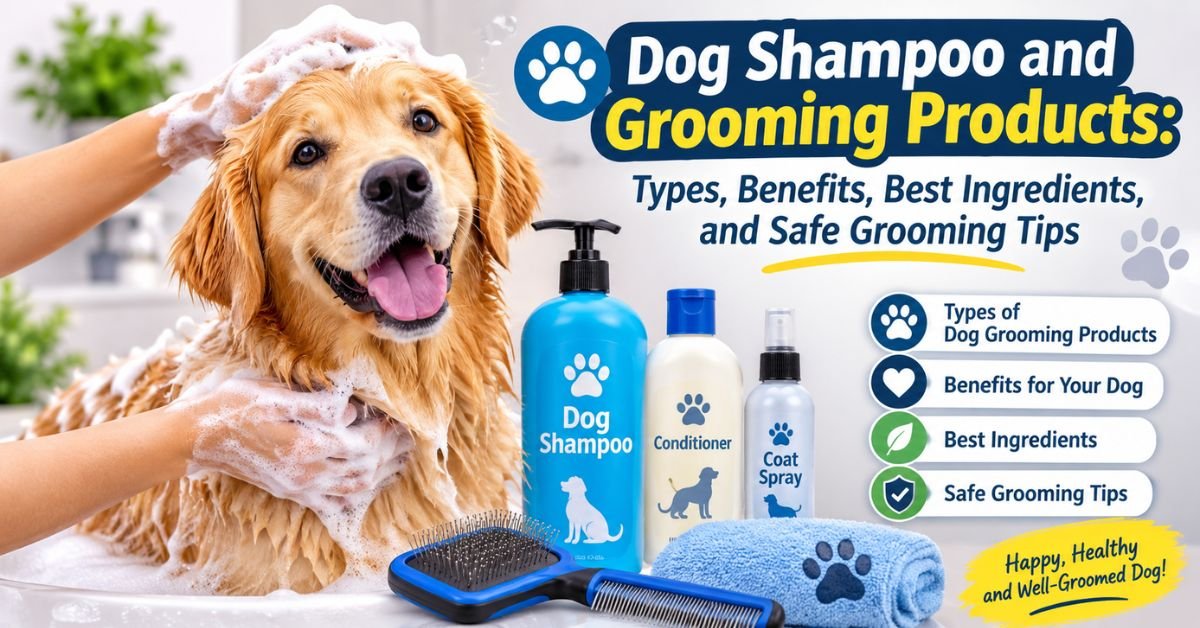
Choosing the right dog shampoo and grooming products is key to keeping your dog’s skin healthy, coat clean, and overall appearance well maintained. Regular grooming does more than make a dog look good. It removes dirt, loose hair, allergens, and unpleasant odors while giving owners a chance to notice skin problems, unusual lumps, parasites, and other changes.
However, not every grooming product suits every dog. Puppies, senior dogs, dogs with sensitive skin, and breeds with thick or long coats may have different grooming requirements. Using the wrong shampoo, conditioner, or cleaning product can cause dryness, irritation, and other skin problems.
Whether you have a playful Labrador, a fluffy Golden Retriever, a small Pomeranian, or a short-haired French Bulldog, understanding which grooming products to choose can make everyday care easier.
This guide explains the different types of dog shampoo and grooming products, their benefits, important ingredients, safe bathing techniques, and practical recommendations to help you build a suitable grooming routine.
Dog Shampoo and Grooming Products
Overview of Dog Shampoo and Grooming Products
Dog shampoo and grooming products are specially designed to clean, maintain, and protect a dog’s skin and coat. These products include shampoos, conditioners, detangling sprays, grooming wipes, brushes, combs, nail clippers, and ear-cleaning solutions.
Dogs have different skin characteristics from humans. Their skin barrier and natural pH balance require products formulated specifically for canine use. Human shampoos, including some baby shampoos, may disrupt the skin’s protective barrier and contribute to dryness or irritation.
According to VCA Animal Hospitals, dog skin has a different pH from human skin, which is one reason veterinary professionals recommend shampoos formulated for pets. Dog Shampoo and Grooming Products
Why Are Dog Grooming Products Important?
Regular grooming supports several aspects of canine health and comfort. The right grooming products help maintain clean skin, a healthy coat, and your dog’s overall well-being.
Skin Cleanliness
Removes accumulated dirt, debris, and environmental allergens from your dog’s coat and skin.
Healthy Coat
Helps remove loose hair and distribute natural oils, keeping the coat clean and manageable.
Tangle Prevention
Regular brushing reduces knots and painful matting, particularly in long-haired breeds.
Odor Control
Removes dirt and odor-causing substances, helping your dog maintain a fresher coat.
Early Problem Detection
Makes it easier to notice redness, bumps, parasites, wounds, or unusual hair loss.
Comfort and Well-Being
Keeps the coat manageable and helps prevent discomfort caused by excessive tangles.
Different Dogs Have Different Grooming Needs
A grooming routine should depend on your dog’s coat type, age, lifestyle, and skin condition. Every breed has different grooming requirements, so choosing the right products and techniques is essential.
🐾 Why Individual Grooming Matters
A long-haired Shih Tzu may need frequent brushing to prevent painful mats, while a short-haired Beagle generally requires less intensive coat maintenance. Dogs with skin allergies may need a veterinarian-recommended bathing schedule and specialized shampoo.
Breeds such as Shih Tzus need regular brushing to prevent tangles, trapped debris, and coat matting.
Breeds such as Beagles generally need simpler coat maintenance and occasional brushing.
Dogs with skin allergies may require gentle products and a veterinarian-guided bathing routine.
Dogs with dense coats need thorough brushing to manage loose hair and prevent tangles.
Common Symptoms and Triggers That Affect Your Dog’s Skin and Coat
Before choosing dog shampoo and grooming products, understand the skin and coat problems you want to address. Some problems are caused by environmental conditions or poor grooming habits, while others may indicate an underlying medical condition.

1. Dry and Flaky Skin
Dry skin can cause visible flakes, rough patches, and increased scratching. Your dog may also develop a dull-looking coat or show signs of discomfort when touched.
Common Contributing Factors
- Low humidity and dry weather.
- Frequent bathing with harsh products.
- Inadequate rinsing after shampooing.
- Certain nutritional deficiencies.
- Allergies or underlying skin disorders.
Image reference: Nextmune – Skin and Coat Supplements

2. Excessive Itching and Scratching
Dogs may scratch because of fleas, environmental allergies, food allergies, skin infections, or contact irritation. Occasional scratching is normal, but repeated itching may indicate an underlying skin problem that needs attention.
Common Warning Signs
- Repeated scratching throughout the day.
- Excessive licking of paws.
- Red or irritated skin.
- Frequent head shaking.
- Chewing around the legs or belly.

3. Unpleasant Body Odor
An occasional doggy smell is normal, but a strong or persistent odor may indicate a problem. It can come from the skin, ears, mouth, or moisture trapped in areas such as skin folds.
Possible Causes
- Accumulated dirt and moisture.
- Skin infections.
- Yeast overgrowth.
- Ear infections.
- Dental disease.
- Moisture trapped inside skin folds.

4. Tangled and Matted Fur
Long-haired and curly-coated dogs are particularly vulnerable to tangles. Without regular brushing, loose hair can become trapped within the coat and form tight knots called mats.
Mats can trap moisture, dirt, and debris close to the skin. Severe matting may cause pain, skin irritation, and discomfort during movement or grooming.
Common Areas Where Mats Develop
- Behind the ears.
- Under the front and back legs.
- Around the neck and collar area.
- Under the belly.
- Near the tail and hindquarters.
Image reference: The Lab Shop – Dog Coat Care Guide

5. Excessive Shedding
Seasonal shedding is normal for many dogs. However, unusual hair loss, bald patches, or changes in coat texture may indicate a health concern that needs attention.
Possible Causes of Excessive Shedding
- Seasonal coat changes.
- Parasites.
- Allergies.
- Hormonal conditions.
- Nutritional problems.
- Skin infections.
Types of Dog Shampoo and Grooming Products
Different grooming products serve different purposes. Understanding their uses helps you avoid purchasing unnecessary or unsuitable products. The right choice depends on your dog’s coat type, skin condition, and grooming requirements.

1. General-Purpose Dog Shampoo
General-purpose shampoo is designed for routine cleaning of healthy dogs. It helps remove everyday dirt, environmental debris, and unpleasant smells while keeping the coat clean.
What to Look For
- Dog-specific pH formulation.
- Mild cleansing ingredients.
- Clear usage instructions.
- Suitable ingredients for your dog’s coat.
- Minimal fragrance, especially for sensitive dogs.
Image reference: Panakei – Dog Bathing Guide

2. Hypoallergenic Dog Shampoo
Hypoallergenic shampoos are formulated to reduce exposure to certain potential irritants. They are often selected for dogs with sensitive skin or a history of reacting to fragranced grooming products.
Useful Product Features
- Fragrance-free formulations.
- Gentle cleansing agents.
- Limited unnecessary additives.
- Clearly identified ingredients.

3. Oatmeal Dog Shampoo
Oatmeal-based shampoos are commonly used in grooming products for dogs with mildly dry or sensitive skin. Colloidal oatmeal can help soothe the skin and support moisture retention.
Potential Benefits
- Supports skin hydration.
- Helps relieve mild dryness.
- Improves coat softness.
- Provides gentle cleansing.
Product reference: Sage Willow Designs – Oatmeal Relief Dog Shampoo

4. Medicated Dog Shampoo
Medicated shampoos contain specific active ingredients intended to help manage certain skin conditions. Depending on the formulation, they may be recommended for selected bacterial, fungal, or inflammatory skin problems.
Common Active Ingredients
- Chlorhexidine.
- Miconazole.
- Ketoconazole.
- Benzoyl peroxide.
- Other veterinarian-selected therapeutic ingredients.
5. Dog Conditioner and Detangling Spray
Conditioners and detangling sprays help maintain coat manageability after shampooing. They can be particularly useful for long-haired breeds that are more likely to develop knots and tangles.
Potential Benefits
- Makes brushing easier.
- Reduces friction between hair strands.
- Improves coat softness.
- Helps manage minor tangles.
- May reduce hair breakage during grooming.
6. Waterless Dog Shampoo and Grooming Wipes
Waterless shampoos and grooming wipes can help clean small areas between regular baths. They are convenient options for removing minor dirt and freshening your dog’s coat.
When These Products May Be Useful
- When your dog has dirty paws after a walk.
- When cleaning minor surface dirt.
- When your dog dislikes traditional bathing.
- When freshening the coat between grooming sessions.
Product reference: Furiviox – Pet Care Products
Reading the ingredient list is one of the most useful steps when choosing grooming products for your dog. Some ingredients help maintain skin moisture and coat condition, while others are included for specific therapeutic purposes.
| Ingredient | Main Purpose | Suitable Use |
|---|---|---|
| Colloidal oatmeal | Helps soothe and moisturize the skin. | Mild dryness and sensitive skin. |
| Aloe vera | Skin-conditioning ingredient. | Selected moisturizing formulations. |
| Glycerin | Helps attract and retain moisture. | Dry or normal skin. |
| Ceramides | Support the skin’s natural barrier. | Dry or barrier-impaired skin. |
| Chlorhexidine | Antiseptic ingredient. | Certain bacterial skin conditions under veterinary guidance. |
| Miconazole | Antifungal ingredient. | Certain fungal or yeast-related conditions. |
| Hydrolyzed proteins | Provide coat-conditioning support. | Selected coat-care formulations. |
| Mild cleansing agents | Remove dirt and excess oils. | Routine bathing. |
Important grooming advice: Not every dog needs all these ingredients. Choose a product according to your dog’s skin condition and grooming requirements. Medicated ingredients such as chlorhexidine and miconazole should be used with veterinary guidance. Avoid products that are not specifically formulated for dogs.
Ingredients and Products to Use Carefully
Some grooming ingredients can irritate dogs, particularly those with sensitive skin. Checking product labels before bathing your dog can help you avoid unnecessary irritation and choose a more suitable formula.
Strong fragrances: Unnecessary perfumes and strong scents may irritate sensitive skin.
Harsh cleansing agents: Some formulations may remove too much natural skin oil and cause dryness.
Concentrated essential oils: Certain oils can be harmful to pets, even when used in grooming products.
Non-canine products: Avoid products containing ingredients that are not approved or intended for canine use.
Human shampoos and conditioners: These may not have a suitable formulation or pH for your dog’s skin.
Unsupervised medicated products: Avoid using medicated ingredients without veterinary guidance.
Important safety note: Essential oils deserve particular caution because some concentrated oils can be harmful to pets. Never assume that a natural ingredient is automatically safe for dogs. If your dog develops redness, itching, or irritation after using a product, stop using it and contact your veterinarian.
Detailed Recommendations: Choosing the Right Dog Grooming Products
Selecting grooming products becomes easier when you consider your dog’s individual requirements. Skin condition, coat type, bathing frequency, and any existing skin problems can all influence which product is suitable.
The following recommendations can help you make a more informed choice.
1. Choose Shampoo According to Skin Type

The first step is understanding whether your dog has normal, dry, sensitive, or medically affected skin. A shampoo that works well for one dog may not be suitable for another.
Normal Skin
A mild, dog-specific general-purpose shampoo is usually sufficient for routine bathing.
Dry Skin
Consider a moisturizing canine shampoo with appropriate conditioning ingredients to support skin hydration.
Sensitive Skin
A fragrance-free, gentle formulation may be a sensible starting point for dogs that react to certain grooming products.
Allergy-Prone Skin
Ask your veterinarian about suitable products and possible allergy triggers before changing your dog’s grooming routine.
Infected Skin
Use a veterinarian-selected medicated shampoo when prescribed. The correct product depends on the underlying condition.
Practical tip: Do not assume that a shampoo designed for one skin condition will work for another. Persistent itching, redness, sores, unusual odor, or hair loss should be assessed by a veterinarian rather than treated with shampoo alone.
2. Select the Right Brush for Your Dog’s Coat
Brushing is an essential part of grooming, and choosing the correct brush makes the process more comfortable for your dog. The right tool can help remove loose hair, manage tangles, and keep the coat looking healthy.

Different brushes work better for different coat types. Understanding their uses can help you choose a suitable grooming tool.
Slicker Brush
Useful for many medium-haired, long-haired, and curly-coated dogs. Use gentle pressure and avoid repeatedly brushing the same area to prevent scratching the skin.
Bristle Brush
Often suitable for short-haired breeds and routine surface grooming. It can help remove loose hair and light debris from the coat.
Pin Brush
Helpful for maintaining longer coats and removing loose hair. It can also help keep long fur looking neat when used gently.
Rubber Curry Brush
Useful for many short-coated dogs. Its flexible rubber surface can loosen dead hair while providing a gentle massage.
Metal Comb
Helpful for checking tangles, particularly behind the ears, under the legs, and around the tail. Work carefully through knots.
Brushing tip: Your dog’s coat type should determine which brush you purchase. Brush gently, stop if your dog shows discomfort, and avoid pulling forcefully through tight mats. Severe matting may require help from a professional groomer.
3. Use Dog-Specific Conditioner
Conditioners can improve coat manageability, especially in dogs with long or curly fur. A suitable canine conditioner may help reduce tangles, soften the coat, and make brushing easier.
What to Look for in a Dog Conditioner
- Matches your dog’s coat requirements.
- Is compatible with the shampoo being used.
- Does not leave excessive residue on the coat.
- Can be rinsed or applied according to its instructions.
Conditioner safety: Some leave-on conditioning products are useful for detangling, but they should never be applied to irritated or broken skin unless your veterinarian recommends them. Always follow the product label and choose a conditioner formulated specifically for dogs.
4. Consider Grooming Wipes for Everyday Cleaning
Dog grooming wipes can make daily maintenance easier. They are particularly helpful for quick clean-ups and keeping your dog fresh between baths. Choose wipes specifically formulated for dogs and follow the manufacturer’s instructions.
✓ Great for Everyday Cleaning
- Paws after outdoor walks.
- The coat around the legs.
- Minor dirt around the body.
- External skin folds when the product is suitable.

⚠️ Facial Cleaning Tips
For facial cleaning, use a soft damp cloth and avoid getting grooming products into your dog’s eyes. Use only products specifically labeled as safe for the intended facial area.
🐶 Special Care for Wrinkled Breeds
Dogs with facial wrinkles, including Pugs and Shar-Peis, need careful cleaning and thorough drying between skin folds. Moisture trapped in these areas can contribute to irritation.
5. Choose Safe Nail Clippers
Overgrown nails can make walking uncomfortable and may change how a dog places its feet.
Common nail-care tools include:
- Scissor-style nail clippers.
- Guillotine-style nail clippers.
- Electric nail grinders.
Choose a tool appropriate for your dog’s size and nail thickness.
Trim small amounts at a time because cutting into the quick can cause pain and bleeding. If you cannot identify the quick, ask a professional groomer or veterinarian to demonstrate safe nail trimming. Dog Shampoo and Grooming Products
6. Use Ear-Cleaning Products Only When Appropriate
Dog ear-cleaning solutions are designed to remove excess debris and wax from the external ear canal.
However, not every dog needs routine ear cleaning.
Look for veterinary-approved products and follow the instructions carefully.
Avoid:
- Inserting cotton swabs deep into the ear.
- Using alcohol or hydrogen peroxide without veterinary direction.
- Cleaning painful, inflamed, or infected ears without examination.
Head shaking, discharge, redness, or a strong ear odor can indicate an infection that needs veterinary attention. Dog Shampoo and Grooming Products
Veterinary Advice Box
🩺 Veterinary Expert Advice & Disclaimer:
“Always choose grooming products specifically formulated for dogs, as unsuitable shampoos and cleaning products may irritate the skin or interfere with its natural protective barrier. If your dog experiences persistent itching, redness, hair loss, sores, or an unusual odor, consult a veterinarian before using medicated shampoos or other treatment products.”
— Veterinary Information Prepared for Doggopulse
How Often Should You Bathe Your Dog?
Bathing frequency depends on your dog’s coat type, lifestyle, skin health, and the products being used. Some dogs need only occasional baths, while others require more frequent grooming.
VCA Animal Hospitals explains that many healthy non-shedding dogs are bathed approximately every six to eight weeks, although individual needs vary.
General Bathing Frequency Guide
Use the following table as a general starting point when planning your dog’s bathing routine.
| Dog Type or Condition | General Bathing Guidance | Important Consideration |
|---|---|---|
| Short-haired dogs | When dirty or when needed | Avoid unnecessary frequent bathing. |
| Long-haired dogs | Around every 4–8 weeks as a starting point | Brush regularly to prevent mats and tangles. |
| Curly-coated dogs | Often every 4–8 weeks | Regular coat maintenance is especially important. |
| Dogs with sensitive skin | Based on individual needs | Use suitable, gentle grooming products. |
| Dogs with allergies | As recommended by a veterinarian | Some dogs may require a therapeutic bathing schedule. |
| Dogs with skin infections | According to veterinary instructions | Follow the prescribed shampoo contact time and schedule. |
These are general grooming estimates, not fixed medical schedules. Your dog’s coat, skin condition, lifestyle, and veterinarian’s instructions should always take priority.
Veterinary reference: VCA Animal Hospitals – Grooming and bathing guidance.
Feeding Guidelines and Nutrition for Healthy Skin and Coat
Although grooming products help maintain external cleanliness, healthy skin and a good-quality coat also depend on proper nutrition.
A shampoo cannot correct nutritional deficiencies or replace a balanced diet.
1. Provide Complete and Balanced Dog Food
Choose a complete and balanced diet appropriate for your dog’s life stage and health requirements.
Important nutrients include:
- Protein: Provides amino acids needed for skin and hair structure.
- Essential fatty acids: Support normal skin function and coat condition.
- Zinc: Contributes to normal skin and hair health.
- Vitamin A: Supports normal skin maintenance.
- Vitamin E: Provides antioxidant support.
- B vitamins: Participate in normal skin and coat metabolism.
Nutritional requirements vary with age, body condition, and health status.
2. Support Skin Health With Essential Fatty Acids
Omega-3 and omega-6 fatty acids contribute to normal skin barrier function.
They are available in different dietary ingredients, including certain fish oils and plant oils.
However, supplements should not be added automatically. Too much supplementation may create nutritional imbalances or cause unwanted side effects.
Discuss the appropriate source and amount with your veterinarian.
3. Maintain Proper Hydration
Fresh, clean drinking water should always be available.
Adequate hydration supports normal body functions, although drinking extra water alone will not resolve a skin disease or replace appropriate grooming.
4. Avoid Unnecessary Supplements
A dog eating a nutritionally complete diet may not need additional vitamins or minerals.
Before introducing a skin or coat supplement, discuss your dog’s diet and health with a veterinarian.
Step-by-Step Guide: How to Bathe Your Dog Safely
Bathing your dog at home can be straightforward when you prepare the right products and follow a gentle process. These eight steps can help make bath time safer and more comfortable for your pet.
Brush Before Bathing
Remove loose hair, small tangles, and debris before wetting your dog’s coat. Wet fur can make existing tangles harder to remove.
Severe mats should be handled by an experienced groomer or veterinarian rather than cut with household scissors.
Prepare the Bathing Area
Choose a comfortable location with a nonslip surface. Gather everything you need before bringing your dog into the bathing area.
- Dog-specific shampoo.
- Suitable conditioner, if needed.
- Lukewarm water.
- Soft, clean towels.
- A gentle grooming brush.
- A non-slip bath mat.
Wet the Coat Carefully
Gently wet your dog’s body with lukewarm water. Start slowly to help your pet become comfortable with the bathing process.
Avoid directly spraying water into the eyes, nose, and ears. For the face, a damp washcloth is usually a safer option.
Apply Dog Shampoo
Follow the product label and apply an appropriate amount of shampoo. Massage it gently through the coat, paying attention to dirty areas.
Avoid vigorous scrubbing, particularly if your dog has sensitive or inflamed skin.
Rinse Thoroughly
Rinse your dog’s coat until all shampoo has been removed. Remaining product can irritate the skin.
Pay special attention to the areas underneath the legs, around the belly, and beneath thick fur.
Apply Conditioner When Appropriate
If your dog needs conditioning, use a suitable canine product according to its instructions.
Some conditioners require rinsing, while others are designed to remain on the coat. Always check the product label before application.
Dry Your Dog Properly
Use clean towels to remove excess water. Dry the coat thoroughly, particularly in thick-haired areas and skin folds.
If using a dryer, choose a suitable low-temperature or cool setting and keep it at a comfortable distance. Never leave your dog unattended during drying.
Brush and Inspect the Coat
Once the coat is sufficiently dry, gently brush it using an appropriate grooming tool. This helps remove loose hair and identify possible skin problems.
- Redness.
- Unusual bumps.
- Fleas or ticks.
- Skin flakes.
- Hair loss.
- Unusual odors.
If you notice persistent abnormalities, arrange a veterinary examination.
Be patient throughout the bathing process. Use gentle handling, appropriate grooming products, and positive reinforcement to help your dog develop a more comfortable bathing routine.
Common Dog Grooming Mistakes to Avoid
Even well-intentioned grooming can cause problems when unsuitable products or techniques are used. Understanding common mistakes can help protect your dog’s skin, coat, and overall comfort.
| Common Mistake | Why It Can Be Harmful | Better Approach |
|---|---|---|
| Using human shampoo | May disrupt the dog’s skin barrier. | Choose dog-specific shampoo. |
| Bathing too frequently | May contribute to dryness or skin irritation. | Follow an appropriate bathing schedule. |
| Using excessive fragrance | May irritate sensitive skin. | Prefer fragrance-free products. |
| Leaving shampoo on the coat | Product residue may irritate the skin. | Rinse the coat thoroughly. |
| Brushing aggressively | Can scratch or damage the skin. | Use gentle, suitable brushes. |
| Cutting mats with scissors | Can accidentally cut the dog’s skin. | Seek professional grooming help. |
| Ignoring ear problems | May delay diagnosis and treatment of an infection. | Consult a veterinarian. |
| Using medicated shampoo without advice | May be inappropriate for your dog’s skin condition. | Follow veterinary instructions. |
Always choose grooming products according to your dog’s coat and skin needs. If you notice persistent itching, redness, unusual odor, or irritation, consult your veterinarian before changing your grooming routine.
When Should You Consult a Veterinarian?
Grooming products are intended to support routine care, not replace medical treatment.
Contact your veterinarian if your dog develops:
- Persistent scratching or licking.
- Red, swollen, or painful skin.
- Open sores or bleeding.
- Bald patches or unexplained hair loss.
- Recurrent skin infections.
- Strong or unusual body odor.
- Persistent dandruff or greasy skin.
- Ear discharge or repeated head shaking.
Seek prompt veterinary attention if your dog develops severe skin inflammation, rapidly spreading lesions, significant pain, or facial swelling.
If a grooming product causes a reaction, discontinue it and gently rinse the affected area with clean water. Contact your veterinarian for further advice. Dog Shampoo and Grooming Products
Frequently Asked Questions (FAQs)
1. What is the best shampoo to use on dogs?
The best shampoo depends on your dog’s skin condition and coat type. A mild, dog-specific shampoo is generally appropriate for healthy skin, while fragrance-free or moisturizing formulations may suit some sensitive dogs. Dogs with skin diseases may require veterinarian-prescribed medicated shampoo.
2. Can I use human shampoo on my dog?
Human shampoo is generally not recommended for dogs because their skin has a different pH and structure. Regular use may contribute to dryness, irritation, and disruption of the skin’s protective barrier. Choose shampoo specifically formulated for dogs.
3. How often should I use dog shampoo?
Many healthy dogs need bathing every four to eight weeks, but the ideal frequency depends on their breed, coat, lifestyle, and skin condition. Dogs with allergies or certain skin diseases may require a different bathing schedule prescribed by a veterinarian.
4. Are oatmeal shampoos good for dogs with sensitive skin?
Oatmeal shampoos can help soothe mild dryness and support skin moisture. However, they are not a cure for allergies, bacterial infections, or fungal conditions. Choose a suitable canine formulation and consult your veterinarian if irritation continues.
Conclusion
Choosing the right dog shampoo and grooming products helps maintain a clean coat, support healthy skin, and make regular grooming more comfortable. From gentle shampoos and conditioners to brushes, grooming wipes, and nail-care tools, each product has a specific purpose.
The most important thing is to select products according to your dog’s coat type, skin condition, and individual needs. Avoid unsuitable human grooming products, use medicated shampoos only with appropriate veterinary guidance, and maintain a consistent brushing and bathing routine.
Remember that persistent itching, unusual odors, hair loss, and skin irritation may indicate an underlying health problem rather than poor hygiene. Regular grooming combined with balanced nutrition and veterinary care can help your dog stay comfortable and maintain a healthy-looking coat.
Scientific References & Sources
The following veterinary and scientific resources support the grooming, bathing, shampoo selection, and skin-care recommendations discussed in this article.
📚 Scientific References & Sources
- VCA Animal Hospitals – Grooming and Coat Care for Your Dog
- Virginia Tech Veterinary Teaching Hospital – Safe Bathing Practices: Protecting Your Pet’s Skin
- ASPCA – Dog Grooming Tips
- Washington State University Veterinary Teaching Hospital – Bathing Your Dog
- Merck Veterinary Manual – Principles of Topical Treatment in Animals
- Veterinary Dermatology Research (PMC) – Shampoo Therapy in Veterinary Dermatology: Benefits and Practical Tips

Muhammad Ahad — Passionate writer sharing informative, engaging, and easy-to-read articles across different topics. Focused on delivering valuable content that helps readers learn, explore, and stay inspired every day.