

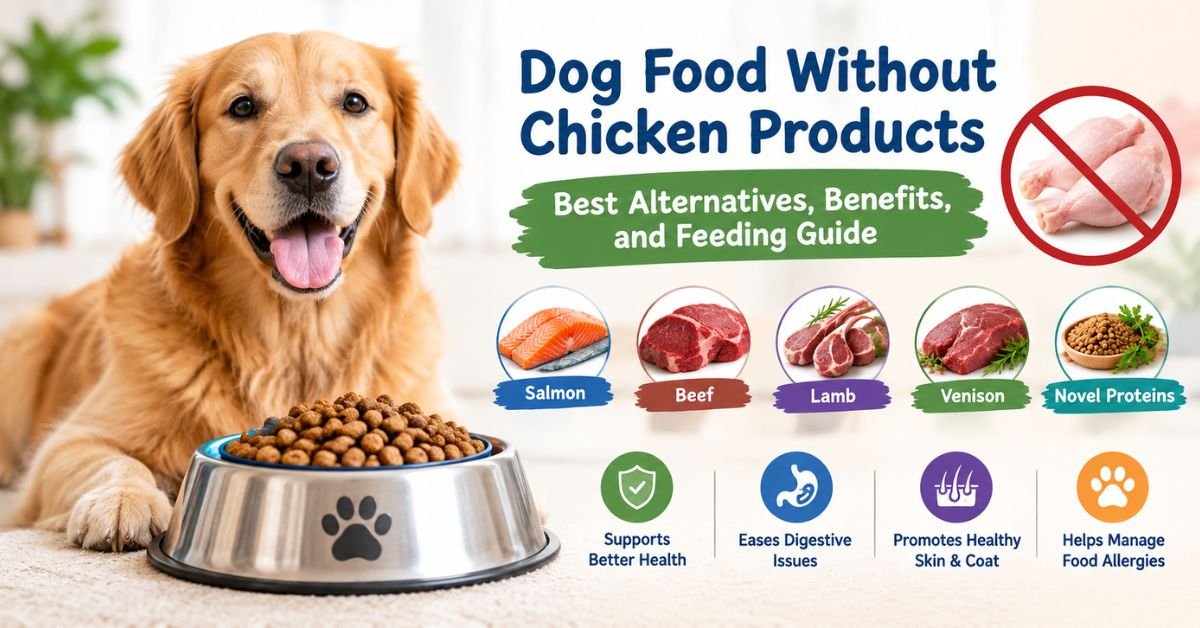
If your dog gets itchy skin, recurring ear infections, digestive upset, or other symptoms after eating chicken-based food, you may be wondering whether a chicken-free diet could help. Choosing dog food without chicken products can be a practical option for dogs with a confirmed chicken allergy, suspected food sensitivity, or owners who simply prefer alternative protein sources.
However, avoiding chicken is not always as simple as choosing a food labeled “beef,” “lamb,” or “salmon.” Some recipes contain chicken fat, poultry ingredients, chicken meal, or other chicken-derived components. Dogs with a suspected food allergy may also need a carefully controlled diet rather than an ordinary alternative-protein formula.
This guide explains how to identify chicken-free dog food, which protein sources to consider, how to read ingredient labels, and how to transition your dog safely while protecting their nutritional health.
What Is Dog Food Without Chicken Products?
Dog food without chicken products is food formulated without chicken-derived ingredients. Depending on the recipe and manufacturing process, these ingredients may include chicken meat, chicken meal, chicken liver, chicken broth, chicken fat, or chicken flavoring.
These diets are available in dry kibble, wet food, fresh food, and veterinary therapeutic formulas. Some use alternative animal proteins such as salmon, whitefish, lamb, beef, pork, or venison. Others use hydrolyzed proteins, in which proteins are broken into smaller components to reduce their ability to trigger certain immune reactions.
The most suitable option depends on your dog’s health, age, nutritional needs, and reason for avoiding chicken.
Who May Benefit From Chicken-Free Dog Food?
Chicken-free food may be worth considering for:
- Dogs with a suspected chicken allergy: Especially when a veterinarian recommends investigating a food-related reaction.
- Dogs with recurring skin problems: Persistent itching, paw licking, or ear inflammation may justify an allergy assessment.
- Dogs with digestive symptoms: Some dogs experience vomiting, loose stools, or diarrhea associated with a particular food, although these symptoms have many possible causes.
- Dogs on a veterinarian-directed elimination diet: A carefully selected formula may help identify the ingredient responsible for symptoms.
- Owners seeking different protein sources: Some households prefer recipes based on fish, lamb, beef, or other ingredients.
A key distinction is that chicken-free does not automatically mean hypoallergenic. A dog may react to beef, dairy, eggs, or another ingredient instead. Environmental allergies, parasites, infections, and other medical conditions can also cause similar symptoms.
Signs Your Dog May Not Tolerate Chicken
A dog eating chicken-based food does not necessarily have a chicken allergy simply because symptoms develop. Food allergies require proper investigation, and a veterinarian can help distinguish them from other conditions.
1. Persistent Itching and Scratching
A dog with a food-related allergy may repeatedly scratch the ears, belly, armpits, face, or other parts of the body. You might notice frequent licking, chewing at the paws, rubbing against furniture, or restless sleep.
These signs are not specific to chicken allergies. Fleas, environmental allergens, and skin infections can produce similar problems.
2. Recurrent Ear Infections
Repeated ear inflammation, redness, odor, discharge, or head shaking can sometimes occur alongside food allergies. If your dog develops frequent ear problems, ask your veterinarian to investigate the underlying cause rather than repeatedly treating the symptoms alone.
3. Digestive Upset
Possible signs include:
- Recurrent diarrhea or soft stools
- Vomiting
- Increased gas
- Changes in stool frequency
- Occasional abdominal discomfort
These symptoms can also result from sudden food changes, parasites, infections, eating spoiled food, or other medical conditions. Severe or persistent digestive symptoms should not be managed by changing food alone.
4. Paw Licking and Skin Irritation
Dogs with allergic skin disease may lick their paws until the fur becomes stained or the skin turns red. Repeated chewing can damage the skin and increase the risk of secondary bacterial or yeast infections.
5. Symptoms That Continue Despite Changing Brands
Switching from one chicken-based brand to another may not help if both foods contain chicken-derived ingredients. Similarly, changing to a salmon recipe will not establish whether chicken was the problem unless other dietary variables are appropriately controlled.
Seek urgent veterinary care if your dog develops facial swelling, difficulty breathing, collapse, or another sudden severe reaction.
Best Types of Dog Food Without Chicken Products
There is no single best chicken-free dog food for every dog. The right choice should provide complete nutrition while avoiding the ingredients that cause problems for your individual pet.
1. Salmon or Fish-Based Dog Food
Salmon and other fish-based recipes can be useful alternatives when your dog needs a different protein source. Fish also provides omega-3 fatty acids, including EPA and DHA, which support normal skin function and help maintain a healthy coat.
What to check: Look for a complete and balanced fish-based formula that does not contain chicken meal, chicken fat, poultry digest, or other chicken-derived ingredients if strict avoidance is necessary.
Fish-based food is not automatically hypoallergenic, and a dog may react to fish as well. Choose the protein according to your dog’s dietary history and veterinary recommendations.
2. Lamb-Based Dog Food
Lamb is another option for dogs that tolerate it and need a diet without chicken ingredients. It provides protein and essential nutrients needed to maintain muscle and normal body functions.
However, lamb is not necessarily a novel protein. If your dog has eaten lamb-based food before, it may not be suitable for a diagnostic elimination diet.
Read the complete ingredient list rather than relying on the lamb image or wording on the front of the bag.
3. Beef-Based Dog Food
Beef-based formulas are widely available and can provide high-quality protein when properly formulated. They may suit dogs that tolerate beef but need to avoid chicken.
Be careful if your dog has suspected food allergies. Beef is itself a recognized canine food allergen, so it is not automatically a safer choice than chicken.
Choose a recipe that meets your dog’s life-stage requirements and check for chicken-derived ingredients elsewhere in the formula.
4. Turkey-Based Dog Food
Turkey may appear to be an easy substitute because it is a different bird from chicken. Nevertheless, dogs with suspected chicken allergies should not automatically be switched to turkey.
The clinical significance of cross-reactions between different poultry proteins is not fully predictable for an individual dog. If your veterinarian suspects a food allergy, they may recommend a protein source your dog has not eaten before or a suitable hydrolyzed veterinary diet.
5. Novel-Protein Dog Food
Novel-protein foods use an animal protein that your dog has not previously eaten, such as rabbit or venison, when an appropriate formula is available.
These diets may help during an elimination trial, but the protein must genuinely be novel for your dog. A product advertised as limited-ingredient may still contain undeclared proteins or be vulnerable to cross-contact during manufacturing.
For a true diagnostic diet trial, veterinary therapeutic foods are generally more reliable than ordinary over-the-counter limited-ingredient products.
VCA Animal Hospitals
6. Hydrolyzed-Protein Veterinary Diets
Hydrolyzed diets contain proteins broken into smaller fragments to make them less likely to trigger an immune response. Veterinarians often use these diets when investigating suspected food allergies.
Important: Some hydrolyzed veterinary diets use chicken-derived protein. Hydrolysis does not mean that every chicken-derived ingredient has been removed. If your dog must avoid chicken entirely, tell your veterinarian and confirm the exact formulation before choosing a product.
How to Find Dog Food With No Chicken Ingredients
The front label is a starting point, not a guarantee that the entire recipe is chicken-free.
Read the Entire Ingredient List
Check the label for ingredients such as:
- Chicken or chicken meal
- Chicken liver or chicken broth
- Chicken fat
- Poultry meal or poultry by-products
- Poultry digest or chicken flavor
- Dried chicken or chicken protein
These ingredients do not all have identical allergenic properties. For example, highly purified chicken fat generally contains much less protein than chicken meat, but its purity can vary. If your veterinarian has recommended strict chicken avoidance, do not assume chicken fat or an ambiguous poultry ingredient is acceptable without confirmation.
Contact the Manufacturer When Necessary
Ask the manufacturer:
- Does this exact recipe contain any chicken-derived ingredients?
- Are poultry ingredients included under broad terms such as “animal fat” or “animal digest”?
- Is the food made on shared equipment with chicken-containing products?
- Are procedures in place to minimize cross-contact?
- Can the company confirm the protein sources used in the current formula?
Manufacturers may change recipes, so verify the current product rather than relying on an old online ingredient list.
Look for Complete and Balanced Nutrition
A chicken-free diet still needs the right balance of protein, fats, carbohydrates, vitamins, and minerals.
Choose a food labeled as complete and balanced for your dog’s appropriate life stage. Puppies, adult dogs, and pregnant or nursing dogs have different nutritional needs. A food suitable for an adult dog may not meet the requirements of a growing puppy.
Veterinary Expert Advice
If you suspect a food allergy, changing to a different protein can be a useful first step, but it does not confirm that chicken is responsible for your dog’s symptoms. A veterinarian-guided elimination diet, fed exclusively for the recommended period and followed by a controlled food challenge when appropriate, is the most reliable way to identify a food trigger.
The following is a general educational advice box for your article, not a claim that an individual veterinarian has examined or reviewed this specific case.
🩺 Veterinary Expert Advice & Disclaimer:
“If your dog has persistent itching, recurring ear infections, or digestive problems, consult your veterinarian before assuming chicken is the cause. A properly supervised elimination diet can help identify the trigger while ensuring your dog receives complete and balanced nutrition.”
— General Veterinary Guidance for Doggopulse
Feeding Guidelines for Chicken-Free Dog Food
Once you select a suitable chicken-free formula, introduce it carefully. A sudden diet change may cause temporary digestive upset and make it harder to determine whether the new food is helping.
Step 1: Transition Gradually
For a healthy dog that is simply changing foods, a transition over approximately 5–7 days is often reasonable. Some dogs need longer.
| Transition period | Previous food | New chicken-free food |
|---|---|---|
| Days 1–2 | 75% | 25% |
| Days 3–4 | 50% | 50% |
| Days 5–6 | 25% | 75% |
| Day 7 onward | 0% | 100% |
These percentages refer to the portions of the total daily food allowance, not necessarily equal weights in grams, because different foods have different calorie densities.
If your dog develops loose stools or vomiting, slow the transition and consult your veterinarian if symptoms persist or worsen. If you are starting a prescribed elimination diet to investigate an allergy, follow your veterinarian’s specific instructions instead of independently mixing foods.
Step 2: Feed the Correct Daily Amount
Your dog’s ideal portion depends on body weight, age, activity level, body condition, neuter status, and the food’s calorie content.
Use the manufacturer’s feeding guide as a starting point, then adjust according to your veterinarian’s advice and your dog’s weight trend. Divide the daily allowance into suitable meals, and keep treats within the overall calorie budget. Dog food without chicken products
Step 3: Keep the Diet Consistent During an Allergy Trial
If your veterinarian prescribes an elimination diet, consistency is essential. During the trial, your dog may need to avoid:
- Treats and table scraps that are not part of the prescribed diet
- Chews and flavored dental products
- Supplements containing unapproved ingredients
- Flavored medications unless your veterinarian approves them
- Food stolen from other pets
Even small amounts of an unapproved ingredient can complicate the results. Many veterinary elimination trials last around 8–12 weeks, although the exact duration depends on the symptoms and your veterinarian’s plan.
VCA Animal Hospitals
Step 4: Monitor Your Dog’s Response
Keep a simple record of your dog’s meals, bowel movements, itching, ear symptoms, and any unusual reactions. If skin symptoms improve, that is useful information, but it does not by itself prove a chicken allergy.
Your veterinarian may recommend reintroducing the original food or a specific ingredient in a controlled manner to confirm the diagnosis. Never deliberately reintroduce a suspected allergen without veterinary guidance if your dog has experienced a severe reaction.
Chicken-Free Dog Food Comparison Table
Use this table to compare broad food categories before selecting a product. These are general options, not endorsements of specific brands.
| Food type | Potential benefit | Main consideration | Best suited for |
|---|---|---|---|
| Salmon or fish-based | Provides protein and may supply omega-3 fatty acids | Check for chicken ingredients and fish tolerance | Dogs that tolerate fish |
| Lamb-based | Alternative animal protein | Lamb may be a previously eaten or triggering protein | Dogs that tolerate lamb |
| Beef-based | Widely available protein source | Beef can also trigger food allergies | Dogs that tolerate beef |
| Rabbit or venison | May offer a novel protein | Must be new to the dog’s dietary history | Selected allergy investigations |
| Hydrolyzed veterinary diet | Designed for supervised food trials | May contain hydrolyzed chicken protein | Dogs undergoing veterinary allergy evaluation |
Common Mistakes to Avoid
Assuming Every Chicken-Free Recipe Is Hypoallergenic
A food may contain no chicken yet still trigger an adverse reaction to beef, fish, dairy, eggs, or another ingredient. A hypoallergenic diet for diagnostic purposes must be selected according to the dog’s dietary history and medical needs.
Choosing Food Based Only on the Front Label
Words such as “salmon recipe,” “lamb dinner,” or “limited ingredient” do not necessarily mean every ingredient comes from that protein. Read the complete label and contact the manufacturer when strict avoidance matters.
Making a Homemade Diet Without Professional Guidance
Cooked meat and rice alone are not a complete long-term diet for most dogs. Homemade diets can lack essential minerals, vitamins, fatty acids, or other nutrients when not formulated properly. If you prefer home cooking, ask a board-certified veterinary nutritionist or an appropriately qualified veterinary nutrition professional to formulate a balanced recipe.
Ignoring Other Possible Causes of Symptoms
Fleas, environmental allergies, infections, parasites, and gastrointestinal disorders can cause signs that resemble food allergies. Repeatedly changing foods without a diagnosis may delay effective treatment.
Forgetting About Other Chicken Sources
Your dog may receive chicken protein through treats, chews, table scraps, supplements, or flavored medications even after the main food has been changed. Check all food-related products if your veterinarian has advised strict avoidance.
Frequently Asked Questions
1. What is the best dog food without chicken products?
The best option is a complete and balanced food that meets your dog’s life-stage needs and avoids the ingredients that cause problems for them. Fish, lamb, beef, and novel-protein recipes are possible options, but a dog with a suspected food allergy may need a veterinarian-prescribed elimination diet instead.
2. Can dogs with chicken allergies eat chicken fat?
Possibly, but do not assume it is safe for every dog. Highly purified chicken fat generally contains little protein, while other chicken-derived ingredients may contain more. If your dog requires strict chicken avoidance, ask your veterinarian and the manufacturer whether the specific formula is appropriate.
3. How long does it take to see improvement after switching to chicken-free food?
Digestive symptoms may change within days if the food was contributing to the problem, but improvement does not confirm an allergy. Skin-related food allergy symptoms may require an exclusive, veterinarian-supervised diet trial lasting approximately 8–12 weeks. The time needed varies, and other conditions may require treatment.
4. Is grain-free dog food the same as chicken-free dog food?
No. Grain-free food avoids certain grains, while chicken-free food avoids chicken-derived ingredients. A grain-free recipe can still contain chicken, and a chicken-free recipe can contain grains such as rice, oats, or barley. Choose according to your dog’s actual nutritional needs and any diagnosed sensitivities rather than assuming one label guarantees the other.
Final Thoughts
Choosing dog food without chicken products can help you avoid a particular ingredient while providing your dog with the nutrition they need. Start by checking the complete ingredient list, confirming the protein sources, and selecting a complete and balanced food appropriate for your dog’s age and health.
If your dog has persistent itching, repeated ear infections, or digestive problems, work with your veterinarian to identify the cause rather than relying on food changes alone. For suspected food allergies, a properly managed elimination diet is more reliable than repeatedly switching between commercial recipes.
The goal is not simply to remove chicken. It is to find a safe, nutritionally complete diet that suits your dog’s individual needs.
Scientific References & Sources
The following veterinary resources provide additional information about food allergies, elimination diets, and canine nutrition.
📚 Scientific References & Sources
- Merck Veterinary Manual – Allergies in Dogs
- VCA Animal Hospitals – Implementing an Elimination-Challenge Diet Trial in Dogs
- VCA Animal Hospitals – Food Allergies in Dogs
- Merck Veterinary Manual – Nutrition in Disease Management in Small Animals
- North Carolina State University College of Veterinary Medicine – Food Allergies and Your Pet

Muhammad Ahad — Passionate writer sharing informative, engaging, and easy-to-read articles across different topics. Focused on delivering valuable content that helps readers learn, explore, and stay inspired every day.