

Introduction
Dogs may not speak our language, but they communicate with us every day. Understanding body language for dogs is one of the most important skills every dog owner can learn. Your dog’s tail, ears, eyes, posture, and facial expressions all provide valuable clues about how they feel.
When you learn to read your dog’s signals, you can improve training, strengthen your bond, and avoid misunderstandings that may lead to stress or behavioral problems. Whether you have a playful puppy or a senior companion, understanding canine communication helps create a happier and safer relationship.
In this guide, you’ll learn how to interpret common dog behaviors, recognize signs of stress and happiness, and communicate more effectively with your furry friend.
Why Understanding Body Language for Dogs Matters
Dogs communicate primarily through body language rather than vocal sounds. While barking, whining, and growling are important, their physical signals often reveal much more.
Understanding your dog’s body language helps you:
- Recognize fear, stress, or anxiety early
- Prevent bites and aggressive incidents
- Improve training results
- Build trust and confidence
- Strengthen your relationship
- Respond appropriately to your dog’s needs
The better you understand your dog, the easier it becomes to meet their emotional and physical needs.
The Main Elements of Dog Body Language
Ears
A dog’s ears can reveal a lot about their emotional state.
Relaxed Ears
When a dog is comfortable, the ears usually rest in a natural position.
Forward Ears
Ears pointed forward often indicate curiosity, alertness, or interest.
Flattened Ears
Ears pinned back against the head may signal fear, anxiety, submission, or discomfort.
Eyes
The eyes are one of the clearest indicators of canine emotions.
Soft Eyes
Relaxed eyes with normal blinking usually indicate a calm and happy dog.
Wide Eyes
A dog showing the whites of their eyes, often called “whale eye,” may be feeling nervous or uncomfortable.
Hard Stare
A direct, fixed stare can sometimes be a warning sign or indication of tension.
Tail
Many people believe a wagging tail always means happiness, but that’s not always true.
Loose Wagging Tail
A relaxed, broad wag generally signals friendliness and excitement.
High Tail
A tail held high can indicate confidence, alertness, or dominance.
Tucked Tail
A tail tucked between the legs often shows fear, stress, or insecurity.
Mouth
A dog’s mouth can communicate emotions clearly.
Relaxed Mouth
A slightly open mouth with a relaxed tongue usually means the dog is comfortable.
Lip Licking
Frequent lip licking can indicate stress or uncertainty.
Baring Teeth
Showing teeth may be a warning sign and should never be ignored.
Understanding Common Dog Postures
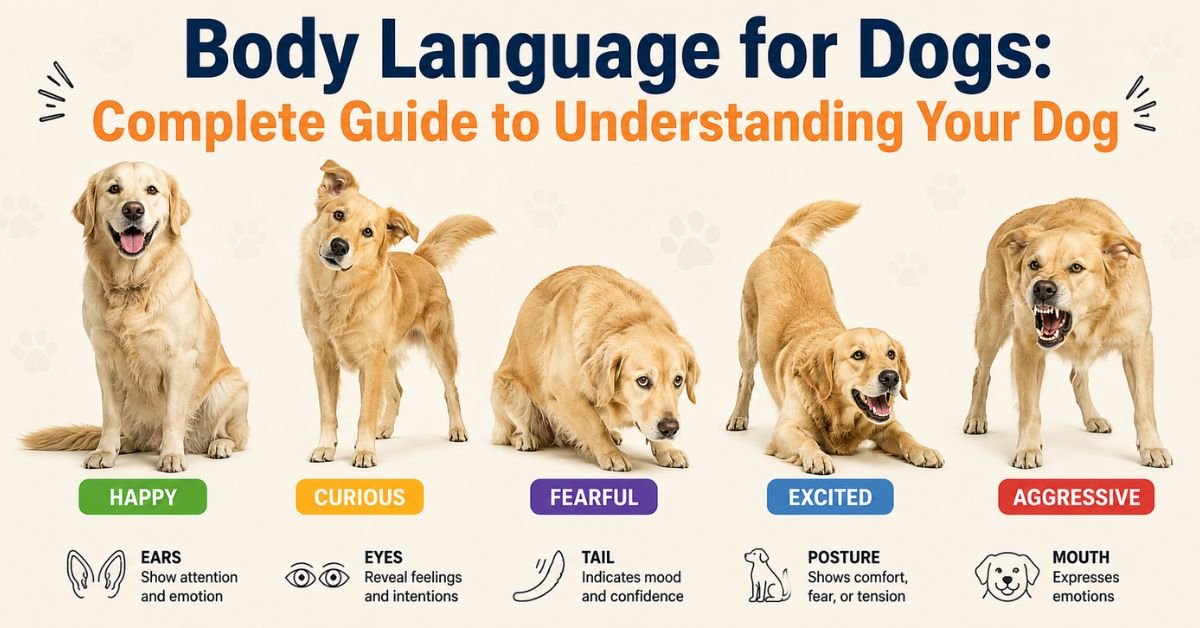
Relaxed and Happy Dog
A happy dog typically displays:
- Loose body posture
- Soft eyes
- Relaxed ears
- Gentle tail wagging
- Open mouth
This is the ideal emotional state for most dogs.
Excited Dog
Excited dogs may show:
- Fast tail wagging
- Bright eyes
- Increased movement
- Playful bouncing
- Alert ears
Excitement is normal, but excessive excitement may require training and management.
Fearful Dog
Fearful dogs often display:
- Tucked tail
- Flattened ears
- Crouched body
- Avoiding eye contact
- Trembling
Recognizing fear early can prevent defensive aggression.
Confident Dog
Confident dogs generally show:
- Upright posture
- Tail held naturally
- Calm eye contact
- Relaxed movements
Confidence helps dogs navigate new situations comfortably.
Aggressive Dog
Aggressive body language may include:
- Stiff posture
- Hard stare
- Raised hackles
- Growling
- Showing teeth
Always give a dog space if these signals appear.
Dog Facial Expressions and Their Meanings
Dogs use subtle facial expressions to communicate.
Relaxed Face
A relaxed face indicates comfort and security.
Wrinkled Muzzle
A wrinkled muzzle combined with growling or showing teeth can be a warning sign.
Excessive Panting
If a dog is not hot or exercising, excessive panting may indicate stress or anxiety.
Yawning
Dogs often yawn when tired, but they may also yawn when feeling nervous.
Signs of Stress in Dogs
Many dog owners miss early signs of stress.
Common stress signals include:
- Lip licking
- Yawning
- Turning away
- Excessive panting
- Pacing
- Shaking off
- Avoiding interaction
- Lowered body posture
Identifying these signals early can help you remove your dog from uncomfortable situations.
Understanding Play Behavior
Play behavior is a positive form of dog communication.
The Play Bow
One of the most recognizable dog communication signals is the play bow.
In this posture:
- Front legs are lowered
- Rear end stays raised
- Tail often wags
The play bow tells others, “I’m playing, not threatening.”
Playful Movements
Dogs at play may:
- Bounce around
- Chase each other
- Take turns wrestling
- Pause and re-engage
Healthy play usually includes loose, relaxed body movements.
Dog Body Language Around Other Dogs
Understanding dog behavior signals becomes especially important during dog-to-dog interactions.
Friendly Greeting
Friendly dogs often:
- Approach in curved paths
- Display loose bodies
- Show relaxed tails
- Sniff briefly
Uncomfortable Interaction
Warning signs include:
- Stiff body posture
- Freezing
- Direct staring
- Raised hackles
Intervening early can prevent conflicts.
How Dogs Communicate With Humans
Dogs constantly communicate with people using body language.
Examples include:
| Dog Behavior | Possible Meaning | Recommended Response |
| Tail wagging and relaxed body | Happy and friendly | Continue interaction |
| Tucked tail and avoidance | Fearful or nervous | Give space and reassurance |
| Play bow | Wants to play | Engage in safe play |
| Lip licking repeatedly | Stress or uncertainty | Assess environment |
| Hard stare and stiffness | Warning signal | Back away calmly |
| Leaning against owner | Seeking comfort or affection | Provide attention |
Common Mistakes When Reading Dog Body Language
Assuming Every Tail Wag Means Happiness
Tail position and body posture matter just as much as wagging.
Ignoring Stress Signals
Many subtle stress signs appear before barking or growling begins.
Forcing Interactions
A dog showing discomfort should never be forced to interact with people or other animals.
Looking at Only One Signal
Always evaluate the entire body rather than focusing on a single feature.
How to Improve Communication With Your Dog
Observe Daily Behavior
Spend time watching your dog’s normal behaviors. This makes unusual changes easier to identify.
Respect Boundaries
If your dog shows signs of discomfort, allow them space.
Use Positive Reinforcement
Reward desired behaviors with treats, praise, or toys.
Learn Individual Differences
Every dog has a unique personality. Some signals may vary slightly between breeds and individuals.
Practice Consistency
Consistent routines and training help dogs feel secure and understood.
Body Language Differences Between Puppies and Adult Dogs
Puppies
Puppies tend to be:
- More energetic
- Less predictable
- Highly expressive
- Quick to switch emotions
Adult Dogs
Adult dogs often display:
- More controlled behavior
- Clearer communication signals
- Better emotional regulation
Understanding age-related differences can improve interactions and training success.
When to Seek Professional Help
Consider consulting a professional trainer or veterinarian if your dog regularly shows:
- Extreme fear
- Persistent aggression
- Severe anxiety
- Sudden behavior changes
- Resource guarding
Early intervention can prevent problems from becoming more serious.
Conclusion
Learning to read body language for dogs can transform your relationship with your pet. Dogs communicate constantly through their ears, eyes, tail, posture, and facial expressions. By paying attention to these signals, you can better understand their emotions, respond appropriately, and build a stronger connection.
Remember that no single signal tells the whole story. Always consider your dog’s complete body language and the surrounding situation. With practice, you’ll become much better at recognizing what your dog is trying to communicate and ensuring they feel safe, understood, and loved.
Body language for dogs refers to the physical signals dogs use to communicate emotions, intentions, and needs through posture, facial expressions, tail movements, ear positions, and other behaviors.
No. A wagging tail can indicate excitement, nervousness, alertness, or even aggression depending on the tail position and the rest of the dog’s body language.
Lip licking is often a stress signal. Dogs may lick their lips when feeling anxious, uncertain, or uncomfortable.
A tucked tail usually indicates fear, anxiety, insecurity, or submission.
Dogs often perform a play bow, wag their tails loosely, and display relaxed, bouncy movements when they want to play.

Muhammad Ahad — Passionate writer sharing informative, engaging, and easy-to-read articles across different topics. Focused on delivering valuable content that helps readers learn, explore, and stay inspired every day.
Very good thinking about dogs community