

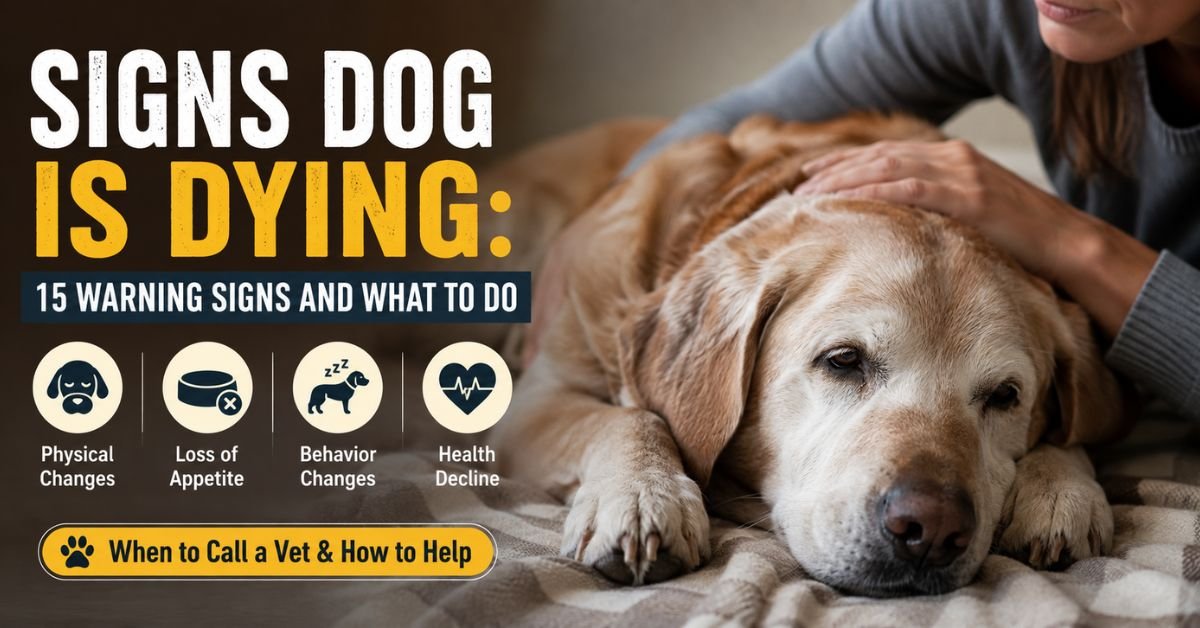
Watching a dog grow old or struggle with a serious illness can leave owners searching for answers they may not feel ready to hear. The signs dog is dying can include major changes in breathing, appetite, mobility, awareness, comfort, and behavior. However, one important fact comes first: no single sign proves that a dog is dying. Some of these symptoms can also occur with serious but treatable medical conditions Signs Dog Is Dying.
A dog that suddenly refuses food, struggles to stand, breathes with difficulty, or becomes unusually unresponsive needs veterinary attention rather than assumptions. In many cases, treatment can restore comfort or reveal a problem that was not immediately obvious.
The goal is not to predict the exact moment a dog will die. The more useful question is whether your dog is comfortable, whether suffering can be controlled, and what veterinary support is needed now.
A cluster of changes—especially difficulty breathing, persistent pain, inability to eat or drink, severe weakness, withdrawal, and repeated medical crises—may signal serious end-of-life decline. These signs can also indicate treatable illness. Contact a veterinarian promptly, and seek emergency care immediately for severe breathing problems, collapse, or uncontrolled pain Signs Dog Is Dying.
Veterinary end-of-life guidance focuses heavily on a dog’s comfort, pain, breathing, mobility, nutrition, hydration, hygiene, happiness, and the balance between good days and bad days.
Why Recognizing a Dog’s Decline Can Be Difficult
Dogs rarely follow a simple, predictable path toward death. Some decline gradually over months, while others appear relatively stable and then experience a sudden crisis.
This uncertainty can be emotionally exhausting. Owners may begin questioning every change: Is my dog just tired? Is this old age? Is the illness getting worse? Did I miss something important?
The difficulty is that many common dog dying symptoms overlap with symptoms of treatable problems.
For example:
- Sleeping more may happen with age, arthritis, infection, medication effects, or terminal illness.
- Loss of appetite can occur because of nausea, dental pain, stress, kidney disease, cancer, or another medical problem.
- Weakness may result from dehydration, anemia, heart disease, pain, neurologic disease, or an end-of-life decline.
- Withdrawal can be related to pain or illness, but some dogs simply Signs Dog Is Dying seek quiet places when they feel unwell.
This is why veterinarians usually evaluate the overall pattern rather than relying on one symptom.
The question is often not, “Does my dog have one of the signs on an internet list?” It is, “How different is my dog from their normal self, how quickly is the change happening, and can they still live comfortably?”
15 Signs Dog Is Dying or Experiencing Serious End-of-Life Decline
1. A Major Change in Appetite
A dog nearing the end of life may gradually lose interest in food. Some will eat only favorite foods, while others refuse meals entirely.
Loss of appetite can occur when the body is seriously ill, pain or nausea is present, organ function is declining, or the dog no longer has enough energy to eat comfortably.
However, refusing food does not automatically mean death is imminent. A dog that stops eating may have a treatable condition and should be evaluated.
Watch for:
- Refusing normal meals
- Taking food into the mouth but dropping it
- Eating only very small amounts
- Losing interest in favorite treats
- Difficulty chewing or swallowing
- Repeated vomiting after eating
A practical mistake is repeatedly offering large meals and becoming distressed when the dog refuses. Ask your veterinarian whether small portions, softer food, appetite support, anti-nausea treatment, or another approach is appropriate.
2. Drinking Much Less or More Than Usual
A seriously ill dog may drink very little because of weakness, nausea, confusion, or difficulty reaching the water bowl. Some medical conditions, however, cause the opposite problem, leading to increased thirst.
Dehydration can make a dog feel worse and may contribute to weakness and discomfort Signs Dog Is Dying.
Signs that deserve veterinary attention include:
- Dry or tacky gums
- Markedly reduced drinking
- Sudden changes in thirst
- Weakness or confusion
- Vomiting or diarrhea combined with poor fluid intake
Never force water into a weak or unresponsive dog’s mouth, as this can create a choking or aspiration risk. Your veterinarian can advise you on the safest way to maintain hydration.
3. Extreme Weakness and Loss of Strength
One of the more concerning signs a dog is dying is a severe loss of physical strength.
A dog may struggle to:
- Rise from bed
- Walk across a room
- Support their own weight
- Reach food or water
- Change position
- Go outside to urinate or defecate
Some dogs become tired after only a few steps. Others may collapse or be unable to stand at all.
Still, weakness should never automatically be dismissed as “just old age.” Sudden weakness or collapse can be caused by emergencies such as internal bleeding, heart problems, shock, severe anemia, toxin exposure, or other acute illnesses.
A sudden collapse is a reason to contact a veterinarian immediately.
4. Difficulty Breathing
Breathing problems are among the most urgent symptoms a dog can experience.
Possible signs include:
- Labored or visibly difficult breathing
- Open-mouth breathing when not related to normal heat or exercise
- Extended neck while trying to breathe
- Repeated stretching of the neck or body
- Rapid breathing at rest
- Blue, gray, or very pale gums
- Severe abdominal effort while breathing
- Panic or distress associated with breathing
Difficulty breathing can occur near the end of life, but it can also result from heart failure, lung disease, airway obstruction, fluid accumulation, infection, or other conditions requiring urgent treatment.
A dog that appears unable to breathe normally should be treated as a veterinary emergency. End-of-life sources also identify difficulty breathing as a major sign that a dog’s comfort and quality of life need urgent assessment.
5. Persistent or Uncontrolled Pain
Dogs can hide pain surprisingly well. Some become quiet rather than vocal.
Possible pain signs include:
- Trembling
- Panting at rest
- Restlessness
- Difficulty settling
- Crying, groaning, or unusual vocalization
- Guarding a painful area
- Sudden irritability
- Avoiding movement
- A hunched or tense posture
- Refusing to lie down comfortably
A dog does not need to cry continuously to be suffering.
Pain can often be managed, even when the underlying disease cannot be cured. Veterinarians may adjust medication, recommend palliative care, or discuss hospice support Signs Dog Is Dying .
Persistent pain that cannot be adequately controlled is one of the most important reasons to reassess a dog’s quality of life.
6. Sleeping Much More and Showing Little Interest in Life
A dog near the end of life may spend most of the day asleep. They may no longer greet family members, respond to familiar routines, or show interest in favorite activities.
This can look like:
- No longer wanting walks
- Ignoring toys
- Refusing interaction
- Sleeping through normal household activity
- Little interest in being petted
- Reduced awareness of the environment
The key difference is a clear change from the individual dog’s normal personality.
A quiet senior dog that still enjoys meals, affection, comfortable rest, and short walks may have a reasonable quality of life. A dog that is consistently disconnected from everything they previously enjoyed may need an urgent quality-of-life discussion.
7. Withdrawing or Hiding
Some dogs seek isolation when they are seriously ill.
They may:
- Hide under furniture
- Move to a quiet room
- Avoid interaction
- Sleep away from the family
- Appear emotionally distant
Other dogs do the opposite and become unusually clingy.
Neither behavior proves that a dog “knows they are dying.” Scientific evidence does not establish that dogs understand their own death as a concept. Behavioral changes may instead reflect discomfort, weakness, altered senses, anxiety, or changing physical needs.
8. Confusion, Disorientation, or Reduced Awareness
A dog may seem confused or less connected to their surroundings.
Possible changes include:
- Staring into space
- Walking into corners
- Getting stuck behind furniture
- Wandering without purpose
- Failing to recognize familiar routines
- Sleeping at unusual times
- Restlessness during the night
Cognitive decline can occur in older dogs, but sudden disorientation can also indicate an emergency involving toxins, neurologic disease, low blood sugar, organ dysfunction, or other problems.
Sudden mental changes should be discussed with a veterinarian.
9. Loss of Bladder or Bowel Control
A dog nearing the end of life may have accidents because they are too weak to stand, unable to reach the door, confused, or unable to control elimination.
This is different from intentionally “being bad” or becoming poorly trained.
Compassionate care includes:
- Keeping bedding clean and dry
- Using absorbent pads when appropriate
- Helping the dog change position
- Gently cleaning urine or stool from the coat and skin
- Asking the veterinarian how to protect the skin
Incontinence alone does not mean it is time for euthanasia. The bigger question is whether the dog’s comfort and dignity can still be maintained.
10. Difficulty Staying Clean and Comfortable
A dog that cannot move normally may become soiled with urine or feces or develop pressure-related discomfort from remaining in one position.
Owners sometimes underestimate how important hygiene is to quality of life.
Ask:
- Can my dog get away from urine or stool?
- Can they change positions?
- Can I keep their coat and skin clean?
- Is their bedding dry and supportive?
- Does moving them cause pain?
A soft, clean resting area and gentle assistance can make a significant difference.
11. Progressive Weight and Muscle Loss
Weight loss can occur even when a dog is still eating.
Serious illness may cause:
- Visible ribs or spine
- Loss of muscle over the shoulders or hips
- Reduced strength
- A weaker overall appearance
Cancer, kidney disease, heart disease, digestive disorders, and other illnesses can contribute to progressive weight loss.
A thin dog is not necessarily dying, but rapid or severe weight loss should prompt a veterinary examination.
12. Repeated Vomiting or Ongoing Nausea
Some terminal illnesses can cause nausea and vomiting. A dog may repeatedly lick their lips, drool, turn away from food, swallow excessively, or vomit.
Do not assume repeated vomiting is a normal part of aging.
Ongoing vomiting can lead to dehydration and serious weakness. It may also indicate a potentially treatable problem.
Veterinarians can sometimes improve comfort with anti-nausea treatment, dietary adjustments, hydration support, or other care depending on the underlying condition.
13. Changes in Body Temperature and Circulation
During severe illness or the final stage of life, circulation may become weaker.
An owner may notice:
- Cool paws or legs
- Unusually cold ears
- Weakness
- Pale gums
- Reduced responsiveness
However, gum color and body temperature changes can also occur in emergencies such as shock or severe blood loss.
Do not wait to see whether these symptoms “get better overnight.” Contact a veterinarian promptly.
14. Abnormal Breathing Patterns and Periods of Irregularity
A dog’s breathing pattern may change as their body becomes seriously compromised.
Breathing may become:
- Faster or slower
- More shallow
- More irregular
- Interrupted by pauses
- Noisier because of fluid or secretions
These signs can be frightening to witness. A veterinarian can help determine whether the dog is in distress and whether urgent intervention is needed.
Natural death is not always peaceful, which is one reason veterinary end-of-life planning focuses strongly on minimizing pain, anxiety, and distress rather than assuming a pet will simply “go to sleep.”
15. More Bad Days Than Good Days
This is often one of the most meaningful indicators of an overall decline.
A good day does not need to mean a perfect day. It might simply mean your dog:
- Ate something comfortably
- Rested peacefully
- Enjoyed affection
- Responded to you
- Went outside safely
- Had pain that was well controlled
A bad day may involve:
- Persistent discomfort
- Fear or distress
- Severe weakness
- Breathing difficulty
- Inability to rest
- Repeated vomiting
- Loss of enjoyment
Veterinary organizations often encourage owners to track good and bad days because memory can be influenced by hope, guilt, or one particularly good or bad moment.
Comparison Table: Temporary Illness or Possible End-of-Life Decline?
| Change | May Occur With Treatable Illness | More Concerning for End-of-Life Decline | Recommended Action |
|---|---|---|---|
| Loss of appetite | Yes | Persistent refusal with progressive decline | Contact veterinarian |
| Weakness | Yes | Severe, progressive, or unable to stand | Prompt examination |
| Withdrawal | Yes | Combined with pain, weight loss, and loss of interest | Discuss quality of life |
| Breathing changes | Yes | Severe distress or persistent difficulty | Emergency veterinary care |
| Incontinence | Yes | Inability to remain clean or move away from waste | Veterinary assessment |
| Sleeping more | Yes | Minimal engagement with food, family, or surroundings | Monitor overall pattern |
| Weight loss | Yes | Severe muscle loss and progressive weakness | Veterinary examination |
| Repeated crises | Yes | Recovery between episodes is becoming shorter or poorer | End-of-life planning discussion |
How to Assess Your Dog’s Quality of Life
Owners sometimes wait for a single unmistakable sign. In reality, quality of life is usually assessed across several areas.
A commonly used framework is the HHHHHMM scale:
- Hurt
- Hunger
- Hydration
- Hygiene
- Happiness
- Mobility
- More good days than bad
The scale can help organize observations, but it should not replace professional veterinary judgment. AAHA also notes that quality of life is partly subjective and that tracking changes can help owners develop a more objective picture.
Ask yourself:
Is my dog comfortable?
Consider pain, breathing, anxiety, nausea, and the ability to rest.
Can my dog eat and drink with reasonable comfort?
Do not judge this only by the amount eaten. Difficulty swallowing, nausea, and distress matter too.
Can my dog move enough to meet basic needs?
Mobility does not mean running. The important question is whether your dog can move comfortably enough to reach food, water, a resting area, and an appropriate place to eliminate.
Does my dog still enjoy anything?
Look for the dog’s personal favorites:
- A particular person
- Gentle petting
- Sitting in the sun
- Sniffing outside
- A favorite treat
- A short car ride
Are good days becoming rare?
A calendar can help. At the end of each day, write a few words about your dog’s comfort and overall experience.
What Should You Do If You Think Your Dog Is Dying?
Do not make a final decision based solely on an online article.
The next step should be a veterinary conversation.
Your veterinarian can help answer:
- What is causing the decline?
- Is the condition treatable?
- Is my dog in pain?
- Can nausea, breathing difficulty, or anxiety be managed?
- Is palliative care appropriate?
- Is hospice care an option?
- What should I expect next?
- What emergency signs should I watch for?
- When should we discuss humane euthanasia?
Palliative care focuses on comfort and quality of life when curing the disease is no longer the primary goal. Hospice care may provide structured support as a dog’s life-limiting illness progresses.
When to Call a Veterinarian Immediately
Some situations should not wait for a routine appointment.
Seek urgent veterinary care if your dog has:
- Severe difficulty breathing
- Blue, gray, or extremely pale gums
- Collapse
- Loss of consciousness
- Uncontrolled pain or panic
- Repeated seizures
- Severe or repeated vomiting
- Sudden inability to stand
- A swollen abdomen with distress
- Heavy bleeding
- Extreme confusion or sudden neurologic changes
If you are unsure whether a symptom is an emergency, call a veterinary clinic and describe exactly what you are seeing.
A Practical Checklist for Supporting a Dog at the End of Life
- Call your veterinarian and explain the changes you have noticed.
- Write down when symptoms started and whether they are worsening.
- Track appetite, water intake, mobility, comfort, and behavior each day.
- Record good days and bad days on a calendar.
- Ask how your dog’s pain can be assessed and controlled.
- Ask about nausea, hydration, appetite, anxiety, and breathing support.
- Create a quiet, warm, comfortable resting area.
- Place food and water where your dog can reach them easily.
- Use supportive bedding and keep it clean and dry.
- Ask for safe lifting or mobility assistance instructions if your dog is weak.
- Keep emergency veterinary contact information available.
- Discuss palliative care, hospice, natural death, and humane euthanasia before a crisis forces a rushed decision.
- Discuss your family’s wishes so everyone understands the plan.
- Focus on your dog’s comfort rather than your fear of making the “perfect” decision.
[wp_ulike]
Common Mistakes Owners Make
Waiting for a Dog to Tell You Exactly When It Is Time
Dogs cannot explain how much pain, nausea, fear, or weakness they feel.
Waiting for a single dramatic event can result in an emergency crisis.
Assuming Natural Death Is Always Peaceful
A natural death can be peaceful, but it can also involve significant distress. Veterinary guidance recommends planning ahead to minimize suffering.
Treating Every Symptom as a Sign of Death
The opposite mistake is also common.
A dog may have symptoms that appear frightening but are caused by a treatable illness. Veterinary assessment matters.
Judging Quality of Life Only by Whether the Dog Eats
A dog may still accept food while experiencing severe pain, breathing difficulty, or loss of mobility.
Look at the entire picture.
Delaying the Conversation Because Euthanasia Feels Too Final
Talking about euthanasia does not mean you must immediately choose it.
An early discussion gives you time to understand all available options, including comfort care and hospice.
Final Thoughts
The signs dog is dying are not always clear, and no internet checklist can tell you the exact moment your dog is approaching death. What matters most is the overall pattern: comfort, pain, breathing, mobility, appetite, hydration, hygiene, happiness, and whether good days still outweigh bad ones.
If your dog is declining, try not to carry the entire burden of decision-making alone. Your veterinarian can help you understand what is happening, what can still be treated, and how your dog can be kept as comfortable as possible.
Sometimes the kindest next step is more treatment. Sometimes it is palliative or hospice care. And when suffering can no longer be controlled, humane euthanasia may be discussed as a final act of compassion.
Moral:
There may never be a moment that feels emotionally “perfect.” The goal is not to find a perfect decision. The goal is to make a compassionate, informed decision centered on your dog’s comfort and welfare.
Early signs can include declining appetite, sleeping more, weakness, reduced interest in normal activities, weight loss, and behavioral changes. However, these symptoms are not specific to death and can occur with treatable illnesses. The most useful approach is to look for progressive changes across several areas and arrange a veterinary examination.
There is no reliable timeline. Some dogs decline gradually over weeks or months, while others deteriorate rapidly over hours or days because of an acute crisis. The cause of illness, available treatment, pain control, organ function, and individual response all affect the timeline. A veterinarian can provide the most useful estimate based on your dog’s specific diagnosis.
Some dogs may seek quiet places or withdraw when they are seriously ill, but hiding does not prove a dog knows it is dying. Pain, anxiety, weakness, confusion, or a desire for rest can all contribute. A dog that suddenly isolates themselves or changes behavior significantly should be assessed for illness or discomfort.
Not necessarily. Loss of appetite can be caused by many treatable problems, including nausea, dental disease, infection, pain, medication effects, and digestive illness. In a terminally ill dog, persistent appetite loss may contribute to an end-of-life decline, but the symptom should still be discussed with a veterinarian rather than interpreted on its own.
The decision should be made with your veterinary team by considering your dog’s diagnosis, comfort, ability to breathe, eat, drink, move, remain clean, interact, and experience more good days than bad. When suffering cannot be adequately relieved and an acceptable quality of life cannot be maintained, humane euthanasia may be the most compassionate option.

Muhammad Ahad — Passionate writer sharing informative, engaging, and easy-to-read articles across different topics. Focused on delivering valuable content that helps readers learn, explore, and stay inspired every day.