


The dog Doberman, officially known as the Doberman Pinscher, is one of the most recognizable working breeds in the world. Athletic, intelligent, alert, and deeply attached to its family, this breed can be an exceptional companion—but it also needs thoughtful training, regular exercise, appropriate nutrition, and proactive health care.
A Doberman is not simply a large dog that needs a backyard. Its intelligence means it needs mental challenges, while its athletic body needs consistent physical activity. Just as importantly, certain inherited health conditions deserve special attention throughout its life.
Quick Answer: A dog Doberman is an intelligent, athletic, loyal working breed that can make a devoted family companion when properly trained and socialized. Most Dobermans need daily physical and mental exercise, a balanced diet, routine veterinary examinations, and careful monitoring for breed-associated conditions such as heart disease, von Willebrand disease, hypothyroidism, hip problems, and bloat.
Understanding the Dog Doberman
The Doberman Pinscher was developed in Germany in the late 19th century by Louis Dobermann. The breed was created to be an alert and capable personal protection dog, but modern Dobermans can serve many roles, including family companion, working dog, obedience competitor, and service or search-and-rescue partner.
The American Kennel Club describes the breed as loyal, protective, athletic, intelligent, and watchful. Dobermans typically stand around 24–28 inches tall and weigh approximately 60–100 pounds, although individual size varies.
The physical appearance can sometimes make the breed seem intimidating. Inside the home, however, a well-socialized Doberman can be affectionate and strongly connected to its people.
That combination is one reason the breed attracts experienced dog owners.
What makes a Doberman different?
Dobermans are highly responsive to their surroundings. They often notice unfamiliar sounds, movements, and people quickly.
That alertness is useful in a working dog but can become a problem when a dog receives insufficient socialization or is encouraged to react aggressively.
A stable Doberman should not need to behave aggressively toward every stranger. Good training teaches the dog when to pay attention and, just as importantly, when to relax.
Dog Doberman Temperament and Personality
A Doberman’s personality is influenced by genetics, early socialization, training, environment, and individual temperament.
Many healthy, well-socialized Dobermans are affectionate with their families and enjoy staying close to their people. The breed is also highly intelligent, which can make training rewarding—but it can expose inconsistencies in an owner’s approach.
If one behavior is allowed today and punished tomorrow, a clever Doberman can quickly become confused.
Are Dobermans good family dogs?
They can be.
A properly socialized Doberman may form strong relationships with family members and can be a loyal household companion. However, children should always be supervised around dogs, regardless of breed.
The breed’s athleticism also matters. A young Doberman playing enthusiastically can accidentally knock over a small child.
Families should consider:
- The dog’s energy level
- Children’s ages
- Household routines
- Available exercise time
- Training experience
- Presence of other pets
- Ability to provide consistent boundaries
Dobermans may also have a strong prey drive. Homes containing rabbits, guinea pigs, or other small animals require particularly careful management and training.
Exercise Needs: How Much Activity Does a Doberman Need?
A Doberman generally needs more than a short walk around the block.
Daily activity should combine physical exercise with mental stimulation. Simply exhausting the dog physically is not always enough. An intelligent Doberman may still become restless if it has nothing meaningful to think about.
Useful activities include:
- Brisk walks
- Controlled running when physically appropriate
- Obedience training
- Retrieve games
- Scent games
- Puzzle feeders
- Structured play
- Agility-style activities
- Recall practice
- Trick training
Avoid the “more exercise is always better” mistake
Puppies deserve special consideration.
Growing bones and joints should not be subjected to excessive repetitive impact simply because the puppy appears energetic. Instead, provide age-appropriate activity and discuss exercise limits with your veterinarian.
For an adult Doberman, the goal is consistency rather than occasional extreme workouts.
A dog that gets two hours of intense exercise on Saturday but almost nothing on Monday may still develop unwanted behaviors.
A predictable daily routine usually works better.
Training a Doberman: Intelligence Needs Direction
Training is one of the most important parts of responsible Doberman ownership.
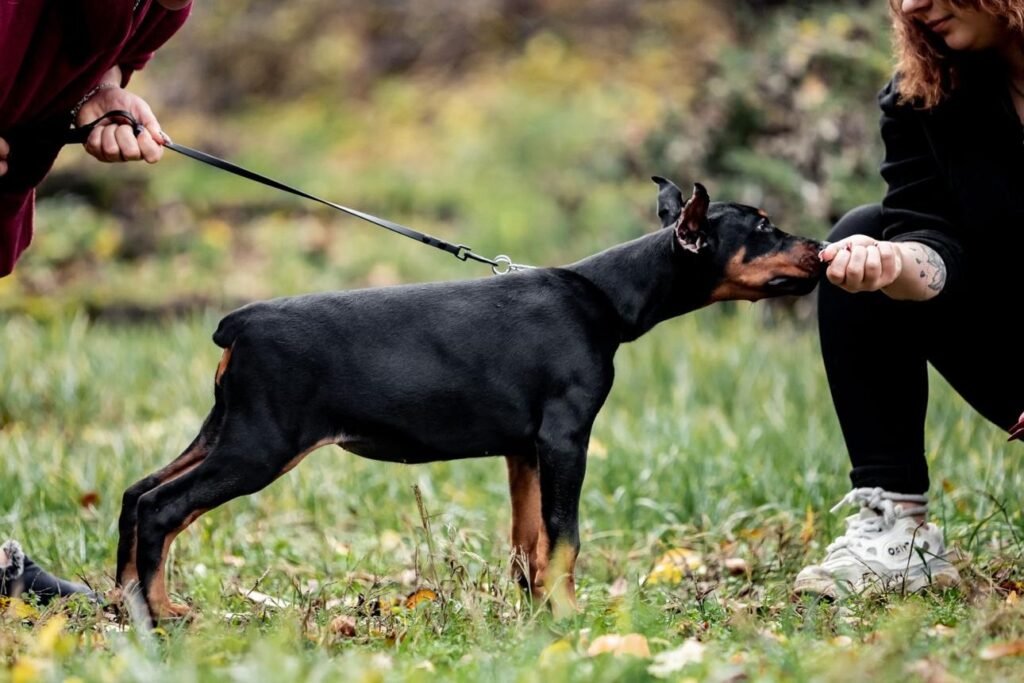
These dogs can learn commands quickly, but intelligence does not automatically produce obedience. A Doberman needs clear expectations, rewards for desirable behavior, and regular practice.
Start with basic skills
Useful foundation commands include:
- Sit
- Down
- Stay
- Come
- Leave it
- Drop it
- Wait
- Loose-leash walking
- Place
- Emergency recall
Training sessions do not need to be extremely long.
Several short sessions can be more productive than one exhausting session.
Socialization is not the same as meeting everyone
A common mistake is assuming that socialization means allowing a puppy to greet every person and dog.
Instead, socialization should help the puppy learn that different environments, sounds, surfaces, people, animals, and situations can be normal and manageable.
A puppy can learn to calmly observe a person without being required to interact with them.
That distinction becomes particularly useful in a protective breed.
Doberman Grooming and Everyday Care
The Doberman has a short, smooth coat and generally does not require complicated grooming.
Regular brushing can remove loose hair and give owners an opportunity to inspect the skin.
Check regularly for:
- Redness
- Lumps
- Cuts
- Parasites
- Unusual odor
- Hair loss
- Irritated areas
The short coat does not mean grooming can be ignored entirely.
Dental care
Dental hygiene is another area owners sometimes overlook.
Regular tooth brushing with dog-safe toothpaste can help reduce plaque buildup. Your veterinarian can also assess the mouth during routine examinations and determine whether professional dental cleaning is needed.
Never use human toothpaste unless your veterinarian specifically directs you to do so.
Nails and ears
Long nails can alter how a dog stands and walks. Check them regularly and trim them gradually.
Doberman ears should also be monitored for redness, odor, discharge, or excessive debris.
Routine care is easier when introduced calmly during puppyhood.
Feeding a Dog Doberman
Nutrition should support a lean body condition, healthy muscles, and normal growth.
For most dogs, a complete and balanced commercial diet appropriate for their life stage can provide a practical nutritional foundation. PetMD notes that Dobermans need individualized calorie intake because body size, metabolism, and activity level differ considerably.
Avoid choosing food simply because the packaging says “premium,” “natural,” or “high protein.”
Instead, consider:
- Life stage
- Body condition
- Activity level
- Existing medical conditions
- Food tolerance
- Veterinary recommendations
- Whether the diet is complete and balanced
How often should a Doberman eat?
Large, deep-chested dogs have particular concerns surrounding gastric dilatation-volvulus, commonly called GDV or bloat.
Feeding practices should therefore be discussed with your veterinarian.
PetMD recommends dividing food into multiple meals rather than giving one large meal and advises avoiding elevated food bowls for Dobermans because elevated feeding has been associated with increased GDV risk. It also recommends avoiding vigorous exercise around meals.
8
Common Doberman Health Problems
The breed can be healthy and active, but Doberman owners should understand several conditions that occur more often or deserve particular attention in the breed.
The Doberman Pinscher Club of America identifies cardiomyopathy, hypothyroidism, chronic active hepatitis, cervical vertebral instability, and von Willebrand disease among important breed health concerns.
The American Kennel Club’s recommended health testing for Doberman Pinschers includes hip evaluation, cardiac examination, ophthalmologist evaluation, thyroid evaluation, and DNA testing for von Willebrand disease type I.
1. Dilated Cardiomyopathy
Dilated cardiomyopathy, or DCM, is one of the most serious health concerns associated with Dobermans.
The heart muscle becomes weakened and may not pump blood effectively. Abnormal heart rhythms can also occur.
Possible warning signs include:
- Reduced exercise tolerance
- Weakness
- Rapid breathing
- Difficulty breathing
- Coughing
- Restlessness
- Collapse
- Sudden death
Unfortunately, a dog can appear healthy while developing cardiac disease.
Veterinary cardiologists may use echocardiography and Holter monitoring to assess heart structure and rhythm. Importantly, even normal results are not a guarantee that a Doberman will never develop DCM later.
Genetic testing can provide additional information, but genetic risk variants are not perfect predictors. AKC veterinary guidance specifically emphasizes that echocardiography and Holter monitoring remain important tools for evaluating Doberman cardiac health.
2. Von Willebrand Disease
Von Willebrand disease, or vWD, affects blood clotting.
A dog with the condition may have difficulty forming an effective clot after injury or surgery.
Potential signs include:
- Nosebleeds
- Prolonged bleeding after injury
- Excessive bleeding after surgery
- Bleeding from the gums
- Blood in urine in some cases
A DNA test for von Willebrand disease type I is available, which is one reason responsible breeders should perform appropriate health screening.
Before elective surgery, discuss your Doberman’s bleeding history and available testing with your veterinarian.
3. Gastric Dilatation-Volvulus
GDV is an emergency.
The stomach fills with gas or food and can rotate, interfering with blood flow. Without rapid veterinary treatment, the condition can become fatal.
Signs can include:
- Distended abdomen
- Repeated unproductive retching
- Excessive drooling
- Pacing
- Anxiety
- Stretching
- Inability to settle
- Weakness or collapse
A Doberman showing these symptoms needs emergency veterinary attention rather than home observation.
Preventive gastropexy may be discussed with veterinarians for dogs considered at increased risk. The procedure helps prevent stomach rotation but does not guarantee that a dog can never bloat.
4. Hypothyroidism
Hypothyroidism occurs when the thyroid does not produce sufficient thyroid hormones.
Possible signs include:
- Weight gain
- Low energy
- Skin changes
- Coat problems
- Recurrent skin or ear infections
Diagnosis requires appropriate veterinary evaluation and blood testing rather than relying on symptoms alone. When confirmed, treatment commonly involves thyroid hormone replacement.
5. Hip Dysplasia
Hip dysplasia occurs when the hip joint develops abnormally and becomes unstable.
Over time, abnormal movement can contribute to cartilage damage and osteoarthritis.
Watch for:
- Difficulty getting up
- Limping
- Reduced activity
- Reluctance to climb stairs
- Difficulty jumping
- Stiffness after rest
Keeping a Doberman lean is valuable because excess body weight places additional stress on joints.
Hip evaluation is also one of the health tests recommended for Doberman breeding dogs.
6. Cervical Vertebral Instability
Cervical vertebral instability, often referred to as Wobbler syndrome, involves the neck and spinal cord.
Affected dogs can develop an abnormal Dog Doberman gait or weakness, particularly in the hind limbs.
Signs can vary, so a Doberman showing unexplained coordination problems, neck pain, weakness, or changes in walking should receive veterinary assessment.
The Doberman Pinscher Club of America identifies cervical vertebral instability as an important hereditary concern, while also noting that predicting which individual dog will eventually develop the condition is difficult.
7. Chronic Active Hepatitis
Liver disease is another condition that deserves awareness.
The Doberman Pinscher Club of America identifies chronic active hepatitis among hereditary diseases associated with the breed. Routine veterinary bloodwork can sometimes reveal liver abnormalities before obvious illness develops.
This is one reason annual wellness examinations should not be treated as optional simply because a dog appears healthy.
Doberman Health Comparison Table
| Health concern | What owners may notice | Why it matters | Typical veterinary evaluation |
| Dilated cardiomyopathy | Fatigue, breathing changes, collapse | Can cause heart failure or sudden death | Cardiac exam, echocardiogram, Holter monitoring |
| Von Willebrand disease | Unusual or prolonged bleeding | May complicate injury or surgery | DNA testing and clotting assessment when indicated |
| GDV/bloat | Retching, swollen abdomen, restlessness | Life-threatening emergency | Immediate emergency examination |
| Hypothyroidism | Weight gain, lethargy, coat changes | Affects metabolism and general health | Blood testing |
| Hip dysplasia | Limping, stiffness, difficulty rising | Can lead to arthritis and pain | Orthopedic exam and X-rays |
| Cervical vertebral instability | Wobbly gait, weakness, neck discomfort | Can affect spinal cord function | Neurologic and imaging evaluation |
| Liver disease | May initially have few obvious signs | Progressive liver damage can occur | Bloodwork and further diagnostic testing |
Preventive Health Care for a Doberman
Preventive care is where owners have an opportunity to make a meaningful difference.
A good routine can include:
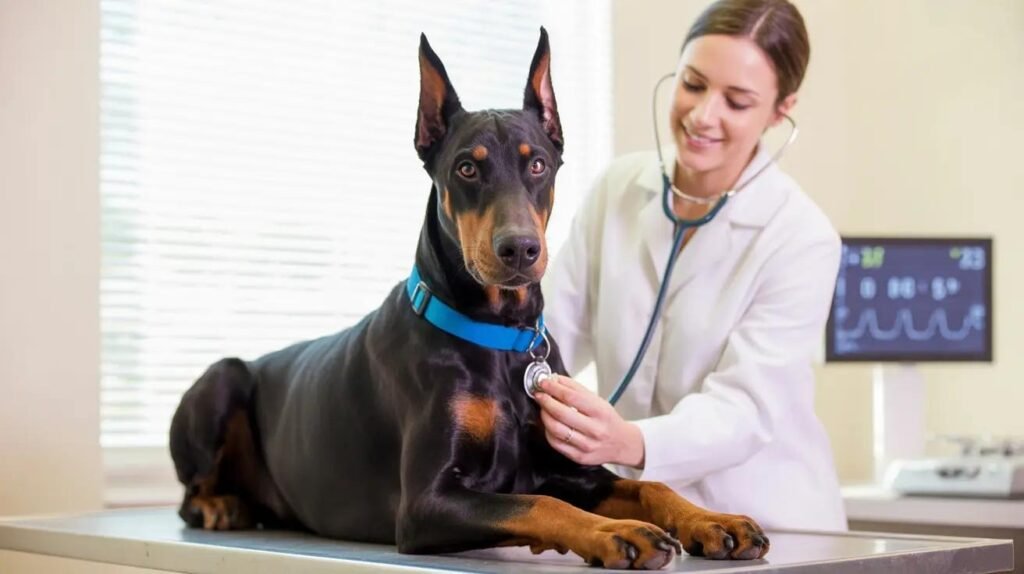
- Annual or veterinarian-recommended physical examinations
- Vaccinations appropriate to the dog’s lifestyle
- Parasite prevention
- Dental examinations
- Weight monitoring
- Routine bloodwork when appropriate
- Cardiac monitoring based on veterinary advice
- Hip evaluation when indicated
- Genetic testing for relevant inherited conditions
- Immediate investigation of unexplained changes
- Dog Doberman
Doberman health screening is especially important for breeders.
AKC lists cardiac, hip, thyroid, eye, and von Willebrand disease testing among recommended health evaluations for the breed.
What should you ask a Doberman breeder?
If purchasing a puppy, do not only ask, “Are the parents healthy?”
Ask for documentation.
Useful questions include:
- Have both parents had cardiac evaluations?
- Were Holter and echocardiographic examinations performed?
- Have the parents had hip evaluations?
- Were thyroid evaluations completed?
- Were eye examinations performed?
- Was von Willebrand disease DNA testing completed?
- Can I see the actual health documentation?
- What is known about longevity in the bloodline?
- Have close relatives developed DCM or other serious inherited disease?
The breed club specifically recommends cardiac evaluation using echocardiography and Holter monitoring for breeding animals and recommends testing for vWD.
How Long Does a Doberman Live?
PetMD currently lists the average Doberman Pinscher lifespan at approximately 10–12 years.
Individual lifespan can vary considerably.
Genetics matter, but so do:
- Body condition
- Nutrition
- Preventive medicine
- Dental health
- Exercise
- Environmental safety
- Early detection of disease
- Access to appropriate veterinary care
The Doberman Pinscher Club of America also maintains a longevity registry, recognizing dogs reaching 10 years or older.
A long life should not be reduced to a single number. The goal is to maximize both years of life and quality of life.
Practical Doberman Owner Checklist
Use this checklist to turn general breed knowledge into everyday care:
- Schedule routine veterinary examinations.
- Ask your veterinarian about cardiac screening, especially as your Doberman ages.
- Monitor resting breathing and exercise tolerance.
- Keep your Doberman at a lean, healthy body condition.
- Feed a complete and balanced diet appropriate for its life stage.
- Avoid feeding one enormous daily meal.
- Discuss GDV prevention and gastropexy with your veterinarian.
- Do not exercise vigorously immediately around meals.
- Provide daily physical exercise.
- Add mental stimulation through training and scent or puzzle activities.
- Socialize puppies carefully and positively.
- Brush the coat regularly and inspect the skin.
- Brush the teeth with dog-safe toothpaste.
- Keep nails at an appropriate length.
- Check ears for redness, odor, or abnormal discharge.
- Watch for limping, stiffness, weakness, or changes in gait.
- Take unexplained bleeding seriously.
- Do not ignore collapse or breathing difficulty.
- Keep emergency veterinary contact information available.
- If buying a puppy, request documented health testing from the breeder.
Dog Doberman
When to Call a Veterinarian
Some changes can wait for a scheduled appointment. Others should not.
Seek emergency care immediately if your Doberman has:
- Collapse
- Severe difficulty breathing
- A swollen or rapidly enlarging abdomen
- Repeated unproductive retching
- Severe weakness
- Pale, white, blue, or gray gums
- Heavy uncontrolled bleeding
- Sudden inability to walk normally
- Severe abdominal pain
- Loss of consciousness
GDV is particularly important because early symptoms can look like restlessness or stomach discomfort before rapidly becoming life-threatening.
Likewise, collapse in a Doberman should never be casually dismissed as “just tired,” particularly because the breed is predisposed to serious cardiac disease.
For non-emergency concerns—such as gradual weight gain, recurring ear infections, persistent coughing, changes in exercise tolerance, skin abnormalities, or stiffness—schedule a veterinary examination rather than waiting for the problem to become severe.
Common Owner Mistakes With Dobermans
Even well-intentioned owners can make mistakes.
Treating exercise as the only form of enrichment
A tired dog is not necessarily a fulfilled dog.
Training, scent work, problem-solving, and controlled social experiences can help satisfy a Doberman’s mental needs.
Encouraging protective aggression
A protective breed does not need to be trained to distrust everyone.
Aggression can become difficult and dangerous to control. A better goal is a confident dog that responds to its owner’s direction.
Ignoring subtle health changes
Owners sometimes notice that a dog is “slowing down” without recognizing that reduced exercise tolerance can be a medical sign.
A gradual change in stamina deserves attention.
Assuming genetic testing guarantees a healthy dog
Genetic tests can provide useful information, but they do not predict every future disease.
This is particularly important with Doberman DCM. AKC veterinary guidance explains that genetic variants associated with DCM do not perfectly predict which individual dogs will develop the disease.
Waiting until adulthood to train
A large, powerful adult Doberman with poor leash manners is much harder to manage than a puppy that has learned good habits early.
Start with simple behaviors and build gradually.
Frequently Asked Questions
1. Is a dog Doberman a good choice for a first-time owner?
A Doberman can be a rewarding first dog for someone who is prepared to invest significant time in training, exercise, socialization, and preventive care. However, its intelligence, strength, energy, and protective tendencies mean that inexperienced owners should seriously consider working with a qualified positive-reinforcement trainer. The breed is generally better suited to owners who can provide structure and consistent daily engagement.
2. What are the most serious health problems in Dobermans?
Dilated cardiomyopathy is one of the most significant concerns because it can cause heart failure, abnormal rhythms, and sudden death. Other important concerns include von Willebrand disease, GDV, hypothyroidism, hip dysplasia, cervical vertebral instability, and liver disease. Not every Doberman will develop these conditions, but owners should understand the warning signs and discuss appropriate screening with their veterinarian.
3. How much exercise does a Doberman need every day?
Adult Dobermans generally need substantial daily physical activity combined with mental stimulation. The exact amount depends on age, health, conditioning, and individual temperament. Several structured activities throughout the day can work better than one extremely demanding workout. Puppies should receive age-appropriate exercise because excessive repetitive impact can be inappropriate for developing joints.
4. Should Dobermans be screened for heart disease?
Cardiac screening deserves serious consideration because Dobermans have a strong breed association with dilated cardiomyopathy. Echocardiography evaluates heart structure and function, while a Holter monitor records the heart rhythm over an extended period. Importantly, a normal screening result is not a lifetime guarantee. AKC veterinary guidance notes that Dobermans can develop DCM later even after previously normal testing.
5. How can I reduce health risks when buying a Doberman puppy?
Start by choosing a breeder who performs appropriate breed-recommended health testing and can provide documentation. AKC lists hip evaluation, cardiac examination, ophthalmologist evaluation, thyroid evaluation, and von Willebrand disease type I DNA testing among recommended Doberman health tests. Ask about the parents’ health history and longevity as well as the testing itself.
Final Thoughts
A Doberman’s appeal goes far beyond its elegant appearance.
This is a highly intelligent working breed that can become intensely devoted to its family when its physical, mental, and social needs are met. The same intelligence and athleticism that make the breed impressive also create responsibilities for the owner.
Good Doberman care means more than buying quality food and taking occasional walks. It means teaching reliable behavior, maintaining a healthy body condition, providing meaningful activity, watching for subtle changes, and taking breed-associated health risks seriously.
Heart health deserves particular attention, while conditions such as GDV, von Willebrand disease, thyroid disease, joint problems, and cervical disease should remain on an owner’s radar. Dog Doberman
No screening program can guarantee a disease-free life. But informed owners can recognize warning signs sooner, choose responsible breeders, and work with veterinarians to make better decisions throughout their dog’s life.

Muhammad Ahad — Passionate writer sharing informative, engaging, and easy-to-read articles across different topics. Focused on delivering valuable content that helps readers learn, explore, and stay inspired every day.