

Introduction
Shock collar training for dogs is a topic that creates strong opinions among dog owners and trainers. Some people believe these devices can help correct unwanted behaviors quickly, while others worry about the potential risks and effects on a dog’s well-being.
If you are considering shock collar training for dogs, it is important to understand how these collars work, when they are used, and whether safer alternatives may be a better option. Training should always focus on improving communication between you and your dog while maintaining trust and confidence.
In this guide, we will cover everything dog owners need to know about shock collars, including benefits, risks, safety recommendations, and humane training alternatives.
What Is Shock Collar Training for Dogs?
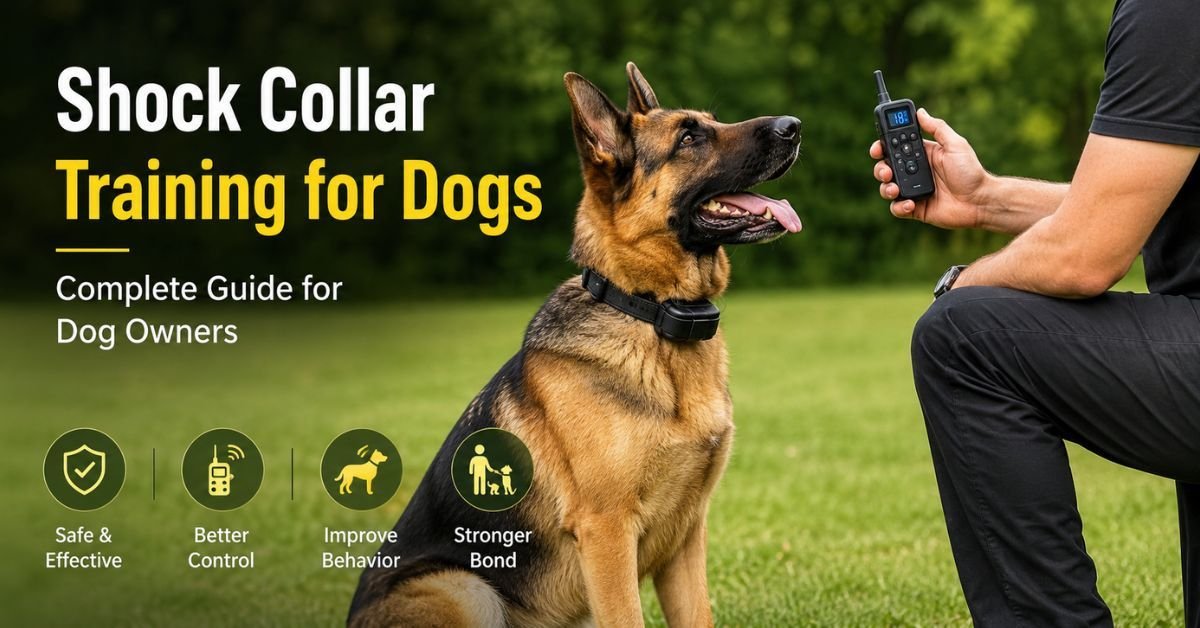
A shock collar, also known as an electronic dog training collar or e-collar, is a device worn around a dog’s neck. It delivers a stimulus through contact points when activated by a remote control or automatic trigger.
Modern collars may offer:
- Static stimulation
- Vibration mode
- Tone or beep alerts
- Adjustable intensity levels
- Remote operation
The purpose of shock collar training is to discourage unwanted behaviors and reinforce commands.
Common behaviors targeted include:
- Excessive barking
- Chasing wildlife
- Ignoring recall commands
- Jumping on people
- Aggression issues
However, proper use requires knowledge, timing, and careful consideration of the dog’s temperament.
How Do Shock Collars Work?
Shock collars deliver a mild electrical stimulation through two contact points touching the dog’s skin.
The trainer typically follows this process:
- Give a command.
- Wait for the dog’s response.
- You should activate the collar if the dog ignores your commands.
- Stop stimulation when the desired behavior occurs.
Some collars are designed specifically for:
Bark Control
These collars activate automatically when barking is detected.
Boundary Training
Used in invisible fence systems to keep dogs within designated areas.
Remote Obedience Training
Controlled manually by the handler to reinforce commands.
The effectiveness depends heavily on timing and consistency.
Why Some Owners Use Shock Collar Training
Many dog owners turn to electronic training collars because they believe the devices can provide faster results than traditional methods.
Potential benefits include:
Improved Recall
Dogs that ignore verbal commands may respond more reliably after proper e-collar training.
Long-Distance Communication
Remote collars can work over large distances, making them attractive for outdoor activities.
Control in Dangerous Situations
Some trainers use electronic collars to stop behaviors that could put a dog at risk, such as running into traffic.
Reduced Excessive Barking
Certain bark collars may help reduce nuisance barking when used correctly.
Although these benefits are often cited, they should be weighed against possible drawbacks.
Risks and Concerns of Shock Collar Training for Dogs
Many veterinarians and animal behavior experts express concerns about dog shock collars.
Physical Discomfort
Even low-level stimulation can cause discomfort.
Possible physical issues include:
- Skin irritation
- Pressure sores
- Neck sensitivity
- Stress-related reactions
Fear and Anxiety
Dogs may associate the stimulation with people, places, or situations rather than their behavior.
This confusion can increase:
- Fearfulness
- Nervousness
- Anxiety
- Defensive behavior
Damage to Trust
In order for training to be effective, dogs must trust their owners.
Overusing punishment-based methods may weaken the bond between dog and owner.
Aggression Risks
Some dogs react to discomfort with defensive aggression.
This risk is especially important in dogs already showing fear-based behavior.
Shock Collar vs Positive Reinforcement Training
Most modern trainers recommend positive reinforcement as the primary training method.
Comparison Table
| Feature | Shock Collar Training | Positive Reinforcement |
| Training Method | Correction-based | Reward-based |
| Risk of Fear | Higher | Very low |
| Trust Building | May decrease trust | Strengthens trust |
| Learning Experience | Can be stressful | Usually enjoyable |
| Long-Term Results | Varies | Often more reliable |
| Suitable for Puppies | Generally not recommended | Highly recommended |
Positive reinforcement focuses on rewarding desired behaviors using:
- Treats
- Toys
- Praise
- Playtime
- Affection
This approach encourages dogs to repeat behaviors willingly.
When Is a Shock Collar Sometimes Considered?
Some professional trainers may use electronic training collars in specific situations.
Examples include:
Advanced Off-Leash Training
Working dogs sometimes receive carefully supervised e-collar training.
High-Risk Behaviors
Certain dangerous behaviors may require specialized intervention.
Specialized Training Programs
Experienced trainers occasionally use remote collars as one tool among many.
In these cases, professional advice is strongly recommended.
Safety Tips for Using a Shock Collar
If you decide to use an electronic training collar, safety should be your top priority.
Start With Professional Guidance
Consult:
- Certified dog trainers
- Veterinary behaviorists
- Experienced canine behavior specialists
Use the Lowest Effective Setting
Never start at high stimulation levels.
Begin with:
- Tone mode
- Vibration mode
- Lowest stimulation setting
Limit Training Sessions
Short sessions help prevent stress.
Aim for:
- 5–15 minute sessions
- Frequent breaks
- Positive reinforcement throughout training
Monitor Your Dog’s Reactions
Stop training immediately if your dog shows:
- Excessive fear
- Trembling
- Avoidance behavior
- Aggression
- Confusion
Avoid Continuous Wear
Collars should not be left on for long periods of time.
Remove them daily to prevent skin irritation.
Humane Alternatives to Shock Collar Training
Many dog owners achieve excellent results without electronic stimulation.
Clicker Training
A clicker marks desired behavior and is followed by a reward.
Benefits include:
- Clear communication
- Fast learning
- Positive associations
Reward-Based Training
Using treats and praise motivates dogs to repeat good behaviors.
Long-Line Recall Training
A long training leash allows safe recall practice without punishment.
Professional Behavioral Training
Certified trainers can develop customized plans for challenging behaviors.
Enrichment Activities
Mental stimulation often reduces unwanted behaviors naturally.
Examples include:
- Puzzle toys
- Scent games
- Obedience exercises
- Agility training
Common Mistakes Owners Make
Many problems arise from incorrect use rather than the collar itself.
Avoid these mistakes:
Using the Collar Without Training Knowledge
A collar cannot replace proper training techniques.
Relying Only on Punishment
Dogs need guidance and rewards, not just corrections.
Using High Settings Too Quickly
Excessive stimulation can create fear and confusion.
Inconsistent Timing
Delayed corrections make it difficult for dogs to understand expectations.
Ignoring Underlying Problems
Behavior issues may stem from:
- Anxiety
- Lack of exercise
- Medical conditions
- Poor socialization
Addressing root causes is essential.
Signs Your Dog Is Responding Well to Training
Regardless of the training method used, watch for positive indicators.
Healthy progress includes:
- Faster responses to commands
- Increased confidence
- Reduced unwanted behavior
- Relaxed body language
- Strong engagement with the owner
Training should make dogs feel successful rather than fearful.
Choosing the Right Training Approach
Every dog is different.
Factors to consider include:
Age
Young puppies generally benefit most from positive reinforcement methods.
Temperament
Sensitive dogs may react poorly to aversive techniques.
Training Goals
Basic obedience often does not require electronic collars.
Behavioral Challenges
Serious behavior issues may require professional evaluation.
The best training method is one that improves behavior while protecting your dog’s emotional and physical well-being.
Conclusion
Shock collar training for dogs remains one of the most debated topics in dog training. While some owners and trainers report success using electronic collars, there are important concerns regarding fear, stress, and potential behavioral side effects.
For most dogs, positive reinforcement methods provide a safer and more enjoyable learning experience while strengthening the bond between dog and owner. Before using any electronic training collar, consider consulting a professional trainer or veterinary behaviorist to determine the best approach for your dog’s unique needs.
Ultimately, successful training is not about controlling your dog, but about communicating, trusting, and being consistent with your training methods.
When used correctly, some manufacturers consider them safe. However, they can still cause stress, discomfort, and behavioral issues if misused.
Most experts do not recommend shock collars for puppies. Training should focus on positive reinforcement during early development.
The level of discomfort varies by collar and setting. Some dogs experience mild irritation, while others may find the stimulation stressful.
Many owners prefer vibration-only collars because they avoid electrical stimulation while still providing a training signal.
In some cases, yes. Improper use may increase fear and defensive aggression in certain dogs.

Muhammad Ahad — Passionate writer sharing informative, engaging, and easy-to-read articles across different topics. Focused on delivering valuable content that helps readers learn, explore, and stay inspired every day.
1 thought on “Shock Collar Training for Dogs: Complete Guide for Dog Owners”