

Introduction
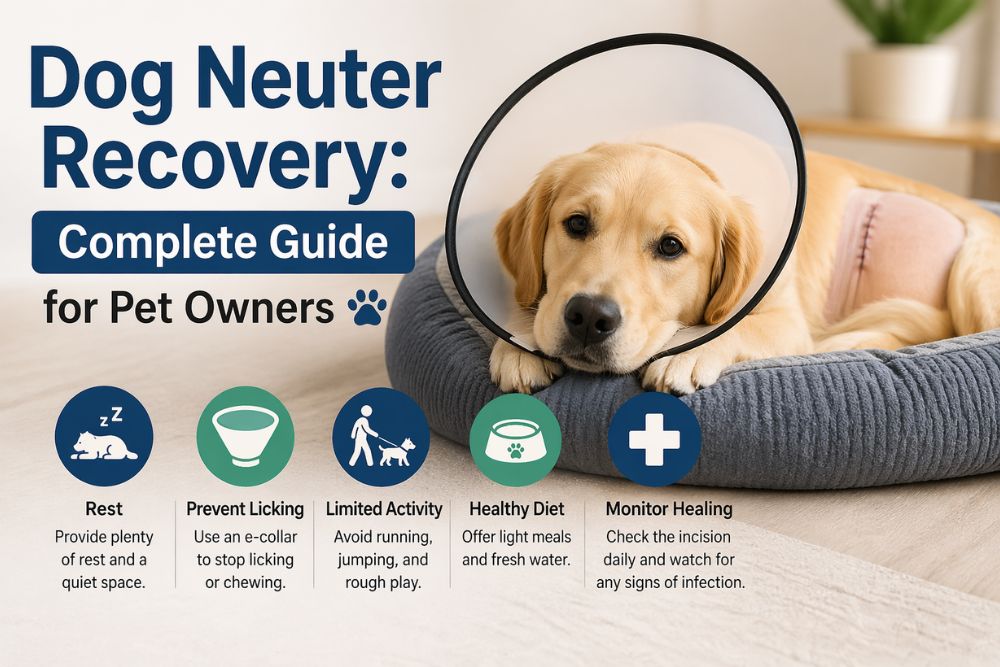
Dog neutering is a common and important procedure that helps improve your pet’s health and behavior. However, dog neuter recovery is just as important as the surgery itself.
After the procedure, your dog needs proper care, attention, and a safe environment to heal smoothly. Without the right care, complications can occur.
In this guide, you’ll learn everything you need to know about recovery time, care tips, and warning signs—so your furry friend can get back to normal quickly and safely.
What Happens After Neutering?
Neutering is a surgical procedure where a male dog’s testicles are removed. It is usually done under anesthesia, so your dog won’t feel pain during the operation.
After surgery, your dog may experience:
- Mild discomfort or soreness
- Sleepiness from anesthesia
- Reduced appetite
- Slight swelling near the incision
These are completely normal during the early stages of dog neuter recovery.
Dog Neuter Recovery Timeline
Understanding the healing stages helps you know what to expect.
| Recovery Stage | Time Frame | What to Expect |
| Immediate | First 24 hours | Sleepiness, low energy |
| Early Recovery | Days 2–3 | Slight swelling, mild pain |
| Mid Recovery | Days 4–7 | Improved energy, healing incision |
| Late Recovery | Days 8–14 | Almost healed, stitches dissolve or removed |
Most dogs fully recover within 10 to 14 days.
How to Care for Your Dog After Neutering
Provide a Comfortable Resting Area
Your dog needs a quiet and clean place to rest.
- Choose a warm, soft bed
- Keep the area calm and noise-free
- Limit movement for the first few days
Rest is essential for proper healing.
Use an E-Collar (Cone)
Dogs tend to lick their wounds, which can cause infections.
- Use an Elizabethan collar (cone)
- Keep it on for at least 10–14 days
- Remove only under supervision
This simple step can prevent serious complications.
Limit Physical Activity
One of the most important parts of dog neuter recovery is restricting movement.
Avoid:
- Running
- Jumping
- Playing rough
- Climbing stairs
Instead, take your dog on short, slow leash walks only when necessary.
Monitor Food and Water Intake
After surgery, your dog may not feel very hungry.
- Offer small meals at first
- Provide fresh water at all times
- Gradually return to normal feeding
If your dog refuses food for more than 24 hours, consult your vet.
Give Medications as Prescribed
Your vet may provide:
- Pain relievers
- Antibiotics
Always follow instructions carefully. Never give human medications to your dog.
Checking the Incision Site
Monitoring the surgical site is crucial during recovery.
Normal Signs:
- Slight redness
- Mild swelling
- Dry incision
Warning Signs:
- Pus or discharge
- Bad smell
- Excessive swelling
- Bleeding
- Open wound
If you notice any unusual symptoms, contact your veterinarian immediately.
Common Problems During Dog Neuter Recovery
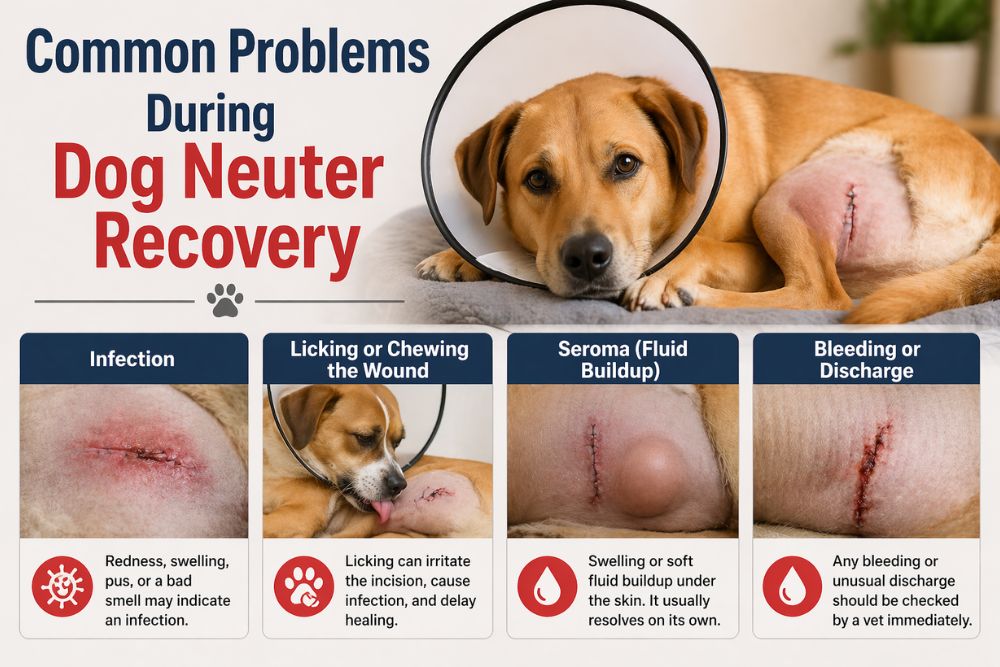
Although most dogs heal smoothly, some issues can occur.
Infection
Caused by bacteria entering the wound.
Signs include:
- Redness
- Swelling
- Fever
Licking or Chewing the Wound
This can delay healing and cause reopening.
Solution: Always use a cone.
Seroma (Fluid Buildup)
A soft swelling under the skin.
It usually goes away on its own but should still be checked by a vet.
Behavior Changes After Neutering
During dog neuter recovery, your dog’s behavior may change.
You might notice:
- Calmness
- Reduced aggression
- Less roaming behavior
However, personality remains mostly the same.
Hygiene and Grooming Tips
Keeping your dog clean is important, but avoid bathing too soon.
- Do not bathe for at least 10–14 days
- Keep the incision dry
- Gently clean surrounding areas if needed
Indoor vs Outdoor Care
It’s best to keep your dog indoors during recovery.
Why?
- Reduces risk of infection
- Prevents excessive activity
- Keeps wound clean
If your dog must go outside, supervise closely.
When Can Your Dog Return to Normal?
Most dogs can return to normal activities after:
- 10–14 days (if fully healed)
- Vet approval
Always ensure the incision is fully closed before resuming normal play.
Conclusion
Proper dog neuter recovery care ensures your pet heals quickly and safely. While the procedure is routine, recovery requires attention and patience.
By providing rest, limiting activity, and monitoring the incision, you can prevent complications and help your dog return to a happy, healthy life.
Always follow your vet’s advice and don’t hesitate to seek help if something seems wrong.
Your dog depends on you so a little extra care goes a long way
Most dogs recover within 10 to 14 days, but full healing may vary slightly.
Yes, but only for short periods. Monitor your dog closely during the first 48 hours.
Yes, sleepiness is normal due to anesthesia and healing.
This can cause infection. Use a cone immediately to prevent licking.
Wait at least 10–14 days or until your vet approves.

Muhammad Ahad — Passionate writer sharing informative, engaging, and easy-to-read articles across different topics. Focused on delivering valuable content that helps readers learn, explore, and stay inspired every day.
1 thought on “Dog Neuter Recovery: Complete Guide for Pet Owners”