


Introduction
Skin allergies are one of the most common problems dog owners face. If your furry friend is constantly scratching, licking, or biting their skin, it can be frustrating and worrying. The good news is—you can effectively treat skin allergies in dogs with the right approach.
In this guide, you’ll learn the causes, symptoms, and best treatments (both natural and medical) to help your dog feel comfortable again. Whether you’re a beginner or an experienced dog owner, this guide will give you practical, easy-to-follow solutions.
What Causes Skin Allergies in Dogs?
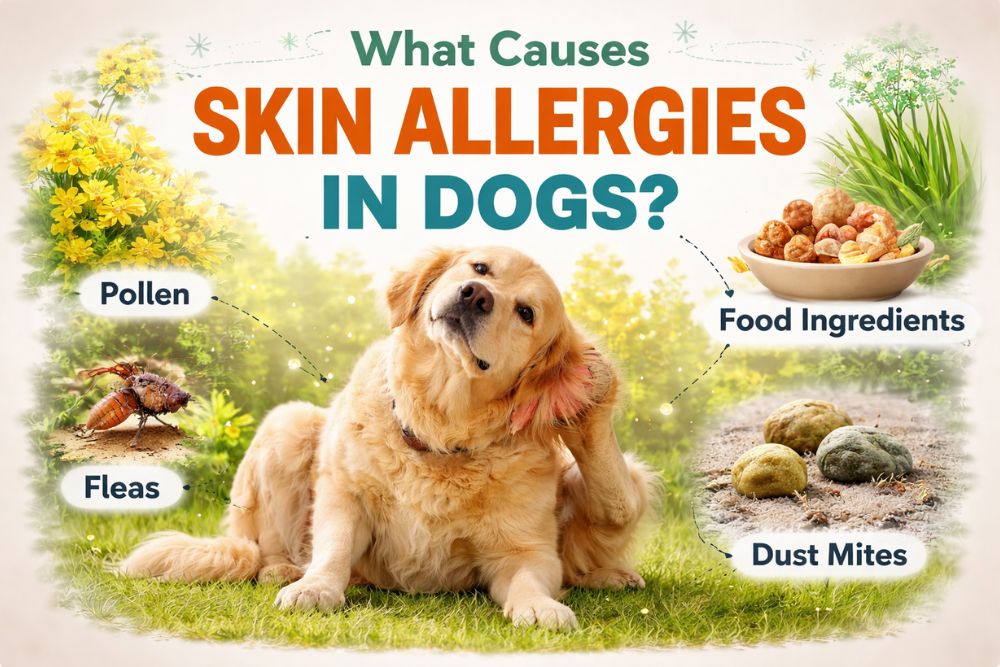
Before you treat the problem, it’s important to understand what’s causing it. Dog skin allergies usually fall into three main categories:
Environmental Allergies
These are triggered by things in your dog’s surroundings, such as:
- Pollen
- Dust mites
- Mold
- Grass
Dogs may show seasonal symptoms, especially during spring or summer.
Food Allergies
Certain ingredients in dog food can cause allergic reactions:
- Chicken
- Beef
- Dairy
- Wheat
Food allergies often lead to itching, ear infections, or digestive issues.
Flea Allergy Dermatitis
Some dogs are highly sensitive to flea bites. Even one bite can cause intense itching and irritation.
Common Symptoms of Skin Allergies in Dogs
Recognizing the symptoms early helps you treat skin allergies in dogs faster.
Look out for:
- Excessive scratching or licking
- Red or inflamed skin
- Hair loss
- Dry, flaky skin
- Ear infections
- Hot spots (painful, moist skin areas)
If symptoms persist, it’s always best to consult a veterinarian.
How to Treat Skin Allergies in Dogs
Now let’s dive into the most effective ways to treat your dog’s skin allergies.
1. Veterinary Treatments
Sometimes, professional help is necessary.
Common Vet Treatments:
- Antihistamines (reduce itching)
- Steroids (for severe inflammation)
- Medicated shampoos
- Allergy shots (immunotherapy)
These treatments work quickly but should always be used under veterinary guidance.
2. Natural Remedies for Dog Skin Allergies
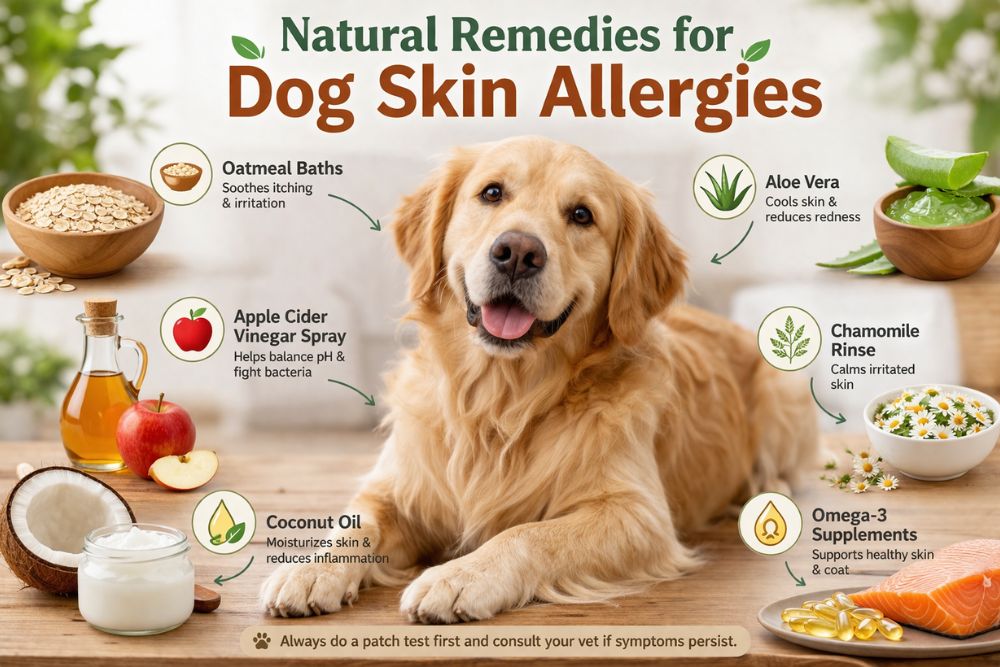
If you prefer a gentler approach, natural remedies can be very effective.
Oatmeal Baths
Oatmeal soothes irritated skin and reduces itching.
How to use:
- Grind plain oatmeal
- Mix with warm water
- Let your dog soak for 10–15 minutes
Coconut Oil
Coconut oil has antibacterial and moisturizing properties.
- Apply directly to affected areas
- Add a small amount to your dog’s food
Apple Cider Vinegar Spray
Helps fight bacteria and relieve itching.
- Apple cider vinegar and water should be mixed equally
- Spray lightly on itchy areas (avoid open wounds)
3. Improve Your Dog’s Diet
Diet plays a huge role in skin health.
Switch to Hypoallergenic Food
Look for:
- Limited ingredient diets
- Grain-free options
- Novel proteins (like duck or salmon)
Add Supplements
- Omega-3 fatty acids (fish oil)
- Probiotics
- Vitamins for skin health
A healthy diet can significantly reduce allergic reactions over time.
4. Regular Grooming and Hygiene
Keeping your dog clean helps remove allergens.
Grooming Tips:
- Bathe your dog regularly (but not too often)
- Use hypoallergenic shampoos
- Brush fur to remove dirt and pollen
- Clean bedding weekly
Consistency is key here.
5. Flea Control is Essential
Even if you don’t see fleas, they could still be the cause.
Prevention Tips:
- Use vet-approved flea treatments
- Clean your home regularly
- Wash your dog’s bedding
- Vacuum carpets and furniture
Quick Comparison of Treatment Options
| Treatment Type | Best For | Pros | Cons |
| Veterinary Medicine | Severe allergies | Fast relief | Can be expensive |
| Natural Remedies | Mild to moderate cases | Safe and gentle | Slower results |
| Diet Changes | Food allergies | Long-term improvement | Takes time to see results |
| Grooming & Hygiene | Environmental allergies | Prevents recurrence | Requires consistency |
| Flea Control | Flea-related allergies | Highly effective | Needs regular maintenance |
Common Mistakes to Avoid
When trying to treat skin allergies in dogs, avoid these mistakes:
- ❌ Ignoring early symptoms
- ❌ Using human skincare products
- ❌ Over-bathing your dog
- ❌ Switching foods too quickly
- ❌ Skipping vet consultation for severe cases
Avoiding these can save your dog from unnecessary discomfort.
Conclusion
Skin allergies can make your dog miserable, but the right care can bring fast relief. Whether you choose natural remedies, improve your dog’s diet, or seek veterinary treatment, consistency is key.
Methods that are combined often produce the best results. Start with simple solutions, monitor your dog’s progress, and don’t hesitate to consult a vet if needed.
By following this guide, you can confidently treat skin allergies in dogs and help your furry companion live a happy, itch-free life.
It depends on the cause. Mild cases may improve in a few days, while chronic allergies can take weeks or months.
Yes, mild cases can be managed with natural remedies and diet changes. However, severe cases need veterinary care.
Hypoallergenic or limited ingredient diets with novel proteins like salmon or duck are ideal.
Some allergies can be managed but not completely cured. Long-term care is often required.
Yes, especially with medicated or oatmeal shampoos. Just avoid over-bathing.
If your dog has severe itching, open wounds, or infections, consult a vet immediately.

Muhammad Ahad — SEO Specialist helping websites grow with smart, clean, and result-driven strategies. I improve search rankings, boost organic traffic, and turn content into real authority. I believe true SEO is built on data, trust, and consistency.