

Introduction
Spaying your dog is one of the most responsible decisions you can make as a pet owner. It helps prevent unwanted litters, reduces certain health risks, and can even improve behavior. But what many dog owners don’t realize is that the real work begins after the surgery.
Proper post spay care for your dog is essential to ensure a smooth, safe, and quick recovery. Without the right care, complications like infections, wound reopening, or discomfort can occur.
If you’re feeling unsure about what to do after bringing your dog home from surgery, don’t worry. This complete guide will walk you through everything you need to know, in simple, practical steps,so your dog heals comfortably and safely.
What to Expect After Spaying
Understanding what’s normal after surgery can help you stay calm and respond correctly.
Immediate Post-Surgery Behavior
When your dog comes home, she may:
- Be sleepy or groggy due to anesthesia
- Show reduced appetite
- Walk unsteadily
- Seem quiet or less active
This is completely normal and usually improves within 24 hours.
Physical Signs to Watch
Your dog will have:
- A small surgical incision on the abdomen
- Possibly shaved fur around the area
- Mild swelling or redness
These signs are part of the normal healing process, but they should improve daily.
Setting Up a Comfortable Recovery Space
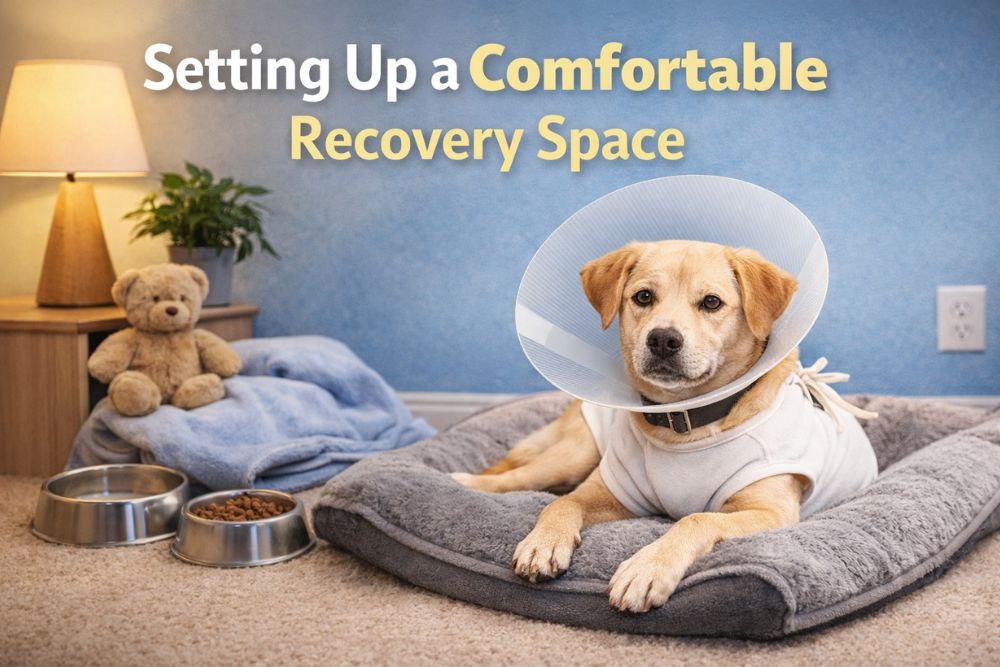
Creating the right environment is one of the most important parts of post spay care.
Keep It Quiet and Stress-Free
Dogs heal faster in calm environments. Set up a recovery area that is:
- Away from noise and activity
- Comfortable with soft bedding
- Warm but well-ventilated
Avoid letting children or other pets disturb her during recovery.
Limit Movement
Too much movement can reopen stitches or slow healing.
For at least 10–14 days:
- No running or jumping
- No climbing stairs (if possible)
- No rough play
Use a leash for short bathroom breaks.
Incision Care: Keeping the Wound Clean
Taking care of the surgical site is critical.
What a Healthy Incision Looks Like
A normal healing incision should:
- Be slightly pink
- Stay dry
- Have minimal swelling
Signs of Infection
Contact your vet immediately if you notice:
- Pus or discharge
- Strong odor
- Excessive redness or swelling
- Bleeding
- Opening of stitches
Do’s for Incision Care
- Check the incision daily
- Keep the area clean and dry
- Follow your vet’s cleaning instructions
Don’ts
- Do NOT apply creams or ointments unless prescribed
- You should not allow your dog to lick a wound
- Do NOT bathe your dog during recovery
Preventing Licking and Chewing
Dogs naturally try to lick wounds, but this can cause serious complications.
Use an E-Collar (Cone)
An Elizabethan collar (cone) is essential to prevent:
- Infection
- Stitch removal
- Delayed healing
Even if your dog dislikes it, keep it on at all times unless supervised.
Alternative Options
If your dog struggles with a cone, consider:
- Inflatable collars
- Recovery suits (dog onesies)
Always ensure the incision stays fully protected.
Managing Pain and Medication
Your dog may experience mild discomfort after surgery.
Pain Management
Your vet will usually prescribe pain relief medication. Always:
- Follow dosage instructions strictly
- Complete the full course
- Never give human painkillers (they can be toxic)
Signs Your Dog Is in Pain
Watch for:
- Whining or whimpering
- Restlessness
- Loss of appetite
- Aggression or irritability
If pain seems severe or prolonged, contact your vet.
Feeding Your Dog After Spay Surgery
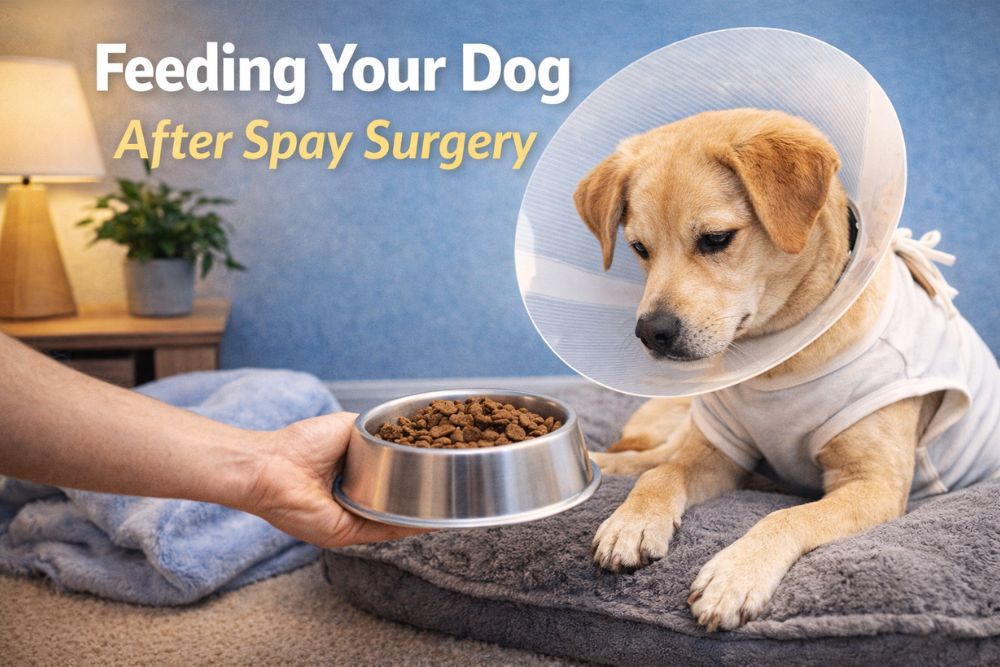
Diet plays a big role in recovery.
First 24 Hours
- Offer small portions of food
- Provide plenty of fresh water
- Expect reduced appetite
After 1–2 Days
Your dog should return to normal eating habits.
Tips for Feeding
- Stick to regular dog food
- Avoid treats in large amounts
- Monitor for vomiting or diarrhea
If your dog refuses food for more than 48 hours, consult your vet.
Activity Restrictions: Why They Matter
One of the biggest mistakes dog owners make is allowing too much activity too soon.
Why Rest Is Important
Excess movement can:
- Tear stitches
- Cause internal bleeding
- Delay healing
Safe Activity Timeline
Days 1–3:
- Strict rest
- Short leash walks only
Days 4–10:
- Slightly increased movement
- Still no running or jumping
After Day 10–14:
- Gradual return to normal activity (if vet approves)
Common Mistakes to Avoid
Even well-meaning owners can make errors during recovery.
Mistake #1: Removing the Cone Too Early
Even one licking session can cause infection.
Mistake #2: Letting Your Dog Jump
Jumping on furniture can reopen stitches.
Mistake #3: Ignoring Warning Signs
Always take unusual symptoms seriously.
Mistake #4: Bathing Too Soon
Water can infect the incision and slow healing.
Mistake #5: Skipping Vet Instructions
Your vet’s advice is tailored to your dog,follow it carefully.
When to Call the Vet
Knowing when to seek help can prevent serious complications.
Call Your Vet If You Notice:
- Persistent vomiting or diarrhea
- Loss of appetite beyond 2 days
- Lethargy lasting more than 48 hours
- Swelling or discharge from incision
- Fever or unusual behavior
When in doubt, it’s always safer to check.
Long-Term Benefits of Spaying
While recovery may seem challenging, the long-term benefits are worth it.
Health Benefits
Spaying helps reduce the risk of:
- Uterine infections
- Breast tumors
- Certain cancers
Behavioral Benefits
Your dog may show:
- Less aggression
- Reduced roaming behavior
- No heat cycles
This leads to a calmer and more manageable pet.
Conclusion
Caring for your dog after spay surgery may feel overwhelming at first, but with the right approach, it becomes simple and manageable.
Focus on the basics:
- Keep her calm and comfortable
- Protect the incision
- Follow medication instructions
- Watch for warning signs
Your attention during this recovery period makes a huge difference in your dog’s health and comfort.
Always remember — when something doesn’t feel right, don’t guess. Reach out to your veterinarian for guidance.
With proper post spay care, your dog will be back to her happy, active self in no time — healthier, safer, and ready to enjoy life by your side.
Most dogs recover within 10 to 14 days. Full healing may take up to 3 weeks depending on the dog’s age and health.
Yes, but only for short periods. Make sure she is in a safe, confined space and cannot lick her incision.
Yes. Sleepiness is common for the first 24–48 hours due to anesthesia and healing.
You should wait at least 10–14 days or until your vet confirms the incision is fully healed.
Immediately stop her and use a cone or recovery suit. If the wound looks irritated, contact your vet.
Yes, but only short, slow leash walks for bathroom breaks. Avoid exercise until your vet approves.

Muhammad Ahad — SEO Specialist helping websites grow with smart, clean, and result-driven strategies. I improve search rankings, boost organic traffic, and turn content into real authority. I believe true SEO is built on data, trust, and consistency.
1 thought on “Post Spay Care for Dogs: Complete Recovery Guide”