
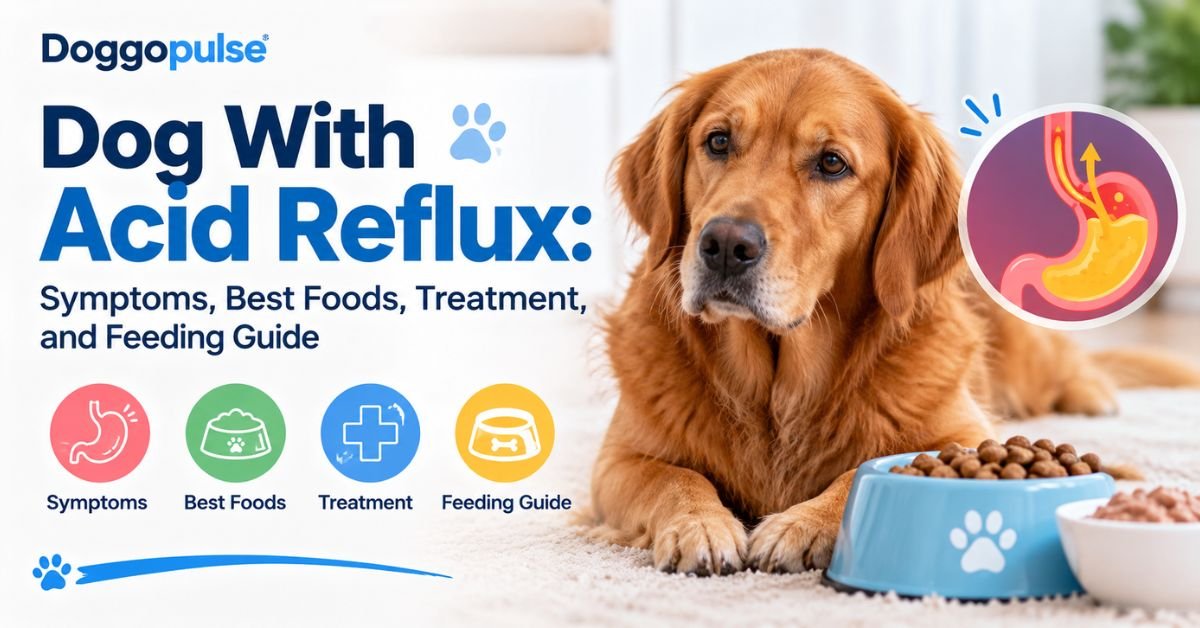
A dog with acid reflux may experience discomfort after eating, repeated swallowing, lip licking, burping, regurgitation, or a sudden loss of appetite. These signs can be worrying, especially when your dog seems hungry but struggles to keep food down. The good news is that appropriate veterinary care, carefully selected food, and a consistent feeding routine can help many dogs feel more comfortable.
Acid reflux occurs when stomach contents flow backward into the esophagus, the tube that carries food from the mouth to the stomach. Stomach acid can irritate the esophageal lining, sometimes making swallowing uncomfortable. Although occasional reflux may be manageable, repeated symptoms deserve veterinary attention because other digestive conditions can look similar.
This guide explains how to recognize acid reflux in dogs, identify possible triggers, choose suitable food, adjust feeding habits, and understand when professional treatment is needed.
What Is Acid Reflux in Dogs?
Acid reflux in dogs, also called gastroesophageal reflux, occurs when stomach contents move backward into the esophagus. The lower esophageal sphincter normally helps prevent this backflow. If it relaxes at the wrong time or does not function effectively, stomach contents can travel upward.
Unlike the stomach, the esophagus does not have the same protective lining against stomach acid. Repeated exposure may cause inflammation, known as esophagitis.
Dogs can experience reflux at different ages, but it may occur following anesthesia, with certain digestive or anatomical problems, or alongside other gastrointestinal conditions. Some dogs have obvious symptoms, while others show only subtle changes in eating behavior.
An important distinction: Acid reflux and vomiting are not the same. Vomiting typically involves active abdominal contractions and the forceful expulsion of stomach contents. Regurgitation is often more passive, with undigested food or liquid coming back up without much warning. Both can occur for different reasons, so describing exactly what happens to your veterinarian is helpful.
Common Symptoms of Acid Reflux in Dogs
Dogs with acid reflux may show one or several of the following signs:
- Repeated lip licking: Your dog may lick its lips frequently or smack them after meals.
- Excessive drooling: Irritation or nausea can cause saliva to build up around the mouth.
- Regurgitation: Food or liquid may come back up without forceful abdominal contractions.
- Repeated swallowing: Your dog may swallow repeatedly as if something is stuck in its throat.
- Reduced appetite: Eating may become uncomfortable, especially if the esophagus is inflamed.
- Discomfort after meals: Your dog may appear restless, stretch its neck, or seem reluctant to lie down.
- Coughing or throat irritation: Some dogs develop a persistent cough, particularly if reflux affects the airway.
- Vomiting or nausea: These signs may accompany reflux, although they can also indicate a different digestive problem.
Not every dog with these symptoms has acid reflux. Dental disease, nausea, esophageal disorders, foreign objects, and other gastrointestinal illnesses can produce similar signs.
When Should You Contact a Veterinarian?
Arrange a veterinary appointment if your dog repeatedly regurgitates food, refuses meals, loses weight, or shows persistent signs of discomfort.
Seek urgent veterinary care if your dog has difficulty breathing, cannot swallow water, repeatedly retches without producing anything, has a swollen abdomen, vomits blood, or appears severely weak. These signs may indicate a serious condition rather than uncomplicated reflux.
What Causes Acid Reflux in Dogs?
Acid reflux can develop for several reasons. Identifying the underlying cause helps your veterinarian select the most appropriate treatment.
1. Anesthesia and Certain Medications
Reflux can occur during or after anesthesia because some anesthetic drugs and related medications affect the protective mechanism between the stomach and esophagus. Esophageal irritation may develop if stomach contents flow backward during a procedure.
Tell your veterinarian if your dog develops swallowing difficulties, drooling, or regurgitation after surgery or anesthesia.
2. High-Fat Meals
Fat-rich meals may contribute to digestive discomfort in some dogs. For dogs with reflux or esophagitis, a veterinarian may recommend a diet that is lower in fat because it can be easier to tolerate in selected cases.
Avoid assuming that every dog needs an extremely low-fat diet. The correct fat level depends on your dog’s diagnosis, nutritional needs, and other medical conditions.
3. Large Meals and Overeating
Eating a large meal at once can distend the stomach and may make digestive symptoms worse in susceptible dogs. Some dogs also eat rapidly, which can make it difficult to recognize when they have eaten enough.
Smaller, more frequent meals may be helpful when recommended by your veterinarian.
4. Repeated Vomiting or Digestive Disease
Frequent vomiting can irritate the esophagus and may contribute to inflammation. Underlying gastrointestinal disease can also cause symptoms that resemble acid reflux.
Conditions such as delayed stomach emptying, anatomical abnormalities, and esophageal motility disorders may need further investigation.
5. Excess Body Weight
Excess weight can contribute to a variety of health problems and may complicate digestive management. If your dog is overweight, your veterinarian can help develop a gradual weight-management plan without restricting essential nutrients.
6. Food Intolerance or Poor Diet Tolerance
Some dogs experience digestive symptoms after eating particular foods or treats. However, a food sensitivity does not automatically mean that acid reflux is the cause.
Keeping a food and symptom diary can help you identify patterns and give your veterinarian useful information.
Best Food for a Dog With Acid Reflux
Choosing the right food is an important part of managing a dog with acid reflux. The goal is to provide complete nutrition while reducing digestive irritation and helping your dog maintain a healthy weight.
Veterinarians may recommend a highly digestible, appropriately low-fat, soft-textured diet served in small meals when esophageal inflammation is present. The ideal diet depends on the individual dog, and some dogs need a different nutritional approach because of another underlying condition.
1. Highly Digestible Veterinary Diets
A veterinary gastrointestinal diet may be suitable when your dog has digestive discomfort or difficulty tolerating its usual food.
Look for a diet selected with your veterinarian that:
- Provides complete and balanced nutrition for your dog’s life stage.
- Uses ingredients and a formulation appropriate for the diagnosed condition.
- Is easy for your dog to eat and tolerate.
- Supplies adequate calories and essential nutrients.
- Has a fat level appropriate for your dog’s medical needs.
Some veterinary diets are designed for highly digestible nutrition, while others target fat restriction or food sensitivities. They are not interchangeable, so choose according to your dog’s condition rather than the product name alone.
2. Soft, Moist Dog Food
Soft food may be easier for a dog with esophageal inflammation to swallow. Wet food can also be mixed with water to achieve a texture your dog tolerates.
However, soft food is not automatically better for every dog with reflux. Some dogs tolerate their usual kibble, while others need a modified consistency because of an additional esophageal disorder.
If your dog struggles to swallow, do not try to solve the problem simply by changing food texture. Arrange a veterinary assessment.
3. Appropriately Low-Fat Dog Food
A lower-fat diet may be recommended for dogs with esophagitis or certain digestive conditions. It may also be especially important when another condition, such as pancreatitis, requires fat restriction.
When comparing dog foods, check the nutritional information and consult your veterinarian about the appropriate fat content. Fat percentages can be reported on different bases, so products should be compared consistently.
Avoid choosing an extremely low-fat food without professional guidance. Growing puppies, underweight dogs, and dogs with other medical needs may require a different formulation.
4. Prescription Hydrolyzed or Novel-Protein Diets
If your veterinarian suspects a food-responsive condition, a hydrolyzed-protein diet or a properly selected novel-protein diet may be recommended.
These diets are intended to help investigate or manage certain food sensitivities. They are not a universal treatment for acid reflux, and an elimination diet must be followed consistently to provide meaningful results.
Do not add unapproved treats, table scraps, or flavored supplements during a prescribed elimination trial.
5. Homemade Food: Is It a Good Choice?
A temporary, simple meal may sometimes be recommended by a veterinarian, but homemade food should not automatically replace a complete commercial diet.
Chicken and rice, for example, is not nutritionally complete for long-term feeding and may be unsuitable for a dog with a chicken sensitivity or another condition requiring a specific nutrient profile.
If your dog needs a long-term homemade diet, ask your veterinarian for a recipe formulated by a qualified veterinary nutritionist.
Foods and Feeding Habits to Avoid
Some foods and habits can worsen digestive symptoms or make a treatment plan harder to follow.
| Food or Habit | Why It May Be a Problem | Better Approach |
|---|---|---|
| Fatty meat and meat trimmings | High-fat meals may be poorly tolerated by some dogs. | Choose a veterinarian-approved food with an appropriate fat level. |
| Greasy leftovers and fried foods | They add unnecessary fat and may trigger digestive upset. | Avoid feeding greasy table scraps. |
| Large meals in one sitting | May increase stomach distension in susceptible dogs. | Divide the daily ration into smaller meals when recommended by your veterinarian. |
| Rich treats and high-fat chews | Can add substantial fat and calories. | Use veterinarian-approved treats in controlled amounts. |
| Sudden food changes | Can cause additional digestive upset. | Transition gradually when medically appropriate. |
| Unapproved supplements | May introduce ingredients that interfere with the diet or treatment plan. | Ask your veterinarian before adding supplements. |
Important food-safety note: Chocolate, grapes, raisins, onions, garlic, and products containing xylitol should be kept away from dogs because they can be toxic. These are general canine food-safety precautions, not specific causes of acid reflux.
Veterinary Advice: Managing Acid Reflux Safely
🩺 Veterinary Expert Advice & Disclaimer:
“If your dog shows repeated regurgitation, painful swallowing, or reduced appetite, arrange a veterinary examination rather than assuming acid reflux is the only cause. A veterinarian may recommend small, frequent meals, an appropriately low-fat and easily tolerated diet, and prescription medication when indicated by the diagnosis.”
— Veterinary Information for Doggopulse
Editorial note: This is general veterinary information, not a substitute for an examination by a licensed veterinarian. Only describe the article as medically reviewed if a qualified veterinary professional has actually reviewed it.
How to Feed a Dog With Acid Reflux
Your dog’s feeding routine can be just as important as food selection. The aim is to avoid unnecessarily large meals, provide sufficient nutrition, and monitor whether particular feeding patterns are associated with symptoms.
1. Offer Smaller, More Frequent Meals
Instead of giving your dog one or two large meals, ask your veterinarian whether dividing the daily food allowance into three or four smaller meals would be appropriate.
For example, if your dog normally receives 300 grams of food per day, that amount could be divided into three meals of 100 grams each. This is only an illustration of meal division, not a recommendation for every dog; the correct daily amount depends on the food’s calorie content and your dog’s nutritional needs.
Measure the total daily ration rather than adding extra food at every meal.
2. Establish Consistent Feeding Times
Feed your dog at roughly consistent times each day. A predictable routine makes it easier to track symptoms and recognize whether particular meals are associated with discomfort.
If symptoms repeatedly occur overnight or after a specific meal, record the timing and discuss it with your veterinarian. Do not assume that every dog needs food immediately before bedtime or that fasting is the solution.
3. Adjust Food Texture When Recommended
If esophagitis makes swallowing uncomfortable, your veterinarian may recommend soft food or a different texture.
Do not automatically elevate your dog’s bowl or force your dog to remain upright after meals. Those measures are particularly important for certain esophageal disorders, such as megaesophagus, and should be tailored to the actual diagnosis.
4. Avoid Vigorous Exercise Around Meals
A calm routine around feeding can help you observe your dog and prevent unnecessary excitement while eating. Ask your veterinarian about appropriate exercise timing, especially if your dog also has a history of regurgitation or another digestive problem.
Avoid intense activity immediately after a large meal. If your dog develops repeated unproductive retching or a swollen abdomen, seek emergency care.
5. Keep a Food and Symptom Diary
Record the following details for one to two weeks, or for the period recommended by your veterinarian:
- Food brand, formula, and amount served.
- Meal times and treat consumption.
- Episodes of regurgitation, vomiting, or repeated swallowing.
- Appetite, energy level, and stool changes.
- Any medication and the time it was given.
A diary can reveal useful patterns and help your veterinarian determine whether the current feeding plan needs adjustment.
Ready Feeding Guide for Dogs With Acid Reflux
| Management Factor | General Recommendation | Important Consideration | When to Seek Advice |
|---|---|---|---|
| Food type | Highly digestible, complete and balanced food when appropriate. | Fat level should match the dog’s diagnosis. | If symptoms persist after a diet change. |
| Meal frequency | Consider 3–4 smaller meals daily if advised. | Keep total daily calories appropriate. | If regurgitation continues. |
| Portion size | Divide the prescribed daily ration into smaller servings. | Calculate portions using calorie content and body condition. | If weight changes unexpectedly. |
| Food texture | Soft or moist food when recommended. | Texture must suit swallowing ability. | If swallowing is difficult or painful. |
| Treats | Keep treats limited and compatible with the diet. | Treats can undermine prescription or elimination diets. | If symptoms recur after treats. |
| Water | Provide access to fresh water unless your veterinarian instructs otherwise. | Never force water into a dog that cannot swallow normally. | Seek urgent veterinary care if your dog cannot swallow water. |
| Weight management | Maintain a healthy body condition. | Weight loss should be gradual and nutritionally balanced. | If weight loss is unexplained or rapid. |
Veterinary Treatment for Acid Reflux in Dogs
Dietary changes may help, but they do not address every cause of reflux. If your dog has recurring symptoms, your veterinarian may recommend an examination and additional testing.
Diagnosis and Examination
Your veterinarian may ask about your dog’s symptoms, recent surgery, medications, feeding routine, and history of vomiting or regurgitation.
Depending on the findings, further investigations may include blood tests, imaging, or endoscopy. Endoscopy allows the veterinarian to examine the esophagus directly and assess inflammation or other abnormalities.
Prescription Medications
Depending on the diagnosis, treatment may include:
- Acid-reducing medication: Reduces stomach acid production when indicated.
- Esophageal protectants: Certain medications may help protect irritated tissue.
- Motility medications: Selected drugs may be used to improve gastrointestinal movement or reduce reflux in appropriate cases.
- Pain management: May be necessary if inflammation causes significant discomfort.
The choice of medication depends on the cause and severity of the condition. Never give your dog human antacids, acid-reducing medication, or leftover prescriptions without veterinary guidance. The correct product, dose, and treatment duration vary by patient.
What Happens if Acid Reflux Is Left Untreated?
Repeated reflux can cause inflammation of the esophagus. In more severe cases, complications such as ulceration or narrowing of the esophagus can develop.
Persistent regurgitation can also increase the risk of inhaling food or liquid into the lungs, which may lead to aspiration pneumonia. Prompt assessment is especially important when symptoms are worsening or accompanied by coughing or breathing changes.
How Long Does It Take for a Dog to Improve?
Recovery depends on the underlying cause, the degree of esophageal irritation, and whether the treatment plan is effective.
Some dogs improve after appropriate dietary adjustments and treatment, while others need additional investigation or a longer period of care. There is no reliable recovery timeline that applies to every dog.
Monitor appetite, swallowing, regurgitation, energy, and weight. If your dog is not improving within the timeframe your veterinarian recommends—or develops new or worsening symptoms—contact the clinic rather than continuing to experiment with different foods.
Frequently Asked Questions
1. What Is the Best Food for a Dog With Acid Reflux?
The best food depends on the dog’s diagnosis. A veterinarian may recommend a highly digestible, appropriately low-fat diet, and soft food may be useful if esophageal inflammation makes swallowing uncomfortable. Choose a complete and balanced diet that meets your dog’s individual nutritional needs.
2. Is Chicken and Rice Good for Dogs With Acid Reflux?
Chicken and rice may be tolerated by some dogs, but it is not a proven treatment for acid reflux and is not nutritionally complete for long-term feeding. It may also be inappropriate for dogs with chicken sensitivities or other dietary restrictions. Ask your veterinarian before using a homemade bland diet, particularly if symptoms are recurring.
3. Should I Feed My Dog With Acid Reflux Smaller Meals?
Smaller, more frequent meals may help some dogs by reducing the size of individual meals. Your veterinarian can recommend a suitable schedule based on your dog’s condition, calorie requirements, and normal feeding routine. Divide the daily allowance rather than increasing the total amount of food.
4. Can Acid Reflux in Dogs Go Away on Its Own?
Mild, occasional reflux may resolve when a temporary trigger disappears. However, repeated symptoms may indicate esophagitis or another underlying condition that requires treatment. Seek veterinary advice if your dog frequently regurgitates food, has trouble swallowing, loses weight, or refuses to eat.
Final Thoughts
Caring for a dog with acid reflux starts with understanding the symptoms and identifying the underlying cause. The right food, smaller meals when appropriate, a consistent feeding routine, and veterinary treatment can help reduce discomfort and support recovery.
Avoid making multiple diet changes at once or relying on home remedies without professional guidance. Keep track of your dog’s symptoms and share those observations with your veterinarian so the feeding and treatment plan can be adjusted safely.
Scientific References & Sources
📚 Scientific References & Sources
- Merck Veterinary Manual – Esophagitis in Small Animals
- Merck Veterinary Manual – Disorders of the Esophagus in Dogs
- Merck Veterinary Manual – Introduction to Digestive Disorders of Dogs

Muhammad Ahad — Passionate writer sharing informative, engaging, and easy-to-read articles across different topics. Focused on delivering valuable content that helps readers learn, explore, and stay inspired every day.
1 thought on “Dog With Acid Reflux: Symptoms, Best Foods, Treatment, and Feeding Guide”