
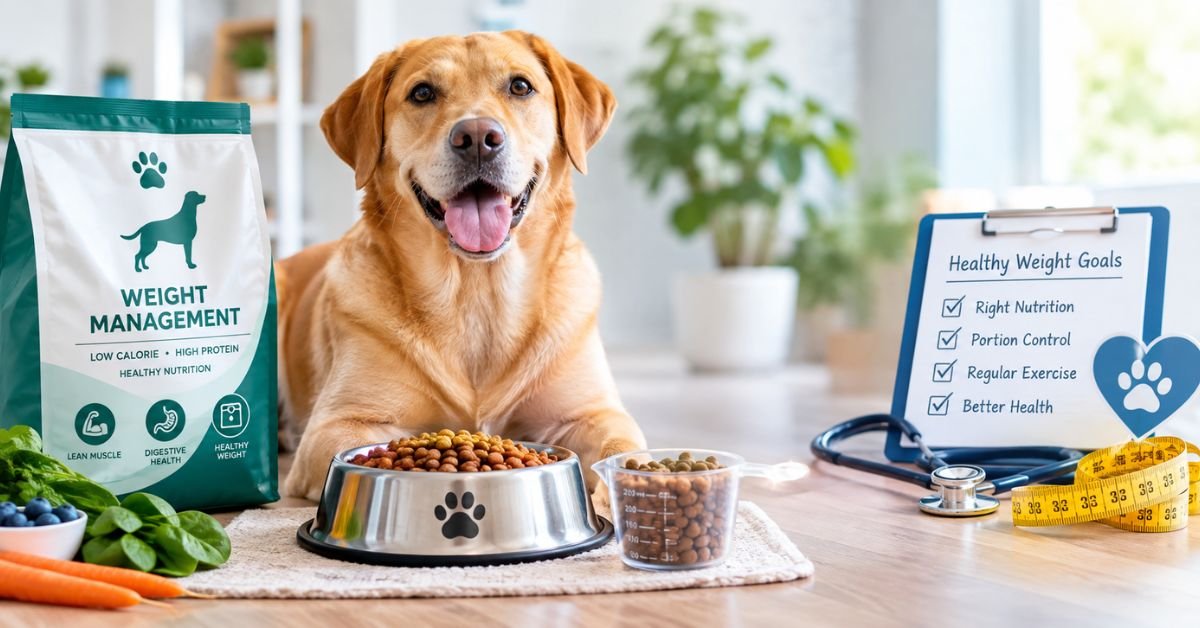
Helping an overweight dog lose weight is about much more than putting less food in the bowl. The right diet should reduce calories while still providing enough protein, vitamins, minerals, and other nutrients to protect lean muscle and support overall health Best Weight Loss Dog Foods .
The best weight loss dog foods are generally formulated to provide fewer calories per serving while maintaining nutritional adequacy. Many also contain higher levels of protein and fiber to help dogs feel satisfied during calorie restriction.
A dog’s ideal diet depends on age, breed, current body condition, activity level, medical history, and target weight. A food that works well for one overweight dog may not be appropriate for another, particularly if the dog has diabetes, kidney disease, pancreatitis, food allergies, arthritis, or another medical condition.
This guide explains what to look for in a weight-management dog food, which types may be appropriate, how much to feed, and how to help your dog lose weight safely.
Overview: What Makes a Good Weight Loss Dog Food?
A suitable weight-loss food should do more than simply contain fewer calories. When a dog eats less food during a weight-loss program, the diet needs to provide enough essential nutrients despite the reduced calorie intake.
Veterinary nutrition guidelines emphasize individualized calorie control, body-condition assessment, monitoring, and appropriate diet selection Best Weight Loss Dog Foods . Therapeutic weight-loss diets may be particularly useful when substantial calorie restriction is required because they are formulated to provide essential nutrients at a lower calorie density.
The main features to look for include:
- Controlled calorie density
- Adequate, high-quality protein
- Appropriate fiber levels
- Controlled fat
- Complete and balanced nutrition
- Appropriate vitamins and minerals
- Good palatability
- A feeding plan based on the dog’s target or ideal weight
Weight loss should also be monitored rather than assumed. A veterinarian can assess your dog’s body condition score and muscle condition and determine whether weight reduction is actually needed.
Why Dogs Gain Excess Weight
Weight gain usually occurs when a dog consistently consumes more energy than the body uses. However, the reasons behind that imbalance can vary considerably.
Excess Calories
Extra calories can come from regular meals, oversized portions, treats, table scraps, chews, dental products, and food used during training.
A small amount of extra food every day may seem insignificant, but those calories can accumulate over weeks and months.
Too Many Treats
Treats should be included in the dog’s overall calorie budget rather than treated as separate from meals.
Veterinary guidance commonly recommends keeping treats and other extras to no more than about 10% of daily calorie intake. The remaining calories should come from a nutritionally complete diet.
Reduced Activity
Dogs that receive less exercise may require fewer calories than they did when they were more active.
Weather, age, injury, arthritis, changes in household routine, and reduced mobility can all decrease daily energy expenditure.
Age and Lifestyle
Older dogs may have lower energy requirements, particularly when activity decreases and lean muscle mass changes.
Neutered dogs and dogs with sedentary lifestyles can also have lower calorie requirements than highly active dogs.
Medical Conditions
Some medical conditions and medications can contribute to weight gain or make weight management more difficult.
If a dog continues gaining weight despite carefully controlled portions, your veterinarian may consider underlying conditions such as endocrine disease or other health problems.
Signs Your Dog May Be Overweight
Body weight alone does not tell the entire story. Two dogs of the same breed and weight can have very different body compositions.
Common signs of excess body fat include:
- Ribs that are difficult to feel
- Little or no visible waist when viewed from above
- A rounded or sagging abdomen
- Excess fat around the chest, spine, or tail base
- Reduced stamina
- Reluctance to exercise
- Difficulty jumping or climbing stairs
- Increased panting during activity
Understanding Body Condition Score
Veterinarians commonly use a Body Condition Score (BCS) to evaluate body fat.
On a commonly used 9-point scale, a score around 4–5 is generally considered ideal. The ribs should be easy to feel without being heavily covered by fat, a waist should be visible from above, and the abdomen should have an appropriate tuck when viewed from the side. Best Weight Loss Dog Foods.
A BCS assessment is more useful than simply comparing your dog with another dog of the same breed.
What Are the Best Weight Loss Dog Foods?
There is no single food that is best for every overweight dog. Instead, several categories can be useful depending on the dog’s needs.
1. Veterinary Therapeutic Weight-Loss Diets
Veterinary therapeutic diets are specifically formulated for calorie-controlled feeding.
They often provide:
- Reduced calorie density
- Increased protein
- Increased fiber
- Controlled fat
- Concentrated vitamins and minerals
- Nutritional support during calorie restriction
These diets can be particularly useful when a dog needs significant calorie restriction or has additional health considerations.
Examples include veterinary weight-management formulas from brands such as Hill’s Prescription Diet, Royal Canin Veterinary, and Purina Pro Plan Veterinary Diets.
These products should be selected with your veterinarian when your dog has obesity combined with another medical condition.
2. Complete and Balanced Weight-Management Foods
Some adult dog foods are specifically marketed for weight management and are formulated to provide fewer calories than standard maintenance formulas.
For example, Hill’s Science Diet Adult Perfect Weight Chicken & Brown Rice Recipe provides a lower-calorie option with protein and fiber designed to support healthy weight management.
The manufacturer lists approximately 298 kcal per cup for the standard formula and reports that more than 70% of dogs in a cited study lost weight within 10 weeks when fed the nutrition.
3. High-Protein Weight-Management Foods
Protein is especially important during calorie restriction because preserving lean muscle is one of the goals of healthy weight loss.
Purina Pro Plan Weight Management Chicken & Rice Formula, for example, is formulated with a higher protein-to-fat ratio and contains approximately 364 kcal per cup according to the manufacturer’s current product information. Best Weight Loss Dog Foods
The specific calorie density matters because the feeding amount must be calculated from the food’s actual calorie content rather than from the number of cups alone.
4. High-Fiber Weight-Management Diets
Fiber can help increase dietary bulk and contribute to satiety.
This can be useful for dogs that constantly seem hungry while following a calorie-controlled feeding plan.
Royal Canin Canine Satiety Support Weight Management is an example of a veterinary-exclusive diet designed around weight management and hunger control. Its formulation uses a high level of dietary fiber to help dogs feel more satisfied between meals.
5. Wet Weight-Loss Foods
Some dogs prefer canned or wet food over dry kibble.
Wet food can be useful because its higher moisture content may provide a larger food volume for the same number of calories, depending on the specific formula.
However, calorie density still matters. A wet food should not automatically be considered a weight-loss food simply because it contains more water.
Weight Loss Dog Food Comparison
The following examples illustrate how different formulas can fit different weight-management situations. They are not a ranking, and product availability and formulas can vary by country.
| Dog Food / Diet Type | Approx. Calories | Main Weight-Management Features | Best Discussed For |
| Hill’s Science Diet Adult Perfect Weight Chicken & Brown Rice | 298 kcal/cup | Protein, fiber, L-carnitine | Adult dogs needing general weight management |
| Purina Pro Plan Weight Management Chicken & Rice | 364 kcal/cup | High protein, reduced fat, prebiotic fiber | Overweight or less-active adult dogs |
| Royal Canin Satiety Support Weight Management | Product-specific | High fiber and satiety-focused formulation | Dogs needing veterinary-guided appetite control |
| Veterinary therapeutic weight-loss diets | Product-specific | Reduced calories with concentrated nutrients | Dogs requiring significant calorie restriction |
🩺 Veterinary Advice
🩺 Veterinary Expert Advice & Disclaimer:
“Safe canine weight loss should reduce excess body fat while preserving lean muscle and essential nutrient intake. Before substantially reducing your dog’s food or changing to a therapeutic weight-loss diet, have your veterinarian determine an appropriate target weight, calorie intake, and monitoring schedule.”
— Medically Reviewed & Verified for Doggopulse
What Nutrients Should You Look For?
Protein
Protein helps support lean muscle while calories are restricted.
A good weight-management diet should provide sufficient protein rather than simply reducing the overall amount of food.
Maintaining muscle is particularly important because the goal is to reduce excess fat while preserving healthy lean tissue.
Fiber
Fiber can increase food volume and help some dogs feel fuller after eating.
However, more fiber is not automatically better. Excessive fiber can affect stool quality or nutrient digestibility in some dogs.
The appropriate amount depends on the overall formulation.
Fat
Fat contains more calories per gram than protein or carbohydrate, so controlling dietary fat can help reduce calorie density.
However, dogs still require essential fatty acids. A low-fat diet should therefore be nutritionally balanced rather than created simply by removing fatty ingredients.
Vitamins and Minerals
One of the biggest reasons not to simply feed much less of a regular maintenance diet is that calorie restriction also reduces the amount of vitamins, minerals, protein, and other nutrients consumed.
Purpose-formulated weight-management foods are designed to help address this issue.
Feeding Guidelines for Dog Weight Loss
Choosing a suitable food is only part of the process. Portion control is equally important.
1. Determine the Target Weight
Your dog’s current weight is not necessarily the weight that should be used to determine the final feeding plan.
Your veterinarian can estimate an appropriate target weight based on body condition, breed, size, muscle mass, age, and health status.
2. Calculate Daily Calories
Weight-loss calories should be individualized.
Veterinary guidelines provide formulas for estimating energy requirements, but these calculations are starting points rather than guarantees.
Dogs of the same weight can have substantially different calorie requirements.
Your dog’s weight and body condition should therefore be monitored and the calorie plan adjusted when necessary.
3. Measure Food Accurately
A kitchen gram scale is often more accurate than measuring food by volume.
A small difference in daily portions can become significant over time, particularly for small dogs.
If the feeding plan calls for a specific number of grams per day, weigh that amount rather than estimating it by eye.
4. Divide Food Into Multiple Meals
Instead of giving the entire daily ration at once, consider dividing it into two or more meals.
Multiple meals can make the feeding schedule easier to manage and may help some dogs cope with reduced portions.
5. Count Treat Calories
Treats count.
Dental chews, training treats, table scraps, toppers, peanut butter, and other extras can contribute substantial calories.
A simple approach is to reserve part of the dog’s daily calorie allowance for treats rather than adding treats on top of the planned food.
6. Avoid Free-Feeding
Leaving food available all day makes calorie control difficult for dogs that readily overeat.
Scheduled meals allow you to measure exactly how much your dog consumes.
7. Transition to New Food Gradually
When changing foods, transition gradually over approximately a week unless your veterinarian recommends another approach.
A gradual transition can reduce the likelihood of digestive upset.
How Fast Should a Dog Lose Weight?
Rapid weight loss is not the goal.
A commonly cited veterinary target is approximately 1% of body weight per week, although an individual dog’s safe rate may differ.
For example, a 30-pound dog losing around 1% of body weight would lose approximately 0.3 pounds per week.
This does not mean every dog should lose exactly 1% every week. Some dogs may lose more slowly, and the plan may need adjustment depending on health, appetite, activity, and body-condition changes.
Regular monitoring is essential.
If your dog is losing weight much faster than expected, seems weak, refuses food, develops vomiting or diarrhea, or shows other concerning symptoms, contact your veterinarian.
Exercise and Weight Loss
Diet generally provides the foundation of a weight-loss program, but appropriate physical activity can help.
Good options may include:
- Controlled walks
- Gentle play
- Swimming
- Food puzzles
- Short training sessions
- Low-impact activities
- Veterinary rehabilitation
The correct activity level depends on the dog’s age, joints, fitness, and medical conditions.
An obese dog with arthritis, breathing difficulties, heart disease, or another health problem may need a carefully designed exercise plan rather than a sudden increase in activity. Best Weight Loss Dog Foods
Common Mistakes When Choosing Weight Loss Dog Food
Mistake 1: Simply Feeding Much Less of Regular Food
This can reduce calorie intake, but it may also reduce the amount of essential nutrients your dog receives.
A purpose-formulated weight-management diet may be more appropriate when significant calorie restriction is required.
Mistake 2: Choosing Food Based Only on the Label
Words such as “light,” “healthy weight,” or “weight control” do not replace looking at calories, nutritional adequacy, and the individual dog’s requirements.
Compare the actual calorie density and feeding recommendations.
Mistake 3: Ignoring Treats
A dog can gain weight even when the main food portion appears appropriate if treats and extras provide a large number of additional calories.
Mistake 4: Guessing Portions
Eye-balling food is surprisingly inaccurate.
Using a gram scale provides much better control.
Mistake 5: Expecting Exercise Alone to Fix Obesity
Increasing activity is useful, but excessive calories can easily offset the calories burned during exercise.
A coordinated nutrition and activity plan is usually more practical.
Mistake 6: Changing Diets Too Frequently
Switching from one weight-loss food to another every few days makes it difficult to determine what is working.
Give a veterinary-approved plan enough time to evaluate the dog’s response unless problems occur.
Foods and Extras to Limit During Weight Loss
Common calorie-dense extras include:
- Fatty table scraps
- Cheese
- Bacon
- Sausage
- Large amounts of peanut butter
- High-calorie commercial treats
- Frequent dental chews
- Human desserts
- Fatty leftovers
- Unmeasured food toppers
Some fruits and vegetables can be used as lower-calorie rewards for certain dogs, but even these should be included within the overall feeding plan.
Dogs with medical conditions or food allergies may need additional restrictions.
When Should You Talk to a Veterinarian?
A veterinary examination is especially important if:
- Your dog is significantly overweight
- Weight gain happened suddenly
- Your dog gains weight despite controlled portions
- Your dog has diabetes
- Your dog has pancreatitis
- Your dog has kidney or liver disease
- Your dog has arthritis or mobility problems
- Your dog takes medications that may affect appetite or weight
- Your dog is a puppy
- Your dog is pregnant or nursing
- Your dog refuses the new diet
- Your dog loses weight unexpectedly
A veterinarian can determine whether obesity is the primary problem or whether another medical condition needs attention.
Frequently Asked Questions
1. What is the best weight loss dog food?
The best weight-loss food depends on the individual dog. In general, look for a complete and balanced diet with appropriate calorie density, adequate protein, controlled fat, and suitable fiber. Veterinary therapeutic diets can be particularly useful when substantial calorie restriction is required or when the dog has additional medical needs.
2. Is low-fat dog food good for weight loss?
Lower-fat foods can help reduce calorie density because fat contains more calories per gram than protein or carbohydrate. However, the lowest-fat food is not automatically the best choice. Dogs still require essential fatty acids, and the complete nutritional profile should be considered.
3. Can I feed my overweight dog less of its normal food?
Sometimes calorie reduction is part of a weight-loss plan, but substantially restricting a regular maintenance diet can also reduce essential nutrient intake. Veterinary-formulated weight-management foods are designed to provide appropriate nutrients at lower calorie intake and may be preferable when significant restriction is necessary.
4. How long does it take for a dog to lose weight?
Healthy weight loss takes time. A commonly used veterinary target is around 1% of body weight per week, but the appropriate rate varies between dogs. Regular weighing and body-condition assessments allow the feeding plan to be adjusted safely.
Final Takeaway
The best weight loss dog foods are not simply the foods with the fewest calories or the smallest ingredient list. A successful diet should provide controlled calories while maintaining adequate protein, essential nutrients, and appropriate dietary fiber.
For many overweight adult dogs, a purpose-formulated weight-management food can make portion control easier while helping preserve lean muscle and improve satiety. Dogs with medical conditions may need a specialized therapeutic diet selected with veterinary guidance.
Most importantly, weight loss should be treated as a monitored health program rather than a short-term diet. Measure portions accurately, count treats, encourage appropriate activity, monitor progress, and adjust calories when your dog’s response indicates that a change is needed.
📚 Scientific References & Sources
📚 Scientific References & Sources
- American Animal Hospital Association (AAHA) – Weight Reduction in the Obese Pet
- American Animal Hospital Association (AAHA) – Use of Therapeutic Diets Designed to Promote Weight Loss
- Merck Veterinary Manual – Nutrition in Disease Management in Small Animals
- World Small Animal Veterinary Association (WSAVA) – Global Nutrition Guidelines
- VCA Animal Hospitals – Creating a Weight Reduction Plan for Dogs
- American Animal Hospital Association (AAHA) – Dog Weight Loss Tips: How to Help Your Dog Slim Down Safely

Muhammad Ahad — Passionate writer sharing informative, engaging, and easy-to-read articles across different topics. Focused on delivering valuable content that helps readers learn, explore, and stay inspired every day.
1 thought on “Best Weight Loss Dog Foods: Vet-Backed Guide to Safe and Healthy Weight Loss”