

Introduction
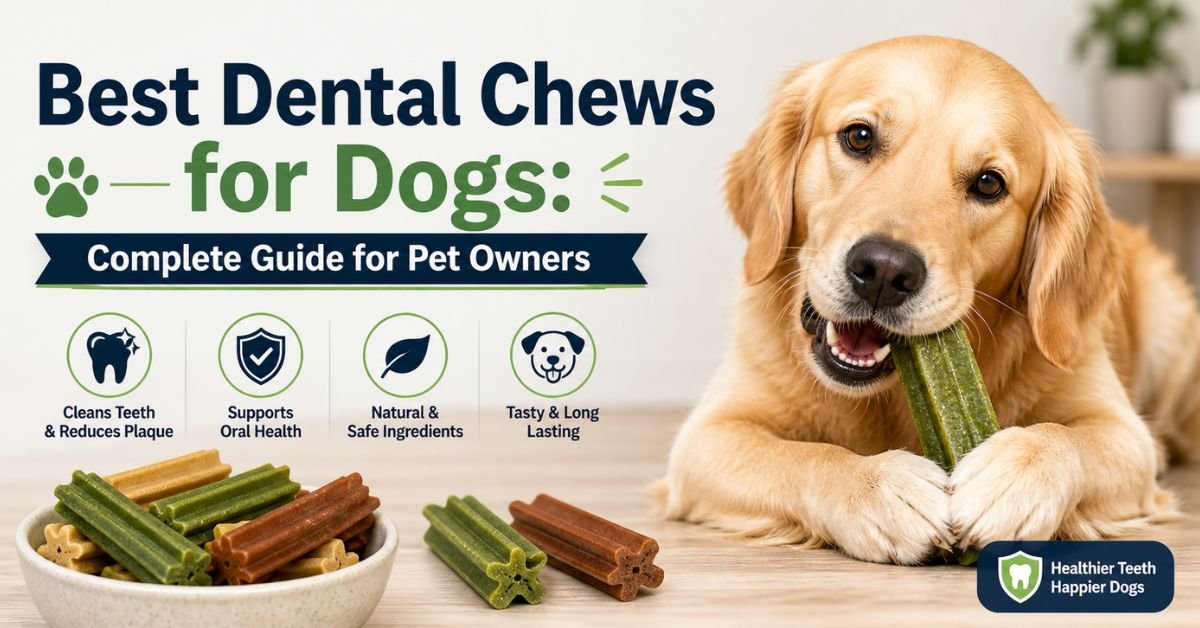
Keeping your dog’s teeth clean is just as important as feeding them a healthy diet. However, brushing a dog’s teeth daily is not always easy. That’s where the best dental chews for dogs come in.
These chews are designed to reduce plaque, fight tartar buildup, and freshen your dog’s breath—all while giving them something tasty to enjoy.
In this guide, you’ll learn how dental chews work, what to look for, and which options are best for your furry friend. Whether you’re a new dog owner or experienced, this guide will help you make the right choice.
Why Dental Health Matters for Dogs
Many dog owners overlook dental care, but it plays a major role in overall health. Poor oral hygiene can lead to serious issues.
Common Dental Problems in Dogs
- Bad breath
- Plaque and tartar buildup
- Gum disease
- Tooth loss
- Pain while eating
Over time, bacteria from the mouth can even affect the heart, liver, and kidneys. That’s why using dog dental treats regularly is a smart preventive step.
How Dental Chews Help
Dental chews are not just treats—they serve a purpose.
Benefits of Dental Chews
- Reduce plaque and tartar
- Massage gums and improve circulation
- Freshen breath
- Keep dogs mentally engaged
- Support overall oral health
Most dog teeth cleaning chews use a combination of texture and ingredients to clean teeth while your dog chews.
What to Look for in the Best Dental Chews for Dogs
Not all dental chews are created equal. Here’s what you should consider before buying.
1. Size and Texture
Choose a chew that matches your dog’s size. A chew that’s too small can be swallowed quickly, while one that’s too large may be difficult to chew.
2. Ingredients
Look for natural, safe ingredients. Avoid artificial colors, flavors, and preservatives.
3. VOHC Approval
Products approved by the Veterinary Oral Health Council (VOHC) are proven to reduce plaque and tartar.
4. Digestibility
High-quality chews should be easy to digest and safe for daily use.
5. Special Needs
Some dogs need grain-free or allergy-friendly options. Always check labels.
Types of Dental Chews for Dogs
Understanding the different types helps you choose the right one.
1. Edible Dental Treats
These are the most common. Dogs chew and consume them completely.
2. Rawhide Alternatives
Safer alternatives made from vegetables or synthetic materials.
3. Natural Chews
Includes items like bully sticks or dried tendons.
4. Rubber Dental Toys
Not edible, but great for long-lasting chewing and gum stimulation.
Best Dental Chews for Dogs (Comparison Table)
| Type | Best For | Key Benefit | Frequency |
| Edible Chews | Daily use | Reduces plaque | Daily |
| Natural Chews | Strong chewers | Long-lasting | 2–3 times/week |
| Rubber Toys | Aggressive chewers | Gum massage | Daily play |
| Rawhide Alternatives | Sensitive digestion | Easy to digest | 2–4 times/week |
How Often Should You Give Dental Chews?
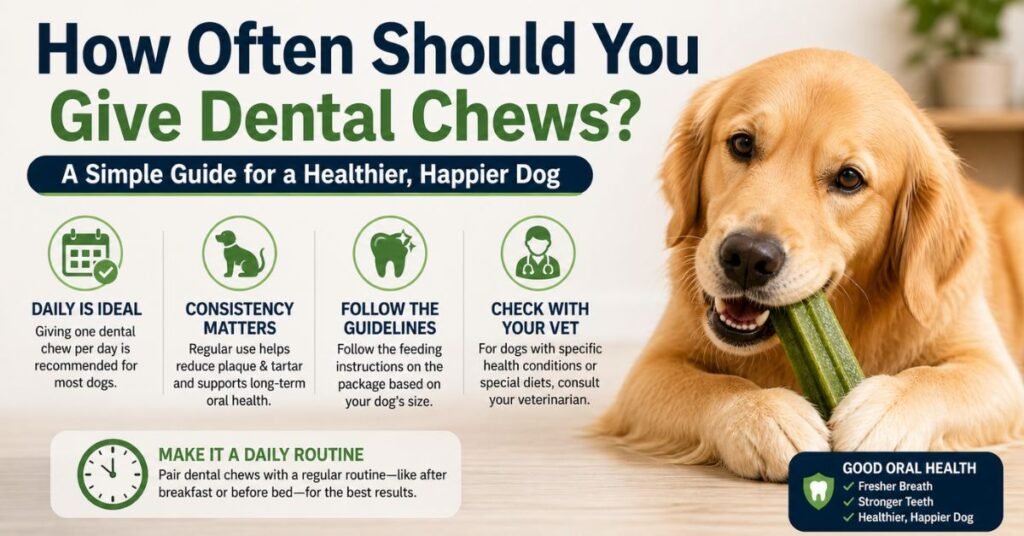
Consistency is key. Most plaque removal chews for dogs are designed for daily use.
However, always follow the feeding guidelines on the package.
General Guidelines
- Small dogs: 1 chew per day
- Medium dogs: 1 chew per day
- Large dogs: 1–2 chews depending on size
Also, always provide fresh water when giving chews.
Tips for Using Dental Chews Safely
While dental chews are helpful, safety should always come first.
Safety Tips
- Supervise your dog while chewing
- Choose the correct size
- Avoid very hard chews that can damage teeth
- Check for allergies or sensitivities
- Store chews in a cool, dry place
Using tartar control dog treats correctly ensures maximum benefit with minimal risk.
Signs Your Dog Needs Better Dental Care
Sometimes, your dog may already have dental issues. Watch for these signs:
- Persistent bad breath
- Yellow or brown teeth
- Red or bleeding gums
- Difficulty chewing
- Drooling more than usual
If you notice any of these, consult a vet. Dental chews can help, but they are not a replacement for professional care.
Dental Chews vs Brushing: Which is Better?
This is a common question among dog owners.
Brushing
- Most effective method
- Removes plaque directly
- Requires training and patience
Dental Chews
- Easy and convenient
- Great for daily maintenance
- Not as thorough as brushing
Best Approach
Use both together. Combine brushing with oral care chews for dogs for the best results.
Are Dental Chews Suitable for All Dogs?
Not always. Some dogs may need special care.
Avoid Dental Chews If:
- Your dog has severe dental disease
- They have sensitive stomach issues
- They are puppies under 6 months (unless specified)
Always consult your vet if unsure.
Conclusion
Choosing the best dental chews for dogs can make a big difference in your dog’s health and happiness. These chews are an easy and effective way to support oral hygiene, reduce bad breath, and prevent serious dental problems.
However, they work best when combined with regular brushing and veterinary care. Always choose high-quality products, follow feeding guidelines, and monitor your dog while chewing.
A small daily habit today can save your dog from painful dental issues in the future.
Yes, high-quality dental chews can reduce plaque and tartar when used regularly.
Most dog breath freshening chews are safe for daily use, but always check the label.
No, brushing is more effective. However, chews are a great supplement.
After meals is ideal, as it helps clean leftover food particles.
Only if the product is specifically made for puppies. Otherwise, wait until they are older.

Muhammad Ahad — Passionate writer sharing informative, engaging, and easy-to-read articles across different topics. Focused on delivering valuable content that helps readers learn, explore, and stay inspired every day.
1 thought on “Best Dental Chews for Dogs: Complete Guide for Pet Owners”