

Introduction
Dogs are naturally active. They run, jump, dig, explore, and sometimes get into trouble. Small cuts, scrapes, or minor wounds are common — especially if your dog spends time outdoors.
As a responsible owner, knowing wound care for dogs at home can make a big difference. Quick and proper care prevents infection, reduces pain, and speeds up healing.
However, not every wound should be treated at home. Some injuries need immediate veterinary attention. In this guide, I’ll walk you through:
- When home treatment is safe
- Step-by-step dog wound cleaning
- What products to use (and avoid)
- Signs of infection
- When to call the vet
Let’s help your dog heal safely and comfortably. 🐾
When Is It Safe to Treat a Dog’s Wound at Home?
Before starting any dog wound treatment at home, you must assess the injury.
Minor Wounds You Can Treat at Home
You can usually manage:
- Small surface cuts
- Minor scrapes
- Shallow punctures
- Torn nails (minor bleeding only)
- Light abrasions
If the bleeding stops within 5–10 minutes and the wound is small, home care is often enough.
Wounds That Require a Vet Immediately
Do NOT attempt home treatment if you notice:
- Deep or gaping wounds
- Heavy bleeding that doesn’t stop
- Bite wounds from another animal
- Swelling with pus
- Foul smell
- Visible muscle or bone
- Signs of severe pain
- Your dog acting lethargic or weak
These injuries need professional medical attention. Delaying care can cause serious infection.
When in doubt — call your vet. It’s always better to be safe.
Step-by-Step Wound Care for Dogs at Home
Now let’s go through the proper dog wound cleaning steps.
Step 1: Stay Calm and Restrain Your Dog
Dogs may bite when in pain — even the sweetest ones.
- Speak softly
- Use a muzzle if necessary
- Ask someone to help hold your dog
- Avoid sudden movements
Safety first — for both of you.
Step 2: Stop the Bleeding
If there is bleeding:
- Use clean gauze or cloth
- Apply gentle, steady pressure
- Hold for 5–10 minutes
Do not keep checking repeatedly. Constant checking restarts bleeding.
If bleeding continues after 10 minutes, seek veterinary help.
Step 3: Trim Fur Around the Wound
Carefully trim the hair around the injury using blunt scissors or clippers.
This helps:
- See the wound clearly
- Prevent contamination
- Improve healing
Be gentle to avoid further injury.
Step 4: Clean the Wound Properly
Cleaning is the most important part of wound care for dogs at home.
Use:
- Lukewarm water
- Sterile saline solution
- Diluted povidone-iodine (tea-color dilution)
- Diluted chlorhexidine
Avoid:
- Hydrogen peroxide (damages healthy tissue)
- Alcohol (painful and delays healing)
- Strong antiseptics
Flush the wound thoroughly to remove dirt and debris.
Step 5: Disinfect Gently
After cleaning, lightly apply diluted antiseptic.
Do NOT pour full-strength antiseptic directly on the wound.
Less is more.
Step 6: Apply Dog-Safe Antibiotic Ointment
Use a pet-safe antibiotic ointment recommended by your vet.
Apply a thin layer only.
Avoid human creams that contain:
- Zinc oxide
- Lidocaine (unless prescribed)
- Steroids (unless directed)
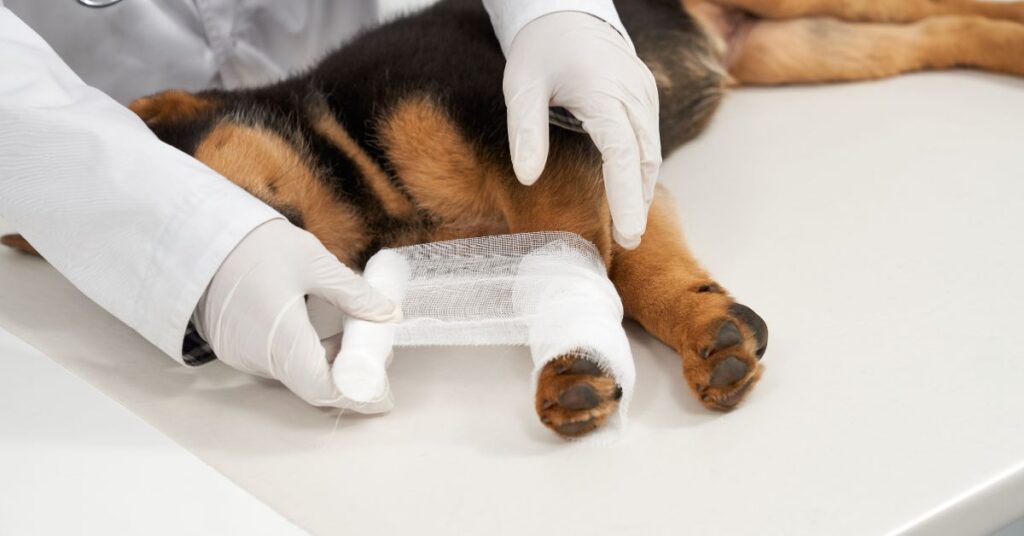
Step 7: Bandage (If Necessary)
Not all wounds need bandaging.
Bandage only if:
- The wound is in a dirty area
- Your dog keeps licking it
- The injury is on a paw
Use:
- Non-stick gauze
- Light wrap
- Not too tight
Check circulation. Toes should not swell or feel cold.
Preventing Your Dog from Licking the Wound
Licking may seem natural, but it delays healing and causes infection.
Options to Prevent Licking:
- Elizabethan collar (E-collar)
- Inflatable recovery collar
- Protective dog shirt
- Bandaging
Monitor your dog closely during recovery.
Signs of Infection You Must Watch For
Even minor wounds can become infected.
Call your vet if you notice:
- Redness spreading
- Swelling
- Warmth around the wound
- Pus or discharge
- Bad smell
- Increased pain
- Fever
- Loss of appetite
Infections can spread quickly in dogs.
Early treatment prevents serious complications.
Special Care for Different Types of Dog Wounds
Paw Pad Injuries
Paws heal slowly due to constant use.
- Keep clean and dry
- Change bandage daily
- Limit walking
- Avoid rough surfaces
Hot Spots (Moist Dermatitis)
Hot spots are painful, inflamed skin patches.
- Clip hair around area
- Clean gently
- Keep dry
- Prevent scratching
These often need vet medication if severe.
Bite Wounds
Even small punctures from bites can cause deep infection.
Always consult a vet for bite injuries.
Surface cleaning is not enough.
Do’s and Don’ts of Dog Wound Care
✅ Do’s
- Clean wounds immediately
- Monitor twice daily
- Keep area dry
- Use dog-safe products
- Consult a vet if unsure
❌ Don’ts
- Don’t use hydrogen peroxide repeatedly
- Don’t apply essential oils
- Don’t let your dog lick constantly
- Don’t wrap bandages too tight
- Don’t ignore swelling or pus
Avoid home remedies found randomly online. Stick to vet-approved care.
Creating a Dog First Aid Kit for Home
The first aid kit of every dog owner should contain the following items.
Include:
- Sterile gauze
- Non-stick pads
- Saline solution
- Diluted antiseptic solution
- Digital thermometer
- Blunt scissors
- Vet-approved antibiotic ointment
- Elastic wrap
- E-collar
Being prepared saves time during emergencies.
How Long Does a Dog Wound Take to Heal?
Healing time depends on:
- Size of wound
- Location
- Dog’s age
- Overall health
- Infection risk
General Timeline:
- Minor cuts: 7–10 days
- Deeper wounds: 2–3 weeks
- Paw injuries: Often longer
If there’s no improvement within 3 days, consult your vet.
When to Absolutely See a Vet
Seek professional care if:
- The wound is deep
- Bleeding won’t stop
- There’s severe swelling
- Your dog is in visible pain
- You suspect internal injury
- The wound was caused by another animal
Home care is for minor injuries only.
Professional guidance protects your dog’s health.
Final Thoughts: Responsible Wound Care Saves Lives
Knowing proper wound care for dogs at home gives you confidence as a dog owner.
Minor injuries happen — but how you respond matters.
Clean promptly. Monitor carefully. Use safe products. And never hesitate to contact your vet when something seems wrong.
Your dog trusts you to protect them.
Stay prepared. Stay informed. And always choose safe, responsible care.
No. It damages healthy tissue and slows healing. Use saline or diluted antiseptic instead.
Small wounds can stay open. Cover only if the area gets dirty or your dog keeps licking.
Clean once or twice daily. Over-cleaning can irritate tissue.
Diluted povidone-iodine or chlorhexidine is safest for most minor wounds.
Very minor cuts can heal naturally, but cleaning reduces infection risk and speeds recovery.
If it’s deep, bleeding heavily, swollen, painful, or producing pus — see a vet immediately.

Muhammad Ahad — SEO Specialist helping websites grow with smart, clean, and result-driven strategies. I improve search rankings, boost organic traffic, and turn content into real authority. I believe true SEO is built on data, trust, and consistency.
1 thought on “Wound Care for Dogs at Home: Complete Guide for Owners”