


Introduction
If your dog has ever had surgery, skin issues, or an injury, you’ve probably seen them struggle with a traditional plastic cone. Those hard cones can feel uncomfortable, stressful, and even restrict your dog’s movement.
That’s where a soft cone for dogs comes in.
A soft cone is designed to protect your dog while keeping them comfortable. It prevents licking, biting, or scratching wounds but without the stiffness and discomfort of the classic “cone of shame.”
In this guide, you’ll learn everything you need to know about soft dog cones, including their benefits, types, how to choose the right one, and tips for helping your dog recover faster.
What Is a Soft Cone for Dogs?
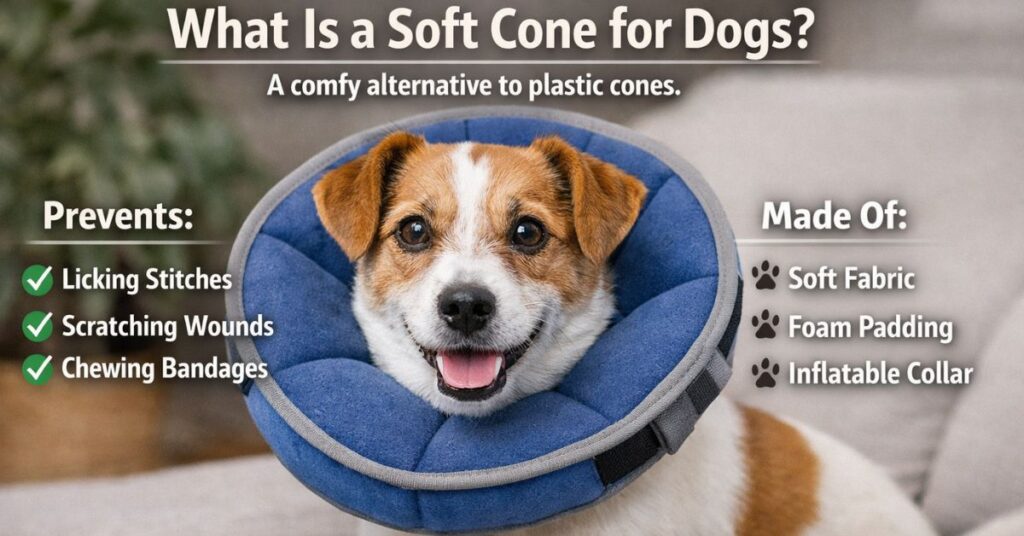
A soft cone for dogs is a flexible and comfortable alternative to the traditional plastic Elizabethan collar. It’s designed to stop your dog from reaching sensitive areas while allowing better movement and visibility.
How It Works
Soft cones create a barrier around your dog’s neck, preventing access to:
- Surgical stitches
- Wounds or injuries
- Skin infections or hot spots
- Bandages
Unlike hard cones, they are made from soft materials like:
- Foam
- Fabric
- Inflatable padding
Why Dogs Need a Cone
Dogs naturally lick wounds, but this can slow healing or cause infections. A cone helps:
- Prevent infection
- Protect stitches
- Avoid reopening wounds
- Speed up recovery
Veterinarians often recommend using a cone after procedures like spaying, neutering, or treating skin conditions.
Benefits of Using a Soft Cone for Dogs
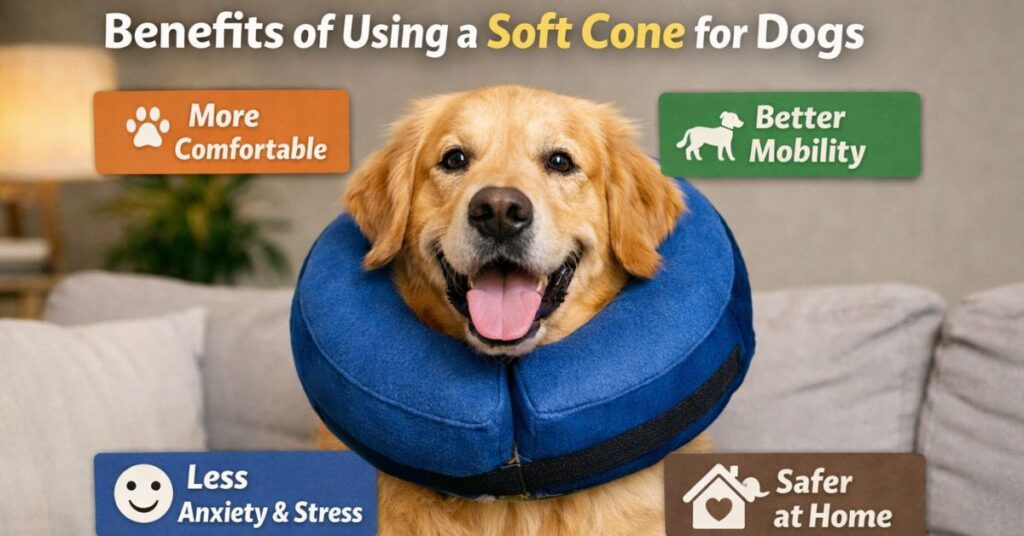
Soft cones are becoming popular and for good reason. They offer comfort without compromising safety.
1. More Comfortable for Dogs
Soft cones are lightweight and gentle on your dog’s neck. This reduces stress and helps them relax during recovery.
2. Better Mobility
Your dog can:
- Walk easily
- Eat and drink comfortably
- Sleep without struggle
This makes daily life much easier compared to rigid cones.
3. Less Anxiety and Stress
Hard cones can make dogs feel trapped. Soft cones feel more natural, helping your dog stay calm.
4. Safer Around Furniture
Soft materials prevent damage to:
- Walls
- Furniture
- Your legs (no more painful bumps!)
5. Improved Sleep Quality
Dogs can rest more comfortably, which is essential for healing.
Types of Soft Dog Cones
Not all soft cones are the same. Choosing the right type depends on your dog’s needs.
1. Inflatable Dog Collars
These look like neck pillows and are very popular.
Features:
- Lightweight and soft
- Easy to inflate
- Comfortable for sleeping
Best For:
- Upper body wounds
- Calm dogs
2. Fabric Soft Cones
These are shaped like traditional cones but made with soft materials.
Features:
- Flexible structure
- Washable fabric
- Adjustable fit
Best For:
- Dogs needing full coverage
- Active dogs
3. Foam Padded Cones
These provide a mix of structure and comfort.
Features:
- Strong yet soft
- Durable
- Holds shape better
Best For:
- Dogs who try to remove cones
- Longer recovery periods
How to Choose the Right Soft Cone for Your Dog
Picking the right cone is very important for your dog’s recovery.
1. Measure Your Dog Properly
Check:
- Neck size
- Length from neck to nose
Dogs should have a cone that extends just a little past their noses.
2. Consider Your Dog’s Behavior
- Calm dogs: Inflatable collars work well
- Active dogs: Choose fabric or foam cones
3. Check Material Quality
Look for:
- Breathable fabric
- Durable stitching
- Easy cleaning options
4. Ensure Proper Fit
A good fit should be:
- Snug but not tight
- Comfortable for breathing
- Not easy to slip off
5. Vet Recommendation
Always consult your vet, especially after surgery. Some injuries need full protection that only certain cones provide.
How to Use a Soft Cone Safely
Even the best cone won’t help if used incorrectly.
Do’s
- ✔ Ensure proper size and fit
- ✔ Check your dog regularly
- ✔ Clean the cone often
- ✔ Monitor wound healing
- ✔ Remove only when safe
Don’ts
- ✘ Don’t use a loose cone
- ✘ Don’t remove it too early
- ✘ Don’t ignore signs of discomfort
- ✘ Don’t let your dog chew the cone
Common Mistakes Dog Owners Make
Avoid these common errors:
1. Choosing the Wrong Size
Wounds won’t be protected by cones that are too small.
2. Removing It Too Soon
Even if the wound looks healed, it may not be fully recovered.
3. Not Monitoring Your Dog
Some dogs find ways around the cone. Always keep an eye on them.
4. Ignoring Signs of Stress
Watch for:
- Excessive whining
- Refusal to eat
- Aggressive behavior
If you notice these, adjust the cone or consult your vet.
Soft Cone vs Hard Cone: Which Is Better?
Both options have their place.
| Feature | Soft Cone | Hard Cone |
| Comfort | High | Low |
| Protection | Moderate | High |
| Mobility | Easy | Restricted |
| Stress Level | Low | High |
When to Use a Soft Cone
- Minor injuries
- Skin conditions
- Calm dogs
When to Use a Hard Cone
- Serious surgeries
- Aggressive licking
- High-risk wounds
Tips to Help Your Dog Adjust to a Soft Cone
Some dogs adapt quickly, while others need time.
1. Introduce Gradually
Let your dog wear it for short periods first.
2. Use Positive Reinforcement
Reward your dog with treats and praise.
3. Keep Them Busy
Use toys or gentle activities to distract them.
4. Maintain Routine
Stick to regular feeding and walking times.
5. Create a Comfortable Space
Make sure your dog has a cozy resting area.
When to See a Veterinarian
A soft cone is helpful, but it’s not a replacement for professional care.
Contact your vet if you notice:
- Swelling or redness
- Bad odor from wound
- Bleeding
- Fever or low energy
- Cone not preventing access
Conclusion
A soft cone for dogs is a smart and compassionate choice for many pet owners. It offers comfort, flexibility, and a less stressful recovery experience compared to traditional cones.
However, choosing the right type and size is key. Always consider your dog’s behavior, the type of injury, and your vet’s recommendations.
At the end of the day, your goal is simple: help your dog heal safely and comfortably.
With the right care, attention, and tools, your furry friend will be back to their happy, healthy self in no time.
Yes, soft cones are safe when properly fitted. They are designed to protect wounds while keeping your dog comfortable.
Yes, most dogs can sleep comfortably with a soft cone, especially inflatable or padded types.
Typically 7–14 days, depending on the injury. Always follow your vet’s advice.
Yes, soft cones allow easier access to food and water compared to hard cones.
You may need a tighter fit or switch to a more secure option. In some cases, a hard cone may be necessary.

Muhammad Ahad — SEO Specialist helping websites grow with smart, clean, and result-driven strategies. I improve search rankings, boost organic traffic, and turn content into real authority. I believe true SEO is built on data, trust, and consistency.
1 thought on “Soft Cone for Dogs: Complete Comfort & Healing Guide”