

Introduction
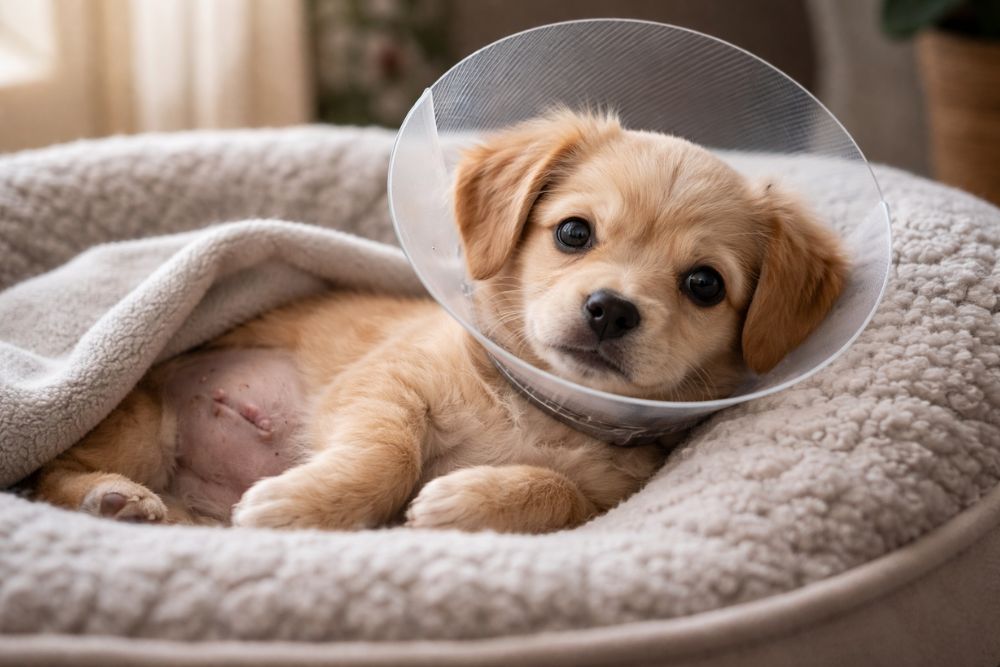
Bringing your puppy home after surgery can feel emotional and a little stressful. You want to make sure everything goes perfectly, but you may not know what to expect. The good news is that puppy spayed recovery is usually smooth and quick when proper care is provided.
Spaying is one of the most common procedures performed by veterinarians.In addition to preventing unwanted pregnancies, it may also reduce the risk of certain long-term health issues. However, your puppy will still need your support during the recovery period.
In this detailed guide, you will learn everything about recovery timelines, feeding, activity restrictions, wound care, and expert tips to ensure your puppy heals safely and comfortably.
What Is Puppy Spayed Recovery?
Puppy spayed recovery is the healing phase after a female puppy undergoes spay surgery, also known as an ovariohysterectomy. During this procedure, the veterinarian removes the ovaries and uterus.
Although the surgery is routine, your puppy’s body still needs time to:
- Recover from anesthesia
- Heal internal and external tissues
- Regain normal strength and energy
Most puppies recover within 10 to 14 days, but each dog is different. Younger puppies often heal faster than older dogs.
Puppy Spayed Recovery Timeline (Detailed)
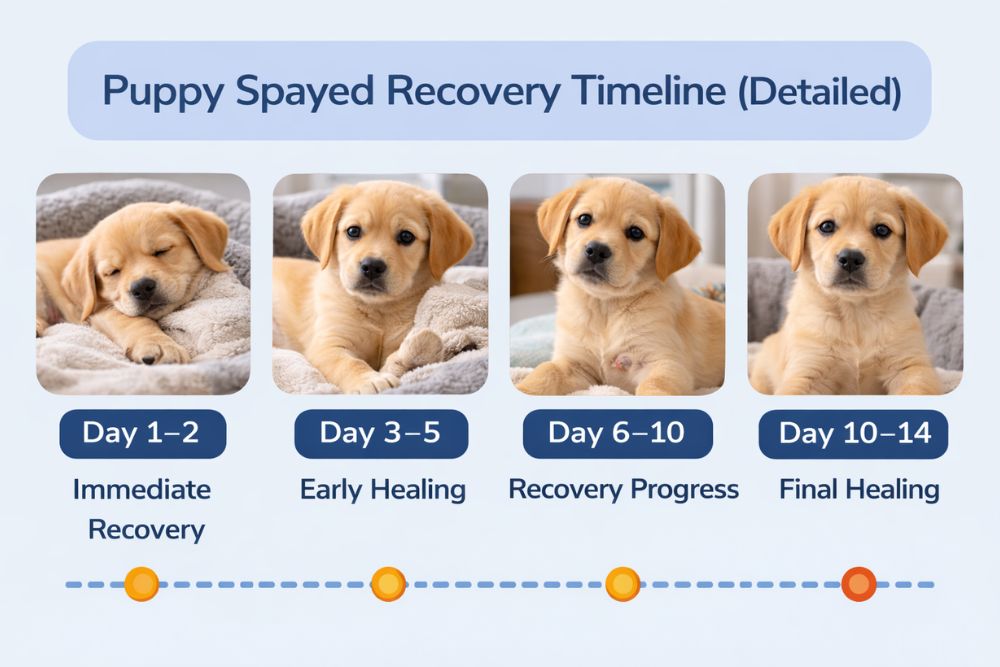
Understanding the recovery timeline helps you stay prepared and reduces anxiety.
Day 1–2: Immediate Recovery Phase
The first 48 hours are the most sensitive.
What to expect:
- Sleepiness or grogginess due to anesthesia
- Reduced appetite
- Slight swelling around incision
- Low energy levels
Care tips:
- Keep your puppy warm and comfortable
- Offer small amounts of food and water
- Avoid unnecessary movement
Day 3–5: Early Healing Stage
Your puppy may start acting more like herself.
Changes you’ll notice:
- Improved appetite
- More alert behavior
- Mild curiosity or movement
Important:
Even if your puppy seems active, do not allow running or jumping.
Day 6–10: Recovery Progress
Healing becomes more visible during this stage.
Signs of improvement:
- Reduced swelling
- Incision starting to close
- Increased energy
Continue:
- Restrict physical activity
- Monitor incision daily
Day 10–14: Final Healing Phase
Most puppies are almost fully recovered.
At this point:
- Stitches may dissolve or be removed
- Puppy returns to normal routine
- Energy levels fully restored
Always confirm with your vet before resuming normal activities.
Setting Up a Comfortable Recovery Space
Creating a proper recovery environment plays a huge role in spayed puppy recovery.
Ideal setup includes:
- A quiet and calm room
- Soft, clean bedding
- Comfortable temperature
- Limited movement space
Extra tips:
- Keep other pets away temporarily
- Avoid loud noises or excitement
- Use a crate if necessary (for safety)
A peaceful environment helps reduce stress and speeds up healing.
Feeding Your Puppy After Spay Surgery
Nutrition is important during recovery, but your puppy’s appetite may temporarily decrease.
Feeding guidelines:
- Start with small portions
- Offer easily digestible food
- Provide fresh, clean water at all times
Foods to avoid:
- Fatty or heavy meals
- Sudden diet changes
- Human food
If your puppy does not eat for more than 24 hours, consult your vet.
Activity Restrictions (Critical for Healing)
This is one of the most important parts of puppy after spay surgery care.
Even if your puppy feels energetic, her body is still healing internally.
Avoid:
- Running
- Jumping on furniture
- Playing with other dogs
- Climbing stairs
Safe activities:
- Short leash walks (only if vet allows)
- Calm indoor time
- Gentle petting
Too much movement can reopen stitches and cause complications.
How to Care for the Surgical Incision
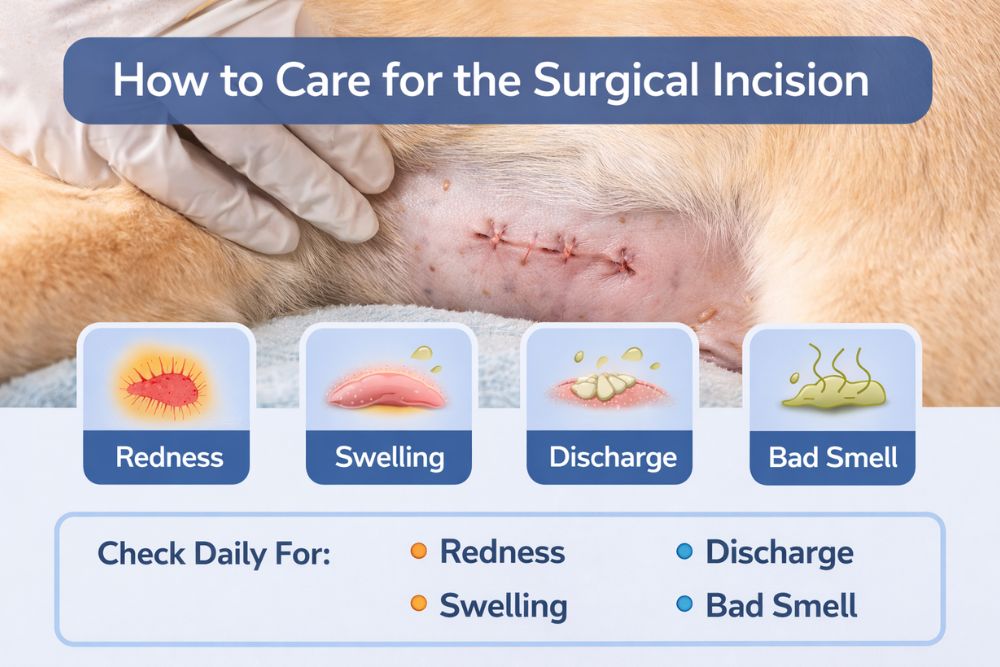
Proper wound care ensures a smooth dog spay healing process.
Check daily for:
- Redness
- Swelling
- Discharge
- Bad odor
Keep the area safe:
- Do not bathe your puppy
- Avoid touching the incision
- Keep it dry and clean
Importance of E-Collar (Cone)
Many puppies try to lick or chew their incision, which can lead to infection.
Why the cone is necessary:
- Prevents licking and biting
- Protects stitches
- Reduces infection risk
Even if your puppy dislikes it, the cone is essential for proper healing
Medications and Vet Instructions
Your vet may prescribe medications to support recovery.
These may include:
- Pain relievers
- Antibiotics
- Anti-inflammatory drugs
Important tips:
- Follow dosage instructions carefully
- Never skip doses
- Do not give human medicine
Always complete the full course of medication.
Signs of Complications
Most recoveries go smoothly, but you should watch for warning signs.
Contact your vet if you notice:
- Excessive swelling or redness
- Bleeding or pus
- Bad smell from incision
- Loss of appetite (more than 24 hours)
- Vomiting or diarrhea
- Extreme lethargy
Early detection can prevent serious health issues.
Puppy Spayed Recovery Care Table
| Care Area | Recommended Action | Avoid This |
| Activity | Short controlled movement | Running, jumping |
| Feeding | Light, small meals | Overfeeding |
| Wound Care | Daily visual check | Touching incision |
| Rest | Quiet, cozy space | Loud or busy areas |
| Protection | Use E-collar | Allow licking |
Expert Tips for Faster Recovery
Here are practical tips to help your puppy recover faster:
- Keep your puppy calm and relaxed
- Follow your vet’s instructions strictly
- Maintain cleanliness in sleeping area
- Give medications on time
- Monitor behavior daily
Small actions can make a big difference in recovery speed.
Conclusion
Helping your puppy through recovery is all about patience, care, and attention. A proper puppy spayed recovery routine ensures your pet heals quickly and safely without complications.
Focus on rest, limit activity, monitor the incision, and follow your vet’s advice. With the right care, your puppy will soon return to her happy, playful self.
Most puppies recover within 10–14 days, but full healing may take up to 2–3 weeks.
Yes, but keep her in a safe, quiet place where you can monitor her easily.
Only after your vet confirms full healing, usually after 10–14 days.
Yes, especially during the first 2 days after surgery.
Use an E-collar immediately and monitor for irritation.
Yes, but do it gently and avoid putting pressure on the abdomen.

Muhammad Ahad — SEO Specialist helping websites grow with smart, clean, and result-driven strategies. I improve search rankings, boost organic traffic, and turn content into real authority. I believe true SEO is built on data, trust, and consistency.
1 thought on “Puppy Spayed Recovery: Complete Healing Guide”