

Introduction
If your puppy often has diarrhea, vomiting, or gas, you’re not alone. Many young dogs struggle with digestion. Choosing the right puppy sensitive stomach food can make a huge difference in your puppy’s health and happiness.
A proper diet helps soothe the stomach, improves nutrient absorption, and boosts overall well-being. In this guide, you’ll learn how to pick the best food, what ingredients to avoid, and practical tips to keep your puppy’s tummy calm.
What Is Puppy Sensitive Stomach Food?
Puppy sensitive stomach food is specially designed to be easy to digest. It contains simple, high-quality ingredients that reduce irritation in the digestive system.
Key Features:
- Easy-to-digest proteins (like chicken or lamb)
- Limited ingredients to reduce allergies
- No artificial additives
- Added probiotics for gut health
This type of food supports puppies who have:
- Frequent loose stools
- Food allergies
- Gas or bloating
- Vomiting after meals
Common Causes of Sensitive Stomach in Puppies
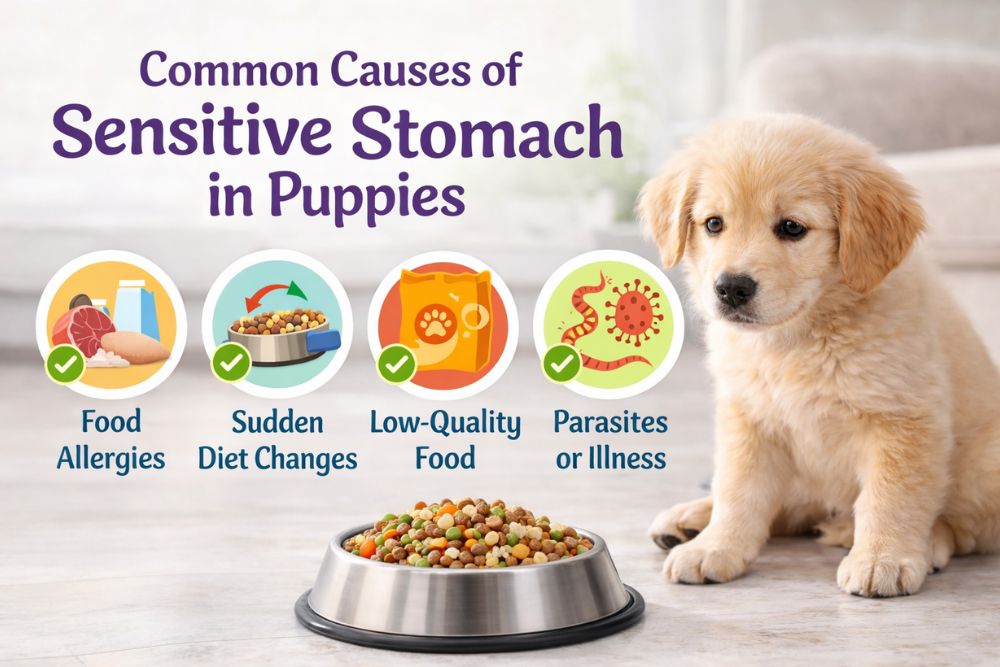
Understanding the root cause helps you choose the right diet.
1. Food Allergies
Some puppies react to common ingredients like:
- Beef
- Dairy
- Wheat
2. Sudden Diet Changes
Switching food too quickly can upset your puppy’s stomach.
3. Low-Quality Food
Cheap dog food often contains fillers and artificial ingredients.
4. Parasites or Illness
Sometimes digestive issues are health-related, so always consult a vet if symptoms persist.
How to Choose the Best Puppy Sensitive Stomach Food
Choosing the right food can feel overwhelming, but focusing on a few key points makes it easier.
Look for High-Quality Protein
Choose easily digestible proteins such as:
- Chicken
- Turkey
- Lamb
- Salmon
Limited Ingredient Diet (LID)
Fewer ingredients mean fewer chances of irritation.
Grain-Free or Gentle Grains
Some puppies do better with:
- Rice
- Oatmeal
Added Probiotics & Prebiotics
These improve gut health and digestion.
No Artificial Additives
Avoid:
- Artificial colors
- Preservatives
- Fillers
Best Ingredients for Sensitive Puppies
Here are some ingredients that are gentle on your puppy’s stomach:
- Sweet potatoes – easy to digest
- Pumpkin – helps with digestion
- Rice – gentle carbohydrate
- Fish oil – supports gut and skin health
- Probiotics – improve digestion
Ingredients to Avoid
Some ingredients can trigger digestive issues:
- Corn and soy
- Artificial flavors
- By-products
- Excess fat
- Dairy
Avoiding these helps reduce symptoms like diarrhea and gas.
Puppy Sensitive Stomach Food Comparison Table
| Feature | Ideal Choice | Avoid |
| Protein Source | Chicken, Lamb, Fish | Unknown meat by-products |
| Carbohydrates | Rice, Oatmeal, Sweet Potato | Corn, Wheat |
| Additives | Natural preservatives | Artificial colors/flavors |
| Digestive Support | Probiotics, Fiber | None |
| Ingredient Count | Limited | Too many fillers |
Feeding Tips for Puppies with Sensitive Stomachs
Even the best puppy sensitive stomach food won’t help if feeding habits are wrong.
Feed Small, Frequent Meals
Instead of 2 large meals, try:
- 3–4 smaller meals daily
Maintain a Feeding Schedule
Consistency helps digestion.
Transition Food Slowly
When changing food:
- Mix old and new food over 7–10 days
Keep Your Puppy Hydrated
Fresh water is essential for digestion.
Avoid Table Scraps
Human food can upset your puppy’s stomach.
Homemade Puppy Food for Sensitive Stomach
Some owners prefer homemade meals.
Simple Recipe:
- Boiled chicken (no seasoning)
- White rice
- Pumpkin
Make sure your pet is getting a balanced diet before switching to homemade food.
When to See a Vet
Sometimes diet alone isn’t enough.
Contact your vet if your puppy has:
- Persistent diarrhea
- Blood in stool
- Frequent vomiting
- Weight loss
These could be signs of serious health issues.
Conclusion
Choosing the right puppy sensitive stomach food is essential for your puppy’s health and comfort. By selecting high-quality, easy-to-digest ingredients and following proper feeding habits, you can reduce digestive issues and help your puppy thrive.
Always observe your puppy’s behavior, make gradual changes, and consult your vet when needed. A healthy diet today means a happy, energetic dog tomorrow
The best food includes limited ingredients, high-quality protein, and added probiotics. Look for trusted brands with simple formulas.
Common signs include diarrhea, vomiting, gas, and loss of appetite.
No. Always transition slowly over 7–10 days to avoid further digestive issues.
Not always. Some puppies do well with gentle grains like rice or oats.
Yes. Low-quality treats can upset your puppy’s digestion.

Muhammad Ahad — SEO Specialist helping websites grow with smart, clean, and result-driven strategies. I improve search rankings, boost organic traffic, and turn content into real authority. I believe true SEO is built on data, trust, and consistency.