

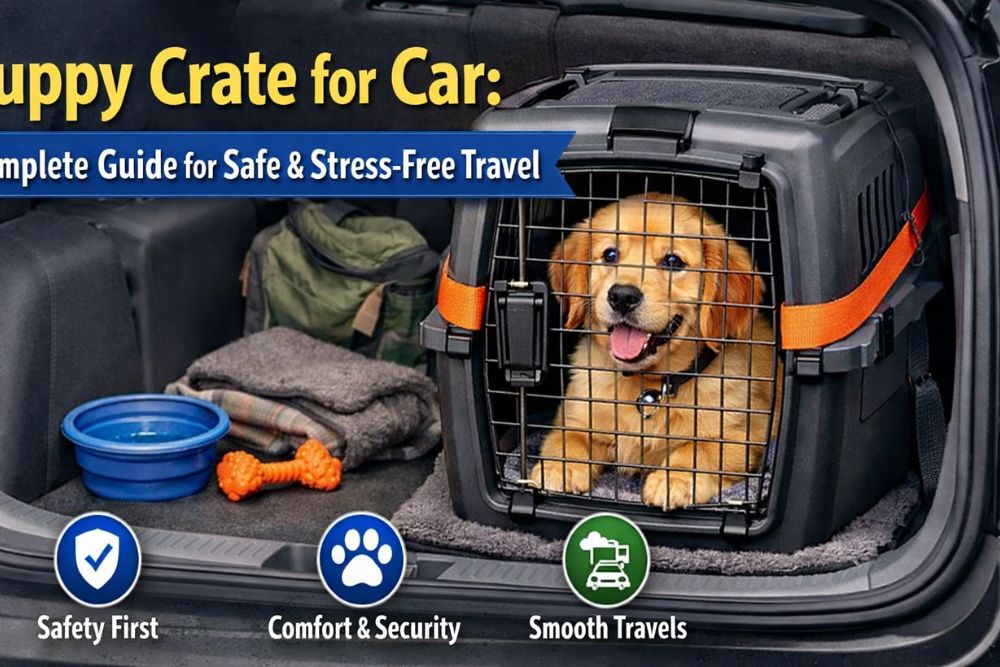
Traveling with your puppy can be exciting—but it also comes with responsibility. Choosing the right puppy crate for car is one of the most important steps to keep your furry friend safe, calm, and comfortable during trips.
Whether you’re heading to the vet, going on a road trip, or just running errands, a proper crate can make all the difference. In this guide, you’ll learn everything you need to know about car crates for puppies, from types and sizes to safety tips and training advice.
Why You Need a Puppy Crate for Car Travel
Many dog owners underestimate the importance of a car crate. However, letting your puppy roam freely in the car can be dangerous.
Key Benefits:
- Safety first: Protects your puppy during sudden stops or accidents
- Reduces distractions: Keeps the driver focused
- Comfort zone: Gives your puppy a secure, familiar space
- Prevents injury: Stops your puppy from jumping or falling
In short, a dog car crate is not just a luxury—it’s a necessity.
Types of Puppy Crates for Cars
Not all crates are the same. Choosing the right type depends on your puppy’s size, behavior, and travel needs.
1. Hard-Sided Crates
These are made from durable plastic and are ideal for safety.
Pros:
- Strong and impact-resistant
- Easy to clean
- Great for long trips
Cons:
- Bulky
- Less ventilation than wire crates
2. Soft-Sided Crates
Perfect for small puppies and short trips.
Pros:
- Lightweight
- Easy to carry
- Comfortable
Cons:
- Not chew-proof
- Less protection in accidents
3. Wire Crates
These offer excellent airflow and visibility.
Pros:
- Good ventilation
- Foldable and portable
- Easy to clean
Cons:
- Less secure in crashes
- Can be noisy
4. Crash-Tested Travel Crates
These are specially designed for maximum safety.
Pros:
- Designed for car travel
- Tested for impact safety
- Highly secure
Cons:
- Expensive
- Heavier than other options
How to Choose the Right Size Crate
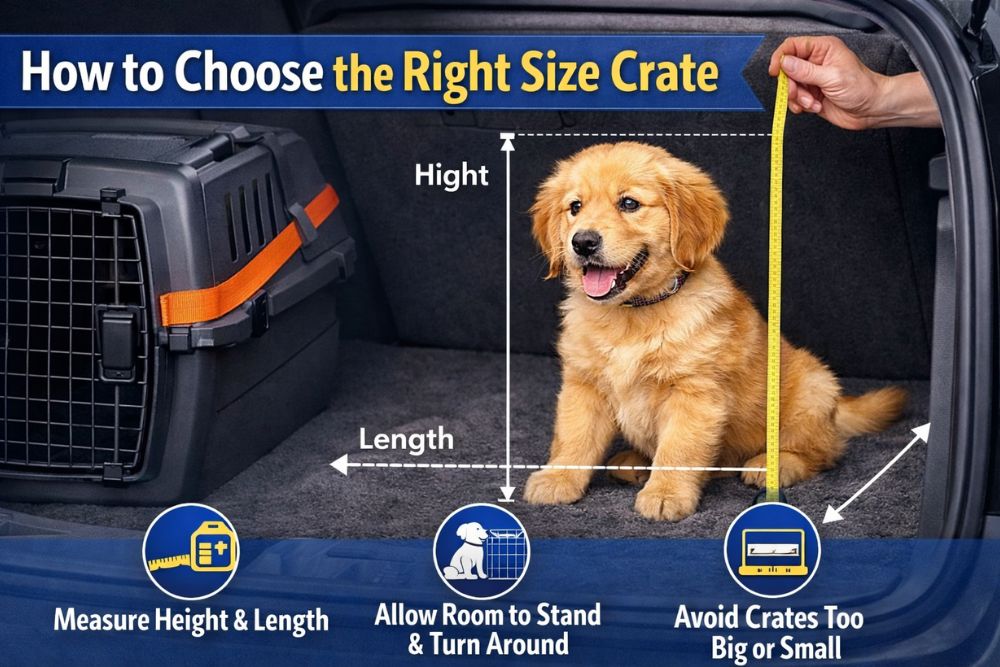
Size matters a lot when selecting a puppy transport crate.
Ideal Crate Size:
Your puppy should be able to:
- Stand up comfortably
- Turn around easily
- Lie down fully
👉 Tip: Avoid buying a crate that’s too big. Puppies may slide during travel, which can be unsafe.
Puppy Crate Size Guide
| Puppy Weight | Crate Size (Approx) | Recommended Type |
| 1–5 kg | 18–22 inches | Soft or plastic crate |
| 5–10 kg | 22–26 inches | Wire or plastic crate |
| 10–20 kg | 26–30 inches | Hard-sided crate |
| 20+ kg | 30+ inches | Crash-tested crate |
Safety Tips for Using a Puppy Crate in the Car
Using a puppy car carrier correctly is just as important as choosing one.
Essential Safety Tips:
- Secure the crate: Use seat belts or straps
- Place it properly: Back seat is safest
- Avoid front seat: Airbags can be dangerous
- Add soft bedding: For comfort
- Keep ventilation: Ensure airflow
- Never leave your puppy alone: Especially in hot weather
How to Train Your Puppy to Use a Car Crate
Some puppies may resist being in a crate at first. Training is key.
Step-by-Step Training:
- Introduce slowly: Let your puppy explore the crate
- Use treats: Reward positive behavior
- Start indoors: Make it a safe space
- Short car trips: Gradually increase travel time
- Stay calm: Your puppy senses your energy
👉 Consistency is the secret to success.
What Features to Look For
When buying a dog travel crate, look for these features:
- Strong and durable material
- Proper ventilation
- Secure locking system
- Comfortable interior
- Easy to clean
- Lightweight but sturdy
Best Placement for a Puppy Crate in the Car
Where you place the crate matters a lot.
Recommended Locations:
- Back seat (secured with seatbelt)
- Cargo area (SUVs only, well-ventilated)
Avoid:
- Front seat
- Loose placement
How to Keep Your Puppy Calm During Travel
Travel anxiety is common in puppies. Here’s how to reduce stress:
- Bring favorite toys
- Use a familiar blanket
- Avoid feeding right before travel
- Play calming music
- Take breaks during long trips
Conclusion
Choosing the right puppy crate for car travel is essential for your puppy’s safety and comfort. From selecting the correct size to ensuring proper placement and training, every detail matters.
A good crate not only protects your puppy but also makes travel easier and stress-free for both of you. Always prioritize safety, comfort, and quality when making your choice.
With the right setup, every car ride can become a pleasant adventure for your furry companion
Yes, a crate provides more protection and prevents movement during accidents.
Yes, but a crash-tested crate is safer for travel.
Puppies should not stay longer than 2–3 hours without a break.
Crash-tested crates are the safest option.
Partially covering can calm your puppy, but ensure proper airflow.
It’s not recommended. Each puppy should have its own crate for safety.

Muhammad Ahad — SEO Specialist helping websites grow with smart, clean, and result-driven strategies. I improve search rankings, boost organic traffic, and turn content into real authority. I believe true SEO is built on data, trust, and consistency.