

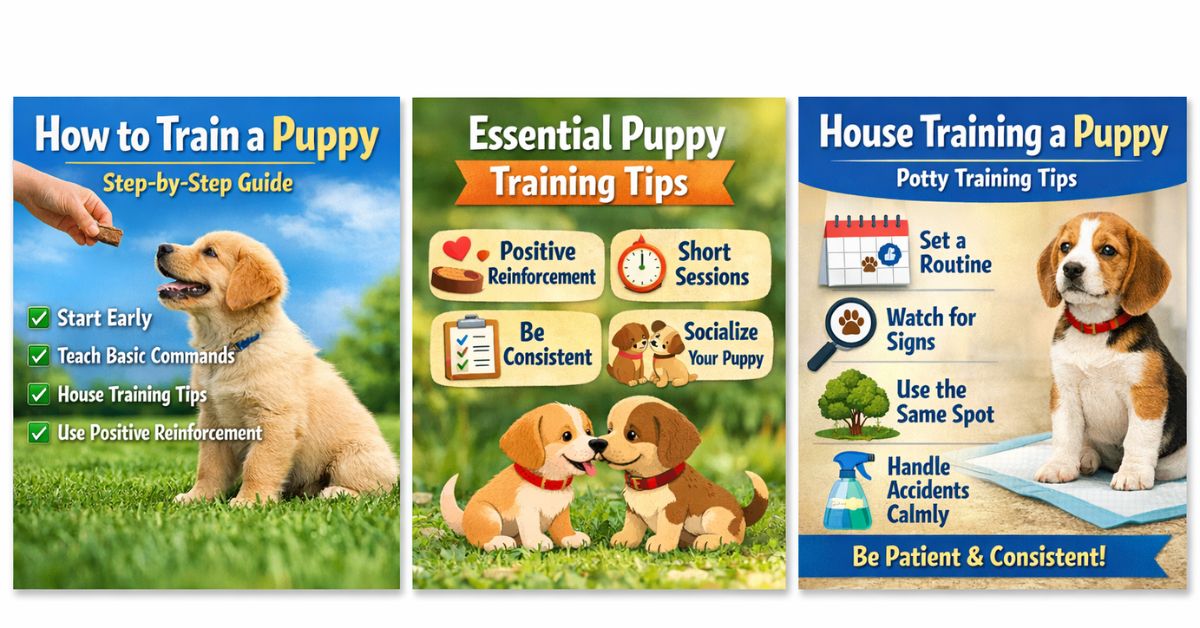
Introduction
Bringing home a new puppy is exciting, joyful, and sometimes a little overwhelming. Puppies are adorable, playful, and full of energy, but they also need guidance to learn how to behave properly.
If you are wondering how to train a puppy, the good news is that puppy training does not need to be complicated. With patience, consistency, and the right techniques, your puppy can quickly learn good habits that will last a lifetime.
Training helps puppies understand what is expected of them. It also strengthens the bond between you and your dog while preventing common behavior problems like chewing furniture, excessive barking, or accidents in the house.
In this complete beginner’s guide, you will learn:
- When to start training a puppy
- Basic commands every puppy should learn
- House training techniques
- Positive training methods
- Common mistakes to avoid
By the end of this guide, you will feel confident about raising a well-behaved, happy, and obedient puppy.
When Should You Start Training a Puppy?

Many new dog owners believe training should start when the puppy gets older. In reality, puppy training should begin as early as possible.
Most puppies are ready to start learning basic training at 8 weeks of age.
At this age, puppies are like little sponges. They absorb information quickly and begin forming habits that shape their adult behavior.
Why Early Training Matters
Early training helps puppies:
- Develop good behavior habits
- Learn boundaries in the home
- Build trust with their owner
- Avoid future behavioral problems
Even simple lessons such as responding to their name or learning where to go to the bathroom can make a big difference.
Remember, puppies are still babies. Training sessions should always be short, positive, and fun.
Essential Puppy Training Basics
Before teaching commands, every dog owner should understand the basic principles of puppy obedience training.
These fundamentals make training easier and more effective.
Use Positive Reinforcement
Positive reinforcement means rewarding your puppy when they do something correctly.
Rewards may include:
- Small dog treats
- Praise such as “Good boy!” or “Good girl!”
- Petting and affection
- Playtime with a favorite toy
Dogs naturally repeat behaviors that bring rewards. This makes positive reinforcement one of the most effective training methods.
Avoid harsh punishment. It can make puppies fearful and damage trust.
Keep Training Sessions Short
Puppies have short attention spans.
The best training sessions are:
- 5 to 10 minutes long
- Repeated 2 to 3 times per day
Short sessions help puppies stay focused and prevent frustration.
Be Consistent
Consistency is one of the most important rules in training a new puppy.
For example:
If jumping on people is sometimes allowed and sometimes not, your puppy will become confused.
Make sure:
- All family members follow the same rules
- Commands are always the same words
- Rewards are given immediately for good behavior
Consistency builds understanding and faster learning.
Basic Commands Every Puppy Should Learn
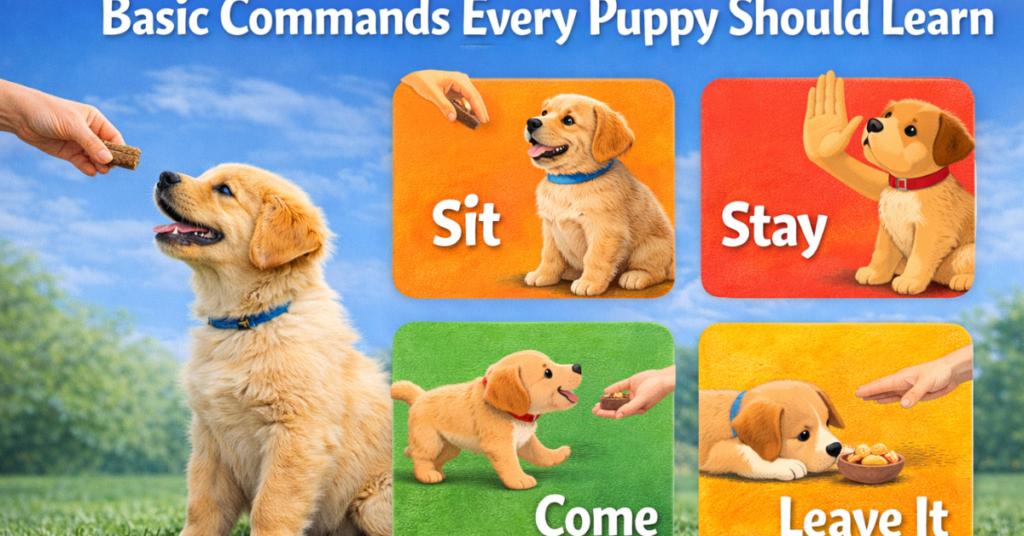
Teaching basic commands is an important part of puppy behavior training. These commands improve communication between you and your dog and help keep your puppy safe.
Below are the most important commands every puppy should learn.
Sit
“Sit” is usually the first command puppies learn.
How to Teach It
- Hold a treat near your puppy’s nose.
- Slowly move the treat upward.
- Your puppy will naturally sit while following the treat.
- Say “Sit” clearly.
- Give the treat and praise immediately.
Repeat this several times each day.
Stay
The “Stay” command helps control your puppy in different situations.
Steps to Train
- Ask your puppy to sit.
- Hold your hand out like a stop sign.
- Say “Stay”.
- Take one small step back.
- If the puppy stays, reward them.
Gradually increase the distance over time.
Come
Teaching “Come” is extremely important for your dog’s safety.
Training Tips
- Start indoors where there are fewer distractions.
- Call your puppy’s name followed by “Come”.
- Reward them immediately when they approach you.
Never punish a puppy after they come to you. This could make them avoid returning next time.
Leave It
This command prevents puppies from picking up dangerous or unwanted objects.
To train this command:
- Place a treat in your closed hand.
- Let the puppy sniff it.
- Say “Leave it”.
- When the puppy stops trying to get it, reward them with a different treat.
This teaches self-control.
House Training Your Puppy
One of the biggest challenges for new dog owners is house training a puppy.
Fortunately, most puppies learn quickly with the right routine.
Create a Bathroom Schedule
Puppies need to go outside frequently.
Take your puppy out:
- First thing in the morning
- After meals
- After naps
- After playtime
- Before bedtime
Young puppies may need bathroom breaks every 1 to 2 hours.
Use the Same Spot
Always take your puppy to the same bathroom area.
The familiar scent encourages them to go quickly.
When your puppy successfully goes outside:
- Praise them enthusiastically
- Give a small treat
This reinforces the correct behavior.
Watch for Signs
Puppies often show signals when they need to go outside.
Common signs include:
- Sniffing the floor
- Circling
- Whining
- Walking toward the door
If you see these signs, immediately take your puppy outside.
Handle Accidents Calmly
Accidents are normal during training.
Never punish your puppy.
Instead:
- Clean the area thoroughly
- Use enzyme cleaners to remove scent
- Continue following your schedule
With patience, accidents will decrease.
Socializing Your Puppy
Socialization is another critical part of puppy training tips.
A well-socialized puppy grows into a confident and friendly adult dog.
Introduce New Experiences
Expose your puppy to:
- Different people
- Friendly dogs
- New environments
- Various sounds
These experiences should always be positive and controlled.
Puppy Classes
Puppy training classes are excellent for learning social skills.
They allow puppies to:
- Interact with other dogs
- Learn commands with distractions
- Build confidence
Professional trainers can also guide new owners.
Common Puppy Training Mistakes
Many dog owners unknowingly slow their puppy’s progress by making simple mistakes.
Here are the most common ones to avoid.
1. Inconsistent Rules
If different family members enforce different rules, puppies become confused.
2. Expecting Too Much Too Soon
Puppies are still learning. Training takes time and patience.
3. Punishment-Based Training
Fear-based training can cause anxiety and behavioral problems.
Positive reinforcement works much better.
4. Skipping Socialization
Poor socialization may lead to fear or aggression later in life.
5. Not Providing Enough Exercise
A bored puppy may develop destructive behaviors like chewing or digging.
Regular play and exercise help burn energy.
Safety Tips During Puppy Training
Training should always be safe and stress-free.
Important safety tips include:
- Use small training treats to prevent overfeeding
- Keep training sessions fun and positive
- Avoid training during extreme heat or cold
- Provide fresh water during long sessions
- Watch for signs of stress or fatigue
If your puppy shows unusual behavior or health concerns, consult a licensed veterinarian.
Conclusion
Learning how to train a puppy is one of the most rewarding parts of being a dog owner. Training helps your puppy grow into a well-behaved companion while strengthening the bond between you.
Remember these key points:
- Start training early
- Use positive reinforcement
- Keep sessions short and consistent
- Teach basic commands gradually
- Be patient and supportive
Every puppy learns at their own pace, so progress may take time. With love, consistency, and proper training, your puppy will develop into a loyal and well-mannered dog.
Responsible dog ownership also includes proper nutrition, regular veterinary care, and plenty of exercise.
Your puppy depends on you for guidance. With the right training approach, you can give them the best possible start in life.
Basic commands can be learned within a few weeks, but full training may take several months. Consistency and daily practice are key.
Most puppies can start basic training at 8 weeks old. Early training helps establish good habits.
Short sessions 2 to 3 times per day work best. Puppies learn faster with regular practice.
Yes. Treats are an excellent reward during early training. Over time, you can gradually reduce treats and rely more on praise.
asons include:
Too many distractions
Training sessions that are too long
Inconsistent commands
Lack of motivation or rewards
Try training in a quiet environment and keep sessions short.

Muhammad Ahad — SEO Specialist helping websites grow with smart, clean, and result-driven strategies. I improve search rankings, boost organic traffic, and turn content into real authority. I believe true SEO is built on data, trust, and consistency.
1 thought on “How to Train a Puppy: Easy Guide for Beginners”