

Introduction
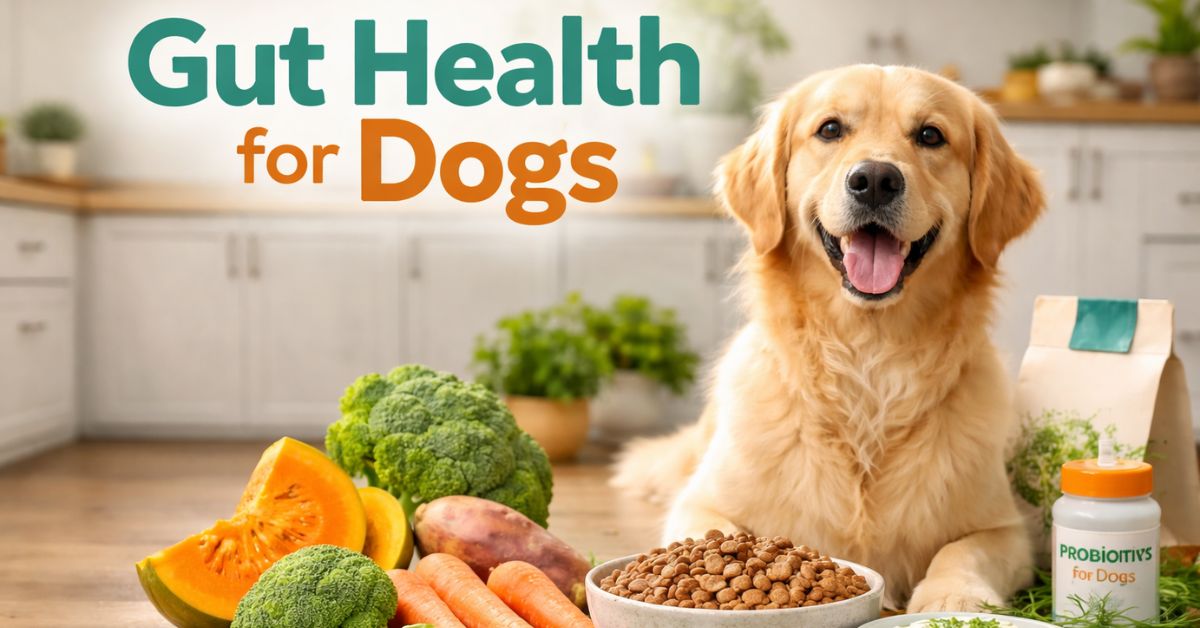
Your dog’s health starts in the gut. Just like humans, dogs rely heavily on a healthy digestive system to stay active, happy, and disease-free. If your dog often suffers from diarrhea, gas, low energy, or skin issues, the root cause could be poor gut health.
Understanding gut health for dogs is not just about feeding them—it’s about supporting their entire system, from digestion to immunity. A balanced gut helps your dog absorb nutrients properly, fight infections, and maintain a shiny coat.
In this complete guide, you’ll learn everything you need to know about improving your dog’s gut health, including diet tips, probiotics, common mistakes, and practical advice you can apply right away.
What Is Gut Health in Dogs?
Gut health refers to the balance of bacteria and microorganisms living in your dog’s digestive system, also known as the gut microbiome.
Why It Matters
A healthy gut microbiome helps your dog:
- Digest food efficiently
- Absorb essential nutrients
- Strengthen the immune system
- Prevent harmful bacteria overgrowth
- Maintain energy levels
When this balance is disturbed, your dog may develop digestive problems and other health issues.
Signs of Poor Gut Health in Dogs
Recognizing early signs can help prevent serious health problems.
Common Symptoms
- Frequent diarrhea or constipation
- Excessive gas or bloating
- Vomiting
- Bad breath
- Itchy skin or allergies
- Low energy or lethargy
- Weight loss or poor appetite
If you notice these symptoms regularly, it’s time to focus on improving your dog’s gut health.
Main Causes of Poor Gut Health
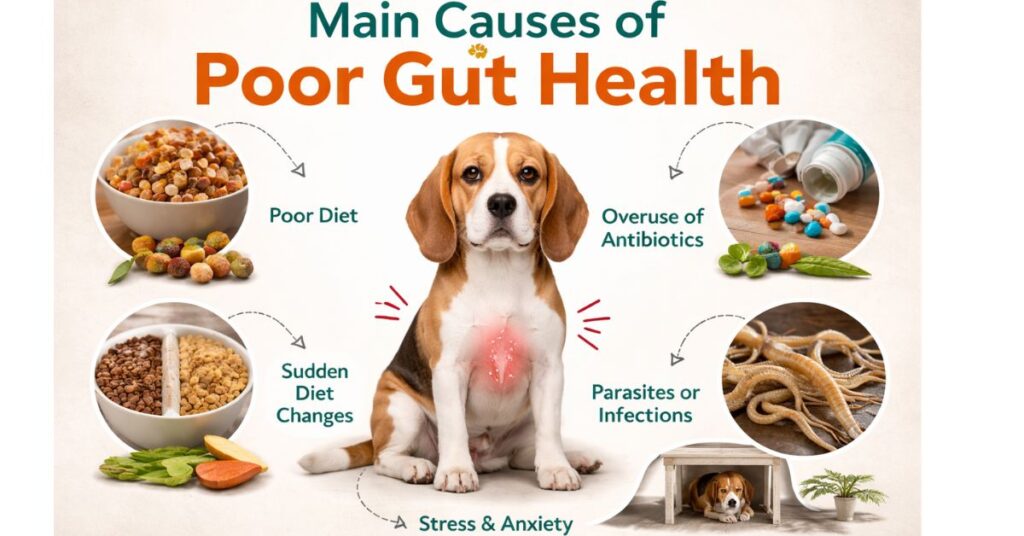
1. Poor Diet
Low-quality dog food with fillers, artificial additives, and low nutrients can harm your dog’s digestive system.
2. Overuse of Antibiotics
In addition to killing harmful bacteria, antibiotics can also kill beneficial bacteria.
3. Stress and Anxiety
Dogs experiencing stress (travel, loud noises, separation) can develop gut issues.
4. Sudden Diet Changes
Switching food too quickly can upset your dog’s stomach.
5. Parasites or Infections
Worms and harmful bacteria can disrupt gut balance.
Best Foods for Gut Health in Dogs
Nutrition plays the biggest role in maintaining a healthy gut.
1. High-Quality Protein
Choose dog food with real meat like:
- Chicken
- Beef
- Fish
Avoid low-quality meat by-products.
2. Fiber-Rich Foods
Fiber supports digestion and healthy bowel movements.
- Pumpkin
- Sweet potatoes
- Carrots
3. Fermented Foods (Safe Options)
Some fermented foods can help boost good bacteria:
- Plain yogurt (unsweetened)
- Kefir (in small amounts)
4. Prebiotic Foods
Prebiotics feed healthy bacteria in the gut.
- Bananas
- Oats
- Apples (without seeds)
Probiotics for Dogs: Do They Work?
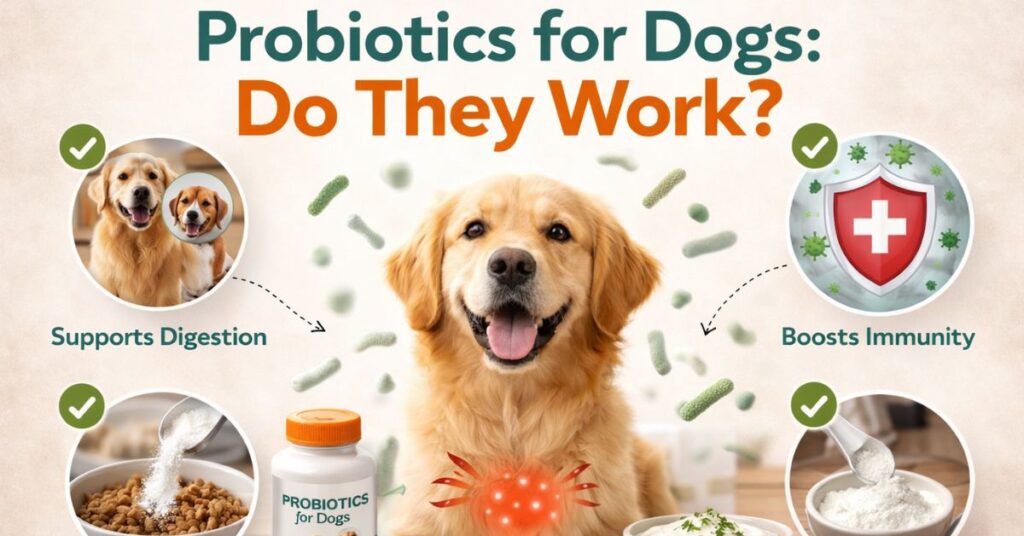
Yes, probiotics are one of the best ways to improve gut health for dogs.
What Are Probiotics?
Digestive health is supported by probiotics, which are beneficial bacteria.
Benefits of Probiotics
- Improve digestion
- Reduce diarrhea
- Boost immunity
- Help after antibiotic use
- Reduce allergies
When to Use Probiotics
- After illness
- During stress
- When switching food
- For chronic digestive issues
Always consult your veterinarian before introducing supplements.
How to Improve Your Dog’s Gut Health
Here are practical, proven steps you can start today:
1. Choose High-Quality Dog Food
Look for:
- Real ingredients
- No artificial preservatives
- Balanced nutrients
2. Add Probiotics and Prebiotics
Include supplements or natural sources in moderation.
3. Keep Your Dog Hydrated
Water supports digestion and nutrient absorption.
4. Exercise Regularly
Physical activity helps digestion and reduces stress.
5. Maintain a Consistent Feeding Routine
Maintain a daily feeding schedule for your dog.
6. Introduce New Foods Slowly
For a smoother stomach, introduce new foods gradually over 7–10 days.
Do’s and Don’ts for Healthy Dog Gut
Do’s
- Feed balanced, high-quality food
- Provide fresh water daily
- Monitor stool quality
- Visit the vet regularly
- Use probiotics when needed
Don’ts
- Don’t overfeed treats
- Don’t switch food suddenly
- Don’t ignore digestive symptoms
- Don’t give human junk food
- Don’t self-medicate without vet advice
Common Mistakes Dog Owners Make
Many dog owners unintentionally harm their dog’s gut health.
1. Feeding Too Many Treats
Too many treats can upset the digestive balance.
2. Ignoring Food Labels
Cheap dog food often lacks essential nutrients.
3. Not Deworming Regularly
Parasites can damage gut health.
4. Overusing Antibiotics
Always use medication only when prescribed.
5. Lack of Routine
Irregular feeding and exercise disrupt digestion.
When to See a Veterinarian
Some gut issues require professional help.
Seek Vet Advice If:
- Diarrhea lasts more than 2 days
- Blood appears in stool
- Your dog refuses to eat
- Vomiting is frequent
- Sudden weight loss occurs
A vet can diagnose underlying conditions and recommend proper treatment.
Conclusion
Improving gut health for dogs is one of the best things you can do for your pet’s overall well-being. A healthy gut leads to better digestion, stronger immunity, and a happier, more energetic dog.
Start with small changes—upgrade your dog’s diet, introduce probiotics, and maintain a consistent routine. Always pay attention to your dog’s behavior and digestion, as these are key indicators of gut health.
Most importantly, don’t hesitate to consult your veterinarian if you notice persistent issues. Responsible dog care starts with awareness, and now you have the knowledge to make a real difference in your dog’s life.
Your dog depends on you—make their gut health a priority. 🐾
You can improve gut health by feeding high-quality food, adding probiotics, providing fiber-rich foods, and maintaining a consistent routine.
Yes, probiotics are generally safe and beneficial, but always consult your vet before starting any supplement.
Avoid processed foods, artificial additives, sugary treats, and fatty human foods as they can harm digestion.
It can take a few days to a few weeks, depending on the dog’s condition and diet changes.
Yes, poor gut health can lead to low energy, irritability, and even anxiety in dogs.
Plain, unsweetened yogurt in small amounts can support gut health due to its probiotic content.

Muhammad Ahad — SEO Specialist helping websites grow with smart, clean, and result-driven strategies. I improve search rankings, boost organic traffic, and turn content into real authority. I believe true SEO is built on data, trust, and consistency.
1 thought on “Gut Health for Dogs: Complete Owner’s Guide”