

Introduction
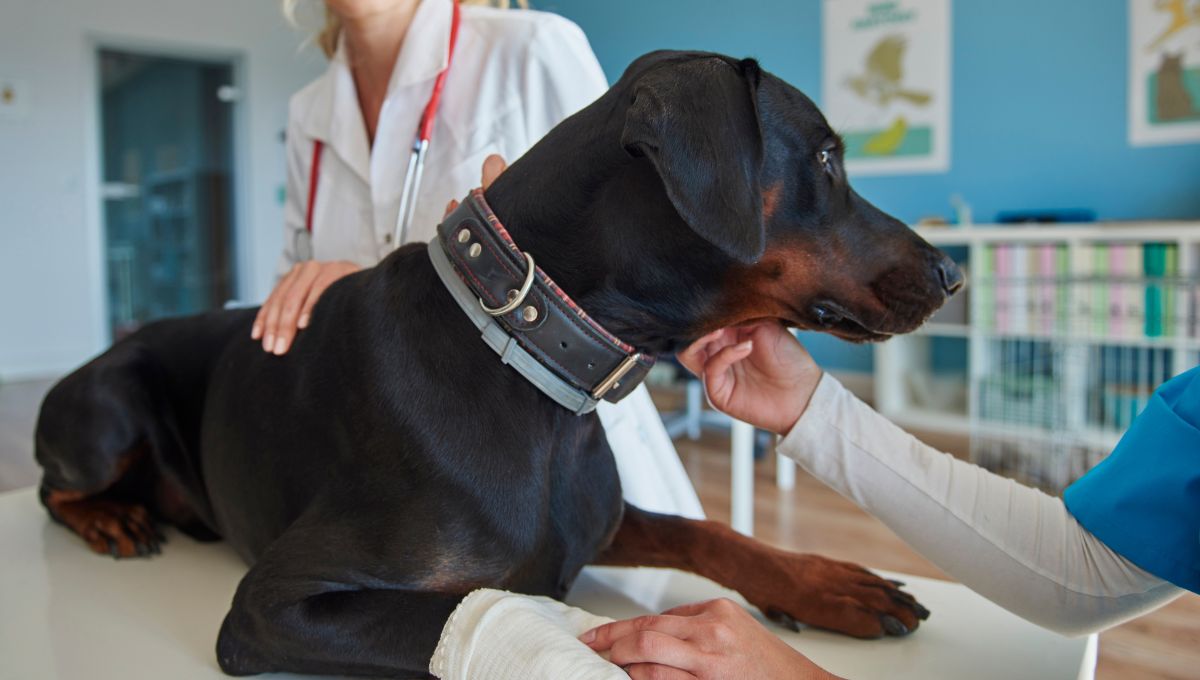
Dogs are naturally playful and curious animals.
Because of this, cuts, scrapes, and small injuries are very common in daily life.
Knowing proper dog wound care can help you:
- Prevent infections
- Reduce pain and discomfort
- Support faster healing
- Avoid unnecessary vet visits
This guide explains how to treat dog wounds safely at home, what mistakes to avoid, and when professional veterinary care is necessary.
All advice is written in simple English and based on real dog-care experience.
Understanding Different Types of Dog Wounds
Before treating a wound, it is important to understand how serious it is.
Common Types of Dog Wounds
Minor Cuts and Scrapes
These are shallow wounds that affect only the top layer of skin.
- Caused by sharp objects, rough surfaces, or play
- Bleeding is usually light or stops quickly
These wounds can often be treated at home.
Abrasions
An abrasion occurs when rough surfaces rub against the skin.
- Common on paws, elbows, and belly
- Skin may look red, raw, or scraped
They usually heal well with proper cleaning and care.
Puncture Wounds
Puncture wounds are small on the surface but deep inside.
- Often caused by bites or sharp objects
- High risk of infection
These wounds may look minor but can be dangerous.
Deep Cuts or Lacerations
These are serious wounds where skin is torn open.
- Heavy bleeding
- Visible tissue or muscle
These require immediate veterinary care.
When a Dog Wound Is an Emergency
Contact a vet immediately if:
- Bleeding does not stop
- The wound is deep or wide
- You see muscle, fat, or bone
- The wound is from an animal bite
- Your dog shows severe pain or weakness
Never delay treatment for serious wounds.
Step-by-Step Dog Wound Care at Home
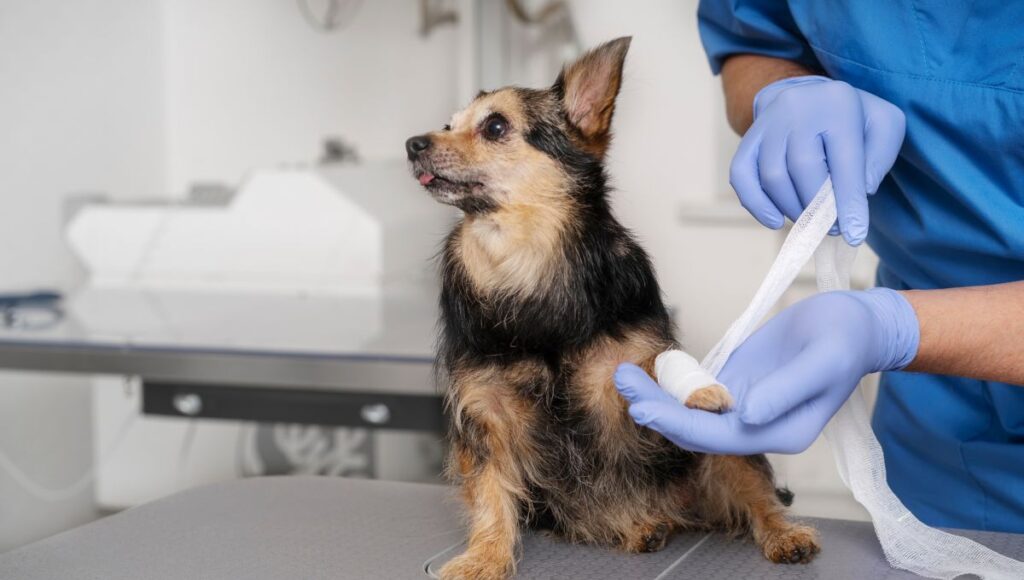
Minor wounds can often be treated safely at home if handled correctly.
Keep Your Dog Calm
Injured dogs may react aggressively due to pain.
- Speak calmly and gently
- Use a leash or towel to restrain if needed
- Ask someone to help hold your dog
Your safety matters too.
Stop the Bleeding
If the wound is bleeding:
- Use clean gauze or cloth
- Apply gentle pressure
- Hold for 5–10 minutes
If bleeding continues, visit a vet.
Clean the Wound Properly
Cleaning is the most important part of dog wound care.
Use:
- Clean water
- Saline solution
- Vet-approved antiseptic
Avoid:
- Hydrogen peroxide
- Alcohol
- Harsh household disinfectants
Gently remove dirt, hair, or debris around the wound.
Apply a Dog-Safe Antiseptic
After cleaning:
- Apply a thin layer of dog-safe antiseptic
- Follow product instructions carefully
Never use human antibiotic creams without vet approval.
Protect the Wound
Protecting the wound prevents dirt and bacteria.
- Cover with sterile gauze
- Use a light bandage
- Do not wrap too tightly
Wet or dirty bandages should be changed every day.
Prevent Licking and Chewing
Dogs naturally lick wounds, but this delays healing.
- Use an Elizabethan collar (cone)
- Keep the wound covered
Licking can cause infection and reopen wounds.
Dog Wound Healing: What Is Normal
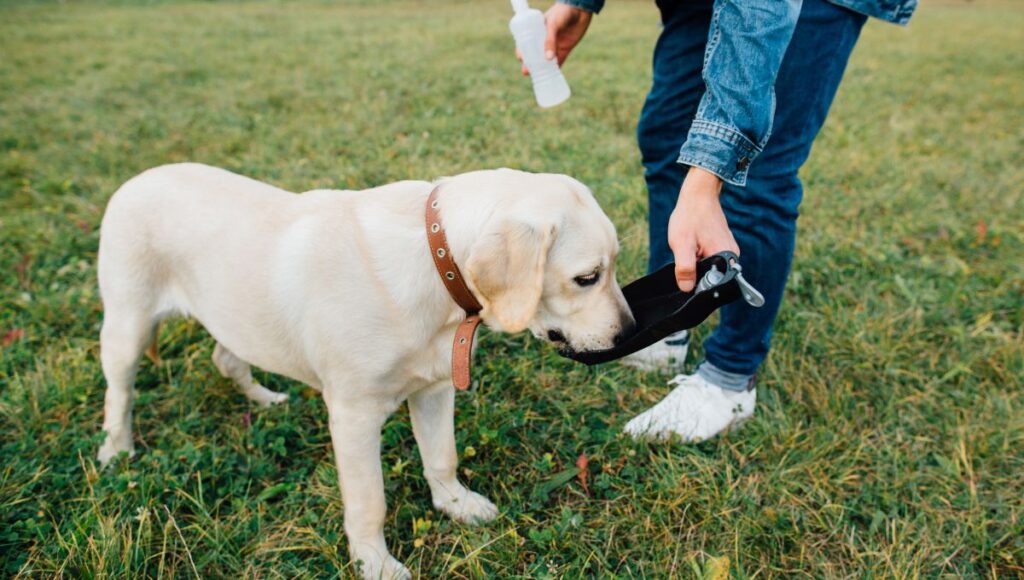
Understanding healing helps you monitor progress.
Normal Healing Signs
- Mild redness in the beginning
- Scab formation
- Reduced swelling over time
- No bad smell or discharge
Your dog should appear more comfortable each day.
Signs of Infection
Contact a vet if you notice:
- Swelling or warmth
- Pus or yellow discharge
- Bad odor
- Fever or tired behavior
- Loss of appetite
Infections can spread quickly if ignored.
Do’s and Don’ts of Dog Wound Care
Do’s
- Clean wounds as soon as possible
- Monitor the wound daily
- Keep the area clean and dry
- Use dog-safe products only
Don’ts
- Do not use human painkillers
- Do not ignore bite wounds
- Do not remove scabs early
- Do not delay vet care if unsure
Common Dog Wound Care Mistakes
Many dog owners make these mistakes:
- Using household chemicals on wounds
- Allowing dogs to lick wounds
- Skipping daily checks
- Bandaging wounds too tightly
Avoiding these mistakes helps wounds heal faster.
How Diet Supports Wound Healing
Good nutrition plays an important role in recovery.
- Protein supports tissue repair
- Omega-3 fatty acids reduce inflammation
- Vitamins help maintain healthy skin
Always provide fresh, clean water.
When to See a Vet
Home care is not enough if:
- The wound worsens after 48 hours
- Your dog shows pain, fever, or weakness
- The wound is deep or infected
- The injury was caused by a bite
Early veterinary care can prevent serious complications.
Conclusion
Proper dog wound care is an essential skill for every dog owner.
With quick action, gentle cleaning, and careful monitoring, most minor wounds heal without problems.
Always remember:
- Small wounds can be managed at home
- Serious wounds require veterinary care
- Your dog’s safety and comfort come first
If you are ever unsure, consult a veterinarian immediately.
🐾 Caring for wounds properly today helps keep your dog healthy, active, and happy.
Yes, small and minor wounds can be treated at home with proper care.
Once or twice daily unless your vet advises differently.
No. It damages healthy tissue and slows healing.
Minor wounds usually heal within 7 to 14 days.
Yes, bandaging helps protect the wound but should not be too tight.

Muhammad Ahad — SEO Specialist helping websites grow with smart, clean, and result-driven strategies. I improve search rankings, boost organic traffic, and turn content into real authority. I believe true SEO is built on data, trust, and consistency.
2 thoughts on “Dog Wound Care: A Complete Guide for Dog Owners”