

Introduction
A healthy digestive system is one of the most important parts of your dog’s overall well-being. If your dog suffers from gas, diarrhea, vomiting, or frequent stomach upset, the problem may be related to their diet.
Many dog owners don’t realize that poor digestion can lead to bigger health issues such as nutrient deficiencies, low energy, poor coat quality, and weakened immunity.
This is where digestive health dog food becomes essential.
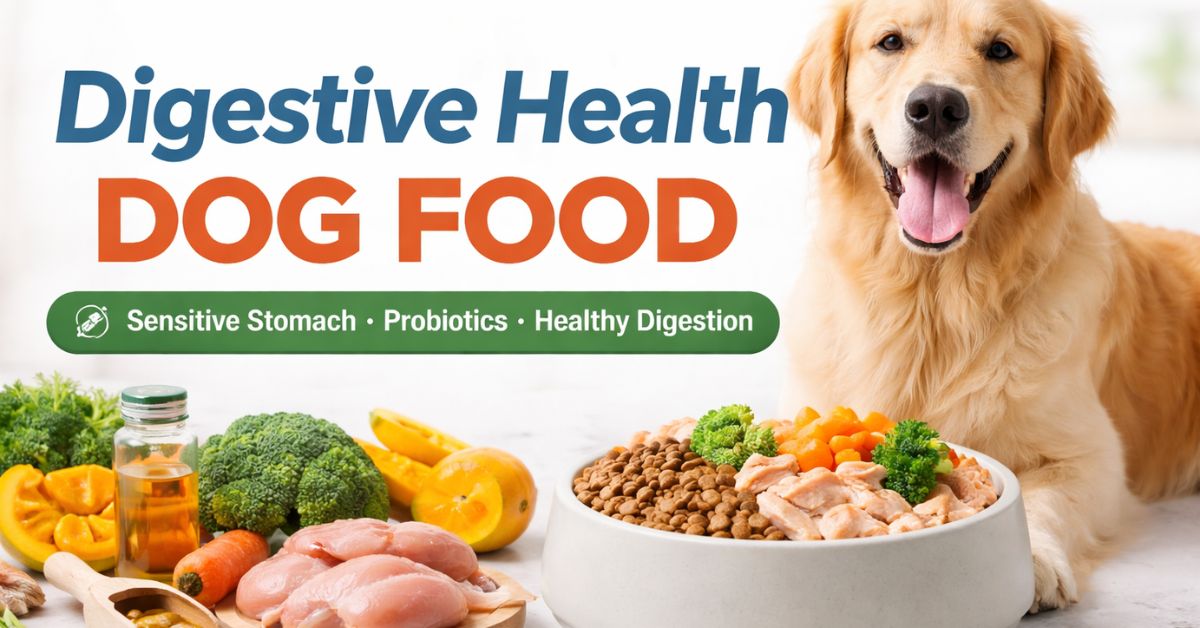
Specially formulated digestive-support dog foods contain ingredients that are easier to digest and help maintain a healthy gut. These foods often include probiotics, prebiotics, fiber, and high-quality proteins that support your dog’s digestive system.
In this complete guide, you’ll learn:
- What digestive health dog food is
- Signs your dog needs digestive support
- Key ingredients that improve digestion
- How to choose the best food for your dog
- Tips to keep your dog’s stomach healthy
Whether you have a puppy, adult dog, or senior dog, this guide will help you make better nutrition choices for your furry companion.
What Is Digestive Health Dog Food?
Digestive health dog food is specially designed to support a dog’s gastrointestinal system. These foods contain ingredients that help break down nutrients efficiently and maintain a balanced gut environment.
Unlike regular dog food, digestive formulas focus on gentle digestion and gut health support.
Key Features of Digestive Health Dog Food
Good digestive-support dog foods usually include:
- Highly digestible proteins like chicken, turkey, or fish
- Probiotics to support beneficial gut bacteria
- Prebiotics that feed healthy gut microbes
- Natural fiber sources for smoother digestion
- Limited ingredients to reduce food sensitivities
These foods are particularly helpful for dogs that experience frequent digestive discomfort.
Dogs That Benefit Most From Digestive Support Food

Not every dog needs a special digestive diet, but certain dogs benefit greatly from it.
Dogs that may need digestive health dog food include:
- Dogs with sensitive stomachs
- Dogs with frequent diarrhea or loose stools
- Dogs with food allergies or intolerances
- Dogs with gas and bloating
- Senior dogs with slower digestion
- Dogs recovering from illness
If your dog regularly shows digestive symptoms, it’s always a good idea to consult a veterinarian before changing diets.
Signs Your Dog May Have Digestive Problems
Sometimes digestive issues in dogs are easy to notice. Other times they appear gradually.
Knowing the warning signs can help you take action early.
Common Symptoms of Digestive Issues
Watch for these signs:
- Frequent diarrhea
- Vomiting after meals
- Excessive gas
- Constipation
- Loss of appetite
- Weight loss
- Bad breath
- Loud stomach noises
- Low energy levels
If these symptoms occur often, your dog may benefit from switching to dog food designed for digestive health.
Occasional vs Chronic Digestive Issues
Occasional stomach upset is normal for dogs. They sometimes eat things they shouldn’t.
However, if symptoms happen regularly, it could indicate:
- Food intolerance
- Poor quality ingredients
- Gut bacteria imbalance
- Digestive disorders
Persistent digestive problems should always be evaluated by a veterinarian.
Key Ingredients in Digestive Health Dog Food
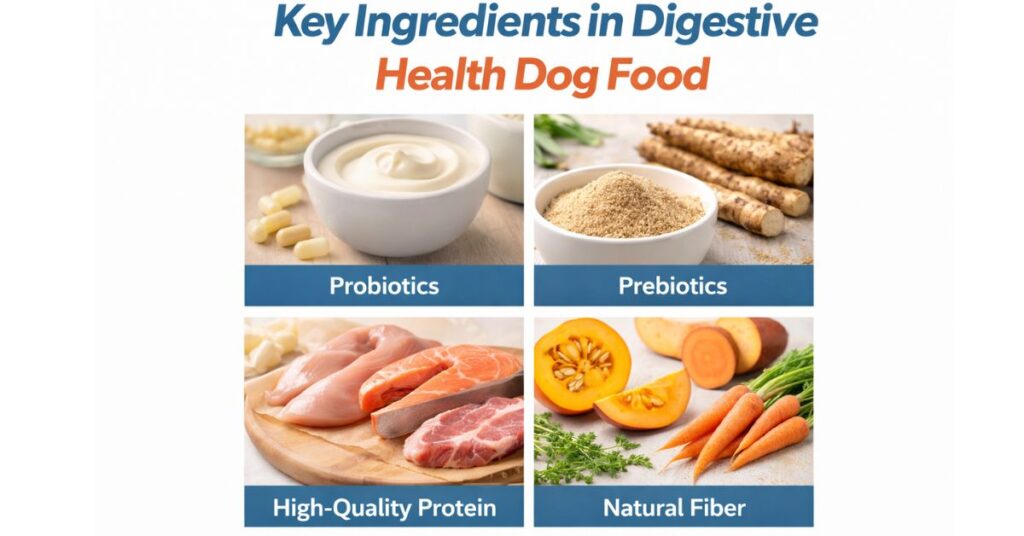
When choosing a digestive support formula, ingredients matter more than brand names.
Let’s look at the most beneficial ingredients for canine digestion.
1. Probiotics
Probiotics are beneficial bacteria that help maintain a balanced gut microbiome.
Benefits include:
- Better digestion
- Reduced diarrhea
- Stronger immune system
- Improved nutrient absorption
Many high-quality dog foods now include live probiotic cultures to support gut health.
2. Prebiotics
Prebiotics feed the healthy bacteria in your dog’s gut.
Common prebiotic ingredients include:
- Chicory root
- Inulin
- Beet pulp
These ingredients help maintain a healthy digestive environment.
3. High-Quality Protein
Dogs digest high-quality animal proteins much better than low-grade fillers.
Good protein sources include:
- Chicken
- Turkey
- Salmon
- Lamb
Poor quality protein sources may cause digestive stress.
4. Digestible Carbohydrates
Easily digestible carbs provide energy without irritating the stomach.
Examples include:
- Brown rice
- Oatmeal
- Sweet potatoes
- Pumpkin
These ingredients help maintain stable digestion.
5. Natural Fiber
Fiber helps regulate bowel movements.
Benefits include:
- Improved stool quality
- Reduced constipation
- Better gut health
Great fiber sources include:
- Pumpkin
- Carrots
- Peas
- Beet pulp
How to Choose the Best Digestive Health Dog Food
Selecting the right dog food can feel overwhelming because there are many options available.
Here are some expert tips to help you choose wisely.
Check the Ingredient List
Always read the first five ingredients.
Look for:
- Real meat as the first ingredient
- Whole food ingredients
- Limited artificial additives
Avoid foods filled with:
- Artificial colors
- Low-quality fillers
- Excess preservatives
Choose Limited Ingredient Diets (LID)
Limited ingredient formulas reduce the risk of food sensitivities.
They contain fewer ingredients, which helps identify potential triggers.
These diets are ideal for dogs with:
- Food allergies
- Sensitive digestion
- Chronic stomach issues
Look for Digestive Support Labels
High-quality digestive dog foods often highlight ingredients like:
- Probiotics
- Prebiotics
- Digestive enzymes
These nutrients support gut balance and smoother digestion.
Consider Your Dog’s Age
Different life stages require different nutritional support.
For example:
- Puppies need more nutrients for growth
- Adult dogs need balanced digestion support
- Senior dogs require gentle digestion formulas
Always choose food formulated for your dog’s life stage.
Feeding Tips for Dogs With Sensitive Stomachs
Even the best digestive health dog food won’t work properly if feeding habits are poor.
Follow these practical feeding tips to protect your dog’s stomach.
Transition Food Slowly
Switching food too quickly can cause stomach upset.
A safe transition takes 7–10 days.
Example transition plan:
Sunlight hours 1–3
75% old food + 25% new food
Day 4–6
50% old food + 50% new food
Day 7–10
25% old food + 75% new food
After day 10, you can feed the new food completely.
Feed Smaller Meals
Large meals can overload the digestive system.
Instead:
- Feed 2–3 smaller meals per day
- Maintain consistent feeding times
This supports smoother digestion.
Provide Fresh Water
Hydration helps digestion.
Always make sure your dog has clean, fresh water available throughout the day.
Avoid Too Many Treats
Too many treats can disrupt digestion.
Choose:
- Healthy treats
- Limited ingredient snacks
- Digestive-friendly options
Moderation is key.
Common Feeding Mistakes Dog Owners Make
Many digestive problems come from simple feeding mistakes.
Avoid these common issues.
Feeding Table Scraps
Human food can irritate a dog’s stomach.
Avoid feeding:
- Spicy foods
- Fatty foods
- Dairy products
- Fried foods
These can trigger digestive problems.
Changing Food Too Frequently
Constant diet changes confuse your dog’s digestive system.
Stick with a high-quality food that works well.
Ignoring Symptoms
Digestive symptoms should never be ignored.
If your dog experiences:
- Persistent vomiting
- Blood in stool
- Severe diarrhea
Seek veterinary care immediately.
Conclusion
Digestive health plays a major role in your dog’s overall wellness. When a dog’s digestive system works properly, they absorb nutrients better, maintain healthy energy levels, and enjoy a better quality of life.
Choosing the right digestive health dog food can make a huge difference, especially for dogs with sensitive stomachs or recurring digestive issues.
Remember these key points:
- Choose food with high-quality ingredients
- Look for probiotics and natural fiber
- Transition food slowly and carefully
- Maintain healthy feeding habits
If your dog experiences ongoing digestive problems, always consult your veterinarian to rule out underlying health conditions.
By paying attention to your dog’s diet and digestive health, you’re taking an important step toward giving them a long, happy, and healthy life.
The best digestive health dog food contains easily digestible protein, probiotics, prebiotics, and natural fiber. Always choose high-quality brands with real ingredients.
Yes. Poor quality ingredients, food allergies, or sudden diet changes can cause digestive upset in dogs.
Yes. Probiotics help maintain healthy gut bacteria, improve digestion, and strengthen the immune system.
Common signs include vomiting, diarrhea, excessive gas, poor appetite, and frequent stomach noises.
Most dogs show improvement within 1–3 weeks after switching to a digestive support dog food.

Muhammad Ahad — SEO Specialist helping websites grow with smart, clean, and result-driven strategies. I improve search rankings, boost organic traffic, and turn content into real authority. I believe true SEO is built on data, trust, and consistency.
1 thought on “Digestive Health Dog Food: Complete Guide for Dog Owners”