
Introduction
Choosing the best dog food for puppies can feel overwhelming.
Walk into any pet store and you’ll see dozens of puppy food brands. Dry food, wet food, grain-free, high-protein, large breed formulas — it’s confusing, especially for first-time dog owners.
But here’s the truth:
Your puppy’s nutrition during the first year shapes their entire life.
Strong bones. Healthy brain development. Shiny coat. Strong immunity. It all starts with the right food.
In this expert guide, I’ll walk you through:
- What puppies really need nutritionally
- How to choose high-quality puppy food
- Ingredients to look for (and avoid)
- Feeding charts and portion tips
- Common mistakes new owners make
Let’s help your puppy grow strong, healthy, and happy.
Why Puppies Need Special Food (Not Adult Dog Food)
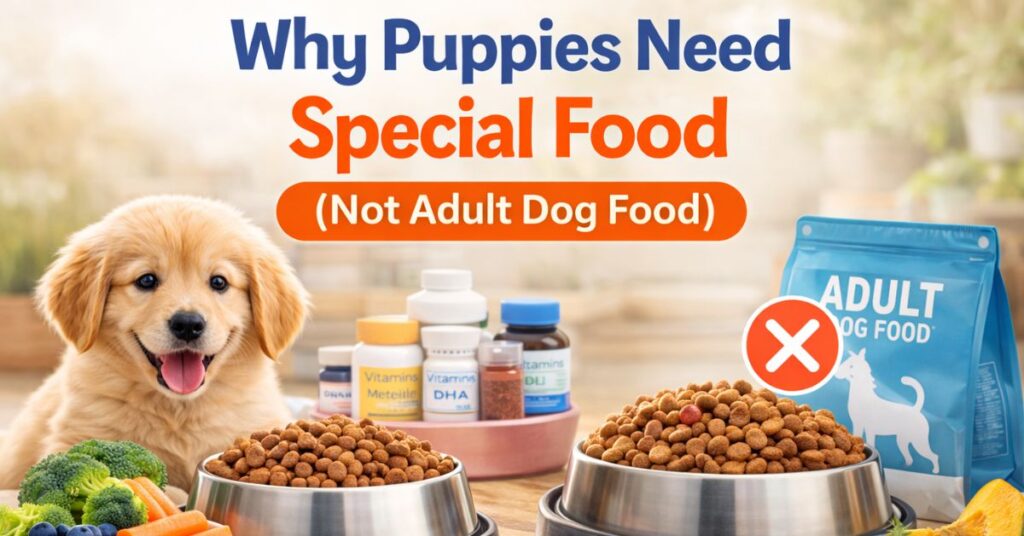
Puppies are not small adult dogs.
They grow rapidly — especially during the first 6–12 months. Large breed puppies can double their weight in just weeks.
That means they need:
- More protein
- More calories
- Controlled calcium levels
- DHA for brain development
- Balanced fats for energy
Adult dog food simply does not meet these needs.
Key Nutrients in the Best Puppy Food
Here’s what high-quality puppy food must include:
1. High-Quality Animal Protein
Look for:
- Chicken
- Turkey
- Lamb
- Beef
- Salmon
Protein supports:
- Muscle development
- Organ growth
- Immune strength
The first ingredient should always be real meat.
2. DHA (For Brain & Vision)
DHA supports:
- Learning ability
- Memory
- Eye development
This is especially important in the first year.
3. Controlled Calcium & Phosphorus
Too much calcium — especially for large breeds — can cause bone problems.
Large breed puppies need carefully balanced minerals.
4. Healthy Fats
Omega-3 and Omega-6 fatty acids:
- Support skin and coat
- Improve immune system
- Provide energy
How to Choose the Best Dog Food for Puppies

Now let’s talk about what really matters when selecting puppy food.
1. Check the Ingredient List
Ingredients are listed by weight.
Good signs:
- Real meat as the first ingredient
- Whole foods (sweet potatoes, brown rice, oats)
- Named fats like “chicken fat”
Red flags:
- Meat by-products (unidentified)
- Artificial colors
- Artificial preservatives
- Too many fillers
2. Look for AAFCO Approval
In the United States, foods that meet standards from the Association of American Feed Control Officials (AAFCO) are labeled:
“Nutritionally balanced to meet growth requirements.”
Always check for this statement.
3. Choose According to Breed Size
Small, medium, and large breed puppies have different needs.
Small Breed Puppies
- Higher calories
- Smaller kibble size
- Faster metabolism
Large Breed Puppies
- Controlled calcium
- Moderate calorie density
- Slower growth support
Feeding a large breed puppy regular puppy food can lead to joint problems.
4. Consider Dry vs Wet Puppy Food
Dry Puppy Food (Kibble)
Pros:
- Good for dental health
- Budget friendly
- Easy storage
Wet Puppy Food
Pros:
- More moisture
- Great for picky eaters
- Easier to chew
Many owners mix both.
Best Types of Puppy Food (Expert Recommendations)
Here are categories to consider when looking for the best puppy food brands.
1. High-Protein Puppy Food
Best for:
- Active breeds
- Working dogs
- Large breeds
Protein content should be around 22–32%.
2. Grain-Free Puppy Food
Some puppies do better without grains.
However, grain-free is NOT necessary unless:
- Your puppy has allergies
- Your vet recommends it
Whole grains are actually healthy for most dogs.
3. Limited Ingredient Puppy Food
Ideal for:
- Sensitive stomach
- Food allergies
- Skin issues
Fewer ingredients = easier digestion.
4. Vet Recommended Puppy Food
Some brands are formulated with veterinary nutritionists.
While boutique brands look attractive, scientifically formulated diets often provide more balanced nutrition.
Always consult your vet before switching food.
How Much Should You Feed Your Puppy?
Overfeeding is one of the most common mistakes.
Follow these general guidelines:
8–12 Weeks Old
- 4 meals per day
3–6 Months
- 3 meals per day
6–12 Months
- 2 meals per day
Check the feeding chart on your puppy food bag — but adjust based on:
- Activity level
- Breed
- Body condition
You should feel ribs easily but not see them clearly.
Common Puppy Feeding Mistakes (Avoid These!)
Even loving dog owners make mistakes.
1. Switching Food Too Fast
Sudden change = diarrhea.
Transition over 7 days:
- Day 1–2: 75% old, 25% new
- Day 3–4: 50/50
- Day 5–6: 25% old, 75% new
- Day 7: 100% new
2. Feeding Table Scraps
Human food:
- Causes obesity
- Upsets stomach
- Creates picky eating habits
3. Overfeeding Treats
Treats should be:
- Less than 10% of daily calories
4. Ignoring Water Intake
A constant supply of fresh water is essential.
Hydration supports digestion and organ health.
Signs You Chose the Right Puppy Food
How do you know the food is working?
Look for:
- Steady weight gain
- Shiny coat
- Normal stools
- High energy levels
- Clear eyes
- No itching or skin irritation
If you notice:
- Chronic diarrhea
- Vomiting
- Lethargy
- Excessive scratching
Consult your veterinarian immediately.
What is the ideal time to switch puppy food to adult food?
This depends on breed size.
Small Breeds:
Around 9–12 months.
Large Breeds:
Around 12–18 months.
Switching too early can affect growth.
Always ask your vet before transitioning.
Final Thoughts: Give Your Puppy the Best Start
Choosing the best dog food for puppies is one of the most important decisions you’ll make as a dog owner.
The right food supports:
- Strong bones
- Healthy brain development
- Balanced growth
- Long-term health
Don’t choose based on marketing or price alone.
Read ingredients. Understand your puppy’s breed needs. Monitor their health. And most importantly — build a relationship with your veterinarian.
At DoggoPulse.com, we believe healthy puppies grow into happy dogs.
Feed smart. Love deeply. Raise responsibly.
Dog food that meets AAFCO standards should contain real meat, calcium that is balanced, and DHA that is present. Always choose according to breed size and consult your vet.
Not necessarily. Most puppies digest whole grains well. Grain-free is only needed if allergies are confirmed.
Small breeds: up to 12 months.
Large breeds: up to 18 months.
Only if formulated by a veterinary nutritionist. Homemade diets without balance can cause serious deficiencies.
8–12 weeks: 4 meals
3–6 months: 3 meals
6+ months: 2 meals
Generally 22–32%, depending on breed and activity level.

Muhammad Ahad — SEO Specialist helping websites grow with smart, clean, and result-driven strategies. I improve search rankings, boost organic traffic, and turn content into real authority. I believe true SEO is built on data, trust, and consistency.
1 thought on “This is the definitive guide to the best dog food for puppies”